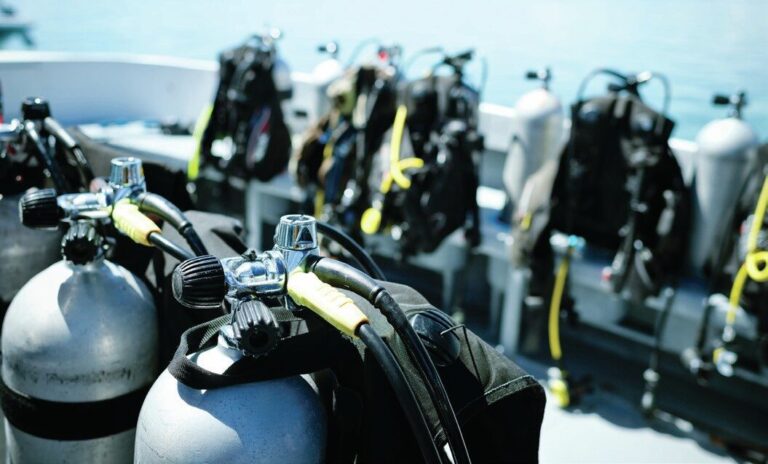
As a deadly contaminant that can enter scuba cylinders, Carbon monoxide detection is essential. It may be present in the ambient air or generated by an overheated, inadequately maintained compressor. CO may also come from fire or from engine exhaust from a boat or a gas-powered compressor, for example.
The Hidden Danger of Carbon Monoxide in Diving
While some may dismiss CO in breathing air as a minor risk — after all, a toaster can produce it — CO actually poses serious danger in diving. As a diver descends, the density of their breathing gas increases, and so does the number of CO molecules inhaled with each breath. It is not the concentration, but the partial pressure of CO that affects us. The deeper we dive, the deadlier it becomes.
CO cannot be smelled, tasted, or seen. The only ways to identify it are by observing symptoms, which is dangerously late, or by using detection tools such as a disposable early-warning device or a dedicated CO gas analyser.
How to Detect Carbon Monoxide Before It’s Too Late
In response to numerous cases of contaminated gas, CO poisoning in divers, and CO intoxication during boat fires, DAN has researched CO detection products for use by the diving community. Divers need detection tools that are affordable, compact, water-resistant, durable, and easy to use. Two devices with distinctly different applications are available on the market:
Disposable Single-Use CO Detector
A disposable detector is useful if you suspect there might be CO in your cylinder — because of an unpleasant taste or odor in the gas or because you experience post-dive symptoms such as nausea, dizziness, faintness, or a headache. The CO-PRO, a simple and compact single-use tester, is especially practical for divers who prefer not to invest in an analyser or who have limited space or other travel-related constraints.
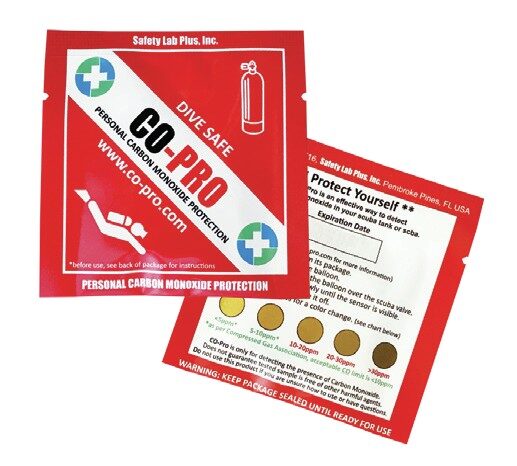
The CO-PRO is available from various suppliers, and you can contact the manufacturer, Safety Lab Plus, Inc., directly. This tool provides a straightforward way to prevent intoxication or check whether breathing gas has been contaminated.
CO Analyser
A CO analyser is a compact, portable, and relatively inexpensive real-time detector with multiple applications. It enables you to check suspicious cylinders as well as monitor CO levels in your liveaboard cabin (or other trip accommodations) and even at home. It’s useful anywhere you might be concerned about fire or elevated CO levels.
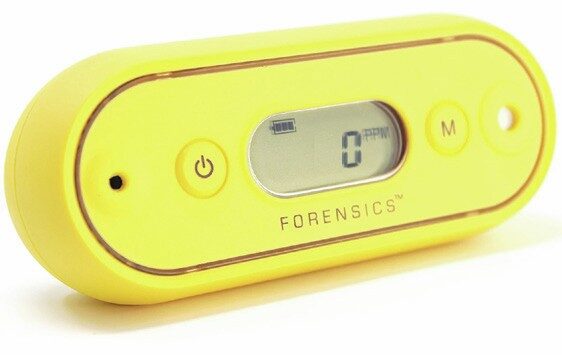
An analyser appropriate for diving applications should be equipped with level alarms and provide precise readings in parts per million (ppm). It should allow you to verify that your scuba cylinder has less than 10 ppm (USA CGA limit) or 5 ppm (European EN limit) or that there is no engine exhaust or combustion product making its way into your environment. One such device, the FD-103-CO analyser from Forensic Detectors, offers a product for the prudent but budget-conscious traveller. The analyser is available from the manufacturer.
Please note that DAN does not endorse specific products. DAN’s intention is to provide guidance about effective CO detection devices for divers concerned about their safety.
For an extensive range of diving health and safety information and downloadable resources, research studies, incident summaries, and free e-Learning courses, take the time to explore the DAN website.
Frequently Asked Questions
Why is carbon monoxide so dangerous for divers?
CO binds to haemoglobin far more readily than oxygen, preventing oxygen transport in the blood. As pressure increases underwater, CO’s toxic effects intensify rapidly.
How can carbon monoxide enter scuba cylinders?
It can come from engine exhaust, fires, or poorly maintained compressors. Even small leaks in intake systems can draw in contaminated air.
How can divers detect CO contamination in their tanks?
Divers can use disposable single-use detectors like the CO-PRO or portable CO analysers, which measure parts per million and provide real-time warnings.
What is the safe limit of carbon monoxide in scuba cylinders?
U.S. standards allow up to 10 ppm, while European standards are stricter at 5 ppm. Ideally, your tank should read 0 ppm.
Are CO analysers worth the investment for recreational divers?
Yes. Portable CO analysers are affordable and offer peace of mind. They can detect contamination in scuba cylinders, cabins, or enclosed spaces.
This article was originally published in Scuba Diver Magazine
Subscribe today with promo code DIVE1 — enjoy 12 months for just £1!
