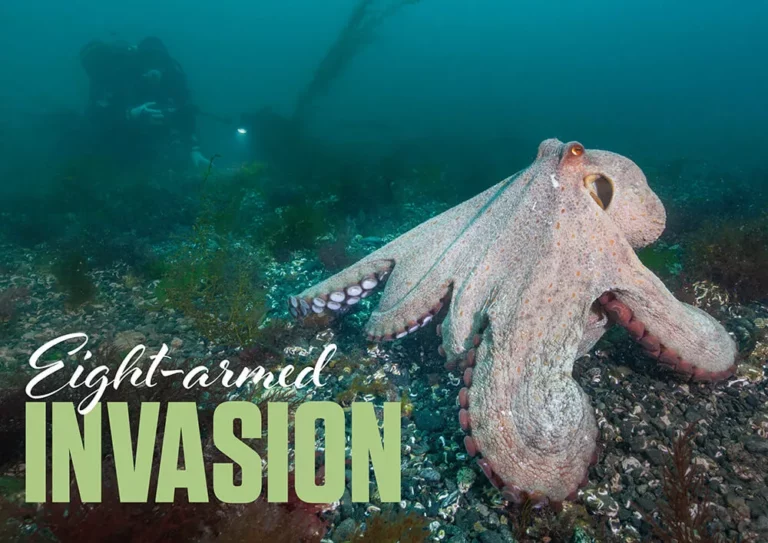
The Cornwall octopus bloom has drawn Lewis Jefferies to the south coast to witness the unprecedented numbers of cephalopods appearing in what experts are calling a historic marine event.
This dramatic surge in the octopus population has provided divers and scientists a rare opportunity to witness one of nature’s most-remarkable underwater spectacles -as well as transforming local fishing operations.
A Historic Perspective on UK Octopus Plagues
Population blooms of octopus in England are rare, but not unheard of. The Marine Biological Association has reported on several major octopus ‘plagues’ along the South Coast of England from Land’s End to Sussex – first in 1899, and most recently in the summer of 1948. The current episode represents the first such event in over 70 years, making it a generation-defining occurrence for Cornwall’s marine environment.
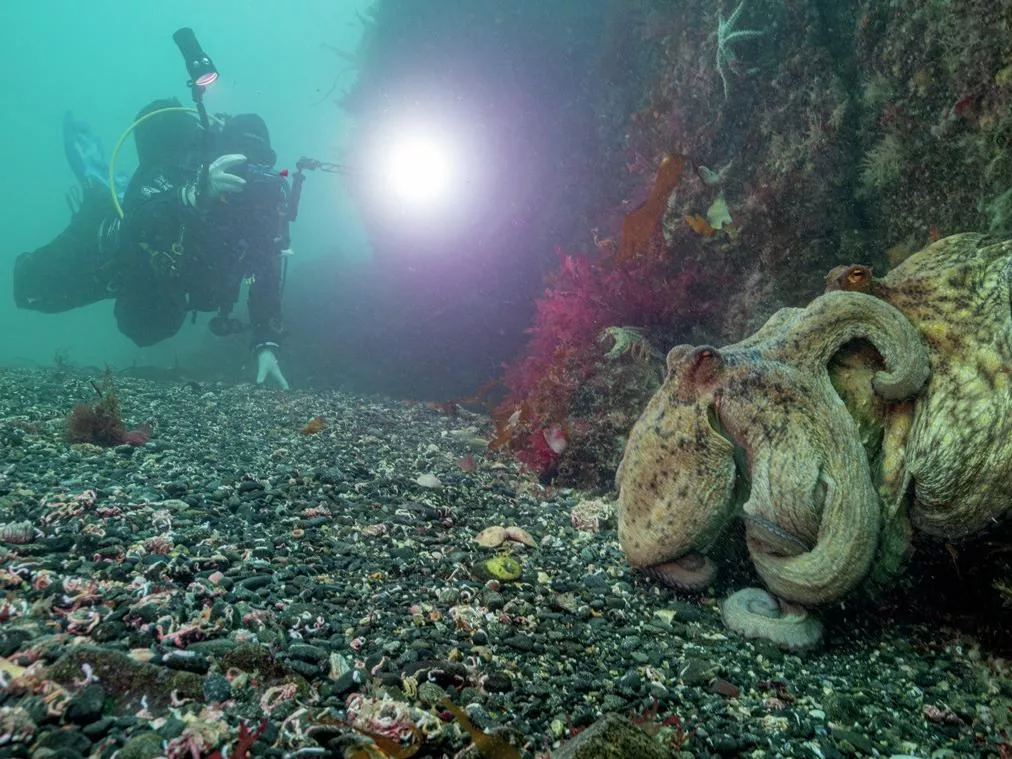
The scale of this phenomenon is remarkable. Local divers and snorkellers have reported many sightings of them, particularly around the Lizard Peninsula. However, the unusually high numbers have extended beyond Cornwall’s borders, with similar reports emerging from Devon and even the Isle of Wight in Dorset.
Warming Oceans and the Cornwall Octopus Bloom
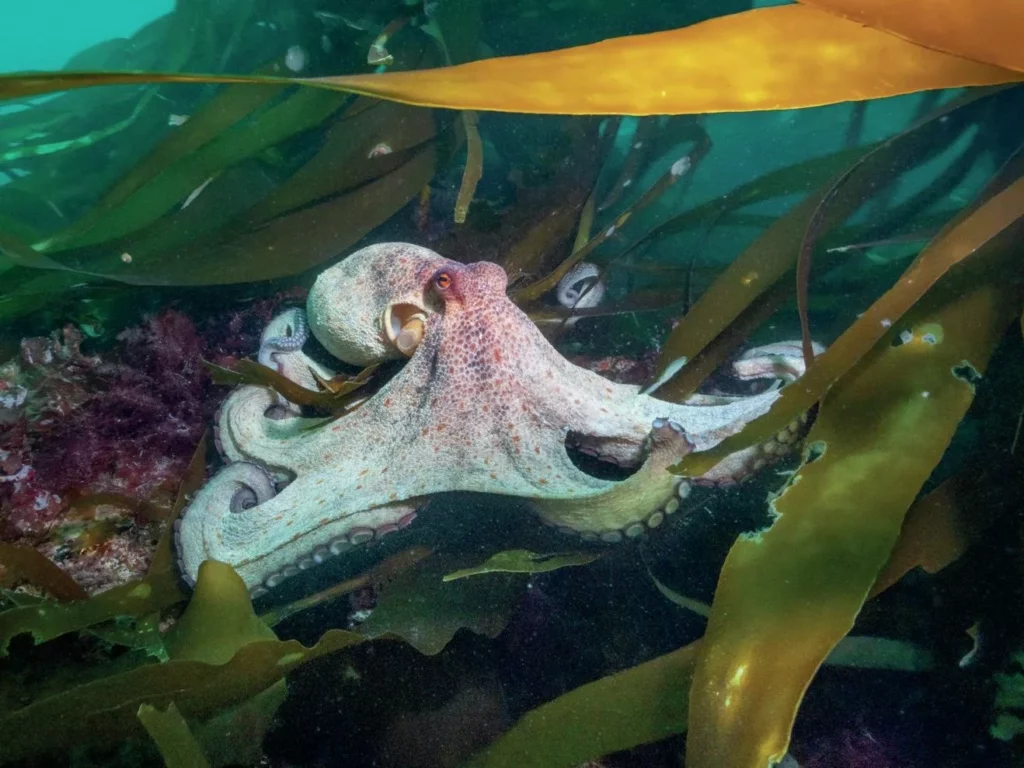
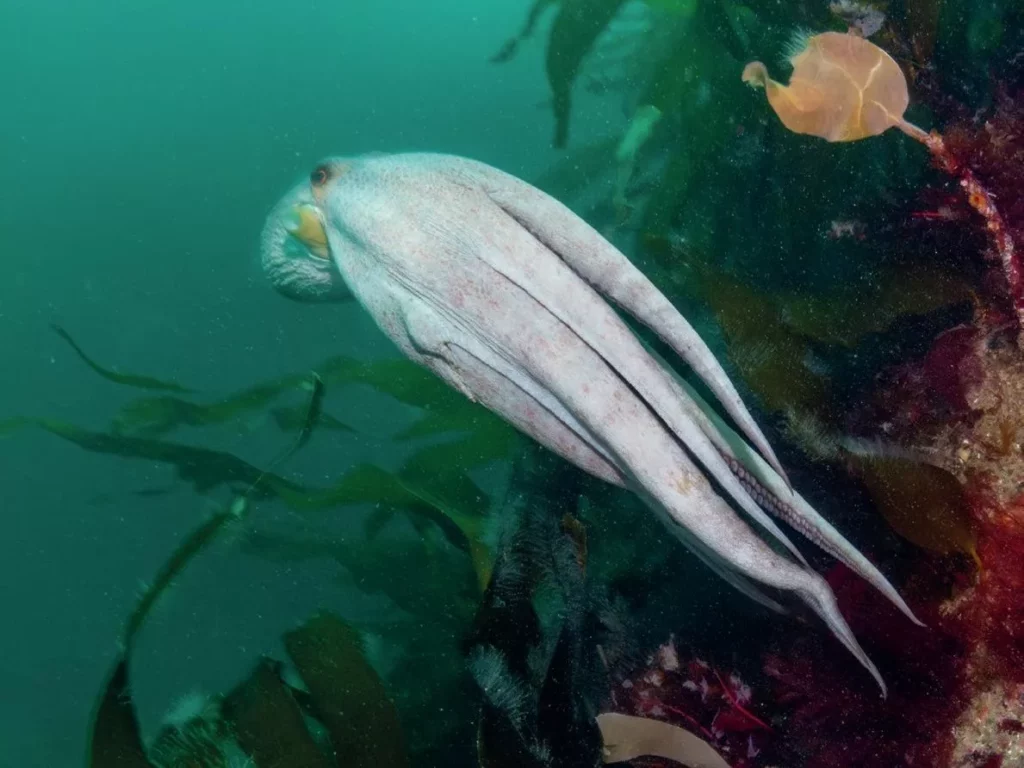
The species at the heart of this bloom is the common octopus (Octopus vulgaris), also known as the Mediterranean octopus. These impressive cephalopods -which can reach lengths of over a metre – are typically more numerous in the warmer waters of southern Europe but are a much rarer sight in the UK. Researchers believe a likely explanation behind this remarkable bloom appears to be significantly warming ocean temperatures.
Related Content: For a deeper look into the environmental shifts that set the stage for this event, read our comprehensive analysis on why 2025 was the UK year of the blooming octopus.
Since March, the waters off Devon and Cornwall in the UK have warmed by up to 4 degrees Celsius above average, which could be drawing the octopus into British waters. This temperature increase represents one of the most-significant deviations from normal conditions recorded in the region.
Dan Barrios Oneill, Head of Marine Conservation at Cornwall Wildlife Trust says: “These exceptionally warmer waters could be an explanatory factor behind the growth and survival rate of the previous years’ juveniles by providing an abundance of their planktonic food. The availability of food in the early stages of these animals’ lives is incredibly important as this species grows very fast.” “Marine biologists are closely monitoring the situation to understand both the immediate ecological impacts and the long-term implications for Cornwall’s marine biodiversity and fishing industry”
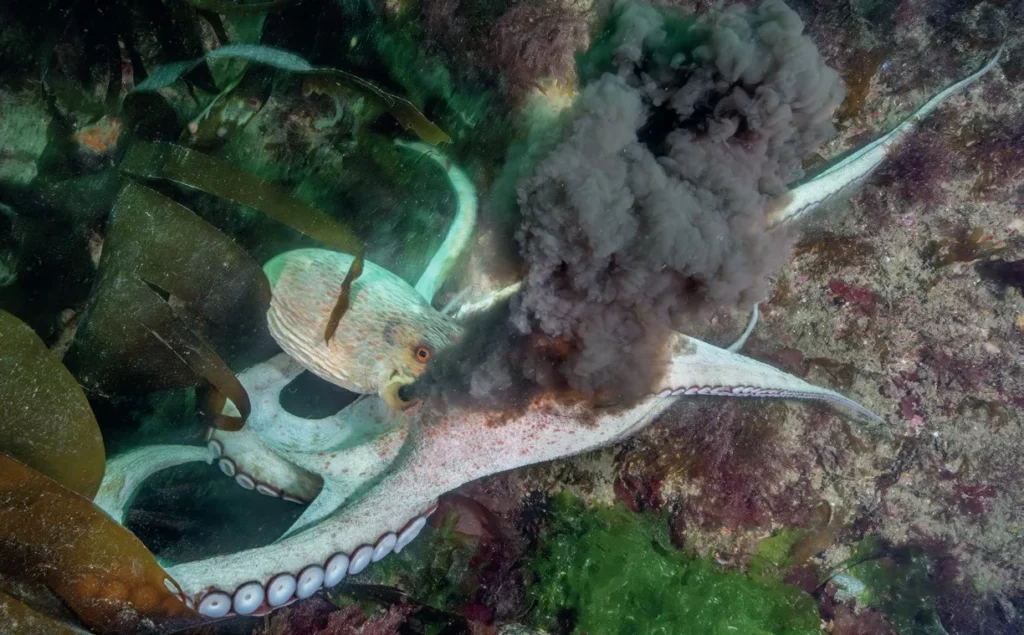
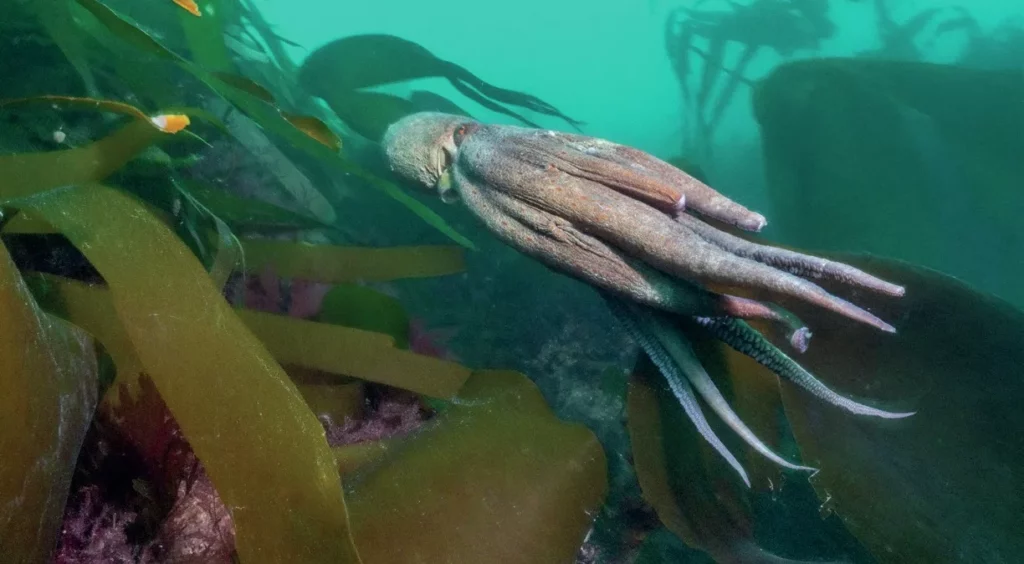
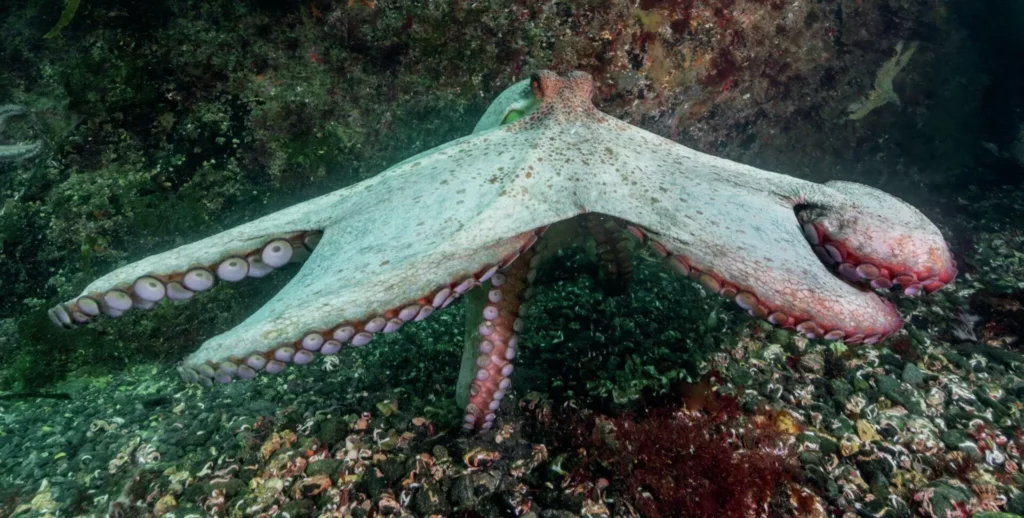
The Mediterranean octopus can lay between 100,000 and 500,000 eggs at a time, which explains how favourable conditions can lead to such dramatic population explosions in relatively short periods.
Did You Know?
Octopuses have eight arms attached to their head, each with a double row of suckers. The common octopus’ favourite food is crab – in fact, a pile of empty crab shells is normally a sign that a well-fed octopus is somewhere nearby!
Impact on the Cornish Fishing Community: Crabs, Lobsters, and Record Hauls
The octopus bloom has created both challenges and opportunities for Cornwall’s fishing community. Some traditional shellfish fishers faced huge frustration as their usual catches disappeared, first noticing the effects of increased octopus numbers in Spring when they were hauling up pots full of empty shells – with some still containing the eight-armed culprits themselves.
Jonny Pascoe, a third-generation fisherman from Mullion Cove on the Lizard Peninsula says: “It’s the most octopus I’ve ever seen in my 15-year career and my catch has definitely dropped as a result. I’ve noticed the octopus have eaten the smaller undersized crabs and lobster by the empty shells I’m pulling up, as well as more that have lost claws. I expect the bloom will fade off, but it could take a long time for our shellfish stocks to recover from such a large influx of predators on the seabed.”
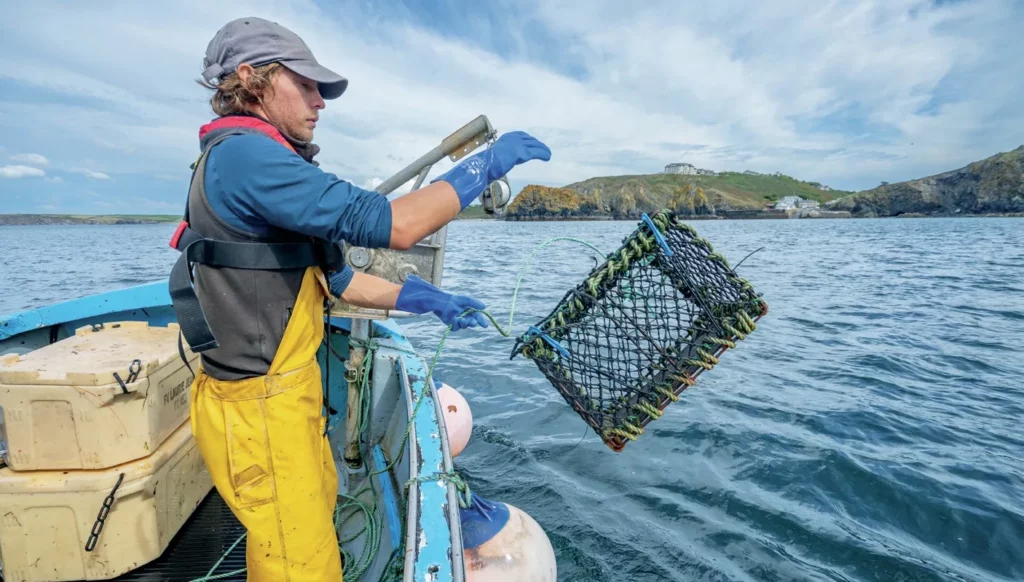
Dan Barrios Oneill adds: “Octopus are highly intelligent, voracious predators that have a rapid growth rate in a relatively short life span, so their demand for energy is very high. Brown or edible crab and lobster make up a large part of their diet – both species targeted by fishers – so they exert a significant top-down pressure on commercially valuable species.”
Despite some negative economic impacts, the bloom has been positive for some with larger commercial vessels cashing in. For example, a Newlyn trawler smashed records with a haul of more than 20 tonnes of octopus worth over £158,000! This single landing demonstrates the significant commercial value these unexpected visitors have brought to Cornwall’s ports.
However, fishing for octopus raises several significant ethical considerations that demand careful examination. Octopuses are among the most-intelligent invertebrates, demonstrating remarkable problem-solving abilities, tool use, and complex behaviours that all suggest capacity for suffering and acute awareness. Such cognitive sophistication challenges traditional approaches to marine harvesting and raises questions about whether these creatures deserve moral consideration afforded to other intelligent animals.
Ethical Harvesting and Cephalopod Intelligence
From a sustainability perspective, octopus populations can be vulnerable to overfishing due to their relatively short lifespan and specific reproductive cycles, making responsible catch limits and harvesting methods crucial for their long-term species preservation. The economic importance of octopus fishing in lieu of reduced shellfish stocks certainly adds a layer of complexity, as any restrictions on harvesting practices must balance animal welfare and environmental concerns with the livelihoods of fishing communities that have relied on crustacean harvesting for decades.
Rewiring the Marine Food Web: Dolphins and Seals Rejoice
Despite the potentially negative impact on local shellfish populations, marine predators are reaping the benefits of the bloom. Risso’s dolphin, that feed on octopus, have arrived in large numbers this summer. This cascade effect demonstrates how the octopus bloom is reshaping the entire marine food web along the South Coast of England, attracting predators that more rarely venture into British waters in larger numbers. Grey seals have also been residing at octopus hotspots to feed – decapitated octopus have been spotted by local divers – a clear tell-tale sign of seal predation. Dan Barrios Oniell adds: “The octopus are providing a significant resource for these larger marine mammals, and these animals may have a useful natural effect on modulating the unusually high numbers of octopus.”
While the current bloom is exceptional in its scale and timing, it’s important to understand the event within the broader context of marine population cycles. Octopuses are short-lived animals that typically have boom and bust cycles, though rarely on this scale or in these northern waters.
The octopus bloom is a vivid illustration of how rapidly marine ecosystems can shift in response to changing environmental conditions and the event has provided researchers with an exceptional opportunity to study cephalopod behaviour and population dynamics in British waters. Marine biologists are closely monitoring the situation to understand both the immediate ecological impacts and the long-term implications for Cornwall’s marine biodiversity and fishing industry.
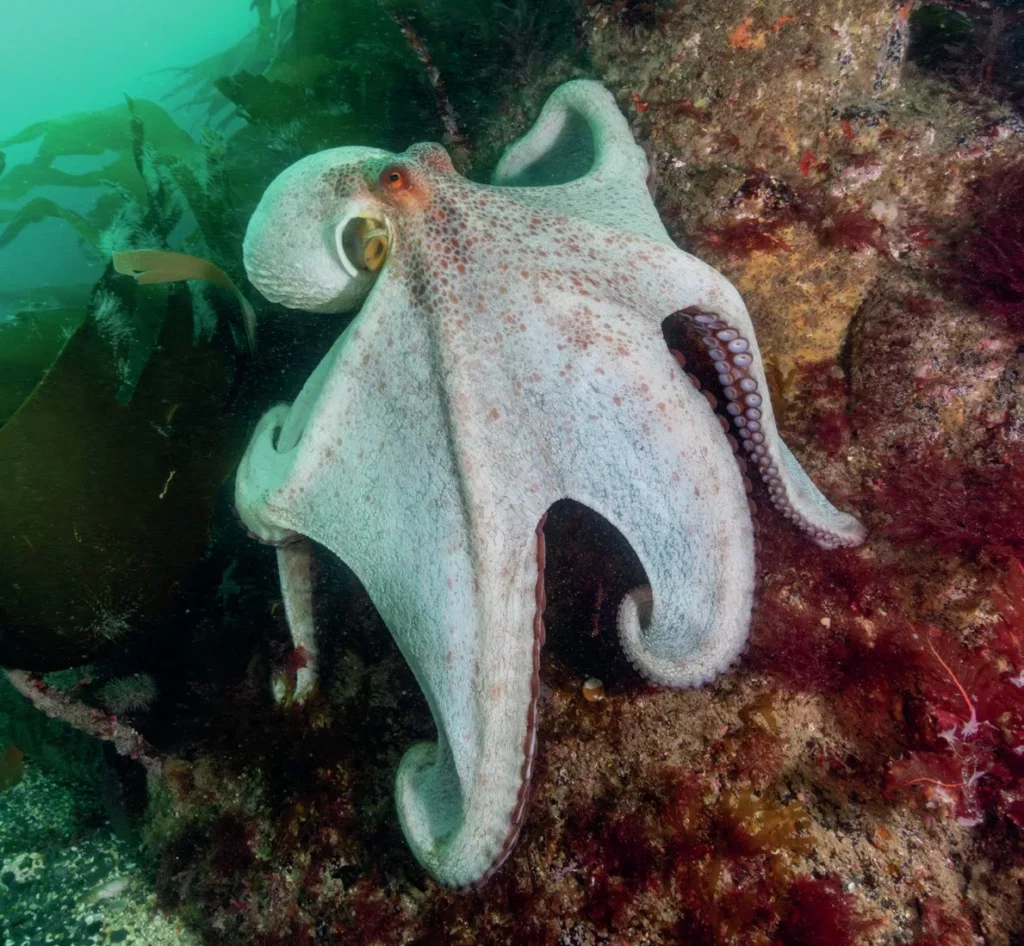
“Octopuses are among the most-intelligent invertebrates, demonstrating remarkable problem-solving abilities, tool use, and complex behaviours that all suggest capacity for suffering and acute awareness”
FAQs
What is causing the Cornwall octopus bloom?
Marine researchers believe the primary driver behind the Cornwall octopus bloom is significantly warming ocean temperatures. Waters off Devon and Cornwall have warmed up to 4°C above average, boosting the growth and survival rates of juvenile octopuses by providing an abundance of planktonic food.
Which octopus species is swarming the UK South Coast?
Has an octopus plague occurred in England before?
Yes, but they are exceptionally rare. The Marine Biological Association recorded major octopus plagues along the South Coast in 1899 and most recently in 1948. The 2026 event is the first major bloom in over 70 years.
How is the octopus influx impacting Cornish fishermen?
It has created both challenges and opportunities. Traditional shellfish fishers are finding pots emptied by these voracious predators, causing crab and lobster catches to drop. Conversely, some large commercial trawlers have landed record-breaking hauls of octopus worth over £158,000.
What predators are benefiting from the high number of octopuses?
Larger marine mammals are reaping the rewards. Risso’s dolphins have arrived along the South Coast in large numbers, and grey seals are actively residing at octopus hotspots to feed on the abundant food resource.
This article was originally published in Scuba Diver Magazine
Subscribe today with promo code DIVE1 — enjoy 12 months for just £1!
