It’s happening people. As James Lovelock -doyenne of Gaia theory -noted when asked about warmer temperatures and chaotic global weather cycles. ‘This is how it happens, it’s just happening a bit quicker than we thought it would’.
Rising Sea Temperatures and Climate Change
I’m talking, of course, about climate change. One of the protocols of the Big Blue Bag – the citizen science programme we’re rolling out at present – is water temperature. For this, we’re asking folks to go out and simply take the sea surface temperature (SST) along their local stretch of coastline. This, by the way, is the oldest measure of climate change that we have that has been taken by instruments. It was 150 years ago that clippers and schooners travelled the world under billowing sails, and lowered a bucket into the sea to take the temperature using the first basic thermometers. So we have a nice, continuous record from back in the day.
Impacts on UK Marine Life
The results we’re already getting from around the UK are positively tepid, damn near tropical. In 2025, the hottest May on record was followed by the hottest June, and now we find British coastal water at 18, 19, and 20 degrees C. This has a seismic impact on marine life, indeed down here on the South Coast we’re experiencing an explosion in octopus populations, which are plundering the creels and pots of local fishermen. It’s so remarkable that we’ve even created a TV pitch about it, called ‘The Shape Shifting Shellfish Stealers’ – I only mention that as I’m so proud of the title.

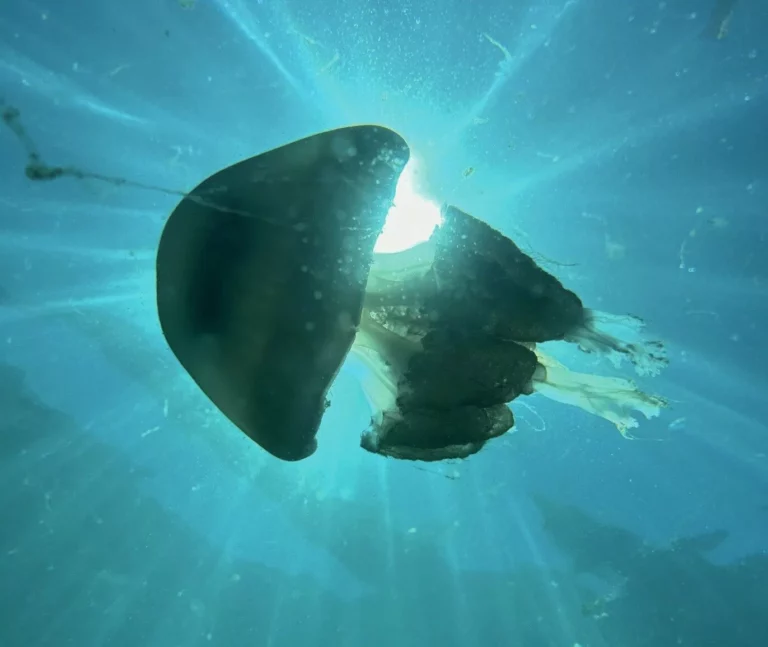
As I type these words there are vast swarms of jellyfish along the coast of the South Hams – indeed, sailing Sobek into the mouth of the River Dart the other day, the only thing I could liken it to was Jellyfish Lake in Palau, a great, pulsing soup that was split by the bow as we made our progress up the estuary. But it has provided a bonanza for some as yesterday a leatherback turtle was spotted feeding in Start Bay.
Why Citizen Science Matters
So, what can we do? Well, right now I sincerely believe that data is our friend. If we can monitor these changes, become constant and diligent researchers, note that the trends are indeed a real thing and heading inexorably in one direction, then that arms us for the work to come. I’ve always thought that divers are on the front line of this type of work, and so the Big Blue Bag – and countless other great initiatives – allow us to gather that data.
In summary (Summery?) it’s not enough for us nowadays to treat the sea as our playground, for the interactions to be one way. There’s a charter here, as marine advocates, as key witnesses to the changes that are taking place, that we record them for posterity and to equip scientific and political arguments in the months and years ahead.
A slightly more downbeat column this month I’ll admit, but it’s important stuff this. It’s time to mobilise on a mass scale to create hubs for data and debate, and for us to add critical value to every dive we do.
Frequently Asked Questions
How is climate change affecting sea temperatures?
Climate change is causing sustained increases in sea surface temperatures, with record-high readings now common in UK coastal waters.
Why is sea surface temperature important?
Sea surface temperature is one of the oldest and most reliable indicators of long-term climate change trends.
What impact does warmer water have on marine life?
Rising temperatures can cause population explosions, species migration, jellyfish blooms, and disruptions to established ecosystems.
How are divers involved in climate-change monitoring?
Divers can collect valuable citizen-science data, such as water temperatures, helping researchers track environmental changes.
This article was originally published in Scuba Diver Magazine
Subscribe today with promo code DIVE1 — enjoy 12 months for just £1!
