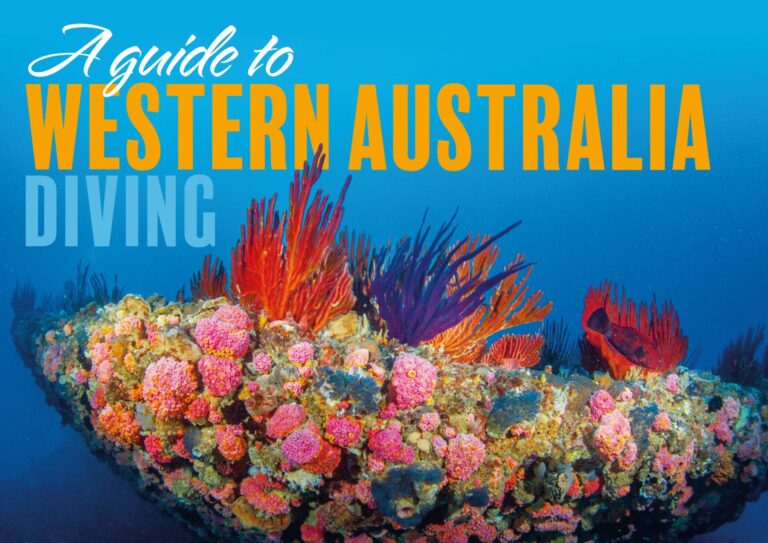
This month we bring you the final instalment of our state-by-state guide to diving the magnificent and diverse waters of Australia, with Emma Burdett providing a closer look at what Western Australia has to offer. Australia boasts stunning reefs, kelp forests, a vast array of wrecks, humpback whale migrations, whaleshark aggregations, great white encounters, sea lions, weedy and leafy sea dragons, macro dives galore, a staggering number of endemic species and much, much more. Australia has it all.
Photographs by Emma Burdett, Emmersion Underwater, Aneta Rybak Ward, Yves Dehouck, Larischa Savy, Tourism Western Australia, Richard Baxter and Andrew Halsall
Western Australia is a diver’s dream destination, offering a plethora of breathtaking dive sites that cater to all levels of experience. From the vibrant coral reefs of the northwest region to the intriguing wrecks in the southwest region, the WA coastline is huge (a whopping 10,194km), as is the variety of diving.
When considering a diving expedition in Western Australia, it is crucial to take into careful consideration the prevailing weather conditions and the specific time of year. Factors such as visibility underwater, wind patterns, and opportunities for encountering marine life can exhibit notable variations.
To guarantee a seamless and delightful experience, it is highly advisable to proactively reach out to local dive operators well in advance of your trip.
One of the most remarkable aspects of diving in Western Australia is the vibrant and dynamic diving community. This community is highly engaged and actively involved in the exploration of underwater wonders.
To provide a glimpse into this thriving community, a collection of wonderful photos from various members is featured alongside this article.
Now, let’s embark on a captivating journey as we explore some of the diverse dive destinations Western Australia has to offer, each holding its own unique and remarkable treasures for avid divers.
DIVING IN THE FAR NORTH -KIMBERLY AND PILBARA REGIONS
When travelling to the far north, you’ll find some of the mosttropical waters in WA. With tropical water comes cyclones too, therefore you’ll want to avoid diving during December to February in these regions. However, during the peak season, it’s a great time to visit the likes of the Montebello or Mackerel Islands.
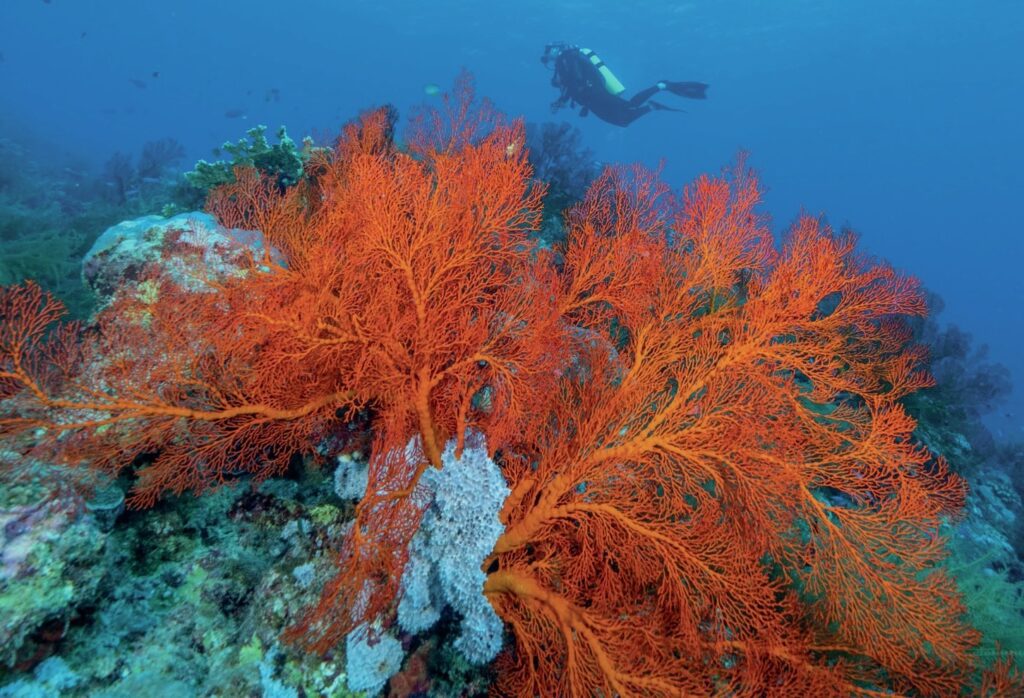
Rowley Shoals. A little further afield, in the Kimberly Region, is the Rowley Shoals! For those seeking an off-thebeaten-path adventure, the Rowley Shoals Marine Park is a remote and untouched marine paradise.
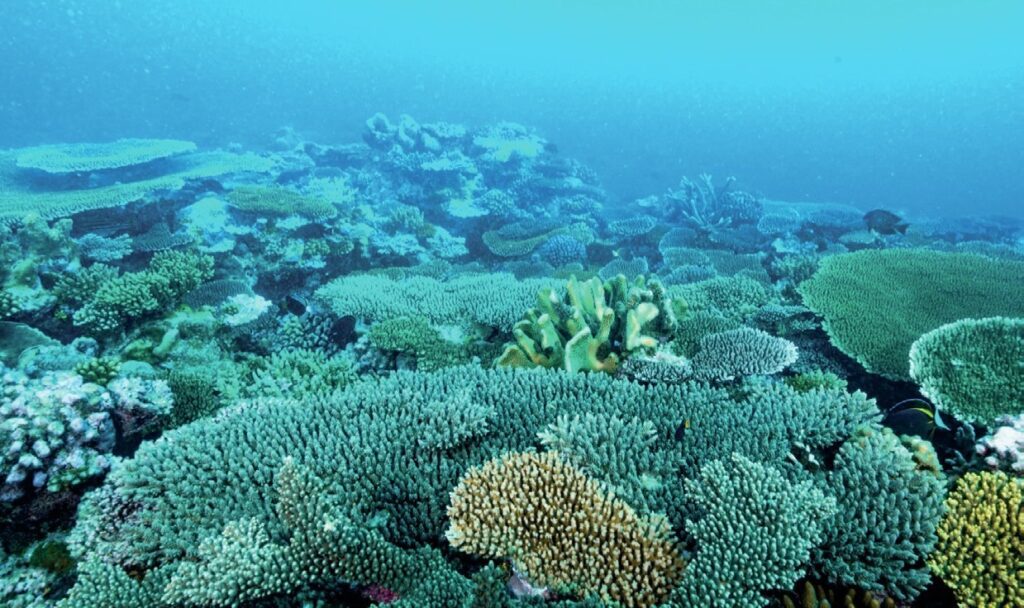
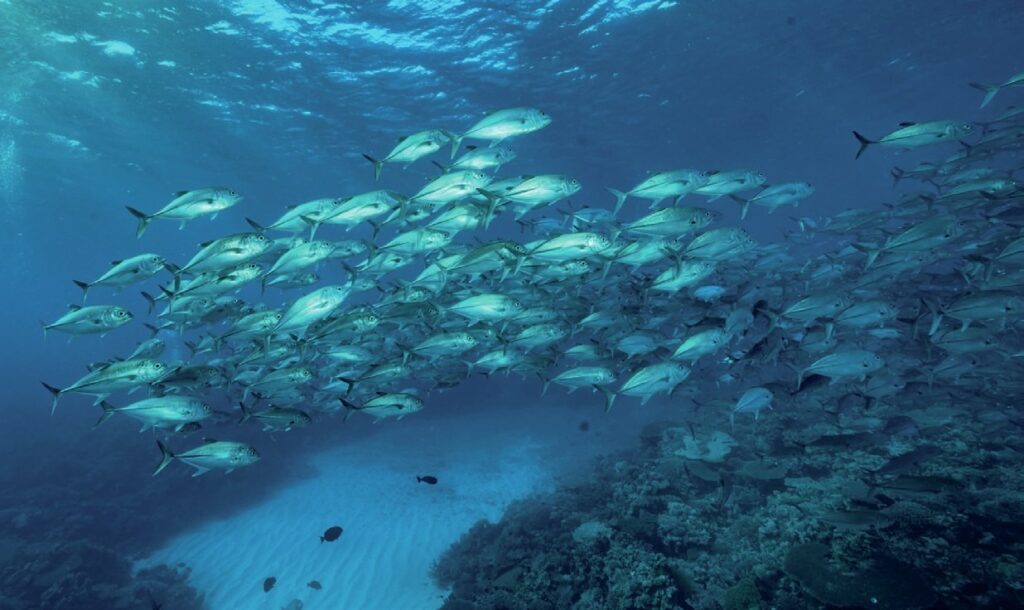
This group of three coral atolls offers exceptional visibility, stunning coral formations, huge gorgonian fans, encounters with reef sharks, giant clams, and an impressive variety of fish species.
To reach this remote gem, you’ll embark on an approximately 20-hour boat journey from Broome. However, it’s precisely this sense of remoteness that adds to the allure and exclusivity of the experience.
After crossing deep seas, the moment you cruise through the channel and enter the calm and crystal-clear waters of the Rowley Shoals, you’ll be greeted by a surreal and unforgettable scene.
Keep in mind that planning ahead is essential, as there is a limited number of boats and trips available to the Rowley Shoals. Additionally, the season to explore this remarkable destination is relatively short, spanning from September to November each year. So, make sure to secure your spot and mark your calendar for this extraordinary adventure.
DIVING IN THE NORTH -GASCOYNE REGION
Diving in the Gascoyne Region of Western Australia has some of the most-vibrant coral reefs and marine life galore! Although water temperatures in summer hover around 25-28°C, the temperature can drop to 22°C in winter which is also when you can expect better visibility and sea conditions.
Plan your travels to this area in between April to July if you’re looking to dive into a world of underwater wonders and excitement. You’ll come face to face with an incredible cast of characters, from colourful tropical fish to the big shots like whalesharks and manta rays.
No matter if you’re a newbie or a seasoned pro, the northwest region has something for everyone. It’s a diver’s paradise that guarantees an unforgettable experience. So gear up, make a splash, and get ready for an adventure like no other.
THE HIGHLIGHTS
Coral Bay. Located approximately 1,200km north of Perth, Coral Bay stands as a prominent gateway to the magnificent Ningaloo Reef, offering a true paradise for snorkellers, freedivers, and scuba divers.
Renowned for its pristine, crystal-clear waters, vibrant coral gardens, and rich profusion of marine life, Coral Bay epitomises an underwater sanctuary. Visitors to this coastal gem can expect extraordinary encounters with majestic manta rays, graceful sea turtles, and a myriad of tropical fish species.
While organised tours may not always guarantee sightings, the area is also home to tiger sharks, whalesharks, dugongs, and leopard sharks, which can be occasionally spotted.
What makes this charming seaside town even more remarkable is its accessibility. Merely strolling down the road from your accommodation allows you to effortlessly enter the water straight from the beach, immersing yourself in the breathtaking coral world that awaits.
Muiron Islands. When the name Exmouth comes to mind, the first association is often the renowned Ningaloo Reef.
However, in close proximity lies the Muiron Islands, which provide a contrasting and unique coral experience and offer a distinct diving encounter characterised by deeper depths (some dive sites reaching 40m) and a longer boat journey.
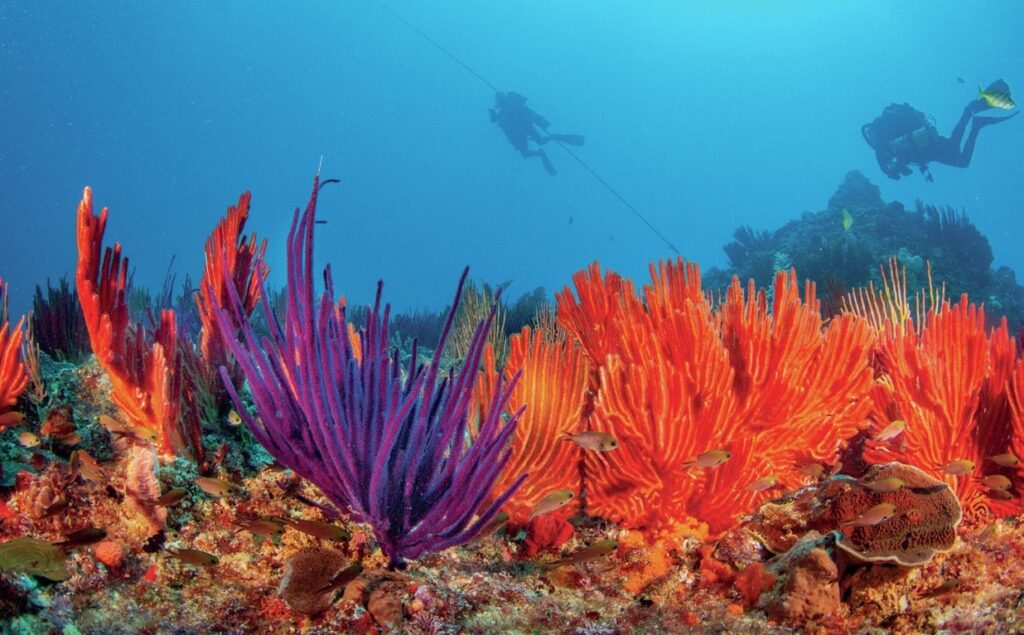
These islands boast a remote location that grants seclusion and an opportunity to explore unspoiled coral reefs teeming with marine life. Expect to encounter an abundance of soft corals, magnificent gorgonian fans, vibrant nudibranchs, and the occasional presence of turtles or manta rays.
Additionally, many dive sites in the area feature captivating swim-throughs, filled with schools of glass fish and cod, enhancing the allure of these underwater domains.
Exmouth Navy Pier. This might be one of the mostincredible shore dives you’ll ever do! Just a short drive from Exmouth town is the Exmouth Navy Pier – afully operational military facility that has been closed to public access for over 50 years.
The absence of fishing and human visitors for so long has resulted in an incredible aggregation of sealife under the pier, leaving you in awe of the sheer abundance and diversity. Often described as ‘Mother Nature’s Aquarium, ‘the Exmouth Navy Pier promises captivating encounters at every turn.
As you explore the depths, you can expect to witness the grey nurse sharks, giant turtles, huge cod, schooling pelagics, nudibranchs, wobbegong sharks, massive shovel rays, sleeping reef sharks, schools of barracuda and trevallies, and possibly even a leafy sea dragon.
It is essential to book your dive in advance, as access to the Exmouth Navy Pier is highly dependent on tidal conditions
Ningaloo Reef. Diving the Ningaloo Reef promises a remarkable underwater adventure like no other. Stretching for 300km, this fringing reef is one of the world’s longest, boasting its unique formation on the western side of a continent.
What sets Ningaloo apart is its close proximity to the coast, allowing for unforgettable snorkelling experiences mere metres from the shore. Imagine swimming alongside graceful turtles and mesmerising reef sharks only 20 metres off the shore!

Did you know?
What makes the Ningaloo Reef unique is its close proximity from the coast, often only 5-10 metres offshore. The reefs contain an almost endless list of spectacular snorkel and dive sites for you to explore with extraordinary marine life encounters guaranteed!
The reef is buzzing with life and is home to over 500 different species of tropical fish, including giant potato cod, sweetlips, spangled emperor, and lionfish. Notably, the Ningaloo Reef is known as the whaleshark capital of Australia and a great place to swim with them from late-March to late-July.

You could also swim with humpback whales here, from June to October each year. Then, let’s not forget the manta rays that live on this reef too! These awe-inspiring encounters add an extra layer of wonder and excitement to your diving experience in this extraordinary marine paradise.

When it comes to exploring the wonders of the Ningaloo Reef, diving operators in Coral Bay and Exmouth are your go-to guides for underwater adventures. One popular scuba diving site is Lighthouse Bay, nestled within the breathtaking Ningaloo Marine Park.

Here, you’ll discover a fascinating blend of vibrant coral formations and an abundance of marine life. But that’s not all – you have the chance to encounter some of the ocean’s larger inhabitants. Keep your eyes peeled for awe-inspiring encounters with majestic creatures that call these waters home.

Dive sites like Blizzard Ridge, Labyrinth, and the deeper Dibley offer divers a captivating glimpse into the peculiar and lively marine ecosystem. From unique marine creatures to stunning coral formations, each dive promises an unforgettable experience.
DIVING IN THE MIDWEST REGION
Alright, let’s talk about diving in the midwest region of Western Australia, and get ready for some serious fun in the underwater playground of this region!
Prepare yourself to swim alongside graceful stingrays and curious reef sharks. You might even stumble upon a lazy sea turtle or two, just casually going about their business. And don’t be surprised if you find yourself surrounded by schools of playful fish, putting on a show just for you.
Moreover, keep an eye out for friendly sea lions that might pop up to say hello during your dive. These playful creatures are like the class clowns of the ocean, always ready to make you smile.
One of the coolest things about diving in the midwest is the sense of adventure. You’ll have the chance to explore less-travelled dive sites and be one of the few lucky ones to witness the untouched beauty of this underwater wonderland.
THE HIGHLIGHTS
Abrohlos Islands. Approximately 60km off the Geraldton coast is the Houtman Abrolhos Islands, an archipelago made of 122 islands with pristine crystal blue waters and an abundance of sea life.
While the islands are famous for their tragic Batavia story, they offer much more than just a historical narrative. The Houtman Abrolhos Islands are renowned for cray fishing, pearls, and an impressive variety of bird species.
However, it’s the diving opportunities that truly capture the imagination of adventurers. Positioned in the path of the Leeuwin Current, which carries warm tropical waters from north to south, the marine environment surrounding the islands is a captivating blend of tropical and temperate marine life.
Massive coral gardens support an enormous array of fish life, including baldchin groper, coral trout, Western Australian dhufish, pink snapper, Sampson fish and yellowtail kingfish.
The underwater realm of the Houtman Abrolhos Islands also plays host to lobster, turtles, manta rays, seals, whales, sharks, and vast schools of bait fish, elevating it to the status of a world-class diving mecca.
Jurien Bay. Just a three-hour drive north of Perth lies the delightful town of Jurien Bay, a popular spot for holidaymakers looking to indulge in some dive time. The Jurien Bay Marine Park stretches out about 5.5km offshore and holds a special treat for all underwater enthusiasts.
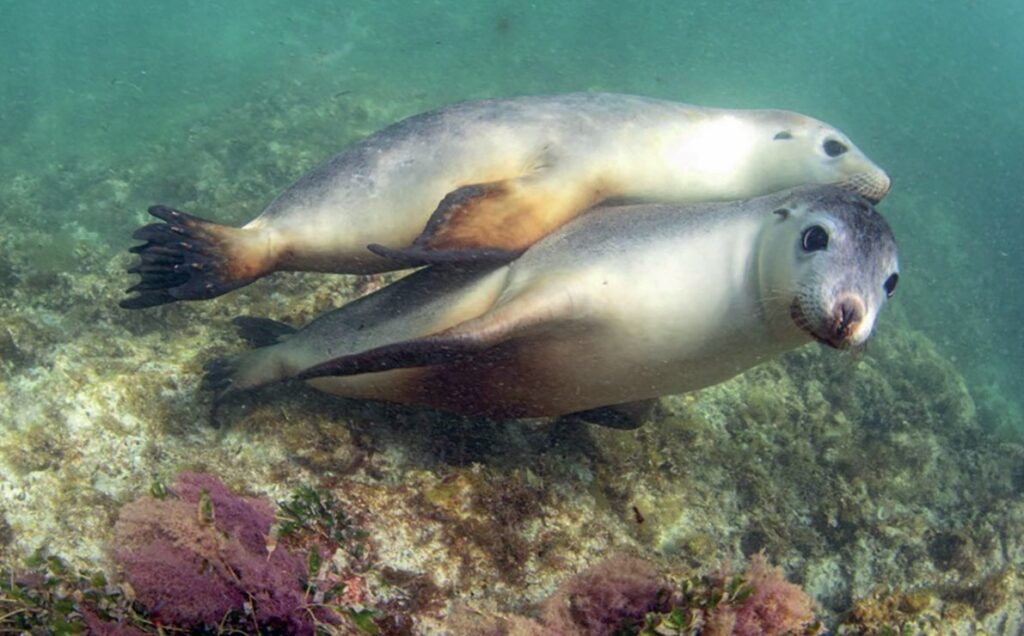
It’s the only breeding area for Australian sea lions on the entire west coast of Australia. These adorable sea lions are seriously rare and they’re like playful puppies in the water!
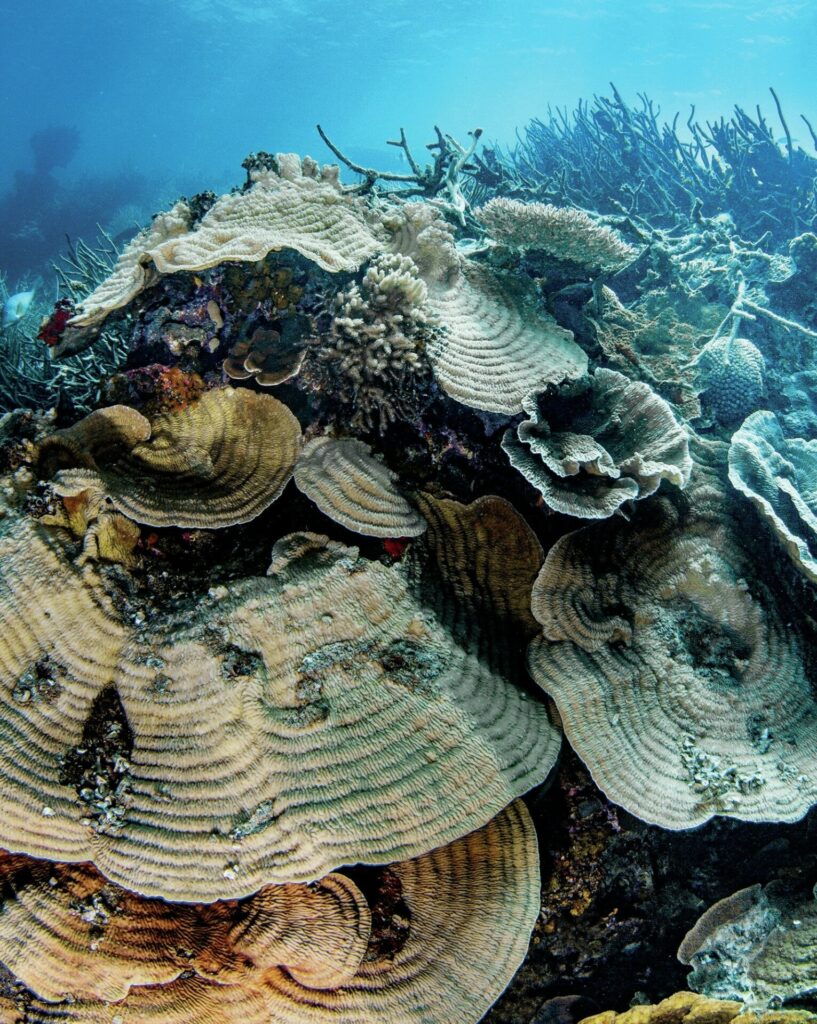
But that’s not all! Jurien Bay is also home to a long limestone reef that runs parallel to the shore. It’s a dream for divers and snorkellers! Dive right in and immerse yourself in a vibrant ecosystem bursting with colourful sponges, schools of fish, rocky reefs, and lush seagrass meadows.
Key Biscayne Oil Rig Wreck. A wreck with a difference! Let us introduce you to the Key Biscayne, a 2,695-ton jackup oil rig that met an unfortunate fate while being towed to Fremantle from the Arafura Sea back in 1983.
But here’s the twist – instead of being a forgotten relic, it has transformed into a thriving artificial reef!
Now resting on the sandy seabed at a depth of 42m, the Key Biscayne offers an exciting adventure for more advanced divers.
The exposed seas and deeper location add an extra thrill to the dive. As you explore the wreck, you’ll be treated to captivating swim-throughs created by the structure resting on the sea floor.
Prepare to be greeted by a spectacle of giant crayfish, as they find refuge in this wreck-turned-reef. Among the coral and fish life on the wreck, keep your eyes peeled for the majestic presence of resident grey nurse sharks, adding a touch of awe and wonder to your underwater encounter.
DIVING IN THE PERTH REGION
Perth is not only known for its sunny beaches and laid-back vibes but also for its fantastic diving opportunities. It’s like having a double dose of fun in one place!
In the Perth region, you’ll find a mix of incredible dive sites that cater to divers of all levels. Whether you’re a seasoned pro or a newbie just dipping your toes into the water, there’s a shore dive here for you.
THE HIGHLIGHTS
Perth Metro shore diving. No matter the time of year, there is always somewhere to dive off the Perth coastline! From Hillarys to Mandurah, there are dozens of dive sites all offering a slightly different experience.
Diving the jetties at local beaches are popular, such as the Ammo Jetty, Kwinana Grain Terminal and Bulk Jetty, that are home to West Australia seahorse, cuttlefish, octopus, Port Jackson sharks and nudibranchs galore.
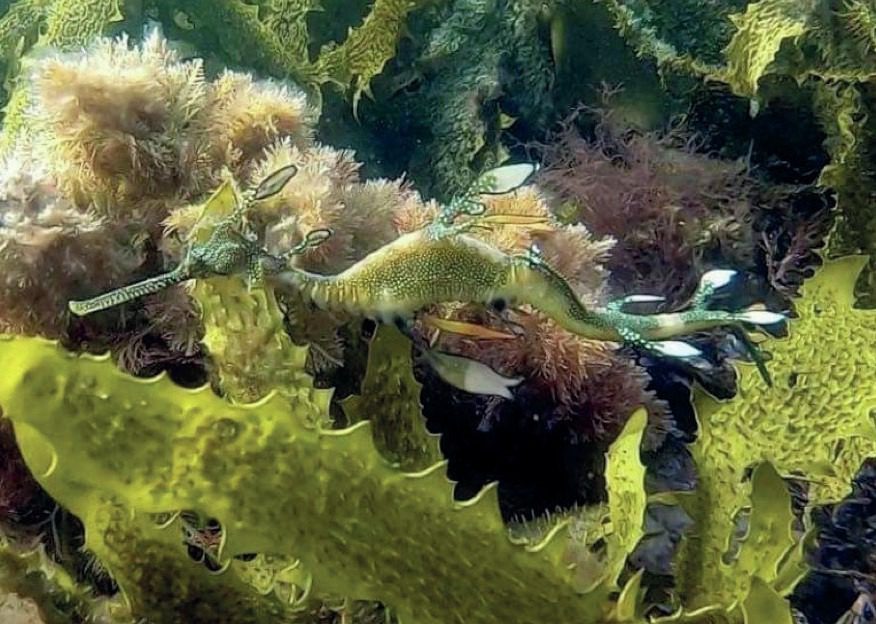
For those who are up for a swim, head over to Point Peron. Here, you’ll be treated to limestone swim-throughs and delightful encounters with weedy sea dragons. It’s a truly magical experience that will leave you in awe of the underwater beauty.
And if the winds are picking up, don’t worry! You can always find sheltered spots in the tranquil waters of the Swan River. No matter which dive site you choose along the Perth coastline, you’re in for an adventure filled with underwater wonders.
Rottnest Island. Less than an hour by boat from Perth, Rottnest Island is a flagship diving destination for WA!
As you explore the crystal-clear waters surrounding the island, be prepared to encounter a rich diversity of marine life. With over 400 different species of fish, including vibrant tropical species swimming alongside you, every dive is a mesmerising underwater spectacle.
Keep an eye out for the graceful presence of green turtles gliding through the depths, and don’t miss the colourful western rock lobster that add a touch of excitement to your underwater exploration.
One of the highlights of diving at Rottnest Island is the opportunity to navigate limestone reef swim-throughs. These unique formations create a magical underwater environment, with stunning light rays beaming down and illuminating the underwater landscape.
You’ll also encounter bustling schools of fish, including the striking western blue devils, as well as the curious giant bull rays and the enigmatic grey nurse sharks.
Marmion Marine Park. Just a short 30-minute drive north of Perth, the Marmion Marine Park beckons divers with its diverse range of dive sites suitable for all skill levels. Located near Hillary’s Boat Harbour, this marine park offers an easily accessible gateway to underwater exploration.
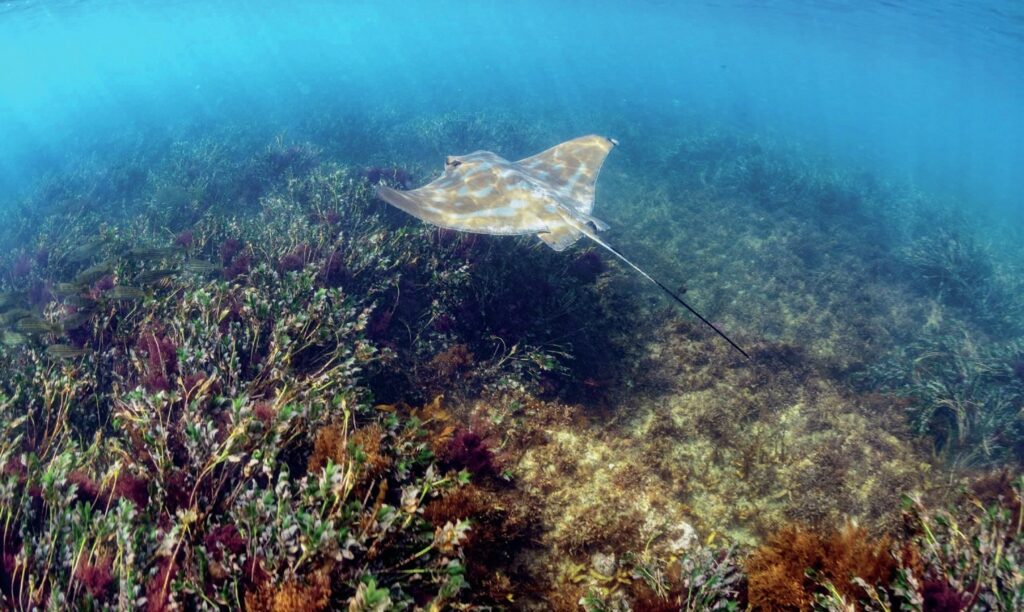
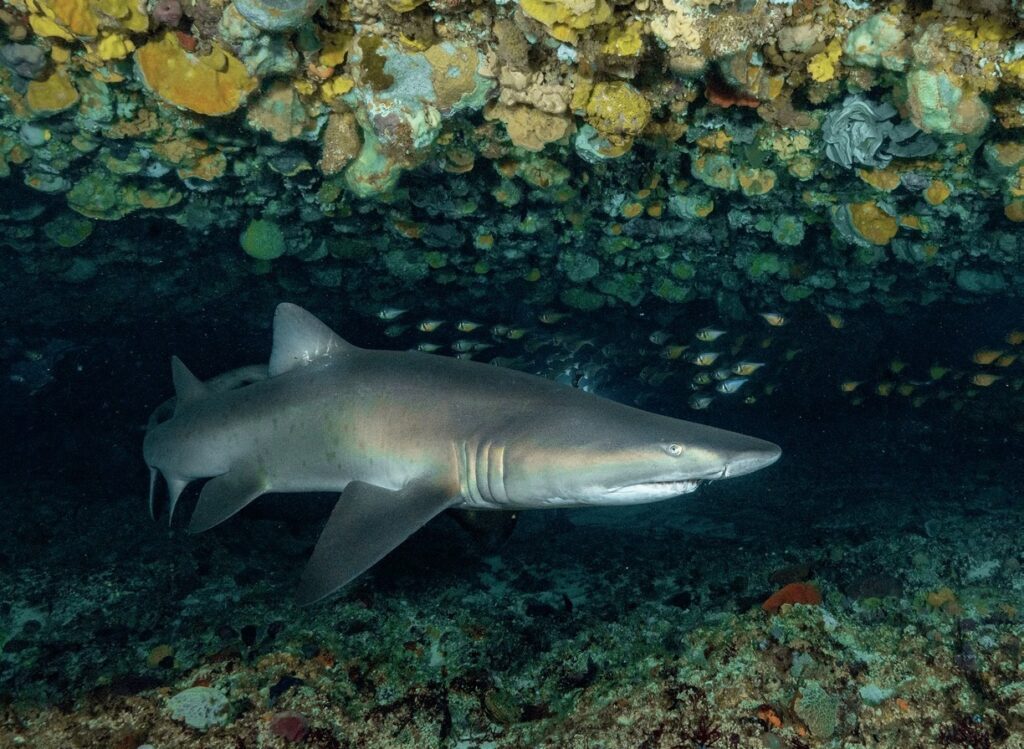

As you dive into the depths of the Marmion Marine Park, you’ll discover a variety of dive sites that cater to both beginners and experienced divers.
While some sites may take you a little deeper, with depths ranging between 30m to 40m, there are also shallower areas perfect for those just starting their underwater adventures.
But here’s an exciting bonus – if you visit during the right time of year, you might even be lucky enough to hear the haunting calls of minke whales. These majestic creatures pass through the waters of Marmion, adding a touch of natural wonder to your diving experience.
Gemini Shipwreck. Deliberately sunk in 1993, this remarkable wreck now rests in 30m of water, not far from Mindarie Marina. It presents an excellent opportunity to explore a substantial wreck in a single dive, offering a captivating experience for divers.
As you descend upon the Gemini wreck, you’ll be greeted by a vibrant display of marine life thriving on and around it. Atop the wreck, you’ll discover vibrant corals adorning its surface, creating a beautiful sight to behold.
Keep an eye out for schools of drummer fish gracefully swimming through the water, and don’t be surprised if you come across the occasional massive Sampson fish, adding an impressive presence to the surroundings.
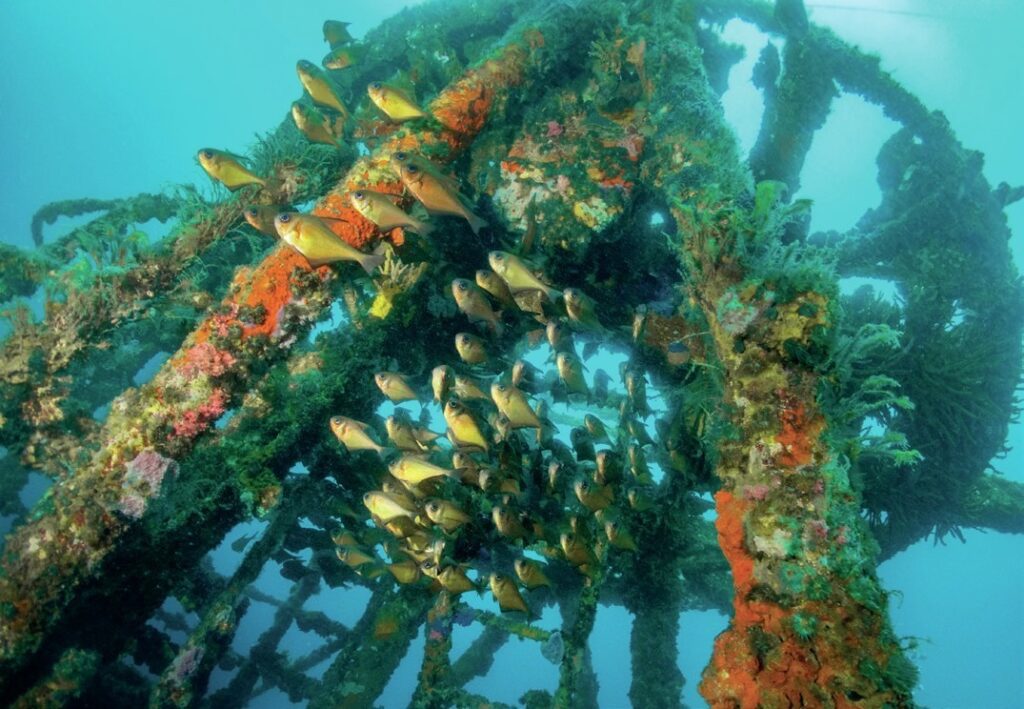
Inside the wreck, you’ll find schools of bullseye fish, creating an intriguing sight as they navigate through the nooks and crannies. And if you’re lucky, you may even encounter a crayfish, adding a touch of excitement to your dive.

SOUTHWEST REGION
The Southwest region is not only a fantastic wine region, it’s also a treasure trove of underwater adventures! Picture yourself diving in crystal-clear waters, surrounded by stunning rock formations and colourful marine life.
With its stunning landscapes, intriguing shipwrecks, and vibrant marine life, this region is a true paradise for underwater adventurers.
THE HIGHLIGHTS
Busselton Jetty. One of Western Australia’s most-iconic dive sites—the Busselton Jetty! Stretching an impressive 1.8km over the protected waters of Geographe Bay, this heritagelisted marvel holds the distinction of being the longest timber-piled jetty in the Southern Hemisphere.
But the jetty’s fame doesn’t stop at its remarkable length; it’s also a haven for a diverse array of marine life!
As you explore the Busselton Jetty, you’ll encounter an enchanting underwater world. The pylons that support the jetty are adorned with colourful corals and sponges, creating a picturesque sight.
Octopuses find joy in calling these pylons home, adding a touch of fascination to your dive. And let’s not forget the fish – prepare to be surrounded by a vibrant assortment of fish species, creating a lively and bustling atmosphere.
There is a diving platform is available, making diving easily accessible from the end of the jetty. Just grab a trolley and put on some comfortable walking shoes to make your way out to the end of the jetty. Alternatively, you can opt to join a boat excursion from Busselton for the full jetty diving experience.
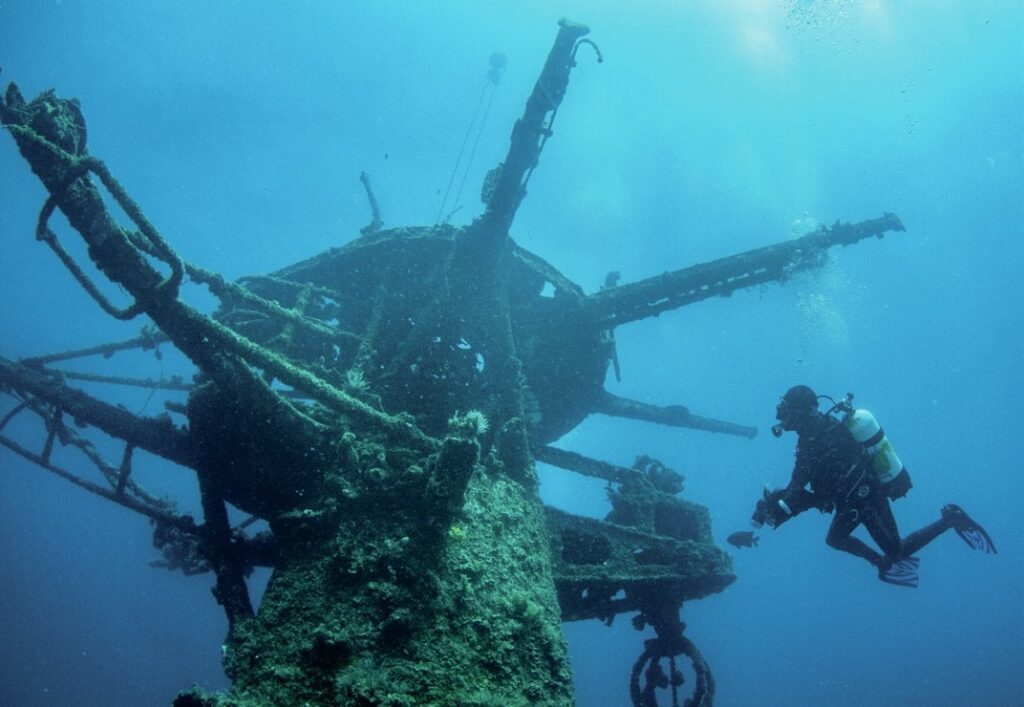
HMAS Swan Wreck. Another iconic WA shipwreck is the HMAS Swan, a decommissioned naval destroyer, now serving as an artificial reef and one of Western Australia’s most-popular wreck dives. Diving the HMAS Swan is an experience that will leave you wanting more.
With multiple decks to explore, you’ll need several dives to fully appreciate the wonders of this fascinating wreck. The best part is that divers of all experience levels can enjoy this dive, as the crow’s nest sits in just 6m of water, while the sand is at a depth of 32m.
As you delve into the depths of the HMAS Swan, you’ll encounter a diverse range of marine life. Schools of bullseye fish gracefully navigate through the ship’s rooms, while King George whiting and brim swim around the hull, adding a touch of movement and colour.
Keep a lookout for Sampson fish, blue devil fish, and sweep, as they are commonly spotted in the vicinity. And if luck is on your side, you may even catch a glimpse of grey nurse sharks gathering at the stern.
Don’t forget to keep an eye out for the resident wobbegong shark, an intriguing and often overlooked inhabitant of the wreck.
Lena Wreck. A great size wreck for a single dive, the Lena shipwreck is easily accessible in 18m of water off the coast of Bunbury.
Once a long-line fishing boat, the Lena Wreck today is home to a plethora of marine life, including hard corals and an abundance of communities of bait fish and small skippy swirling around the hull.
The wide open internal spaces and carefully planned entry and exit holes make it easy to explore this wreck safely, and the engine room is open to divers with both the main engine and generators left in place. And don’t forget to capture a memorable photo with the propeller, which still proudly remains intact.
GREAT SOUTHERN REGION
The most southern (and coolest) waters in WA offer a totally different in water experience for divers. Home to a number of shipwrecks, the exposed waters of the Southern Ocean can be a little more treacherous, but when the conditions are right, the diving is superb!
THE HIGHLIGHTS
Bremer Bay. If you’re looking for an encounter with leafy sea dragons, Bremer Bay is the place to go! This picturesque coastal town located about two hours east of Albany is home to many popular dive sites.
When diving the dive trail at Little Boat Harbour, you’re likely to see a wide variety of temperate water species of fish, nudibranchs, large areas of hard coral, soft coral, and prolific sponge life.
Bright orange gorgonian fans, tube worms, basket stars and soft corals also add colour to this stunning underwater world.
Esperance. Picture-perfect beaches would be the best way to describe Esperance, however with over 140 islands in the Recherché Archipelago, there are many great dive sites throughout these crystal-clear turquoise waters.
You can expect plenty of large caves, boulders and swim-throughs to explore. The temperate water is the ideal environment for the prolific growth of colourful soft corals and sponges.
You’ll likely run into groper, red snapper, harlequin fish, sweep, queen snapper, cuttlefish, wrasse, break-sea cod and blue devils, to mention a few! Esperance is also the home of the famous southern fighting crayfish and abalone – making it a popular spot for hunters and gatherers.
HMAS Perth. The Former HMAS Perth II wreck is a must for divers visiting the Albany region. Since the ship was laid to rest off the coast of Albany in 2001, it’s become home to extensive coral and sponge growth and is home to many fish species, including yellowtails, carpet sharks and kingfish.
With a maximum depth of 34m, this 133-metre-long ship makes for a great diive or two! Humpback whales often visit King George Sound during their migration, so keep an eye out while diving or snorkelling for these fascinating mammals.
Sanko Harvest Wreck. Prepare to explore one of the world’s largest wreck dives and the biggest off the Australian coast – the Japanese bulk carrier Sanko Harvest. This colossal wreck, measuring 174 metres in length, has become an extraordinary host to a diverse array of marine creatures.
Its intriguing history begins when it struck a reef in 1991, succumbing to the relentless forces of the ocean and dividing into three sections.
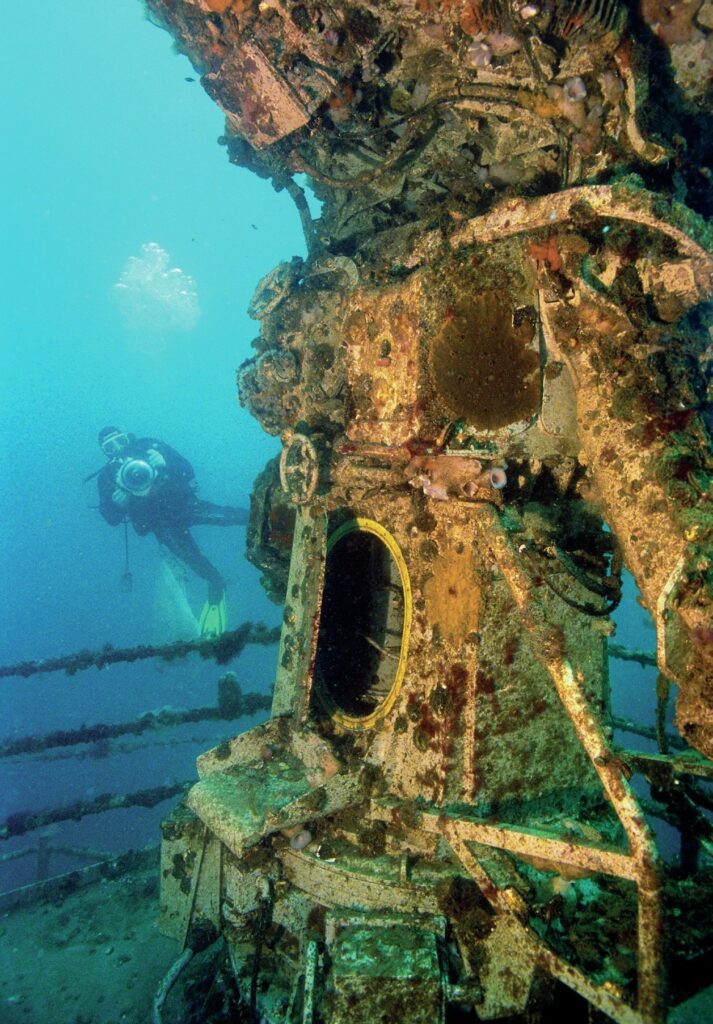
Today, the wreck rests in depths ranging from 18m to 44m of water, serving as a marine sanctuary and safe haven for a multitude of fascinating species.
As you navigate through the twisted remains, you’ll encounter the majestic presence of the large blue groper and the vibrant red snapper, which have made the wreck their home. These impressive inhabitants add a touch of wonder and splendour to your dive experience.
But that’s not all – it is not uncommon to encounter inquisitive seals or playful dolphins who are curious about the divers exploring their underwater domain. Their presence adds an extra layer of excitement and joy to your underwater adventure.
CONCLUSION
Western Australia may be a little more isolated than other places to visit, but the variety and quality of the dive destinations makes it worth the trip!
From the pristine coral reefs of Coral Bay and Ningaloo to the historic wrecks in Albany and the vibrant marine life in Perth, each destination provides a unique and unforgettable diving experience.
So, gear up, dive in, and let the magic of Western Australia’s aquatic realm take your breath away. The underwater world of Western Australia eagerly awaits your arrival!
FAQ: Diving Western Australia
Q: When is the best time to dive Western Australia?
A: It varies by region. Kimberley/Pilbara avoid Dec–Feb (cyclones); Rowley Shoals runs Sep–Nov; Ningaloo is great Apr–Jul (whalesharks) and Jun–Oct (humpbacks); Perth/Rottnest and the Southwest offer year-round diving with winter often bringing clearer water.
Q: What are the must-see sites up north?
A: Rowley Shoals (remote atolls, huge fans, sharks), Coral Bay & Exmouth/Ningaloo (turtles, manta rays, whalesharks), Muiron Islands (deeper reefs, fans, swim-throughs), and Exmouth Navy Pier (mega biodiversity under the pier).
Q: How do I dive Exmouth Navy Pier?
A: It’s an active military facility with restricted access; book ahead with licensed operators and plan around tides.
Q: What can I see at Ningaloo?
A: Over 500 fish species, turtles, reef sharks, manta rays year-round; whalesharks late-Mar to late-Jul; humpbacks Jun–Oct. Snorkelling is possible just metres from shore at many spots.
Q: What’s special about the Midwest (Geraldton/Jurien Bay)?
A: Houtman Abrolhos Islands mix tropical and temperate life (corals, lobsters, pelagics); Jurien Bay is the west coast’s only Australian sea lion breeding area—superb, playful interactions.
Q: Top sites around Perth?
A: Shore dives from Hillarys to Mandurah (Ammo Jetty, Kwinana, Point Peron for weedy sea dragons), Marmion Marine Park, Rottnest Island (limestone swim-throughs, grey nurse, turtles), plus the Gemini shipwreck (~30 m).
Q: Best wrecks in the Southwest/Great Southern?
A: Busselton Jetty (iconic pylon life), HMAS Swan (6–32 m; multiple decks), Lena (18 m; easy penetration), HMAS Perth II (to ~34 m), and the vast Sanko Harvest (18–44 m).
Q: What water temps and conditions should I expect?
A: Far north ~25–28°C in summer, ~22°C in winter; Perth/Southwest cooler—plan thicker suits/drysuits in winter. Visibility and wind patterns shift seasonally; check with local operators.
Q: Do I need to book in advance?
A: Yes—especially for Rowley Shoals (short Sep–Nov season, few boats), Navy Pier (permits/tides), and wildlife swims at Ningaloo (whalesharks/humpbacks).
Q: Is WA suitable for beginners as well as advanced divers?
A: Absolutely. There are easy shore dives and shallow reefs, plus advanced options like deeper wrecks and offshore sites. Choose sites and seasons to match your experience, and dive with reputable local operators.
This article was originally published in Scuba Diver ANZ #61
Subscribe today with promo code DIVE1 — enjoy 12 months for just £1!