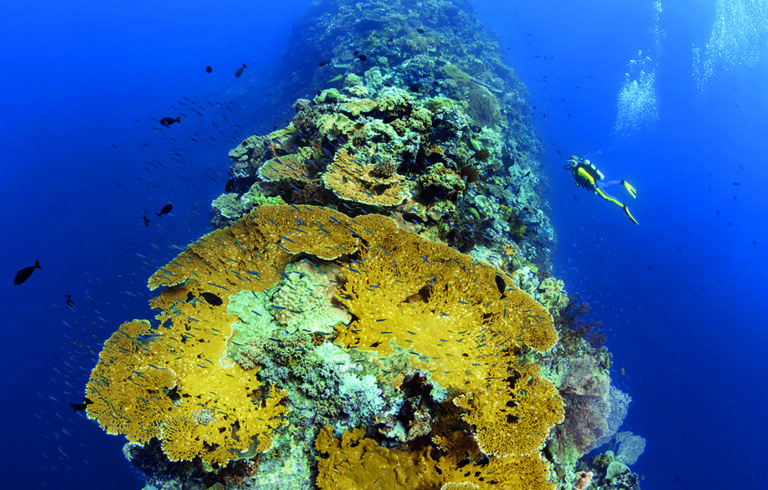
The ‘dream luxury dive vacation’ often comes down to two primary preferences – land-based resort or dedicated dive yacht – and when it comes to Wakatobi, the answer is both.
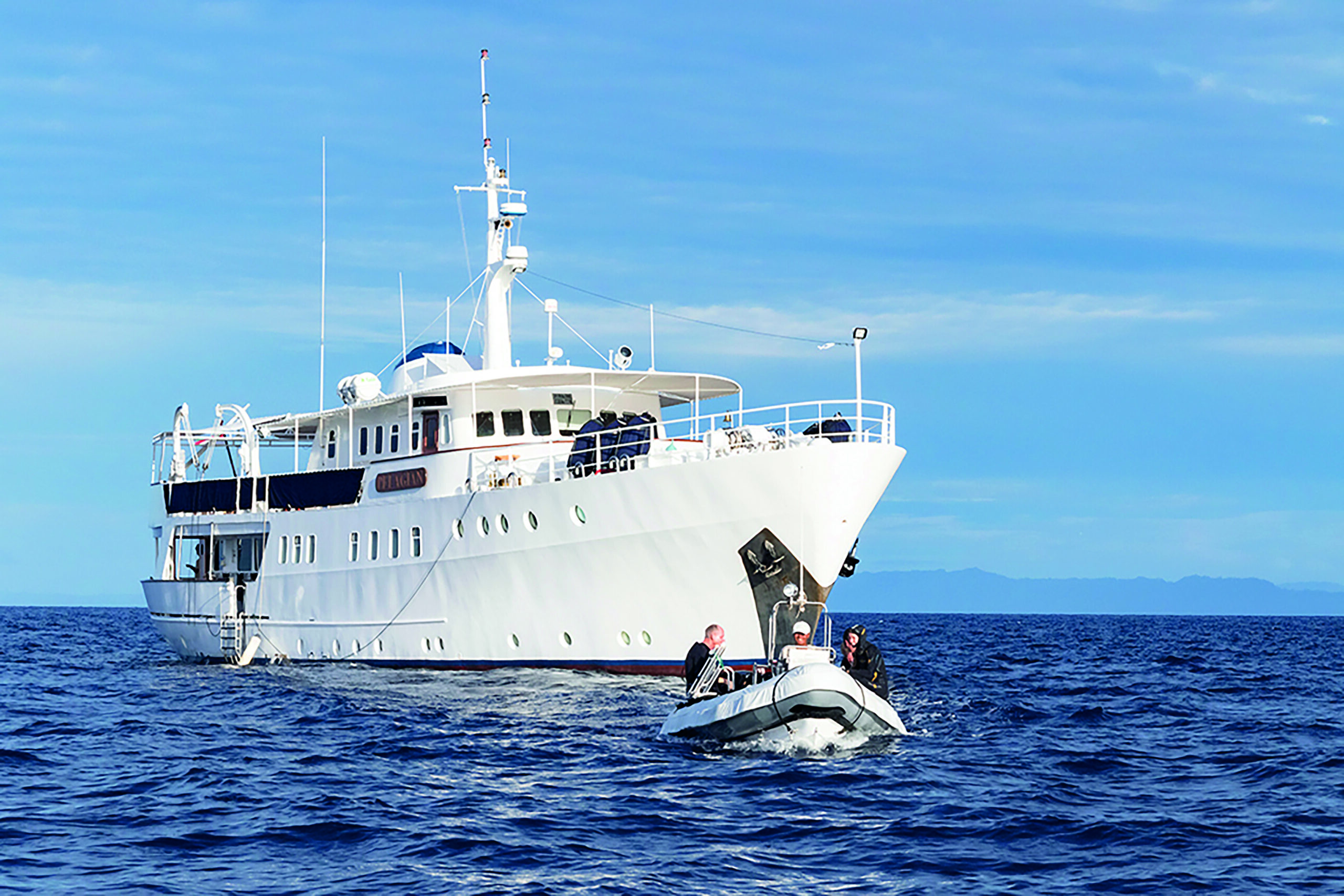
Wakatobi Dive Resort (www.wakatobi.com) has earned a reputation as one of the world’s premier snorkelling and diving destinations. In addition to the resort, Wakatobi also operates the Pelagian, a 36-metre luxury dive yacht that cruises through a broader swath of the bio-diverse Wakatobi archipelago and the southern portion of Buton Island.
The yacht’s seven-day itineraries and seasonal ten-day trips cover an exciting and diverse range of underwater environments, from steep walls perforated by overhangs at Karang Kaledupa and Karang Kapota atolls to unique muck diving in Buton’s Pasar Wajo Bay, and the magnificent reefs, dramatic vertical drop-offs and pinnacles near Wangi Wangi and Kaledupa Islands.
A Different Class of Liveaboard
Pelagian is configured to hold a maximum of ten divers between five extra-comfy accommodations resembling those on private luxury yachts than the typical cabins found on liveaboard dive boats. Each of the cabins features ensuite bathrooms and showers, along with the extra floor space needed for relaxing, reading and dressing.

For those seeking an even-more-upscale experience, Pelagian’s master suite is one of the largest and most-luxurious I’ve ever seen on a dive liveaboard. This suite spans the full width of the vessel and occupies the entire forward portion of the main deck, providing both privacy and easy access to all parts of the yacht.
Amenities include walk-around king-size bed, a spacious lounge with a love seat, and an entertainment centre fitted with a huge flat-panel HD TV and Blueray DVD player. The bathroom is contemporary and features a spacious dressing area and top-of-the-line rainforest shower and vanity fittings.
To ensure five-star service, the Pelagian is staffed by a crew of 12, which includes dedicated stewards and an executive chef who creates fine dining experiences on a daily basis.

One of the added touches that gave me a bit of a chuckle is how the crew hangs every diver’s wetsuit/dive skin out to dry after each dive; better yet, they are folded and placed at the aft fantail bench seat with dive booties below prior to each dive. Talk about pampering.
The dive team provides detailed briefings and handles all logistics of gear transfer back and forth between the yacht and its two custom-fabricated dive tenders, which comfortably whisk divers to each site. The tenders are 5.5-metre RIBs equipped with double 60HP outboard engines, tank racks and one of the sturdiest deck-mounted stainless steel boarding ladder systems for divers to climb back on board I have ever seen in a RIB. With max passenger count at ten, the number of divers per RIB (not counting the dive guide and driver) is divided accordingly, either split evenly or with six in one, and four in the other (especially if the four are photographers).

Guides work to provide appropriate levels of in-water support as requested, and are also keen experts at locating rare marine subjects. Because dives take place at either shallow-water muck sites or on structures with vertical reliefs that allow multi-level profiles, it’s common to enjoy bottom times of 70 minutes or more, and up to four dives a day, including night dives. Like nitrox? No problem. Pelagian is equipped with a trio of Bauer compressors and a hearty Nitrox Technologies system. For more specialised charters and those looking to do extended-range activities, Pelagian can provide custom nitrox and trimix mixes, as well as full oxygen fills and sorb for rebreather divers.
Off To The A Tolls
The Pelagian embarks on its cruises from the resort and day one includes one or more afternoon warm up dives on favourite sites within the marine preserve. Overnight, the boat then heads to the massive reef atolls of Karang Kaledupa and Karang Kapota, which are home to some of the region’s most-colourful and dramatically contoured reefs.

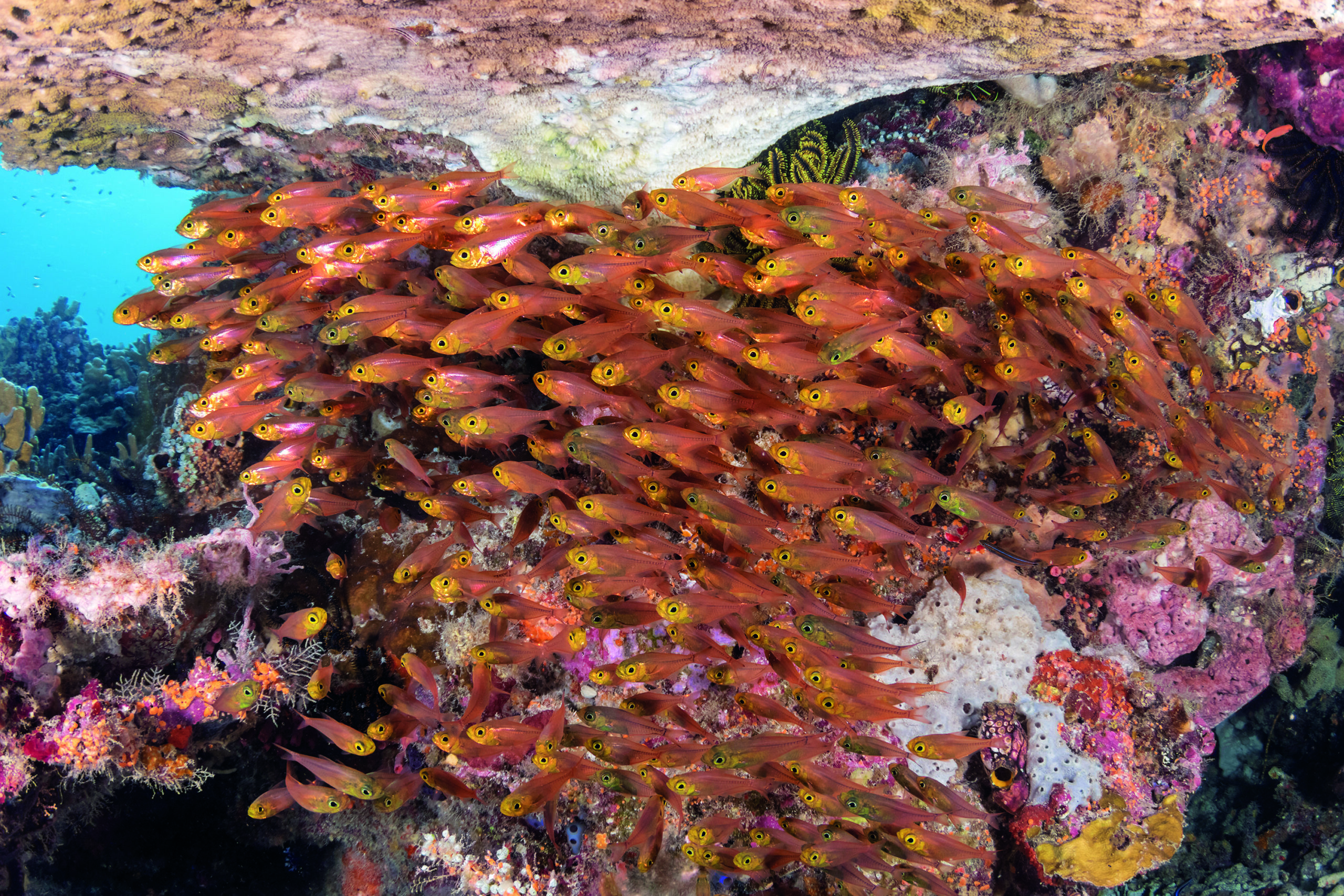
The tops of these formations are thick with dense and diverse coatings of both hard and soft corals, while the adjacent slopes and walls that plunge into the depths showcase an equally broad assortment of vibrant soft coral trees and gorgonians resplendent in red, orange, pink and yellow hues. With visibility that typically exceeds 30 metres, these sites serve up dramatic big-picture views, and are often visited by blackfin barracuda, sea turtles and schools of eagle rays.
Along with panoramic seascapes, the reefs here also contain a wealth of small and cryptic creatures. Some of the best critter hunting takes place among the sea whips that cover the slopes and walls. These long, sometimes spiraling strands are a haven for whip coral gobies and small shrimp. And a highlight of any Pelagian cruise is the chance to find pygmy seahorses. This area is home to bargibanti, Denise’s and pontoh’s pygmy seahorses. The Pelagian’s dive guides are especially good at locating the white pontoh’s, which shelter among the halimeda algae. Once found, these small creatures make great subjects, whether you view them through the lens of a camera, or an underwater magnifying glass.
Mucking About
The middle of Pelagian’s itinerary typically places it on the southeastern side of Buton Island for an entirely different flavour of diving not found among the rest of the Wakatobi archipelago – muck diving. Here inside Buton’s Pasar Wajo Bay is a highly productive variety of muck environments, from grey and brown silt and rubble habitats to white sand slopes with small coral gardens. Among the sites usually visited are Cheeky Beach, Banana Beach and In Between.

These feature gradual slopes from the shoreline down to 30m, with sand and gravel bottoms covered with a bit of light sediment that can be easily stirred up by a misplaced fin. A neophyte muck diver might wonder what all the fuss is about—until they take a closer look. The first sighting could be the mottled red face of a reptilian snake eel peeking out from the sand. With luck, there might be a wonderpus octopus out and about, flowing across the sea floor with its signature undulating motions. Closer looks may reveal Coleman shrimp atop fire urchins, the neon eyes of alien-like peacock mantis shrimp, or lanquid shrimp gobies keeping house with their alpheid shrimp roommates, who seem to do all the work of keeping the burrow clean.
Among the highlights of Pasar Wajo Bay are, of course, the pier dives, and Pelagian has three to choose from, with Asphalt Pier topping most guests’ favourite list. Despite a look of seeming abandonment, this structure is the island’s primary terminal for loading Bituman, a natural form of asphalt that is quarried on the island. Around the front of the pier and at depths of 4.5-15m among clusters of pilings, divers can find a menagerie of characters that includes shrimp gobies, frogfish, leaf scorpionfish and ornate, robust ghost, banded pipefish and much more.

As the name implies, New Pier is the most-recently built landing dock in Pasar Wajo Bay. It is similar in configuration to Asphalt Pier, with depth profiles that run from 4.5-15m around the base of the pilings, and reach about 15 metres out in the sand. The pilings are prime hunting grounds for finding blue ribbon eels, ringed pipefish and spiny devil scorpionfish, while the adjacent debris field is a good place to hunt for octopus and gobies, which take refuge in discarded shells, cans and bottles.
Without a doubt, the bay’s signature dive takes place at Magic Pier. The site can be productive by day, with marine life similar to the other piers. The real magic begins near dusk, when colourful mandarinfish emerge to perform their intricate courtship and mating rituals. In addition to these nightly performances, the pier is populated by a menagerie of invertebrates, from cuttlefish and blue-ringed octopus to flatworms and nudibranchs. It’s also a key area for finding frogfish and twin-spot lionfish.

Reefs, Walls and Pinnacles
On the way back south to home base at Wakatobi resort, the Pelagian completes the loop with a few more stops at the coral-rich shallows, slopes and steep drop-offs near Wangi Wangi Island, Hoga, and Kaledupa Island. In these waters, many reef profiles rise to within 1-2m of the surface, creating opportunities for very long multi-level dive plans. A stand-out site near Wangi Wangi is Komang Reef. This elongated sea mound is alive with vibrant growths of soft corals and large sponges nurtured by the currents.
This stand-alone structure is swarmed by fish life, and on tide changes it may be visited by rays, tuna, trevally and blacktip sharks. Aptly named Fishmarket is a wall with an adjacent pinnacle known for the high numbers of schooling fish it attracts, including a rather huge school of blackfin barracuda. The site’s unique terrain combines a steep wall with three deep ravines and the detached pinnacle that rises to within 10m of the surface.

On the way to and from the resort, Pelagian may stop at other sites on the outer edge of day-boat range, such as the seamounts of Blade. This unique formation is made up of a row of parallel knife-edged pinnacles that are connected by a lower ridge, giving the entire structure the appearance of a serrated knife blade set on edge. It is just one of the many memorable sites that divers will experience aboard Pelagian. And by combining a cruise with a stay at Wakatobi Dive Resort, guests can experience the best that Indonesia has to offer.
“Pelagian is configured to hold a maximum of ten divers between five extra-comfy accommodations resembling those on private luxury yachts than the typical cabins found on liveaboard dive boats”
“Because dives take place at either shallow-water muck sites or on structures with vertical reliefs that allow multi-level profiles, it’s common to enjoy bottom times of 70 minutes or more, and up to four dives a day, including night dives”
Photographs by Walt Stearns
FAQ:
What makes the Pelagian liveaboard different from other dive yachts?
Pelagian carries just ten guests in spacious, luxury cabins with ensuite bathrooms, five-star dining, and personalised service from a crew of 12. It offers the comfort of a private yacht with the adventure of a dedicated dive vessel.
Where does Pelagian operate its diving trips?
Pelagian cruises across the Wakatobi archipelago and Buton Island, visiting pristine reefs, vertical drop-offs, pinnacles, and unique muck diving sites like Pasar Wajo Bay’s Magic Pier.
What type of diving can guests expect on Pelagian?
Guests enjoy up to four dives a day, including night dives. Sites range from colourful coral walls and pinnacles to critter-rich muck dives. Bottom times often exceed 70 minutes thanks to multi-level profiles and nitrox availability.
Is Pelagian suitable for rebreather or technical diving?
Yes. Pelagian supports rebreather divers and extended-range diving, offering custom nitrox, trimix mixes, oxygen fills, and sorb.
What marine life can divers see on a Pelagian trip?
Expect to encounter pygmy seahorses, mandarinfish, frogfish, leaf scorpionfish, whip coral gobies, mantas, barracuda, sea turtles, and more across reefs, piers, and muck habitats.
This article was originally published in Scuba Diver Magazine
Subscribe today with promo code DIVE1 — enjoy 12 months for just £1!