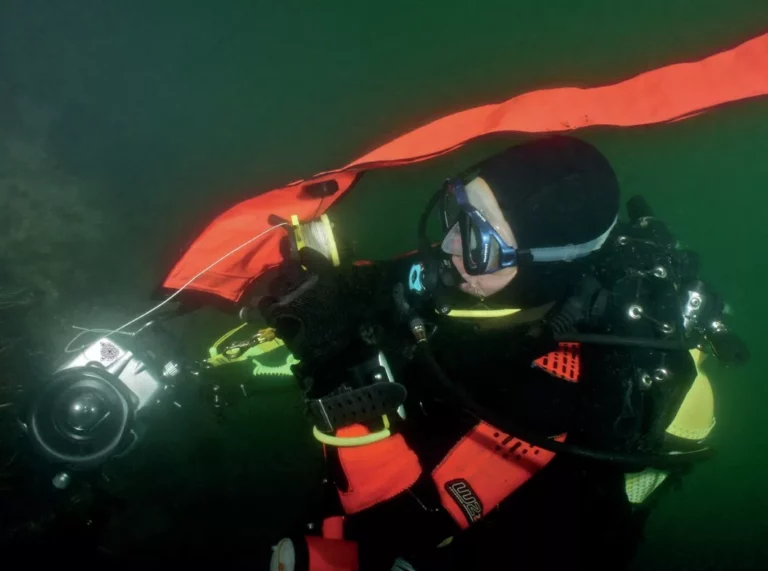
Emergency signaling becomes a diver’s absolute priority when they surface from an amazing dive. Imagine you surface, excited to show everyone on the boat the amazing photos that you took. However, when you turn around to look for the boat, there is nothing but waves in sight. While exceedingly rare, divers do occasionally become lost at sea. In those instances, one of these signaling devices could save your life.

Visual Location Aids: Dive Flags and Surface Marker Buoys
Perhaps the most-important signaling device is a dive flag or surface marker buoy (SMB). Dive flags are typically small floats with the characteristic ‘diver down’ flag that is towed along during shallower dives. Marine vessels are required to keep well clear of the flag to prevent injury, and divers may be required to carry one at high-traffic sites.
SMBs are colorful inflatable devices used to mark a diver’s position where towing a dive flag is impractical — such as at deeper dive sites. Delayed SMBs (DSMBs) have the advantage of being deployable underwater so divers can be marked before breaking the surface. However, proper training is required when using these devices, as manipulating a spool of line while inflating a DSMB can be tricky. In addition, proper tension should be placed on the spool after deploying the DSMB to ensure it says upright.
Large waves can easily obscure smaller SMBs. While having a SMB is always preferable to none, an ideal SMB should be significantly higher than any waves you expect to encounter.
Day and Night Visibility: Signaling Mirrors and Lights
While often associated with hikers, signaling mirrors can also be used in a marine environment. They’re light, cheap, and easy to stow in a pocket. However, while they can often be used to signal from miles away, they only work with good sun exposure. If you had the misfortune of being lost on an overcast day or at night, a mirror would provide limited assistance.
Lights, on the other hand, are incredibly versatile. Modern dive lights are extremely powerful and have significant battery lives. Many also have SOS patterns which greatly improve the likelihood of being spotted at night. Many people always carry a dive light, even during the day, because they are robust and can illuminate dark crevices or underhangs where marine life sometimes hides.

Close-Range Auditory Alerts: Air Horns and Whistles
Auditory signaling devices such as whistles or air horns (that attach to your BCD inflator) can sometimes be useful if you happen to be close to the boat you’re trying to signal.
Integrated air horns, while requiring less effort, do potentially introduce failure points to your BCD and only work if you surface with sufficient gas in your cylinder.
Satellite Tech and Emergency Location: Personal Location Beacons
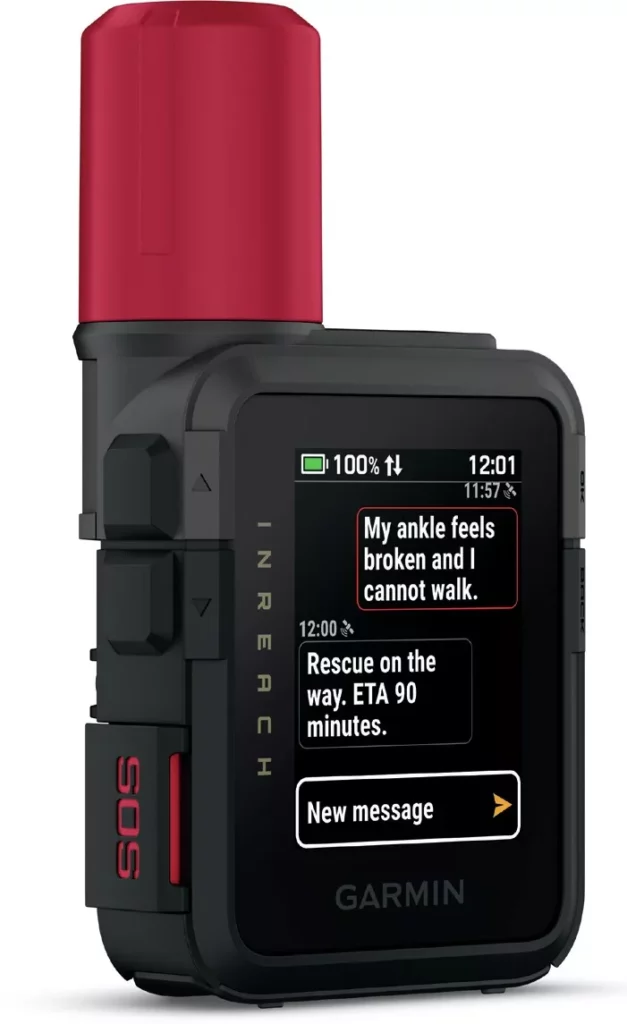
These high-tech devices use satellites to transmit SOS signals, offering a superior option in emergency location. Some can even send messages via a satellite connection. However, given their electronic nature, battery status should be closely monitored. Premium features may also require an additional subscription. While news headlines of divers lost at sea may be frightening, coming equipped with the proper signaling equipment greatly reduces the likelihood of being stranded while increasing the likelihood of being found.
Related Content: If you are ready to invest in satellite-guided safety technology, check out our field-tested guide to the best personal locator beacon for divers.
In addition, consider additional insurance to protect yourself from expensive search and recovery operations or dive accidents.
DIVERS ALERT NETWORK
DAN is an international non-profit medical and research organisation dedicated to the safety and health of divers. WWW.DIVERSALERTNETWORK.ORG
FAQs
What are the most common scuba emergency signaling devices?
The most common and effective tools include visual aids like surface marker buoys (SMBs), delayed SMBs (DSMBs), dive flags, signaling mirrors, and high-powered dive lights. Auditory devices like whistles and integrated BCD air horns are also widely used.
How does a Delayed Surface Marker Buoy (DSMB) keep a diver safe?
A DSMB can be inflated and deployed while a diver is still underwater doing a safety stop. This alerts boat traffic and the dive vessel of the diver’s precise location before they break the surface, reducing the risk of a surface collision or abandonment.
Do signaling mirrors work well for marine emergencies?
Yes, signaling mirrors are excellent scuba emergency signaling devices because they are cheap, lightweight, and can reflect light to boats or aircraft miles away. However, their major limitation is that they require direct, bright sunlight to function effectively.
What is a Personal Locator Beacon (PLB) for diving?
A PLB is a high-tech electronic safety device that uses satellite networks to transmit emergency SOS distress signals and precise GPS coordinates to search and rescue teams worldwide. Some models, like Garmin devices, also support two-way satellite messaging.
Why should divers consider specialized dive accident insurance?
In the rare event a diver is separated from their boat, search and recovery operations can be incredibly expensive. Specialized dive insurance protects you from devastating out-of-pocket costs associated with maritime rescue, emergency transport, and hyperbaric chamber treatments.
This article was originally published in Scuba Diver Magazine
Subscribe today with promo code DIVE1 — enjoy 12 months for just £1!
