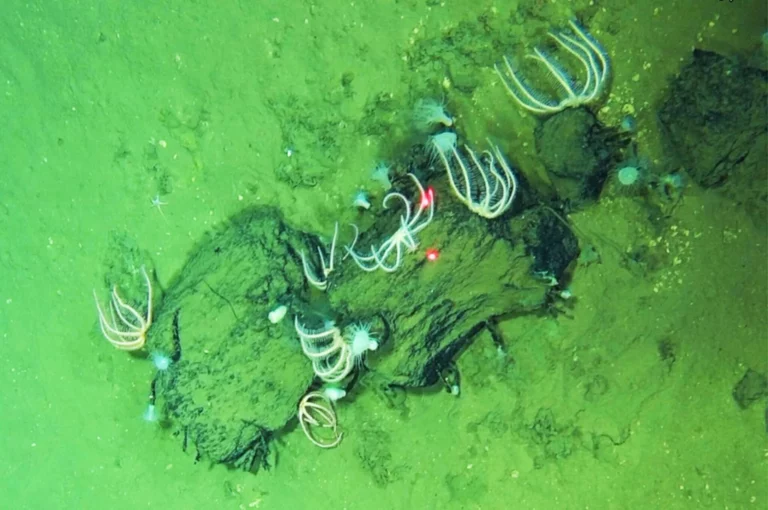
The world’s deepest and biggest known accumulation of whale remains, spanning more than 5 million years and including those of species long-since become extinct, has been discovered in the south-eastern Indian Ocean.
International researchers carried out a series of submersible dives to explore the whale necropolis previously concealed in a deep and remote ocean trench. Now they have revealed the details of their investigation in a new study.
The Diamantina Trench, which lies more than 1,000km west-south-west of Perth in Western Australia, was formed when the Australian and Antarctic continents separated.
The research forms part of the international Global Hadal Trench Exploration Programme (Global TREnD), designed to extend knowledge of geological, biological and environmental conditions in the world’s deepest oceans.
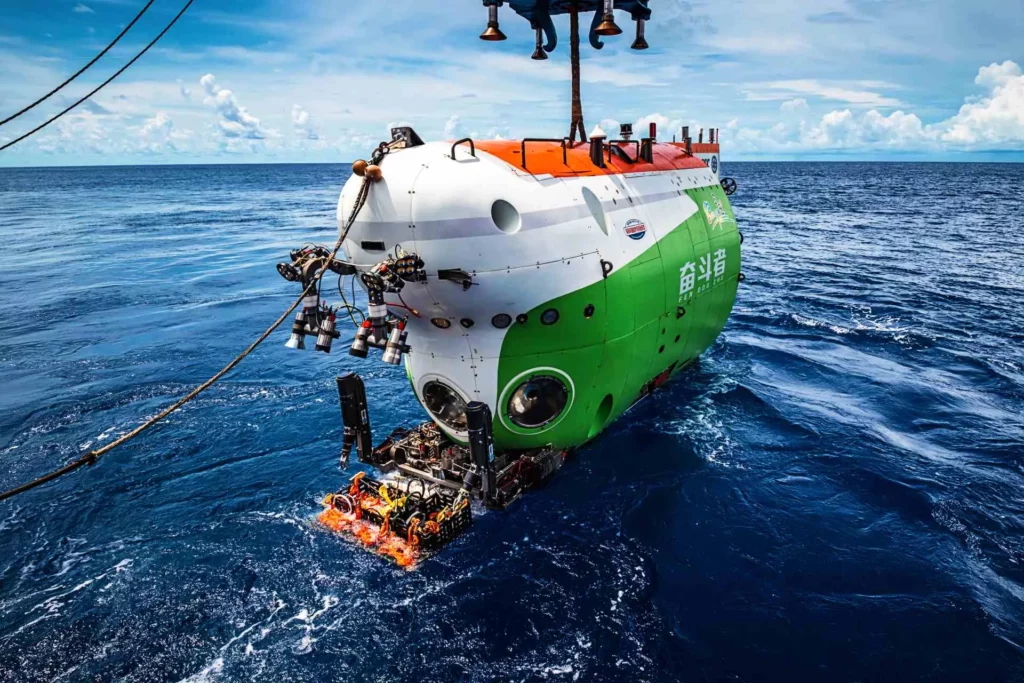
Employing both crewed submersibles and AUVs, this initiative is led by the Institute of Deep-Sea Science & Engineering of the Chinese Academy of Sciences ((IDSSE-CAS).
The Chinese submersible Fendouzhe, said to be the world’s only full-ocean-depth manned submersible with operational capabilities, was deployed to explore 1,200km of the bed of the trench, at depths ranging from 4,600 to 7,000m.
In the process its crews of three recorded an unexpected abundance and diversity of both modern cetacean skeletons and ancient fossils.
Unknown to science
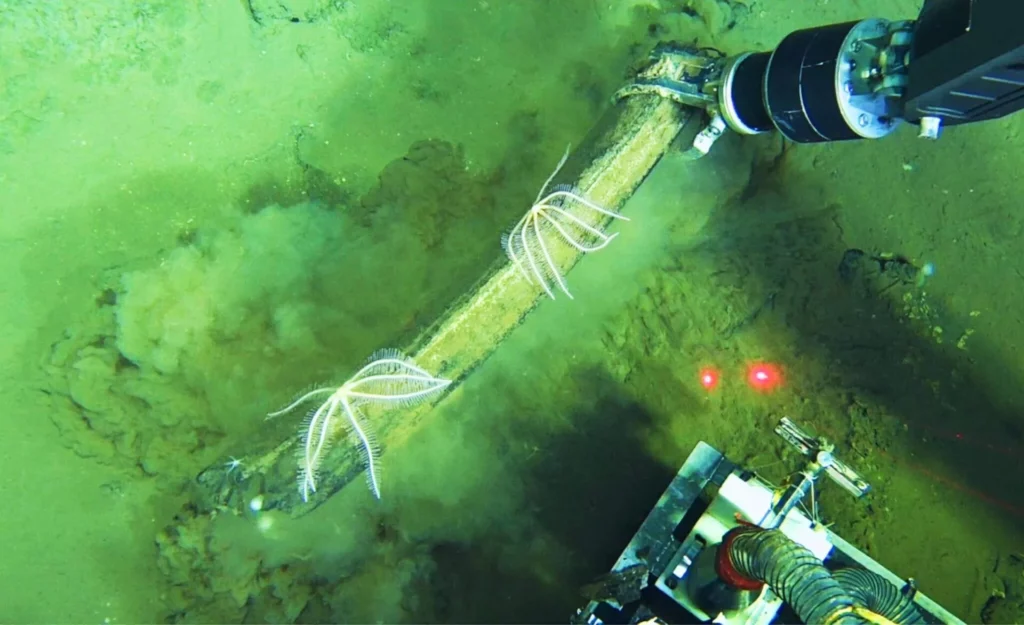
Many of the organisms such as stalked sea anemones, sponges and starfish found living on still-decomposing whale carcasses were species previously unknown to science, capable of consuming virtually all the organic matter on but also inside the whalebones.
“These findings fundamentally reshape our understanding of deep-sea ecosystems associated with whalefalls and highlight the enormous potential of ocean trenches as fossil archives for reconstructing the evolutionary history of cetaceans through geological time,” commented Giovanni Bianucci. The palaeontologist from the University of Pisa’s Department of Earth Sciences analysed the recovered whale remains with colleague Alberto Collareta.
“Most of the skeletal remains belong to beaked whales, deep-diving cetaceans that forage at great depths,” said Bianucci. “The remains are represented mainly by rostra – the elongated anterior portion of the skull – which are particularly resistant to degradation over time.
“Many specimens are also covered by thick ferromanganese crusts that have enhanced their preservation. Numerous rostra belong to two living species, Andrews’s beaked whale [Mesoplodon bowdoini] and the strap-toothed whale [Mesoplodon layardii], but fossil species are also present, including Pterocetus diamondinae, a newly described species named after the trench itself.”
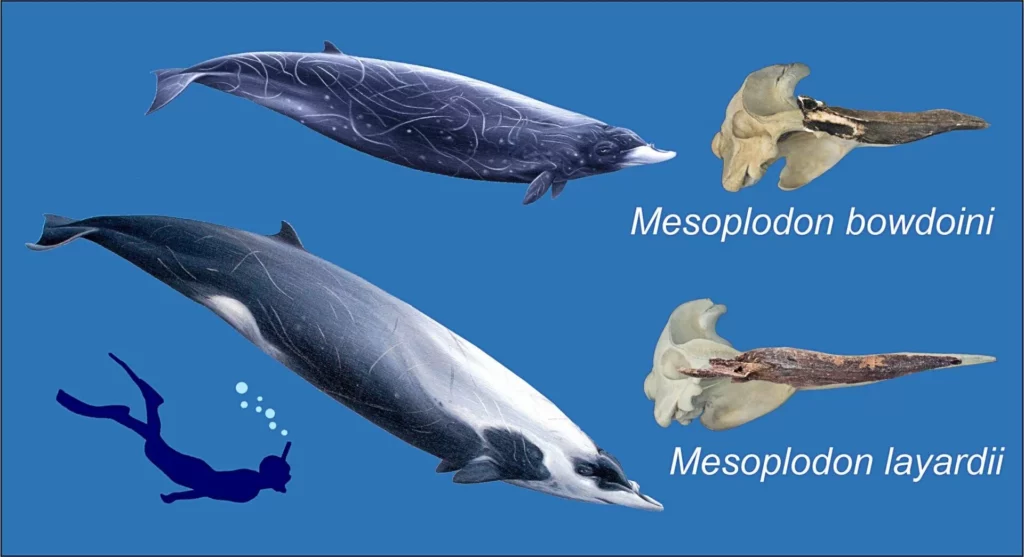
Strontium-isotope dating indicates that the remains of living species range from 1.2 million years ago to the present, while the fossil species date from 2.4m to 5.3m years ago.
“These results not only support our taxonomic identifications but also demonstrate that we are dealing with an extraordinary fossil accumulation that has been forming for more than five million years and continues to grow through the ongoing deposition of whale carcasses on the deep seafloor,” said Collareta. The whale graveyard study has just been published in Nature.