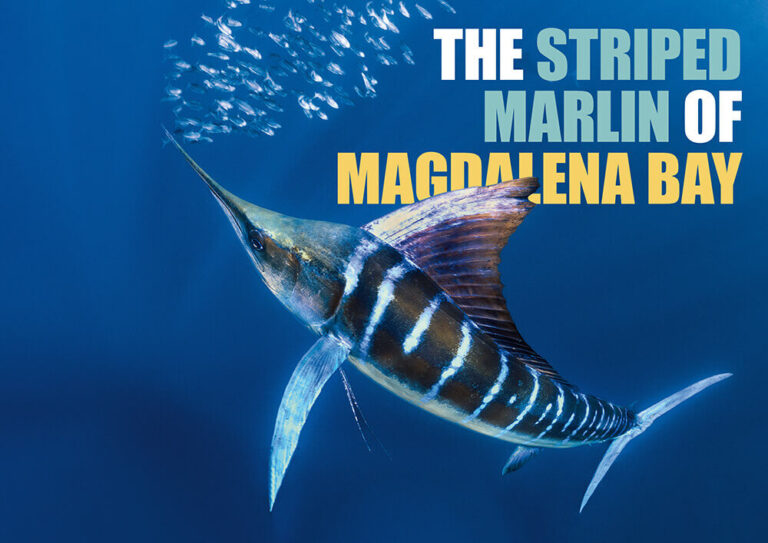
Walt Stearns finds snorkelling with striped marlin on the ‘Mexican Sardine Run’ in Baja California is every bit as frenetic and entertaining as its more-famous South African version
The morning hunt began under clear skies, with a light ocean chop and a north wind. Resting on the boat after my first plunge overboard, a 3mm wetsuit was feeling a little inadequate in the cooling breeze. But this minor discomfort was a small price to pay for the unique opportunity to witness one of the ocean’s most-spectacular interactions of predator and prey during Mexico’s Sardine Run.
The Mexican Sardine Run Explained
Along the southwest Pacific coast of Mexico’s Baja Peninsula, seasonal upwellings of cold water meet and mix with warmer surface waters, creating a nutrient-rich slurry. Vast schools of migrating sardines, anchovies and small mackerels feed on this aquatic buffet as they migrate down to the sheltered waters of Magdalena Bay, which is one of their key spawning grounds. This mass migration in turn lures opportunistic apex hunters – billfish, sea lions, dolphin, whales and the occasional shark. What follows is an orgy of predation that mirrors the more-famous South African Sardine Run and is every bit as spectacular.
One key difference between these two mass feeding events is the cast of characters leading the hunt. While bottlenose dolphin and seals dominate the hunts in African waters, Mexico’s feeding frenzy is spearheaded by striped marlin. This presents what is considered the world’s best opportunity to witness these fast-moving fish at work.
Striped Marlin: The Apex Hunters of Magdalena Bay
Striped marlin are the agile middleweights of the billfish family, found in tropical and temperate water bodies across the Indo-Pacific region. A trophy-sized specimen might tip the scales somewhere above 400lb and measure nearly 13 feet from spear tip to tail. These blue water predators are aggressive hunters with the ability to generate rapid bursts of speed up to 50 miles an hour when pursuing prey such as sardines, small tuna and squid.
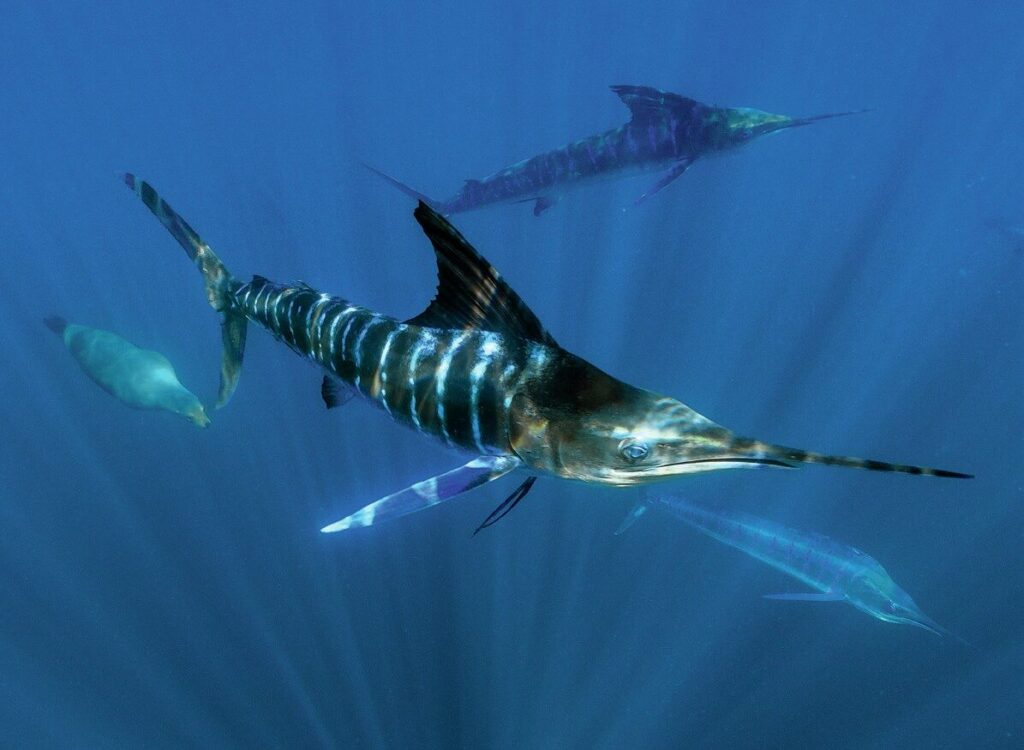
A striped marlin’s namesake feature is a series of 12 to 20 bluish vertical stripes on the sides of their body. These patterns are formed by specialized pigmentation cells known as chromatophores which can light up in vivid shades of blue and lavender when the fish is excited by the hunt.
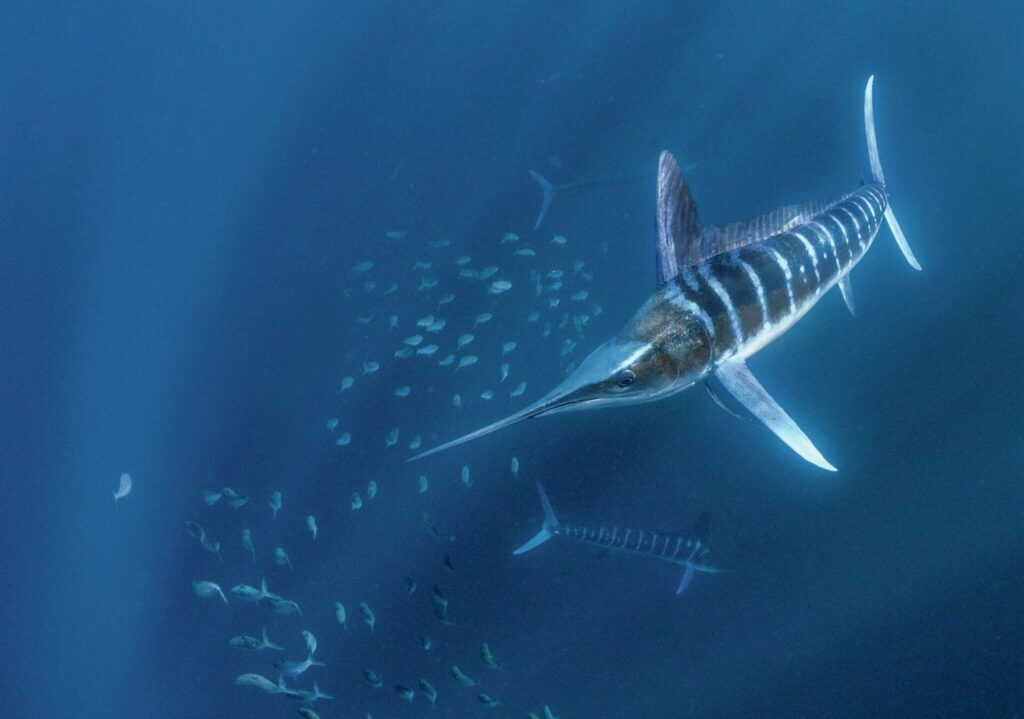
Seeing one of these apex predators in action with dorsal fin fully erect and its body lit up like a neon sign is an impressive sight. And if you are close to the action when one streaks passed you like a heat-seeking missile, the effect is breath-taking.
Did you know?
Striped marlin have a torpedo-like body, dark blue or black with a silvery-white underside. They reside away from shore but near the surface of the water and are typically found in tropical and/or temperate water bodies.
Where the action is
The epicenter of the Mexican Sardine Run is a patch of ocean offshore of Magdalena Bay. The bay, located some 180 miles north of Cabo San Lucas, is famous for the gray whale encounters that take place withing the sheltered waters of this expansive estuary. But meeting the marlins requires a longer boat ride, as the action typically takes place anywhere from 20 to 40 miles offshore.
Did you know?
Magdalena Bay is a 31 mile long bay along the west coast of Baja California. It is protected from the ocean by Magdalena and Santa Margarita islands, giving it a calm environment that is ideal for California gray whales to spend the winter in the bay, giving birth and rearing their young, and mating.
There are several land-based tour operators, the majority offering excursions to the sardine run option. This option begins with a three-plus hour drive from the town of La Paz or a five-hour ride from Cabo San Lucas to the small fishing village of Puerto San Carlos. Operators hire local fishermen who ferry participants to the offshore action aboard locally made skiffs known as pangas. These outboard-powered launches are typically around 26 feet in length, and spartan in design, with basic seating on two or three rows of benches and a canvas roof for shade against the sun.
In favorable sea conditions a panga can cruise at speeds of 20 to 30 miles per hour. Depending on the daily location of the feeding action, a boat ride from Puerto San Carlos could involve one to three hours each way. This extended cruise on a relatively small open boat makes for a long day, but the rewards of this adventure far outweigh such considerations. If a long panga ride were the only way to gain access to the excitement of the sardine run, I would gladly sign on for the daily commute from Puerto San Carlos. But in the early winter of 2024, I found a better way.
The Gallant Lady: Luxury Meets Adventure
Nautilus Adventures offers specialized liveaboard trips that take in some of the Eastern Pacific’s most-thrilling diving and swimming marine life encounters. These itineraries include cruises to the Socorro Islands for giant mantas, hammerheads and whales, adventures in the Sea of Cortez for orcas and rays, and seasonal excursions to the sardine run at Magdalena Bay. There are currently six vessels in the fleet – the liveaboards Nautilus Explorer, Belle Amie, Undersea, and Gallant Lady, and the daily excursion boats Mango Wind and Westerly.
From mid-October to December, the 116foot Gallant Lady departs Cabo San Lucas for one-week trips to Magdalena Bay. This former luxury yacht is configured for a maximum of 12 guests housed in six large suites. This keeps groups pleasantly on the small side. As it should be with any well-run liveaboard, the accommodations are clean and comfortable, the meals and food service is very good, and the crew is enthusiastic, knowledgeable and very safety conscience.
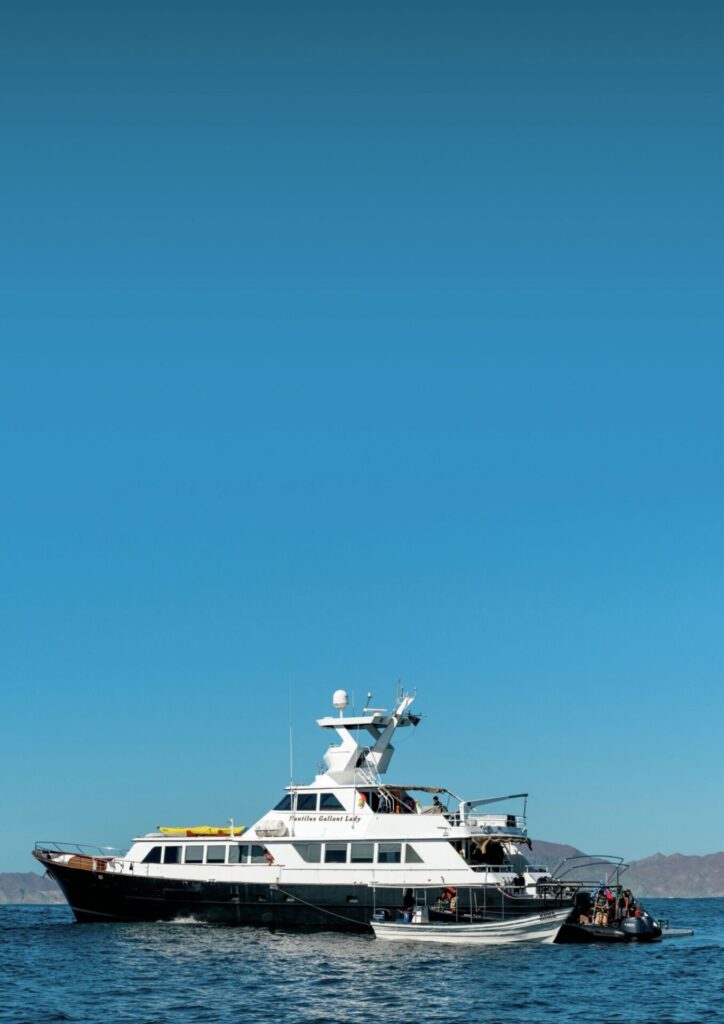
There is one key difference between Gallant Lady’s Magdalena Bay trips and other itineraries. Instead of using the yacht’s own two large rigid-hull inflatables for the days spent for pursuit of the striped marlins, the crew engages the services of local pangas operating out of Puerto San Carlos. The panga operators are former fishermen who know the striped marlin’s behavior quite well, and this local knowledge ensures more consistent and frequent encounters.
The Gallant Lady stays close to the latest-known location for feeding activity, which allows guest to relax until it is time to board the pangas for a relativity short ride to the action. Plus, should the action get slow, and you want to break for a proper lunch, the Gallant Lady is not very far away.
At the risk of seeming smug, each time I saw snorkelers in other boats who had made the trip from Puerto San Carlos, I kept thinking ‘you guys have a looonng day ahead of you out here’. In addition to spending the better course of the day out on the ocean, land-based snorkelers also have to contend with the multi-hour trips from and back to shore.
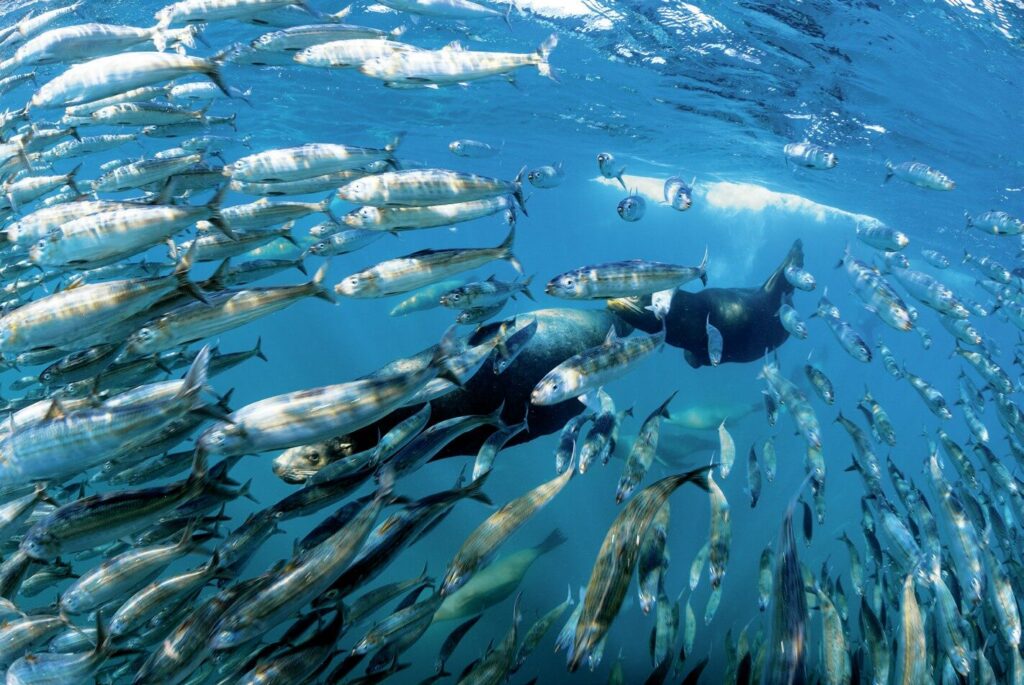
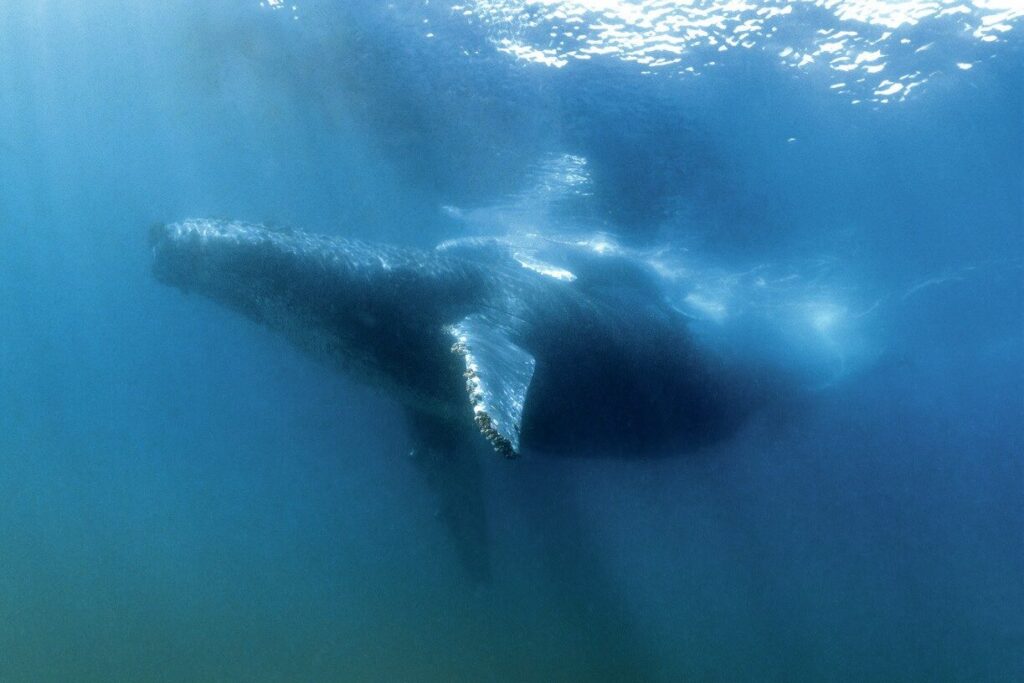
When the action gets hot, as it did the week we were there, thoughts are seldom focused on the boat. Instead, everyone is focused on looking for sardines forming bait balls on the surface, going over the side when the captain says go, and swimming to get close to the underwater maelstrom of the hunt.
Did you know?
The striped marlin can grow up to 12 feet in length and are among the fastest fish in the ocean. They can reach burst speeds of over 50 miles per hour, making them formidable predators and a prized target for sport fishing.
Watching a group of striped marlin work a school of sardines corralled into a static bait ball is a mesmerizing site. At first glance it can seem a bit seem chaotic. But a closer study reveals that this seemingly out of control feeding frenzy is actually a highly co-ordinated and strategic effort. It begins with the marlin circle around and under the baitfish, forcing them towards the surface and into ever-tighter formations. This carefully co-ordinated effort creates an opening for frigates, pelicans and seagulls, which dive missile-like into the schools.
Once the small fish are in a tightly packed ball, marlin will begin their attack, rapidly accelerating into the center of the school while using their long spear like bill to slash and stun their prey. Individual fish will make their runs into the bait ball one at a time, taking turns in consecutive order. It’s a prudent strategy, because the last thing these billfish want to do is accidentally impale one-another.
Nature’s Feeding Frenzy: A Once-in-a-Lifetime Experience
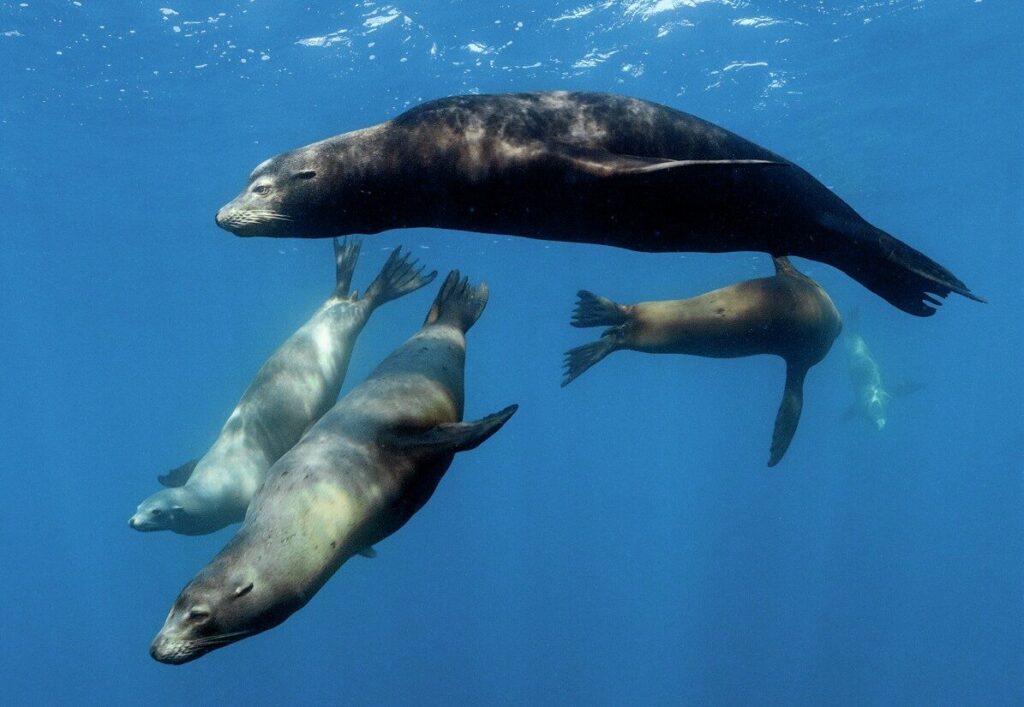
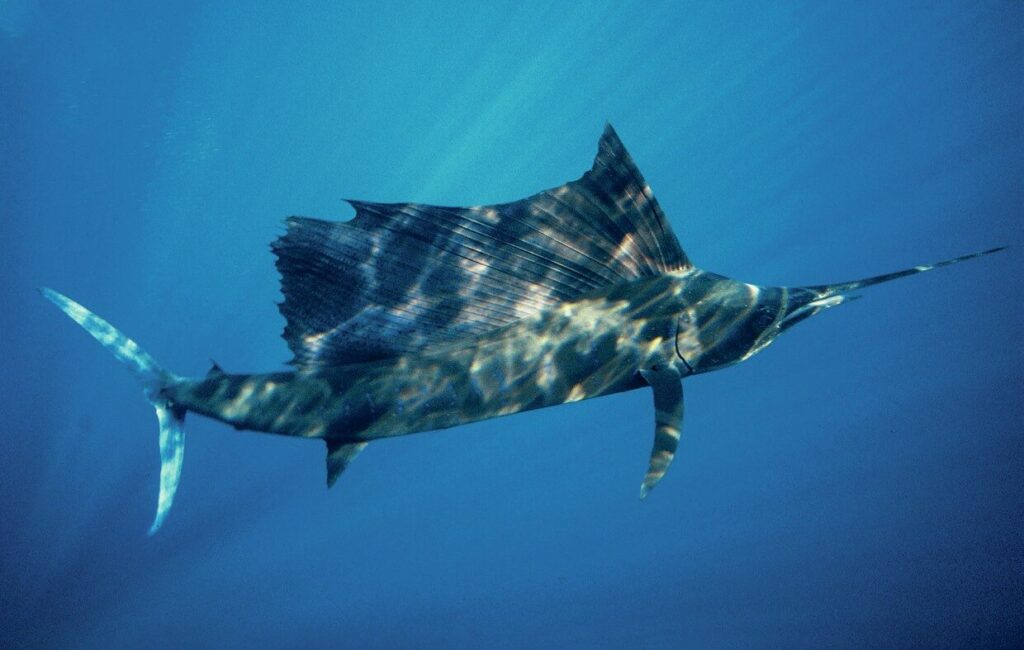
The marlin typically take the lead on corralling the little fish, but they are often joined by sea lions and sometimes by dolphin, silky sharks and whales. It gets even more exciting when a pack of Pacific sailfish show up. From the tip of their bill to the fork of their tail, a full-grown sailfish can measure up to 11 feet in length. When viewed from the side they can look as weighty as a striped marlin, but don’t let that fool you. Seen from above their streamlined bodies are actually slenderer, giving them a willowy build. The Indo-Pacific sailfish is considered one the fastest fish in the sea, capable of reaching 68 miles per hour. Not only can they surpass the top speed for a cheetah, they can do it for a much greater distance.
What sailfish bring to the show is their unique way acquiring their prey. Instead of just rushing in, sailfish will often raise their large sail of a dorsal fin to exaggerate their profile and force sardines into an even tighter ball. At that point, sailfish follow the same strategy as the marlins, taking turns slicing through the bunched fish.
I could call the experience of swimming in the sardine run a once-in-a-lifetime experience. But that would not be true, because it is something I certainly want to do more than once, and I’m already anticipating my next chance to witness this incredible show of nature. And who knows, maybe next time there will be clear water and more visits from whales. n
Frequently Asked Questions
What is the Mexican Sardine Run?
The Mexican Sardine Run occurs off Mexico’s Baja Peninsula when huge schools of sardines attract predators like striped marlin, sea lions, and whales to Magdalena Bay.
When is the best time to see the striped marlin in Magdalena Bay?
The peak season runs from mid-October to December, when sardine schools are most active and striped marlin hunts are at their most dramatic.
How can divers and snorkelers experience the Sardine Run?
Visitors can join liveaboard expeditions like Nautilus Adventures’ Gallant Lady or panga boat tours departing from Puerto San Carlos for close encounters with marlin and bait balls.
Are striped marlin dangerous to snorkelers or divers?
No, striped marlin are focused entirely on their prey during the hunt. They are fast but highly coordinated, and encounters are considered safe with experienced guides.
What makes Magdalena Bay unique compared to South Africa’s Sardine Run?
Unlike South Africa, where dolphins lead the chase, Magdalena Bay’s run is spearheaded by striped marlin—offering faster, more visible, and often closer predator-prey action.
This article was originally published in Scuba Diver Magazine
Subscribe today with promo code DIVE1 — enjoy 12 months for just £1!
