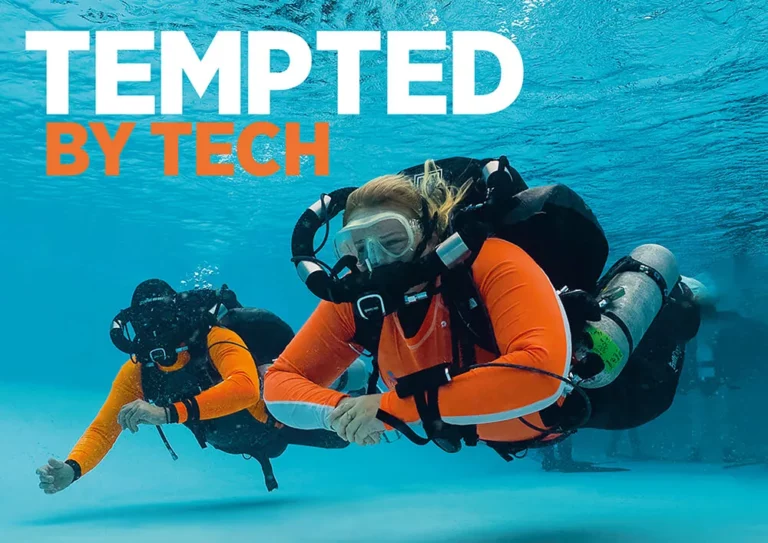
Dedicated recreational diver Adrian Stacey heads out to North Stradbroke Island for Manta Lodge’s annual Tech Weekend and gets to experience trydives on two closed-circuit rebreathers, as well as a host of other advanced equipment.

Manta Lodge Tech Weekend: A Gateway to Technical Diving
Manta Lodge on North Stradbroke Island has been running a tech weekend every year in August since 2021. James, the owner, and Dan, the manager, are avid rebreather divers and are enthusiastic about sharing the benefits of these systems with other scuba enthusiasts. The weekend usually consists of three days of open water diving and a pool session to try out new gear, plus workshops and guest speakers. This year, accomplished filmmaker and photographer Nays Baghai was speaking.
Why Choose a Rebreather? CCR vs SCR Explained
Dan explained that the purpose of the weekend is ‘to give divers interested in technical diving an opportunity to try equipment they may not have access to elsewhere in a safe and fun environment, combined with offering three days in a row of technical boat charters for trained tech and rebreather divers to get some dives in, not limited by recreational profiles’.
He added ‘the tech weekend is an event that both James and I look forward to every year. Being able to showcase the amazing technical diving located at North Stradbroke Island and to be able to introduce the next generation of budding technical divers to the equipment to make these sites accessible, safe and enjoyable is something we both find great enjoyment in’.
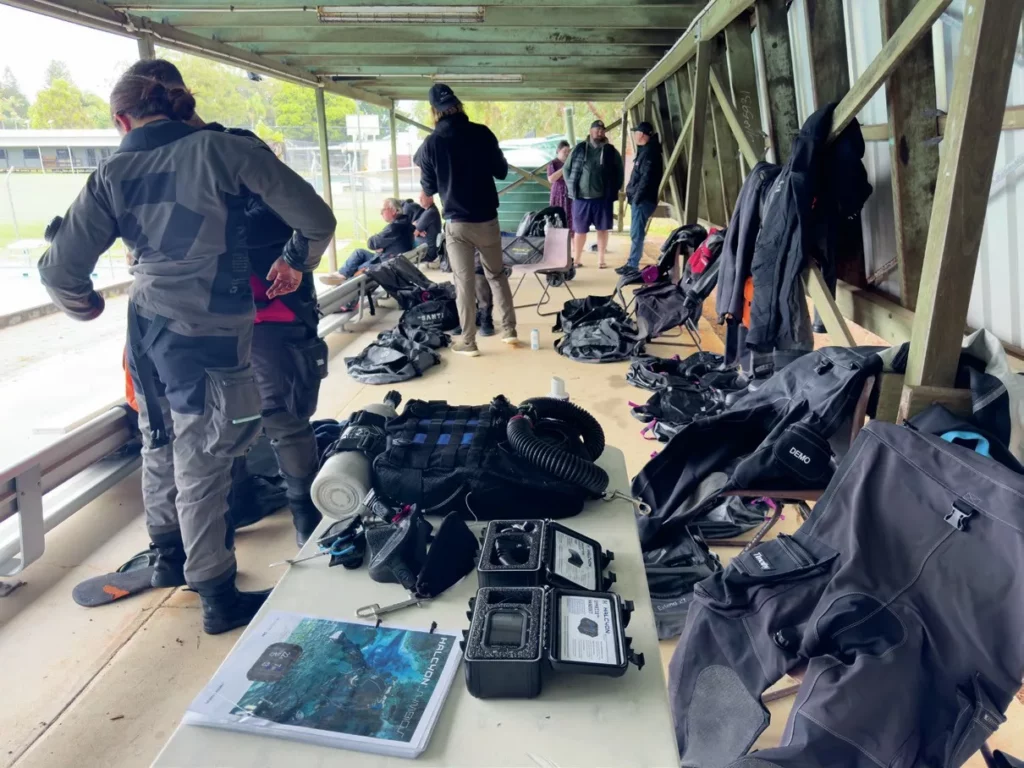
I have been a diver for over three decades now, and the only exposure I have had to tech diving was a Horizon Try Dive with Manta Lodge last year. I enjoyed using the Horizon, a semi-closed rebreather, and it is an excellent introduction to rebreathers. They require less training and are less complicated than their closed-circuit counterparts. That said, as technology advances, closed-circuit rebreathers are becoming easier to use, safer and more compact.
Hands-on with Technical Scuba Gear: The Pool Sessions
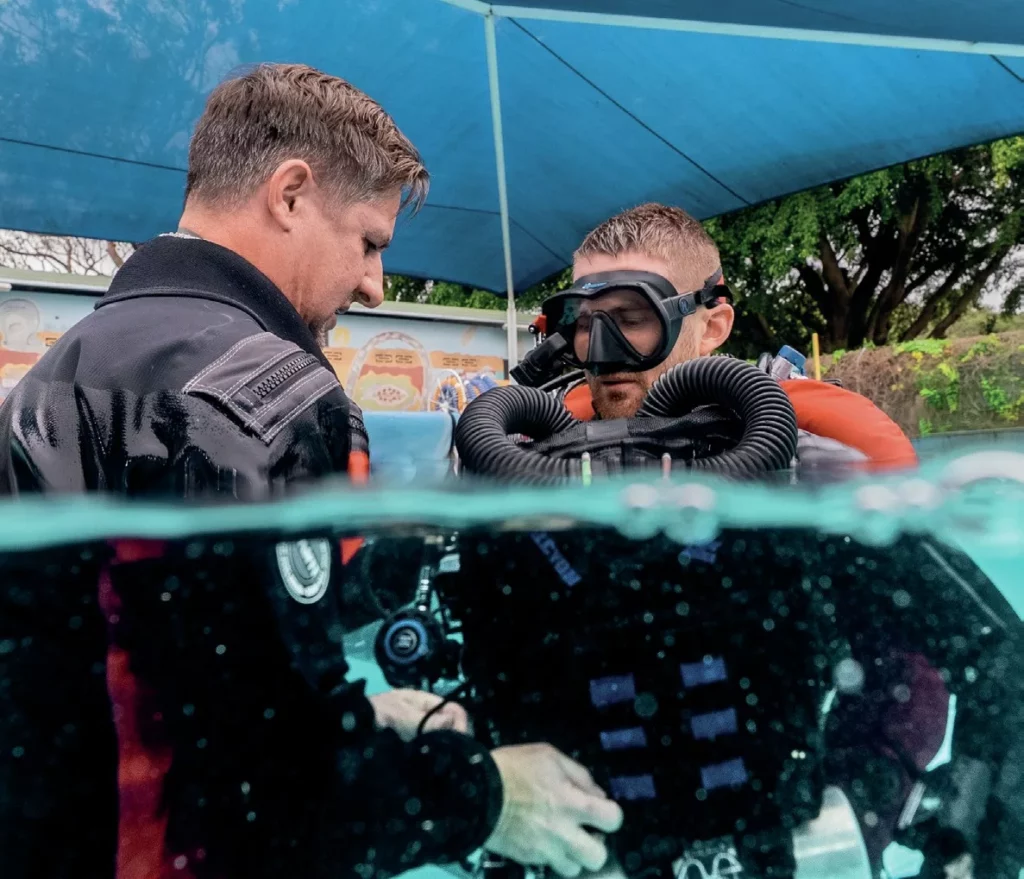
As I am not a trained tech diver, I was unable to venture out into open water. Still, the beauty of this weekend is that on Saturday morning, you get to try the equipment in the local swimming pool, all under the expert supervision of the Manta Lodge team. These pool sessions attract a mix of new tech divers and experienced open circuit tech divers looking to try a rebreather.
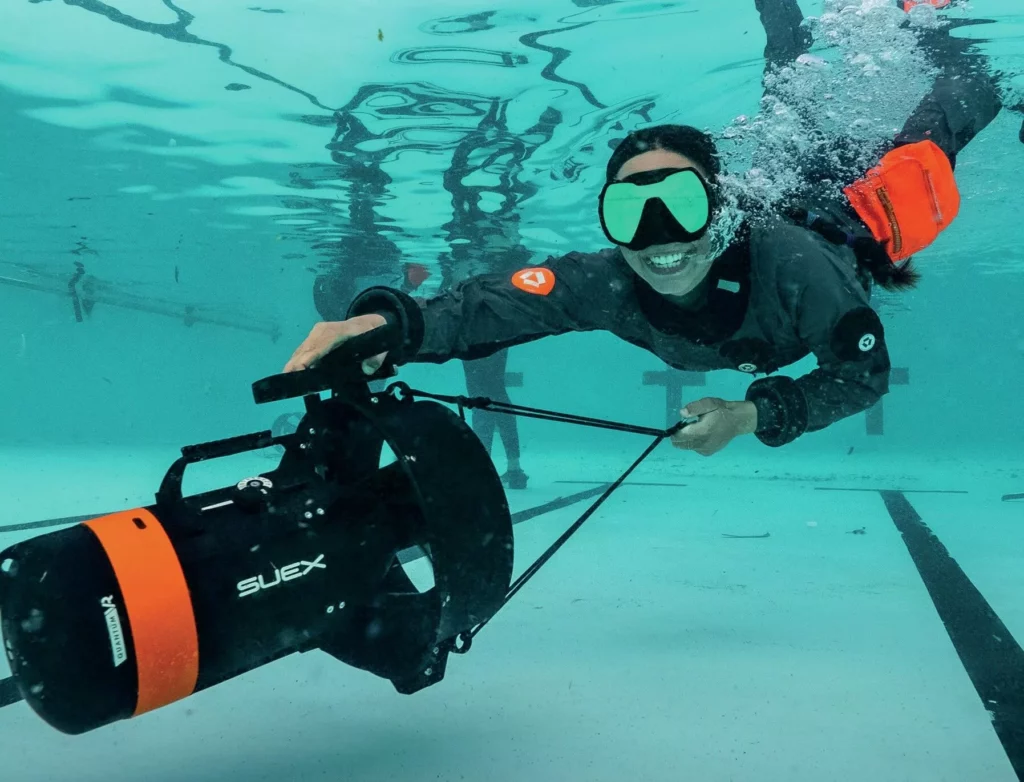
Available to try were the Horizon semi-closed rebreather, the rEvo closed-circuit rebreather, and the new Halcyon Symbios front-mounted closed-circuit rebreather. In addition, there were sidemount and twinset rigs. As the outdoor pool is not heated, Santi drysuits were provided, along with heating systems such as the Venture heated vest or the new WettieWarmaz heated kidney belt. For a bit of fun, there was also the new SUEX underwater scooter.
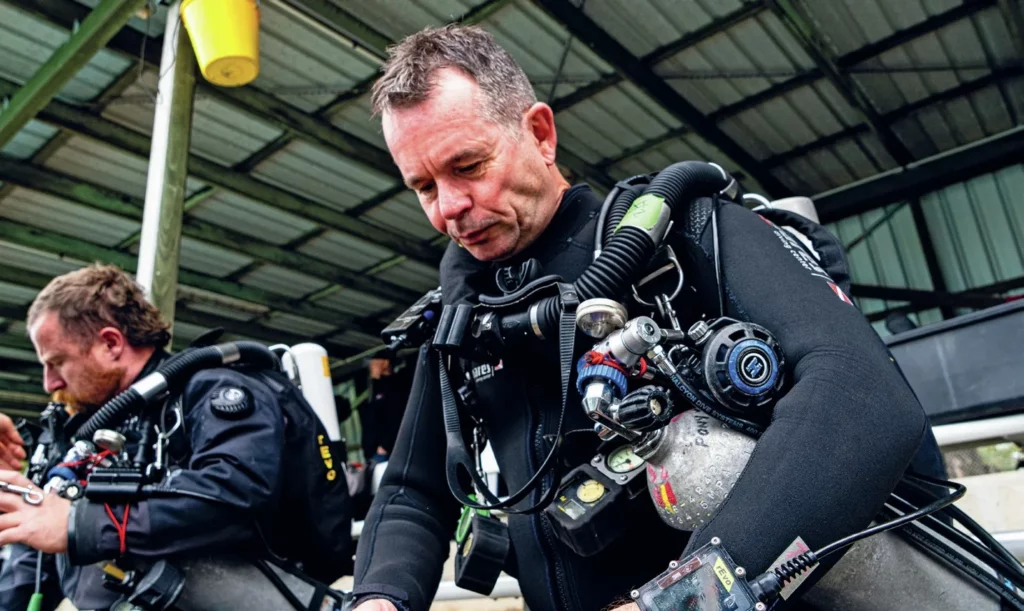
Before jumping in the pool, Dan gave the assembled crowd a comprehensive briefing and explained about the different types of rebreathers, the markets they are aimed at, their benefits and their limitations. There are many benefits to diving on rebreathers, especially for photographers. The lack of bubbles allows you to get closer to marine life, and the extended dive times mean longer can be spent underwater to capture stunning images. Being able to achieve greater depths also allows exploration of deep wrecks and reefs.
There are several differences between semi-closed (SCR) and closed-circuit rebreathers (CCR). SCR units are safer, cheaper to buy, more affordable to run, easier to use and require less training. CCRs can go to greater depths, allow even longer bottom times, can use a greater range of gas mixes and produce no bubbles.
Horizon Semi-Closed Rebreather
This recreational semi-closed rebreather is safe and easy to use, making it very easy to step up from recreational open circuit to this unit. It is approximately half the price of a traditional closed-circuit rebreather and offers numerous benefits, including significantly reduced gas consumption compared to open circuit and quieter bubbles. This unit utilises nitrox, making it easy to use anywhere and cheaper to run. The maximum depth is 30m-40m, depending on the gas mix.
rEvo Closed-Circuit Rebreather (CCR)
This is a tried and tested closed circuit rebreather, popular with deep wreck divers- utilises complete redundancy in both electronics and oxygen monitoring, along with a temperature analysing system to track CO2 absorbent usage. Other benefits include O2 cell redundancy, the ability to conduct field repairs on most major components, a CO2 scrubber monitoring system using temperature probes to track usage, allowing far longer runtimes before replacing scrubber material compared to other rebreathers.
Halcyon Symbios Chest-Mounted Rebreather
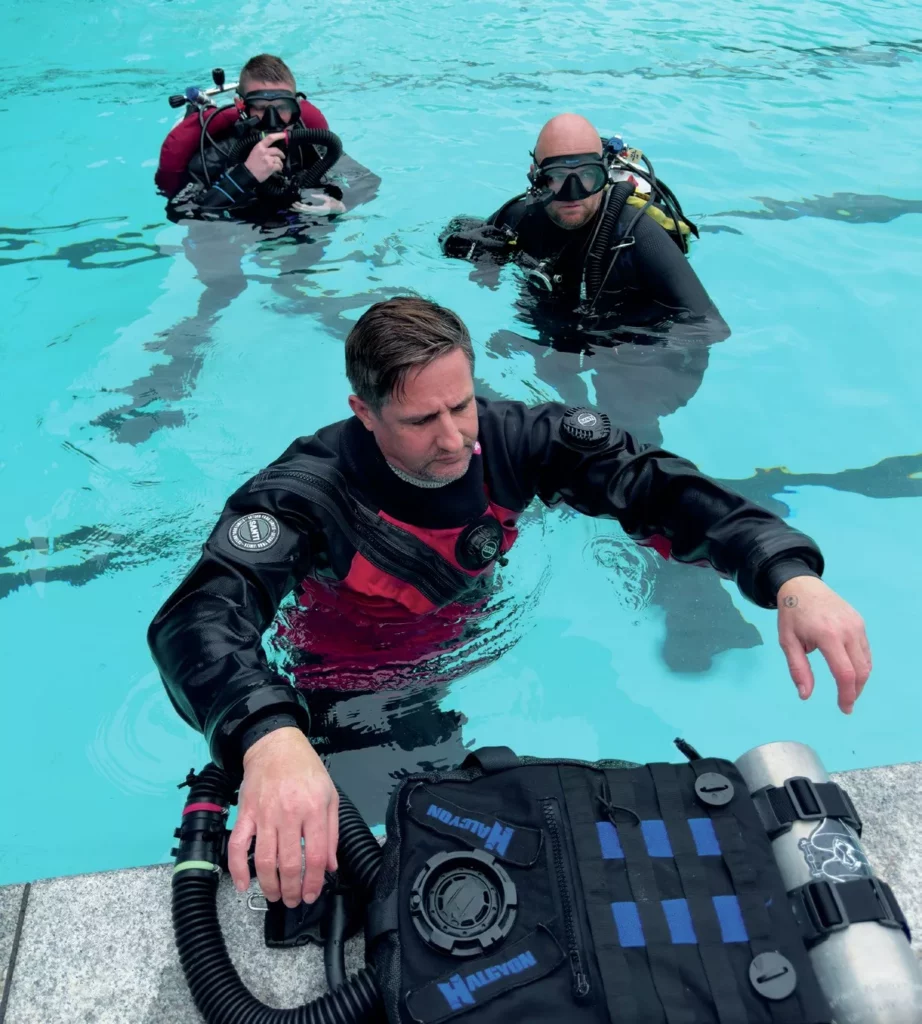
The new kid on the block is a wireless chest-mounted closed-circuit rebreather due to be released towards the end of this year. Utilising revolutionary wireless PO2 and tank pressure systems and a mix of standard oxygen sensors and digital oxygen sensor (green flash) technology, along with a CO2 sensor. This system offers several advantages, including its compact size and lightweight design, making it ideal for travel. Additionally, it can be seamlessly integrated with any existing diving system (single tank, twin tanks, or side mount), featuring a completely wireless handset and heads-up display (HUD).
Real-World Performance: Buoyancy and Silence Underwater
As I had used the Horizon on a previous visit, I decided to jump straight in at the deep end, so to speak, and try out the rEvo. It is a relatively bulky unit, and I found it quite heavy out of the water. In the water, however, it felt well balanced and easy to manoeuvre. There are two air gauges and a computer that need regular monitoring, but overall, if the HUD shows no red lights, you are good to go. Breathing on this unit is a little more difficult than on open circuit scuba, especially in an upright position, and if there is too much oxygen in the loop, you end up with hamster cheeks. Once in a natural swimming position, breathing does not require so much effort. Controlling buoyancy on a rebreather involves a fundamental shift from open-circuit methods, as breathing does not change your buoyancy due to the constant gas volume in the closed-circuit loop. Instead, you use manual adjustments to the buoyancy compensator. Once this has all been overcome, you finally notice the complete silence.
Next up was the turn of the Halcyon; this front-mounted system is much lighter and more compact. I also found the breathing to be slightly easier. Buoyancy control and the blissful silence is the same as the rEvo. The HUD contains all the information on the computer, making it easy to constantly monitor your PO2, which is perhaps the most essential reading to be aware of.
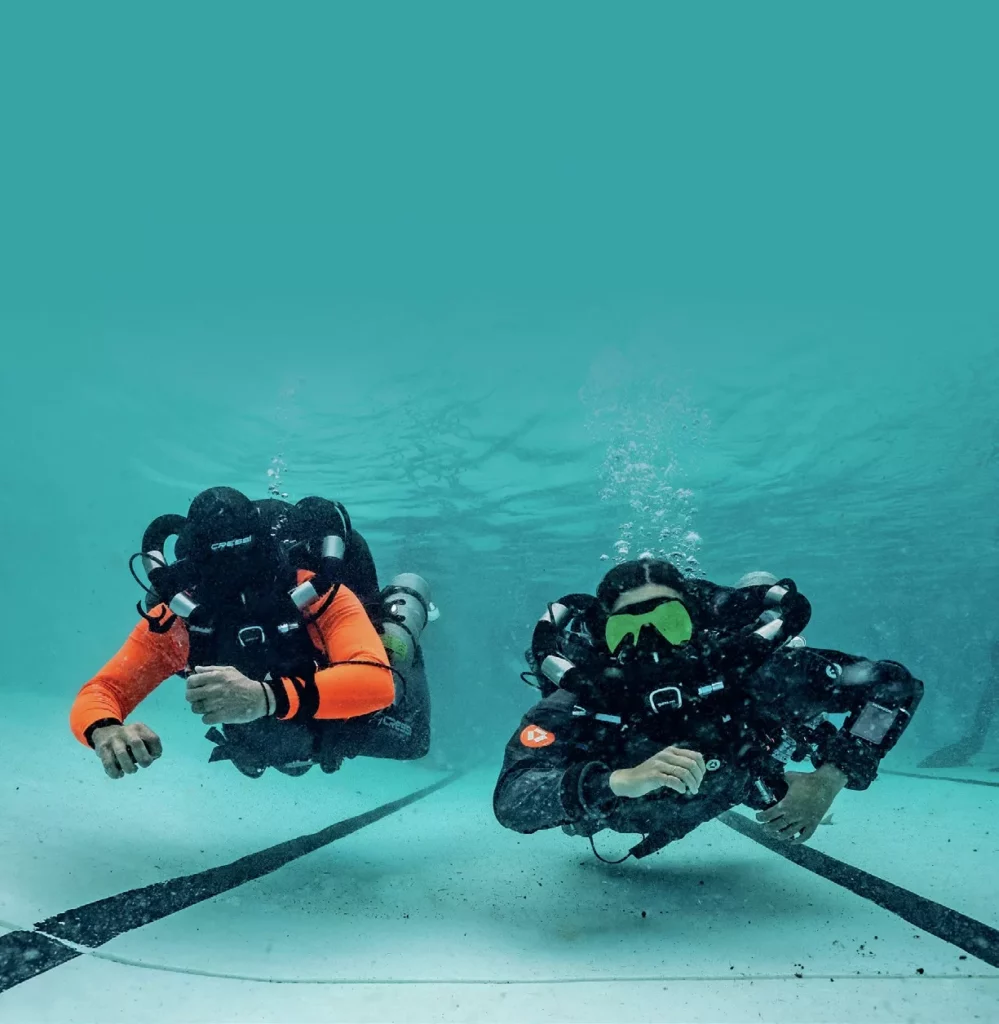
Both systems are great, but due to their size and compatibility with a variety of scuba units, I see the Halcyon attracting more recreational divers to venture into the realms of tech diving. Other pieces of equipment I got to play with included the heating systems, which were both excellent and kept out the chill of the pool. The Venture heated vest provides excellent all-around body warmth, but the battery packs are pretty bulky. On the other hand, the WettieWarmaz focuses the heat on the kidneys, and although it doesn’t offer the same warm hug experience as the vest, it was still very effective in the pool. It is also cheaper and more slimline.
I also got to try out the new Suex VR scooters. These compact units are great fun and pack a decent punch. Although the pool is not big enough to really open them up, it offered a glimpse of their potential.
Exploring North Stradbroke Island’s Technical Dive Sites
North Stradbroke is an excellent place for experienced tech divers to explore and for novices to hone their skills. Most dive sites are in the 25m-45m range and are only a short ten- to 15-minute boat ride away, offering world-class wildlife encounters. A massive variety of shark and ray species are regulars, along with humpback whales, which are commonly sighted on decompression stops during the winter.
Unfortunately for the qualified tech divers, weather conditions meant the dives on Friday and Saturday had to be cancelled; however, it sounded like the Sunday dive more than made up for it! At the site called Roaring Deep, they encountered large schools of rays, bull sharks, and huge schools of fish. Rebreathers open a whole new world of possibilities. As they become safer, easier to use, and easier to travel with, I might have to reevaluate my misconceptions about these incredible devices and my reluctance to embrace the world of tech diving.
Manta Lodge
For more information regarding the release of the Halcyon Symbios or for units and/or training, on the Halycon/rEvo/Horizon/OC Tech, get in touch with Manta Lodge Directly. Email info@mantalodge.com.au Phone +61 7 3409 8888.
Frequently Asked Questions
What is the difference between a semi-closed (SCR) and closed-circuit rebreather (CCR)?
SCR units, like the Mares Horizon, are generally more affordable, require less training, and use Nitrox, though they still produce some bubbles. CCR units, such as the rEvo or Halcyon Symbios, recycle all exhaled gas, produce zero bubbles, allow for deeper depths, and provide significantly longer bottom times.
Why should underwater photographers use rebreathers?
Rebreathers are ideal for photographers because they are silent and bubble-free, allowing divers to get much closer to marine life without spooking them. Additionally, the extended dive times provide more opportunity to capture the perfect shot.
Is technical diving available on North Stradbroke Island?
Yes, North Stradbroke Island offers world-class technical diving. Sites like Roaring Deep feature depths between 25m and 45m, offering encounters with bull sharks, schools of rays, and humpback whales, all within a short boat ride from Manta Lodge.
What is the Halcyon Symbios rebreather?
The Halcyon Symbios is a cutting-edge, wireless chest-mounted CCR. It is known for being lightweight and compact, making it highly portable for travel and compatible with various existing diving setups, including sidemount and twinsets.
Do I need to be a certified tech diver to try a rebreather?
Not necessarily for an introductory experience. Events like the Manta Lodge Tech Weekend offer supervised “try-dives” in controlled environments like swimming pools, allowing recreational divers to test equipment like the rEvo or Horizon before committing to a full certification course.
This article was originally published in Scuba Diver Magazine
Subscribe today with promo code DIVE1 — enjoy 12 months for just £1!
