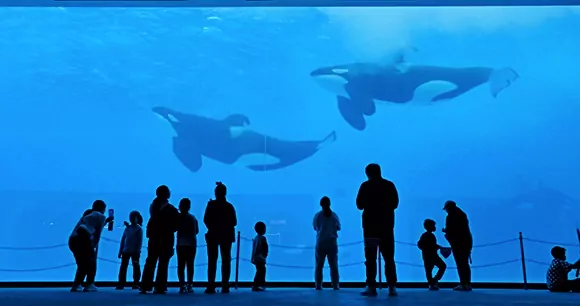
Which country holds the most orcas in captivity? For a long time it was the USA that held that dubious honour, but now it has been overtaken for the first time – by China.
According to a new report by China Cetacean Alliance investigators, China now holds 22 orcas in captivity, most of them on public display with what CCA describes as “minimal welfare safeguards”.
Also read: France’s last captive orcas face uncertain fate
As the international community’s appetite for watching whales and dolphins perform tricks in tanks has waned, China has gone in the opposite direction, says CCA. This means that it is also the world leader in numbers of captive bottlenose dolphins, with more than 730, and beluga whales, of which it has about 145.
“The expanding Chinese ocean theme park industry continues to perpetuate conservation and welfare problems,” says the Washington DC-based coalition of international and Chinese animal welfare bodies.
Also read: Shark & ray CITES listings get a boost
Of China’s 22 captive orcas, 15 were imported from Russia’s Sea of Okhotsk while seven were born in captivity. Most of the animals were put on display only in 2023, with the opening of a facility in Zhuhai called Chimelong Spaceship .
As of July 2024, 101 captive cetacean facilities were operating in China, twice as many as in 2015, with 11 more under construction. They house an estimated 1,307 cetaceans representing 15 species.
Supply from Japan
In the USA 18 captive orcas are held at three SeaWorld parks. Russia banned the live capture of orcas and belugas for entertainment in 2018, since when China is said to have had to focus increasingly on breeding and imports from Japan to meet demand.
“China is the market for wild-caught cetaceans, which has harmed its international reputation, destabilised free-ranging populations and resulted in an unknown number of animal deaths,” says Dr Naomi Rose, senior scientist in marine mammal biology at the Animal Welfare Institute (AWI), a CCA founding member. She visited China at the start of the year to observe orcas living in facilities there.
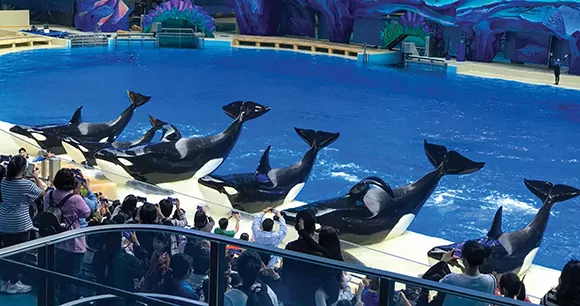
“The Chinese ocean theme park industry is incapable of meeting the complex physical and behavioural needs of cetaceans,” says Rose. “An increasing number of facilities offer visitors swim- or dive-with-cetacean experiences, putting the public at risk – as evidenced by the growing number of reported injuries – while failing to provide meaningful conservation information.
“Moreover, many animals are suffering from publicly documented trainer abuse and lack of specialised veterinary care.”
Disparity in records
There is no publicly available information on the condition of captive cetaceans in China, though the CCA report cites several deaths, including those of two critically endangered Yangtze finless porpoises.
The alliance also alleges that the number of wild-caught cetaceans registered as imported to China in the CITES database differs from export records from the originating countries, including Japan, by more than 380 individuals. “This is an area of critical concern for the government and the industry and represents a potential violation of CITES regulations,” it says.
CCA would like to see the Chinese government launch independent investigations into CITES import data and captive cetacean welfare in China, prohibit close-contact activities between visitors and animals, and prepare plans to phase out their display at ocean theme parks.
CCA members besides the AWI are the Born Free Foundation, Endangered Species Fund, Hong Kong Dolphin Conservation Society, Life Investigation Agency, Marine Connection and Whale & Dolphin Conservation. The alliance’s latest Ocean Theme Parks report is the third edition.
Also on Divernet: Captive dolphin ‘thrown out with bathwater’, Failing Seaquarium gets 6-week ultimatum, Cetacean defenders leap in after Lolita’s lonely death, Tooth damage bites for captive orcas