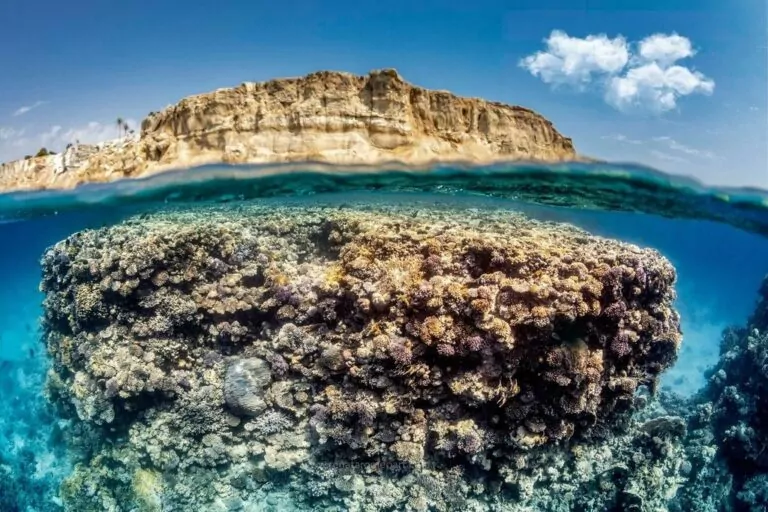
By mapping coral reefs across the western Indian Ocean, the New York-based Wildlife Conservation Society (WCS) says it has uncovered unexpected pockets of climate-resilience that could offer hope for conservation efforts in the region.
WCS researchers identified the reefs by combining AI models with data from 1,000 existing field studies. “Past models have been coarse and often relied on just a few temperature variables,” says Dr Tim McClanahan, director of science for WCS’s Global Marine Programme.
Also read: ReefSeed coral project welcomed in Maldives
“Our model leverages the full capacity of global environmental mapping and machine learning, creating new possibilities for finding resilient reefs that need protection.”
The WCS model is said to consider many environmental variables on a small scale to provide a more detailed and varied outlook for coral reefs. In this way it challenges more severe predictions from previous models, including the 2023 Intergovernmental Panel on Climate Change (IPCC) report.
Under a 1.5°C warming threshold, 70% of reefs were predicted to experience only modest declines of less than 5% in coral cover and species diversity by 2050 – although the researchers warn that if emissions continue unmitigated, coral cover could still decline by 40% by mid-century.
Potential benefit
In the new model about 5% of coral reefs have been identified to potentially benefit from changing conditions, suggesting potential refuges in which corals could continue to thrive despite warming.
“In our work we’ve found that around 30% of reefs in the world could withstand a 1.5°C temperature increase,” said McClanahan. “But as that threshold has passed, only 15% of reefs are expected to show resilience in a scenario without urgent carbon mitigation.
“This means we should expect the more extreme model scenarios to emerge unless humans reduce greenhouse gas emissions now.”
The researchers hope that their modelling methods will be adopted to help scientists worldwide map biodiversity with higher precision.
The research was supported by the US Department of Interior and US Agency for International Development, with fieldwork supported by the Western Indian Ocean Marine Science Association and Bloomberg Ocean Initiative. The study is published in the journal Ecosphere.
Also on Divernet: ‘We’ve bred corals to better tolerate lethal heatwaves’, Scientists discover heat-tolerant corals hidden in plain sight, Big heat-resistance boost from Secore’s super-corals, More super-corals – in the Red Sea