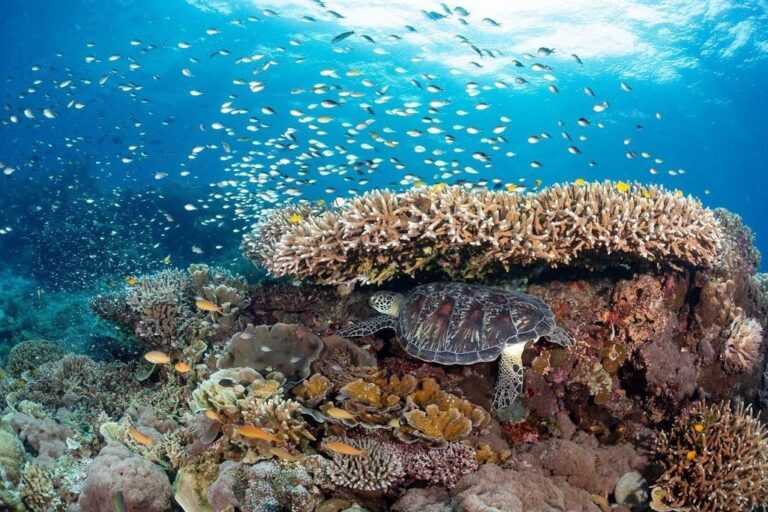
The Wildlife Conservation Society (WCS) has launched its “2025-2030 Coral Reef Conservation Strategy”, which focuses on making the most of what are emerging as the world’s toughest coral outposts.
These High Integrity Climate-Resilient Coral Reefs (HICOR) have survived despite indications that half of the world’s live coral has already been lost in the worst global bleaching event on record. The WCS says that this event has now affected more than 80% of the world’s reefs.
Widely regarded as one of the leading global conservation NGOs, the US-based WCS runs what it says is the world’s largest field-based conservation programme, protecting habitat for more than 40% of Earth’s known biodiversity in partnership with governments, indigenous peoples, local communities and the private sector.
“The world has likely already crossed 1.5°C of warming, and coral reefs are at a tipping point, but our science shows a clear path forward,” says Dr Stacy Jupiter, executive director of WCS’s Global Marine Programme.
“Some coral reefs are defying the odds and have the ability to survive and fight back against the impacts of climate change – if we find them and protect them. This strategy is our commitment to act on that evidence.”
Resilient future
HICOR have enough live coral cover, species diversity and reef-fish biomass to avoid, resist and recover from climate impacts – with the potential to provide the foundation for nature’s global recovery, according to the WCS.
“This strategy is about more than just preventing loss and saving coral reefs,” says WCS director of coral reef conservation Dr Emily Darling, who led the framing of the strategy. “It’s about building a future where oceans thrive, communities prosper and hope endures.
“By focusing on the coral reefs most likely to withstand climate change, we can spark recovery, build a resilient future and show what’s possible when science, collaboration and commitment come together.”
WCS plans to deliver a new global HICOR map, pinpointing those reefs most likely to survive climate change and in which the world should invest most in protection and management. It wants at least 30 new marine protected areas (MPAs) to include those “reefs that matter most”.
Solutions ranging from co-managed fisheries to pollution reduction should be applied to reduce reef threats across at least 10 million hectares of coastal areas, with governments supported in launching five national coral-reef action plans with HICOR at their core.
WCS wants to mobilise 31 countries containing more than 90% of the world’s reef area to commit to protecting their HICOR by next year’s COP31, and to drive global recognition of the strategy through new scientific papers and media features.
“By combining cutting-edge science, political action and the co-creation of local solutions, we are investing in the reefs that have the greatest chance of surviving today,” says WCS executive VP for global conservation Joe Walston.
“These reefs will not only endure but also drive recovery for the oceans and communities of tomorrow.”