Bob Croft, who was hailed as the “father of American freediving” following his breath-hold world record exploits in the 1960s, died on 9 January at the age of 91.
Croft was born in New York on 19 July, 1934. As a boy living in Rhode Island near Narraganset Bay he would experiment with ways of packing extra air into his lungs to help in out-swimming and out-diving his friends.
In 1951 Croft joined the US Navy and became a submariner. Later, working at the naval submarine base in Groton, Connecticut in the early 1960s, his duties included training sailors in submersion escape techniques.
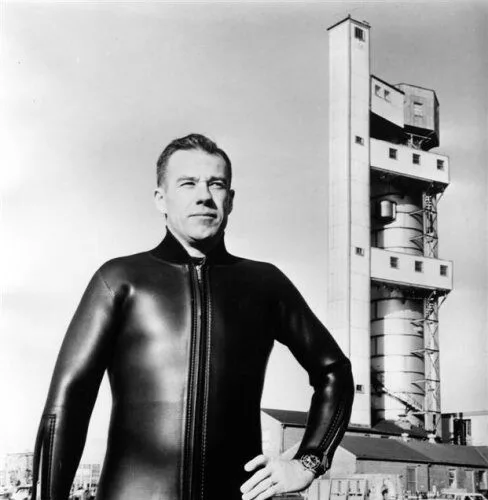
It was in the 36m-deep escape tank that he honed his natural aptitude for breath-holding, building up to six-minute spells under water.
Casual followers of competitive freediving, especially in Europe, might have been led to believe by the classic 1988 movie The Big Blue that early world-record freediving was dominated by the Frenchman Jacques Mayol and the Italian Enzo Maiorca – but for a period in the mid-1960s Croft made the race for depth a transatlantic battle.
Between 1967 and 1968 he set three world freediving depth records, ratified by CMAS, the main international governing body for underwater sports at the time.
Race for depth
Maiorca had emerged at the start of the decade setting a 45m depth record and continuing to improve on his own marks until he had reached 54m by 1965.
Mayol entered the race the following year to crack 60m, but in February 1967 Croft set a mark of 64m, becoming the first freediver to exceed the perceived barrier of 200ft on one breath.
Later in 1967 Maiorca briefly reclaimed the record but Croft responded that December with an improved dive to 67m.
At the start of 1968 Maiorca again shifted the bar to 69m, followed by Mayol reaching 70m. Croft set his final world record later that year with a dive to 73m, and retired from competition.
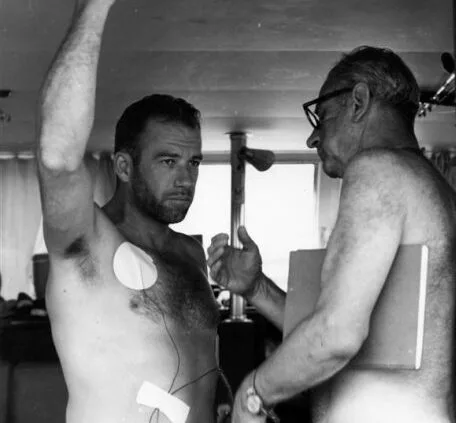
By then he had already been a research subject for Navy scientists for six years, leading to an influential published study of the blood-shift phenomenon, the human diving reflex that allows the body to withstand high pressure at depth.
The competing freedivers had moved from simple breath-hold dives to using sleds and employing advanced breathing techniques. Croft was credited with developing the method of “lung packing” (glossopharyngeal inhalation) to increase his air capacity, based on what he had started doing instinctively in his youth.
As well as his record-setting, Croft qualified as a Navy deep-sea diver in 1968, extending this to mixed-gas diving four years later.
The hard way
The Maiorca-Mayol rivalry continued into the 1970s and ’80s with 100m+ No Limits dives. Croft’s depth achievements had come early in the modern era but his passing of the 200ft mark had defied what many scientists then believed was the physiological limit, and his methods contributed to freediving training long after his retirement.
Maiorca’s early records had been mostly Variable Weight dives, using a weighted sled down and swimming up under his own power, but he went on to carry out No Limits dives once the sled and lift systems with which Mayol’s ’70s world records were associated became accepted.
In contrast, Croft’s mid-’60s record disciplines were Constant Weight – swimming down and up without pulling on a rope – and Variable Weight, carried out often with no fins or minimal assistance. He did not use sled-and-lift No Limits systems.
Croft retired from the US Navy in 1980 and went on to coach and mentor aspiring freedivers and to enjoy recreational diving. Both a scuba and freediving instructor, he wrote and lectured about breath-hold techniques and judged freediving competitions.
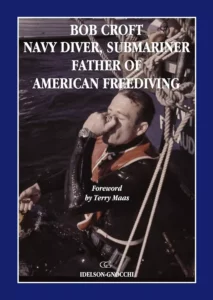
Celebrated within the diving community, he recorded his experiences in his 2013 autobiography Navy Diver, Submariner And Father Of American Freediving. Bob Croft is survived by his wife Edna and their three children.