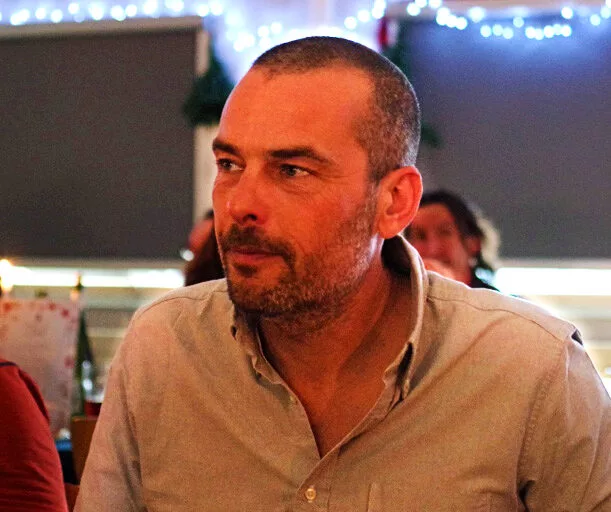
The body of missing Antarctic scuba diver Gérald Malaussena has been found with the help of a US Coast Guard team, though it has yet to be recovered.
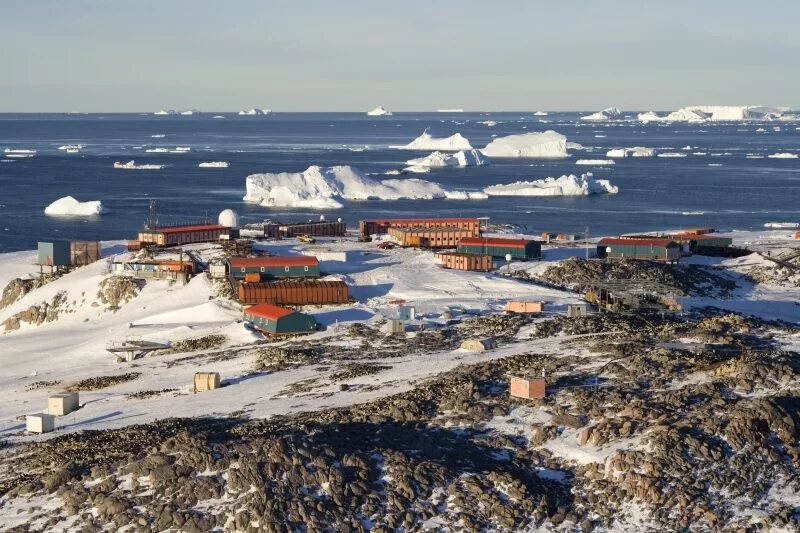
The French Polar Institute scientific diver had gone missing while working with a colleague under the ice near Dumont d’Urville Station in Adélie Land on 13 January, as reported at the time on Divernet.
Described as well-liked and a “consummate professional”, Malaussena had been checking scientific equipment when his colleague lost sight of him.
A search operation was said to have been launched immediately but it was not until 22 January that Malaussena was found.
Following a grid pattern, teams at Dumont d’Urville drilled into the ice-floe near the dive-site to provide shafts of light through which infra-red cameras could be deployed to examine the seabed.
ROV assistance
Late on 15 January, four US Coast Guard officers arrived from McMurdo Station on Ross Island – a 1,500km journey – equipped with an ROV. They used the vehicle to search as wide an area around the dive-site as its range allowed, though without success.
They left on 17 January but on the afternoon of 21 January another US Coast Guard officer arrived with a second ROV, with sonar and metal-detection equipment. Its longer range of 300m enabled an area not previously searched to be reached, and Malaussena’s body to be located.
Three Réunion Island police divers were already on their way from Hobart in Australia on the research vessel L’Astrolabe to reinforce the search and recovery operation, along with a psychologist to provide on-site support for the station staff. They were hoped to arrive around this weekend (24-25 January).
Gérald Malaussena had been working on his fifth consecutive summer campaign in Antarctica and his third as a diver. He alternated, according to season, between his Antarctic missions, work as a freelance boilermaker and renovating his farmhouse in the south of France, and was said to have had a passion for both diving and music.
“You will forever be with us, part of this polar family,” said French Polar Institute director David Renault.