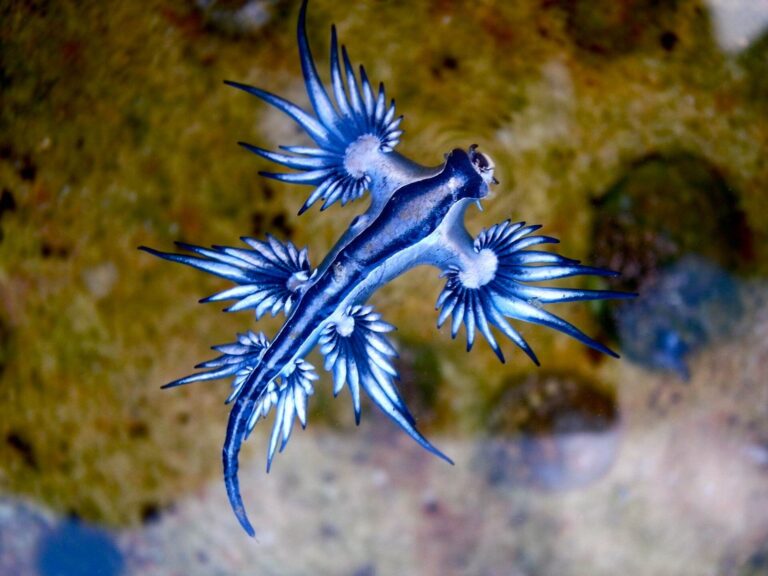
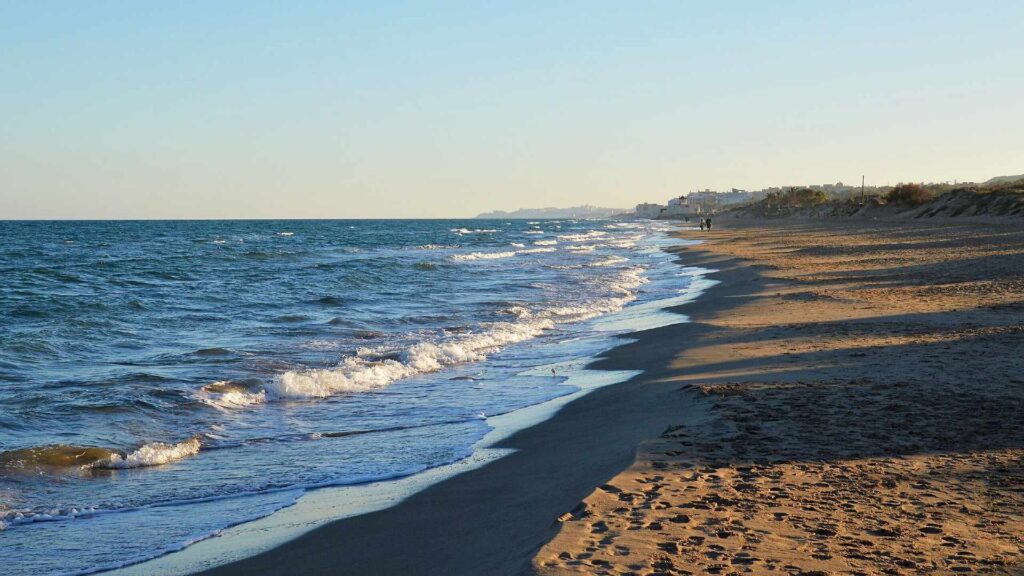
Spanish municipal authorities closed beaches at Guardamar and La Mata in Alicante to swimmers from 20 August because of what they described as the “massive appearance” of a pelagic nudibranch that might be unfamiliar to many divers – the blue angel.
When encountered en masse, blue angels (Glaucus atlanticus) constitute what is termed a “blue fleet”. “Contact with this sea animal can be dangerous and cause painful burns to the skin,” warned the local police.
“We urge neighbours and visitors to respect the directions, exercise caution and avoid direct contact with specimens that may appear in the sand,” it directed, as the tiny visitors started washing up on the shores.
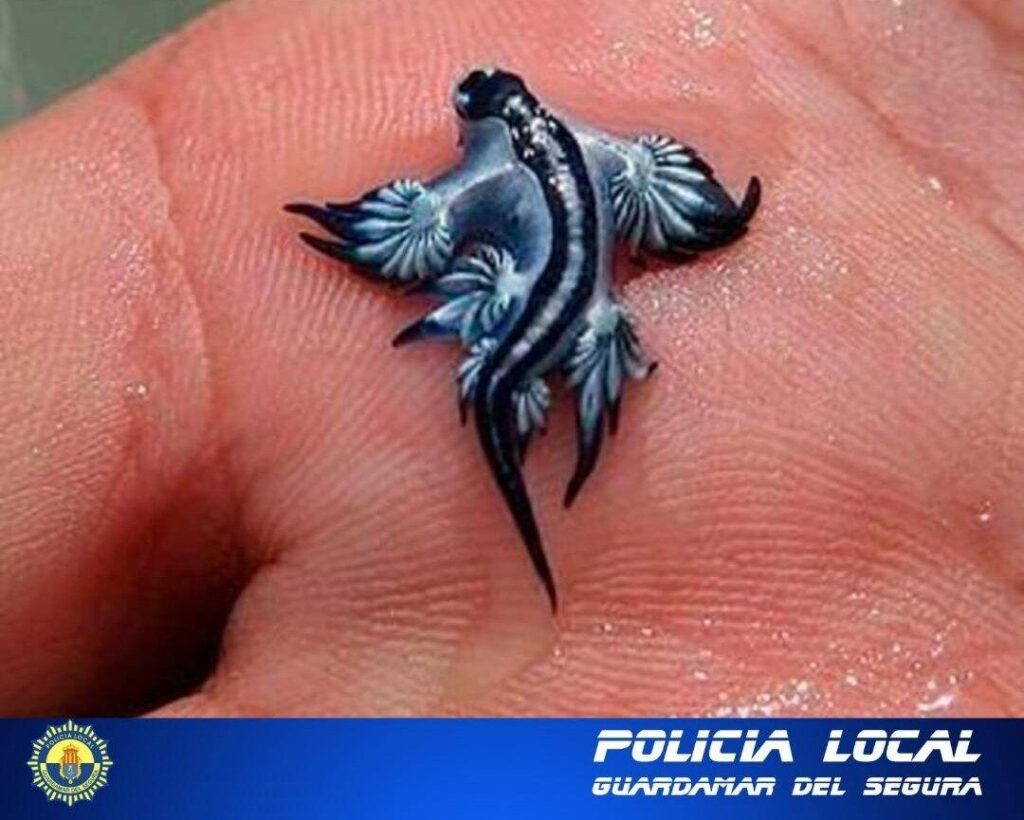
Blue angels, aka blue glaucus, blue sea dragons or sea swallows, are rarely seen in the Mediterranean and it is assumed that ocean-warming is responsible for their arrival from tropical and subtropical waters in the Atlantic. They are also found in the Pacific and Indian Oceans. Water temperatures off the Alicante beaches were reaching close to 28°C at the time.
The 3cm sea slugs float upside-down at the surface using both surface tension and a gas-filled abdominal sac. They appear camouflaged as blue against the water from above, and counter-shaded in grey from a diver or underwater predator’s point of view.
Blue angels prey on jellyfish such as the blue bottle or Portuguese man-o’-war, ingesting its nematocysts in the tips of the finger-like cerata that help them to swim.
They can therefore inflict similar but even more concentrated toxic stings, causing symptoms that can include redness, inflammation, nausea, pain, vomiting or allergic reactions.
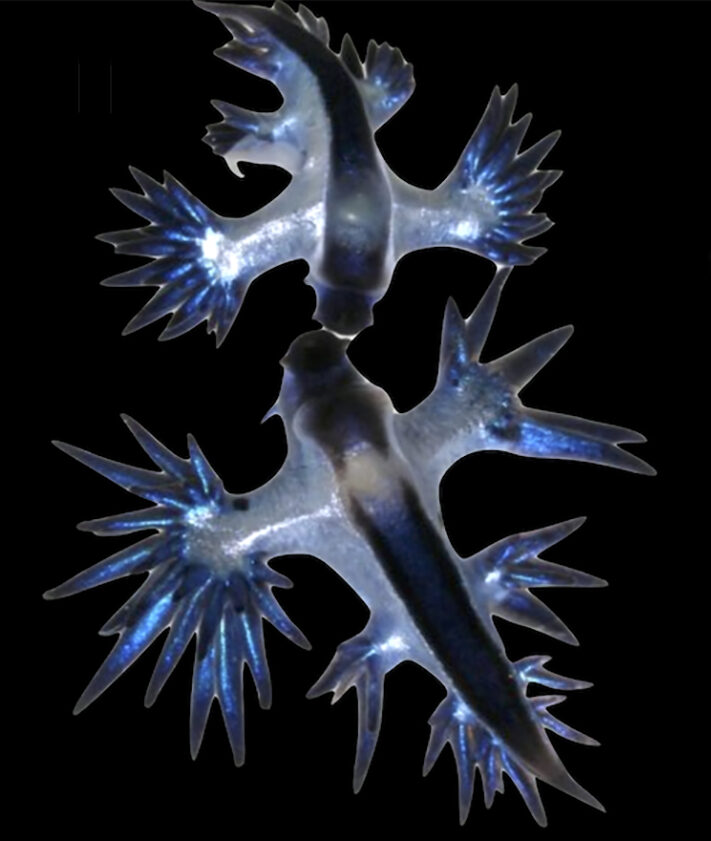
When they mate – each individual has both male and female reproductive organs – they have to do so circumspectly or can end up stinging each other to death. They lay a string of eggs that hatch into larvae within about three days.
Stings should be rinsed with sea water and ideally soaked in hot water for up to 20 minutes to deactivate the toxins and relieve pain.