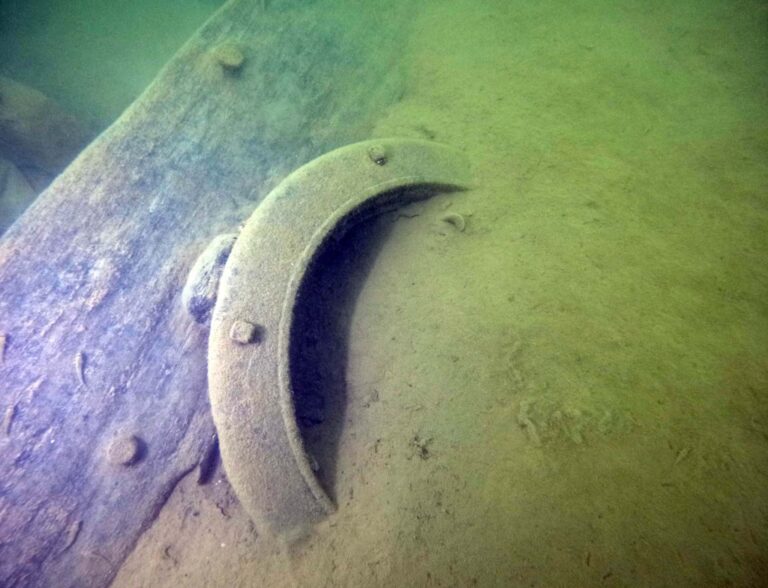
A wreck identified as the JC Ames, one of the most powerful tugboats ever to work in the Greak Lakes, has been found in shallow water off Manitowoc in Lake Michigan.
Boat-angler Christopher Thuss came across the remains only some 3m beneath the lake surface on 13 May. He reported his discovery to Wisconsin Historical Society (WHS) maritime archaeologist Tamara Thomsen, who quickly arranged a dive by society members to check it out.
Also read: Diver’s generosity returns shipwreck gold watch to UK
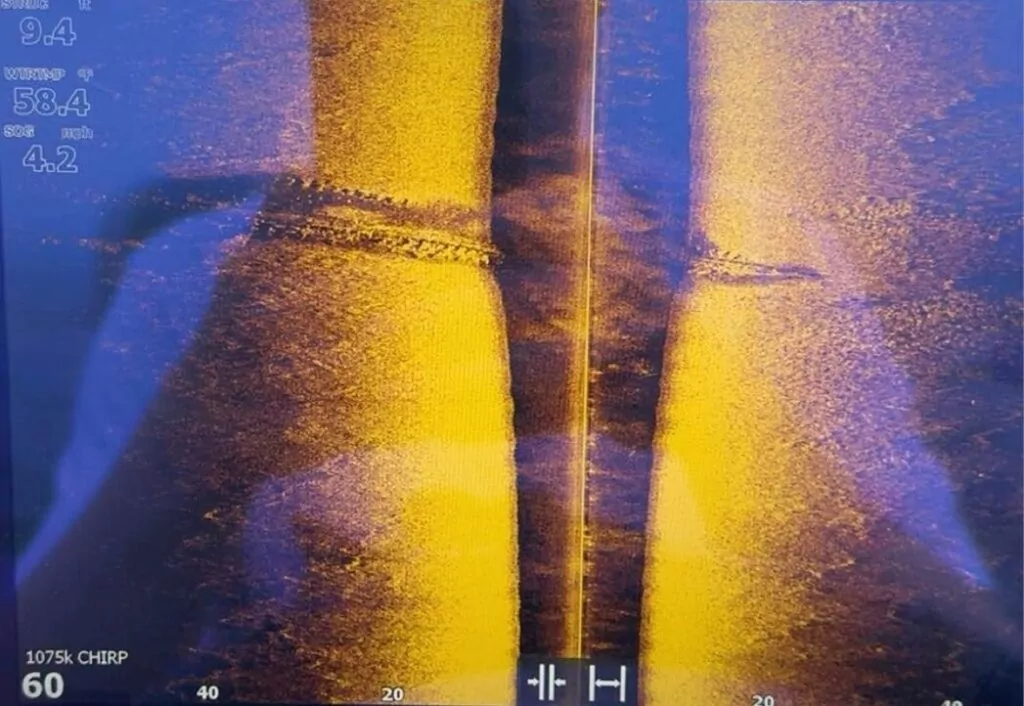
“It sat there for over 100 years and then came back on our radar completely by chance,” said Thomsen, who worked with Wisconsin Underwater Archaeology Association (WUAA) president Brendon Baillod to identify the wreck.
Lack of mollusc encrustation on the structure indicated that it had long been covered by silt before being partially uncovered in a recent winter storm. Invasive quagga mussels in the Great Lakes can cover wrecks so thickly that they eventually crush it.
Thuss’s family is known for discovering wrecks in the Lakes. After retiring from work his step-grandmother, known locally as “Shipwreck Suze”, had operated a powered parachute and an ultralight plane, and in 2015 found three Lake Michigan wrecks in the space of three days.
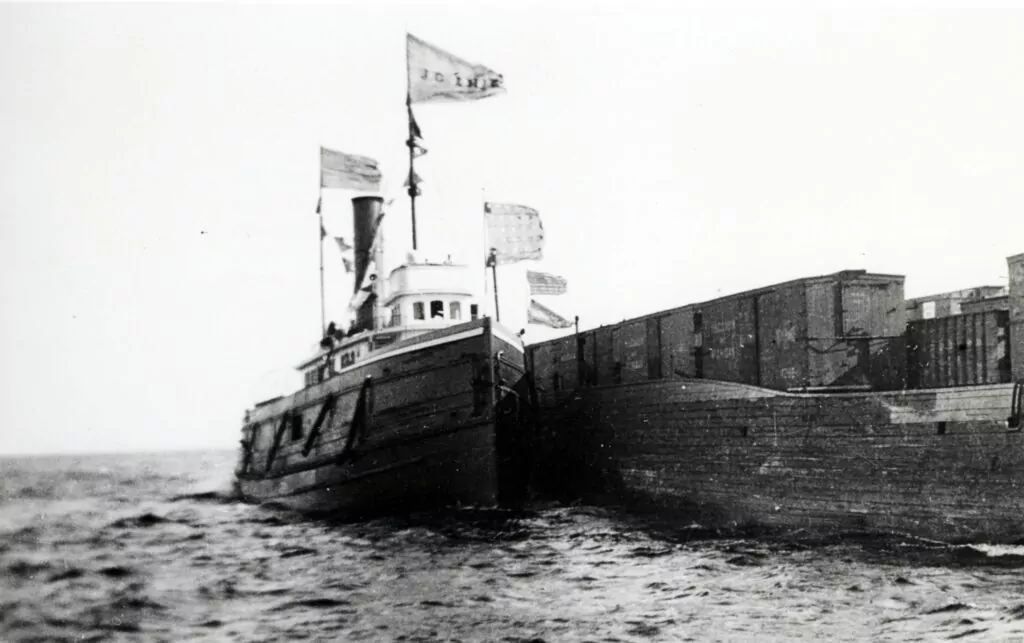
The JC Ames was built by Rand & Burger of Manitowoc for the lumber trade in 1881 and, with its 670hp fore-and-aft compound engine, had been one of the largest and most powerful tugs on the Great Lakes. Costing some $50,000 to build (the equivalent of more than £1m today) it had been called the JC Perrett by its original owner.
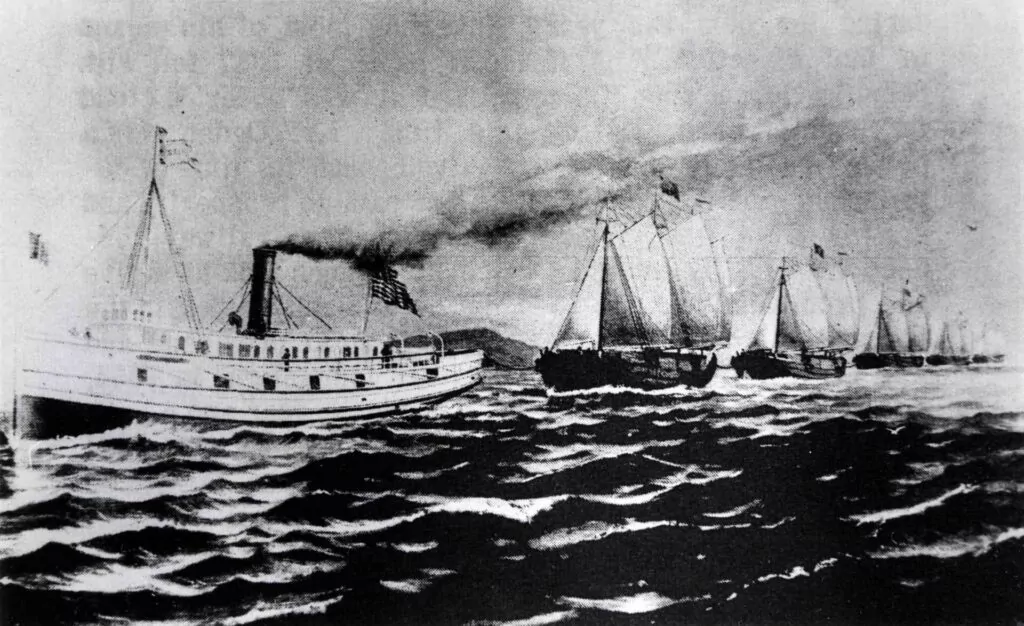
Following repairs to collision damage in 1889 the Lake Michigan Car Ferry Transportation Co of Peshtigo also started using the boat to transport railway carriages. It had several more owners before being discarded, dismantled and deliberately sunk in 1923.
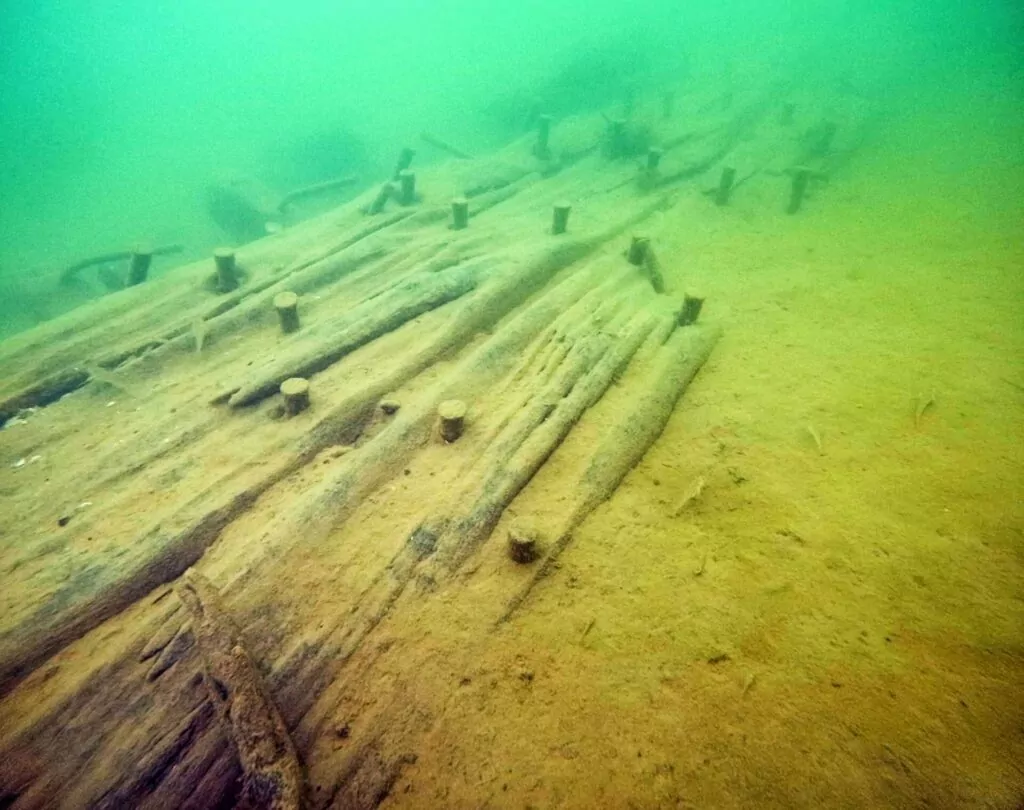
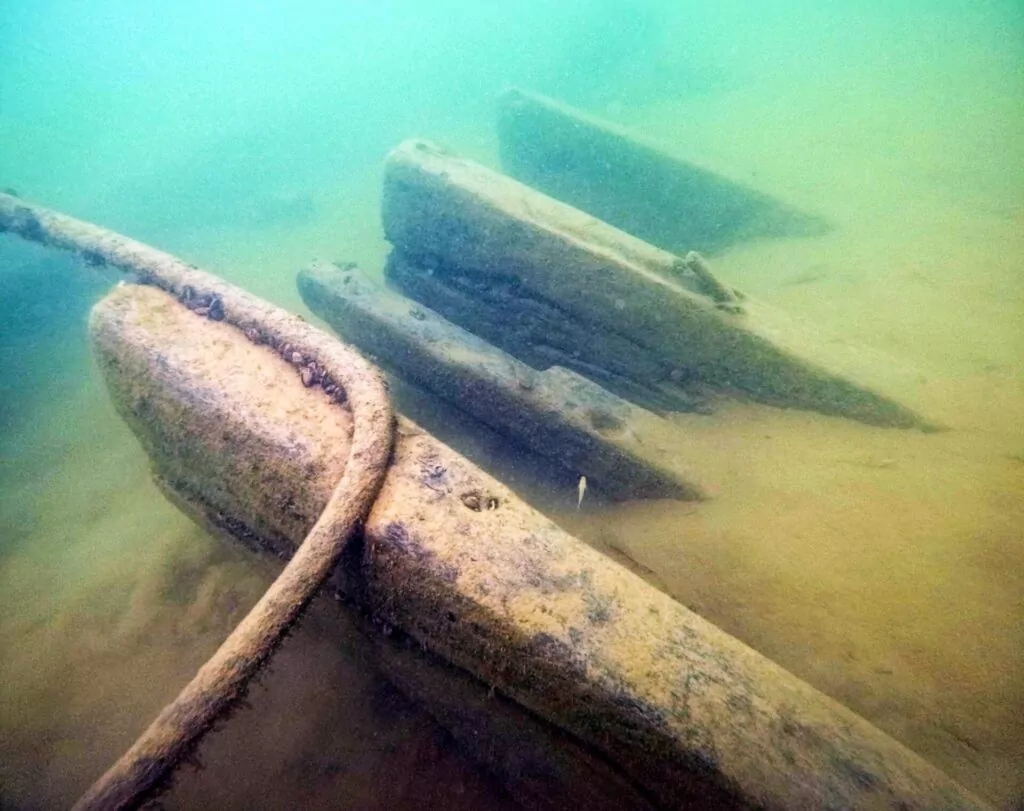
The wreck lies within the Wisconsin Shipwreck Coast National Marine Sanctuary, designated in 2021 and managed by the National Oceanic & Atmospheric Administration (NOAA) and the state of Wisconsin.
The JC Ames is automatically protected under state and federal laws, and WHS archaeological divers have already begun the process required to list it on the state and national registers of historic places, believing that it could become a popular site for snorkellers.
Also on Divernet: Wreck-hunters solve another Great Lakes mystery, Ghost Ships Of The Great Lakes – Pt 1, Trinidad shines even among Great Lakes wrecks, Diver Tamara’s double discoveries honour Native Americans