The South Pacific nation of Vanuatu has had a very rough time of late. Devasted by a series of cyclones and more recently by a massive earthquake, the country also suffered the loss of its national airline. These events have heavily impacted the nation’s tourism industry, especially its diving. However, on a recent trip, Nigel Marsh wanted to see the reality of diving Port Vila Vanuatu firsthand to discover how these natural disasters have impacted the local dive sites.
Diving Port Vila, Vanuatu: Post-Earthquake
Port Vila, the capital of Vanuatu, was the first overseas dive destination I ever visited, way back in 1989. Over two days of diving I explored lovely coral reefs and a scuttled ship, and was very impressed by the sites I dived, seeing pretty corals and an abundance of fishes and invertebrates.
I had hoped to return to explore more of the dive sites around Port Vila, but that didn’t happen until I organised to take a photography group trip there in May 2024. We were all looking forward to this trip, but two weeks before departure, Air Vanuatu collapsed and we couldn’t go. We rescheduled the trip for May 2025. Then, in December 2024, Port Vila was devasted by a massive earthquake that destroyed and damaged many buildings throughout the city, including the motel we were booked to stay in.
It was starting to feel like this trip was cursed, so it was a great relief when we finally arrived in Port Vila in May. The drive from the airport to our motel was eye-opening, with many gutted buildings, piles of rubble and buildings with cracks. The clean-up and rebuilding after the quake looks like it will take many years. Fortunately, our new motel, the Ramada, was designed to withstand earthquakes and had no visible damage.
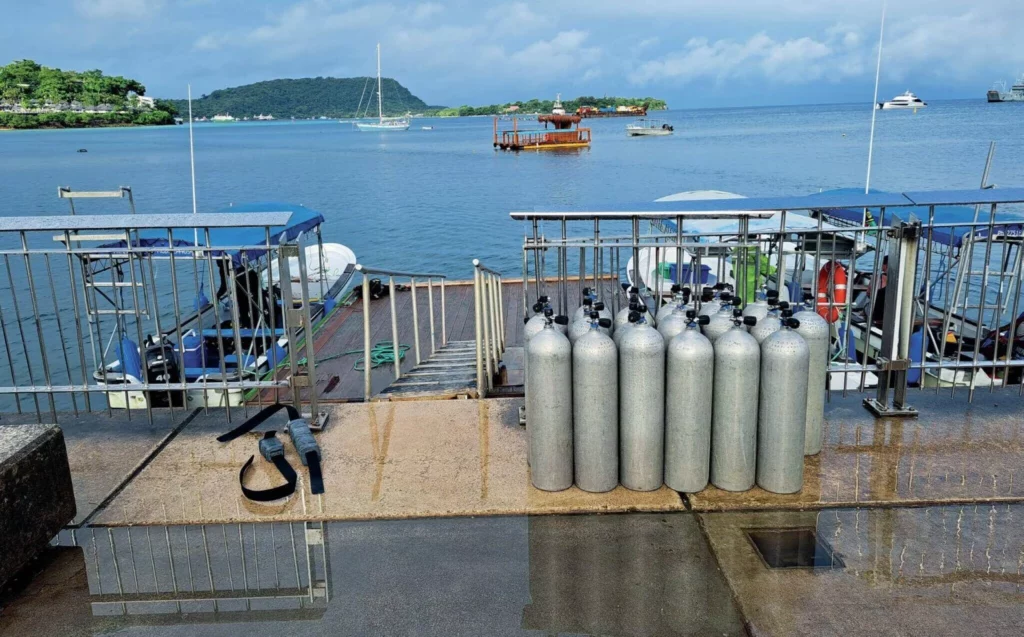
For the next five days we planned to dive a wide variety of dive sites with Big Blue Vanuatu, owned and operated by Joshua Ernst. I was keen to revisit sites I had dived before to see how they had withstood the cyclones and earthquake, and also visit many new sites.
There are over 20 dive sites to explore around Port Vila in the immense Mele Bay, with them grouped as the northern sites and the southern sites. Speaking to Joshua, he explained that few of the sites show damage from the earthquake, but many of the southern sites had damage from the cyclones, with broken hard corals.
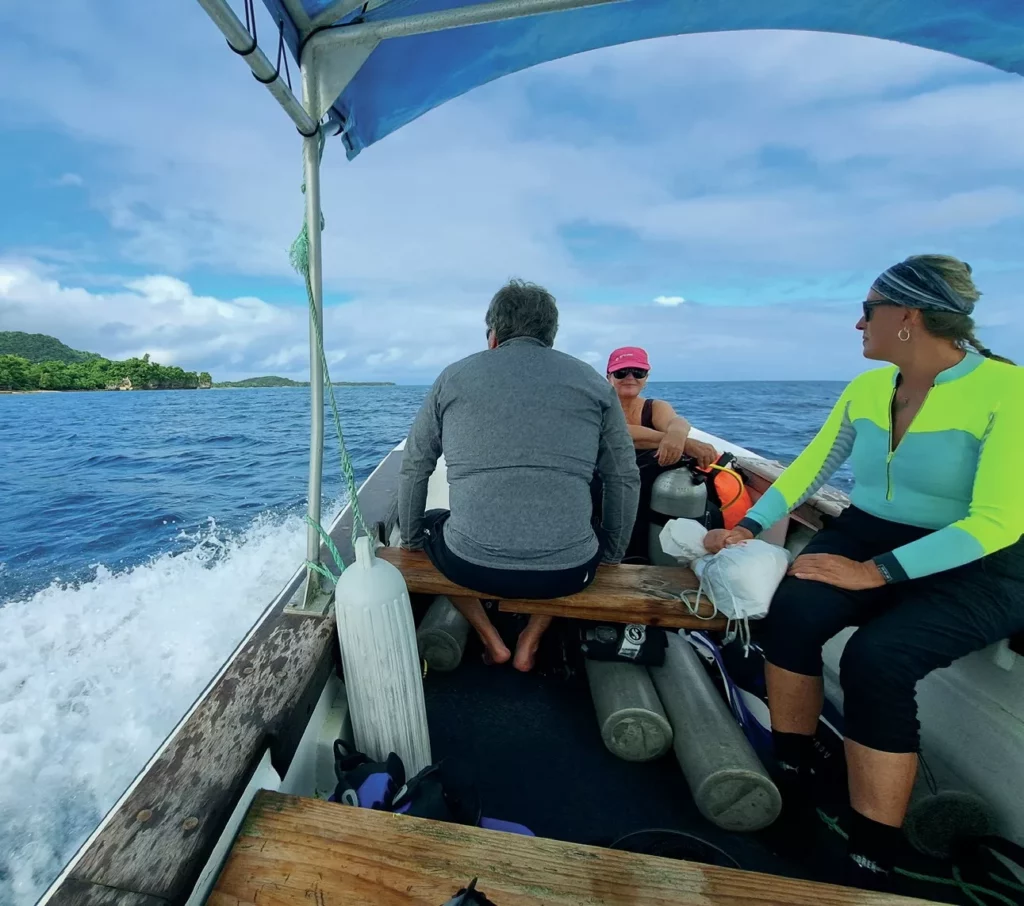
Big Blue Vanuatu are located on the waterfront overlooking the harbour, and it was great to see that the harbour waters are still clear, with corals and reef fish under the jetty. With nine in our group, we were split onto two dive boats and well looked after by our local crew and dive guides – David, Tom, Cathy and Shannon. Each day we did a double dive in the morning, then came back for lunch, before heading out for an afternoon dive.
Southern dive sites
When it comes to diving Port Vila Vanuatu, the southern sites in Mele Bay offer a unique mix of wreck exploration and reef resilience. The southern sites we explored close to the harbour had the worse cyclone damage and visibility, due to dredging in the harbour. Iririka Cove, used to have lovely coral gardens, but most of the hard coral was smashed by the cyclone. It is still a good spot for fish and invertebrates, and we saw tobies, angelfish, tangs, nudis, rock cod and even a sea snake.
Top Marine Life Sightings While Diving Port Vila Vanuatu
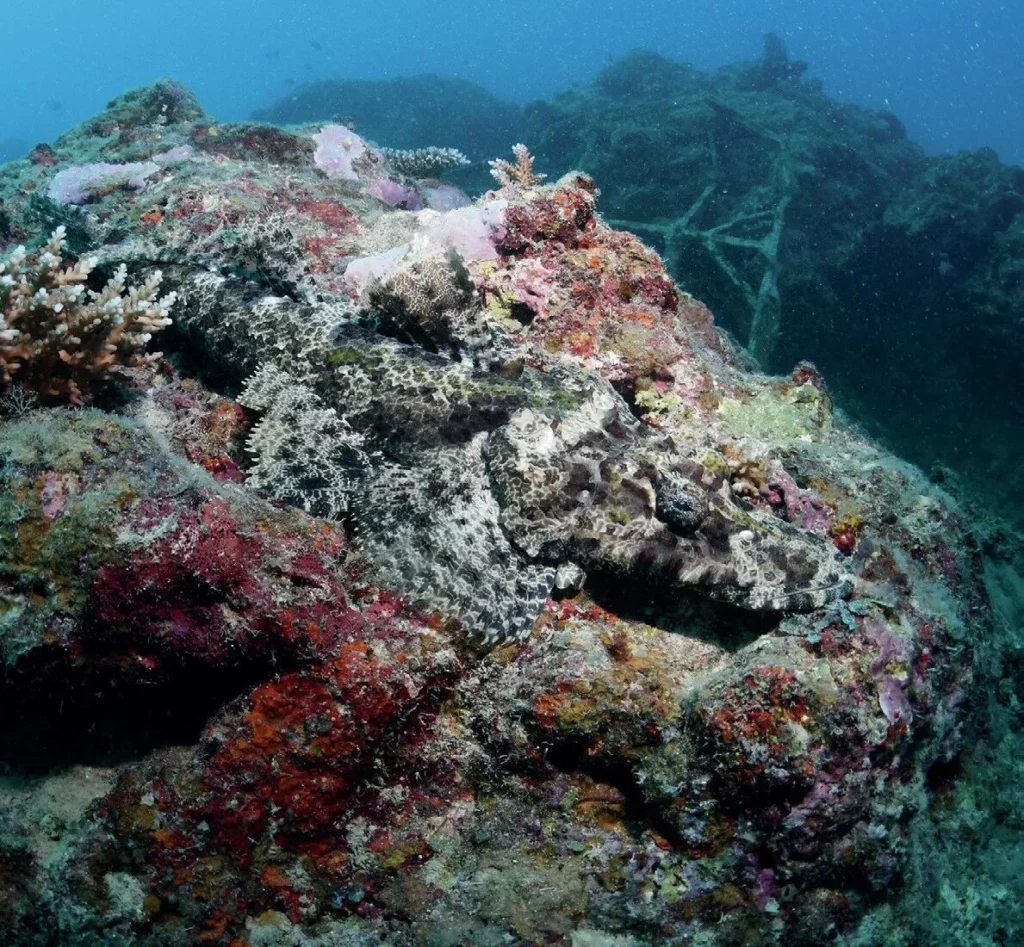
Yankee Juliette is an interesting site with sand, rocky reefs and parts of a plane wreck. In the ten-metre visibility, we saw crocodilefish, octopus, garden eels, parrotfish, anemonefish, pipefish and the plane wings. We missed the stingrays and seahorses that are often seen at this site.
The Konanda was a 45-metre-long island trader that was scuttled as a dive site in 1987. When I dived it in 1989, it was an amazing dive with lots of resident fish in clear water. The Konanda remains a highlight for anyone diving Port Vila Vanuatu, and while dredging has temporarily reduced visibility to six metres, the wreck is still a fantastic site to explore.
Kate’s Corner was another wonderful spot for nudis and small reef fish. However, the highlight was seeing a dugong on the surface only 30 metres from the boat before our dive
We had hoped to dive several other wrecks in the harbour area, like the Star of Russia and the Tasman Seaplane, but with the poor visibility we decided to give them a miss. The further we got from the harbour, the better the visibility and corals. Konanda Reef has coral gardens with small bommies, gutters and ledges to explore, and with 15 metre visibility, we saw prolific fish life, including pipefish, giant morays, fusiliers, parrotfish, goatfish, wrasse and blennies. A feature of all the reefs, we dived were the pygmy angelfish, including lemon peel, pearlscale, bicolor, keyhole, coral beauty and midnight angelfish.
Twin Bommies was a repeat spot for me, and while the corals were not as good as my last visit, the fish life was excellent. This site is dominated by two large bommies that are riddled with ledges and crevices swarming with soldierfish, squirrelfish, cardinalfish, sweeper and many other species. At this site were also found snapper, sweetlips, fusiliers, lionfish, parrotfish, rabbitfish, rock cod, pufferfish and a sleeping whitetip reef shark.
Pillar 25 was a great spot for small fish and invertebrates, including a leaf scorpionfish. With many of these reefs having a limestone base, we did see a few cracks at this site that were possibly caused by the earthquake.
Kate’s Corner was another wonderful spot for nudis and small reef fish. However, the highlight was seeing a dugong on the surface only 30 metres from the boat before our dive. Dugongs are often seen in this area, and the week before our trip, one had done somersaults in front of some very lucky divers.
For many, the pinnacle of diving Port Vila Vanuatu is visiting The Cathedral, a spectacular site sitting at the south-western tip of Mele Bay. It sits at the south-western tip of Mele Bay facing the open ocean. We did two dives at this remarkable site, enjoying 30 metre visibility as we explored this enormous cave that cuts into the reef wall. The walls of this cave are carved with many small ledges and lined with sponges and pretty hydrocorals. While it would be a great spot for wide-angle photography, I went with macro as the site also has a great variety of reef fish and invertebrates.
Exploring the Cathedral, we found rare Naia pipefish and possum wrasse, species I had never seen before, plus a good variety of nudis, shrimps, crabs and pygmy angelfish. We also found an Oceania fantail ray, a green turtle and lovely hard corals decorating the walls outside the cave.

Did you know ?
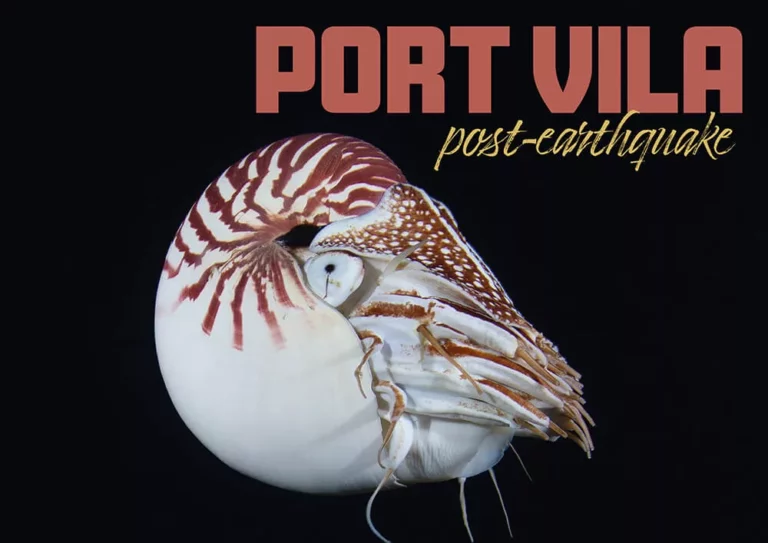
If you are diving Port Vila Vanuatu, you are in one of the few places worldwide where you can encounter the elusive and rare nautilus, which occasionally ventures into the shallows at night. These creatures are usually found in depths of over 300m but sometimes venture into the shallows at night to feed.
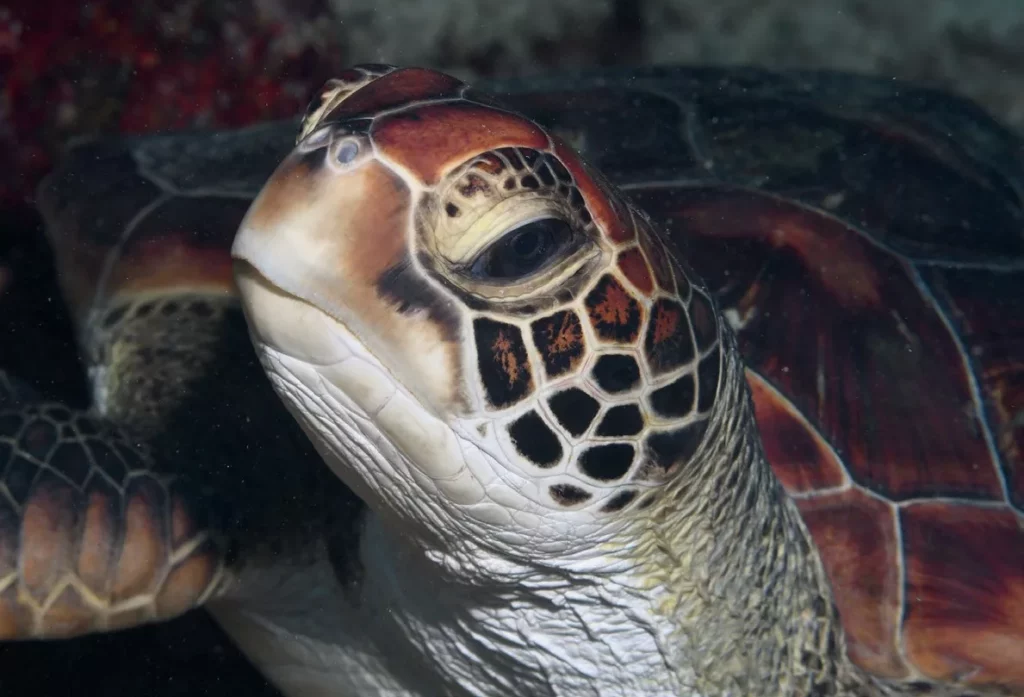

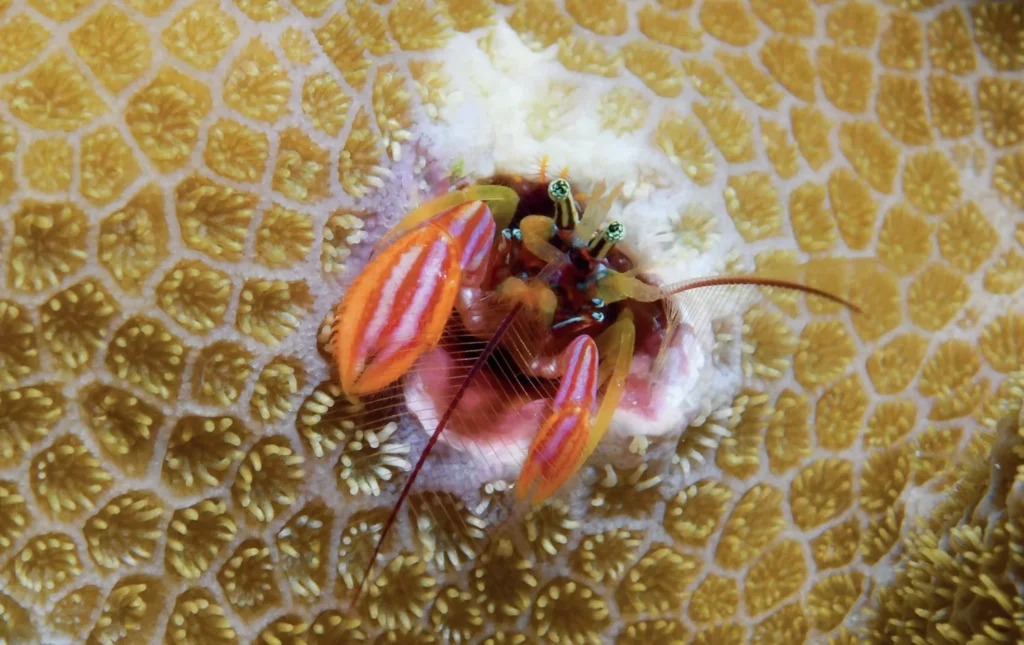
When planning your next dive holiday, don’t avoid Port Vila as the city rebuilds. Port Vila is open for business and needs divers to support the local economy and the wonderful and friendly Ni-Vanuatu people
Northern dive sites
Those seeking pristine reef conditions will find that diving Port Vila Vanuatu’s northern sites offers a more sheltered experience, largely untouched by recent natural events. With these sites a little further away they are usually done as a double dive in the morning.
Kathleen Reef served as our introduction to diving Port Vila Vanuatu’s northern waters, offering a stunning landscape of hard and soft corals that were completely untouched by recent events. And it was so nice that we came back for a second look. This ridge reef rises from 30m to 12m, and is covered in lovely hard and soft corals. With 15 metres visibility we marvelled at the corals and the fish, which included schools of trevally, barracuda, rabbitfish, fusiliers and snapper. Smaller reef fish were also abundant including angelfish, wrasse, damsels, butterflyfish, goatfish and anemonefish. We also enjoyed spending some time with two broadclub cuttlefish as they changed colour and texture.
One special fish I hoped to see in this part of Mele Bay was the rare Watanabe angelfish. Growing to 15cm long, this medium-sized angelfish is found in a few spots in the Indo-Pacific, however, is rarely sighted. They are a member of the swallowtail angelfish clan, which unlike other angelfish they feed on plankton and have different colours for the male and female. I looked for them at several dive sites and fortunately found a male and two females at Kathleen Reef. They are easily overlooked as they zip up and down the reef and in midwater with the damsels and look very similar to a damselfish.
Westside was another lovely reef covered in beautiful hard corals. For ‘fish nerds,’ diving Port Vila Vanuatu at sites like Westside is an absolute dream, with an astonishing variety of angelfish, triggerfish, and hawkfish to document. I photographed angelfish, butterflyfish, triggerfish, wrasse, rock cod, morays, hawkfish, blennies, pigfish and many more. Nearby Anchor Reef was also blessed with wonderful corals and fish, but showed more cyclone damage with a patch of smashed staghorn corals. The corals and fish in this area were just as good as I remembered them to be.
Overall, most of the damage we saw on the reefs we explored was due to cyclone damage and it will fortunately regrow over time. Our photography group had a great time in Port Vila, shooting a wide variety of subjects and even getting involved in the annual sea slug census.
When planning your next dive holiday, don’t avoid Port Vila as the city rebuilds. The message is clear: diving Port Vila Vanuatu is still a world-class experience, and your visit helps support a community that is working hard to rebuild. Port Vila is open for business and needs divers to support the local economy and the wonderful and friendly Ni-Vanuatu people.
For bookings and more information, check out: www.bigbluevanuatu.com or www.diveplanit.com
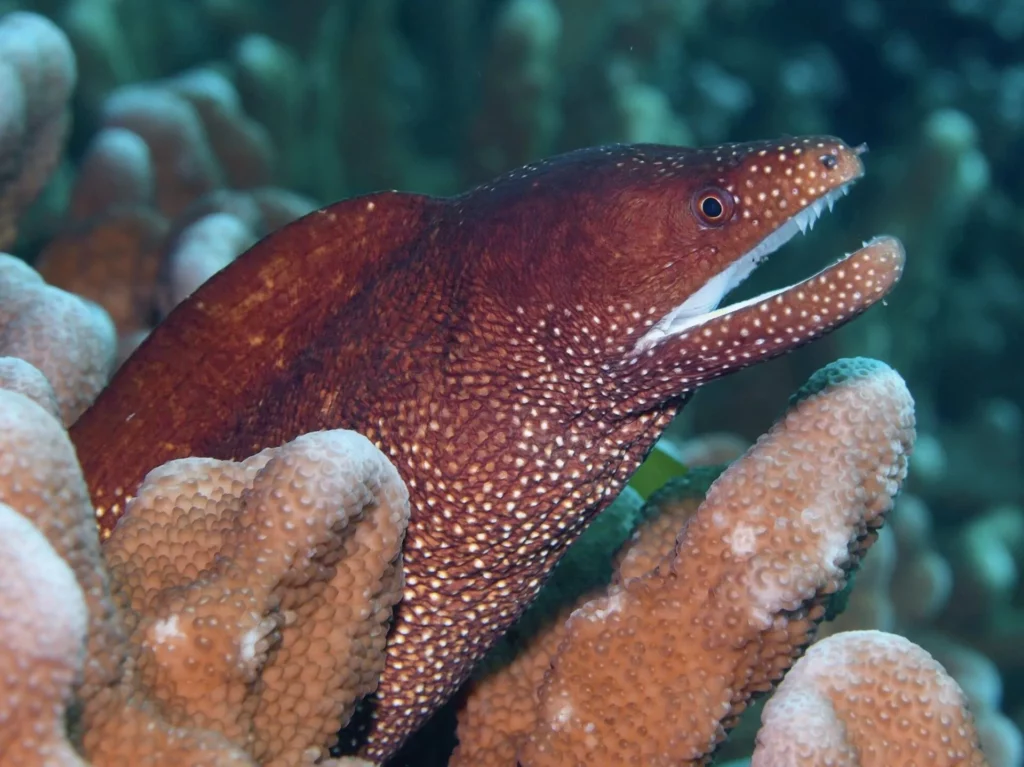
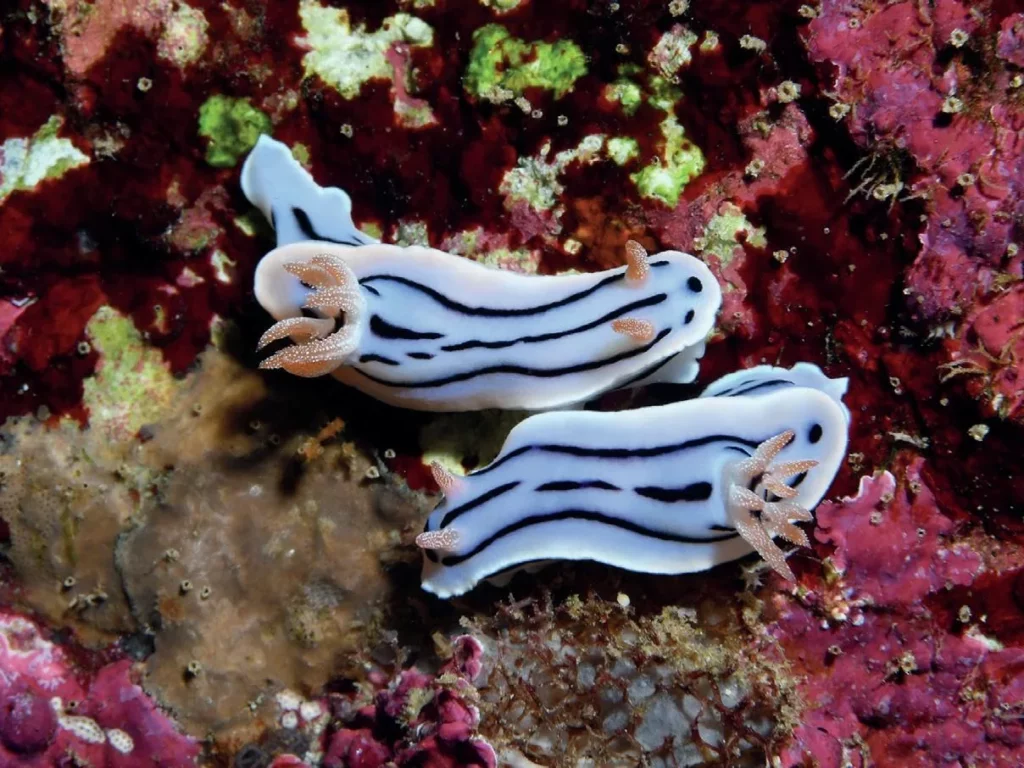
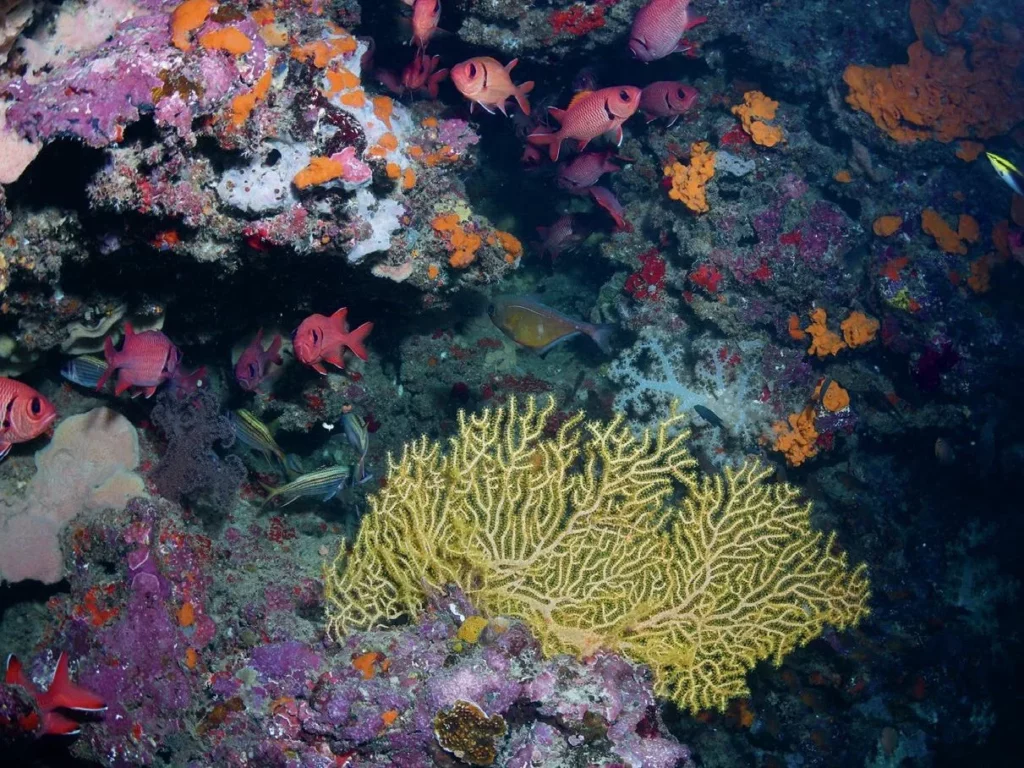

Konanda Reef has coral gardens with small bommies, gutters and ledges to explore, and with 15 metre visibility, we saw prolific fish life, including pipefish, giant morays, fusiliers, parrotfish, goatfish, wrasse and blennies
FAQs
How did the 2024 earthquake affect diving in Port Vila?
While the city of Port Vila suffered significant structural damage, the underwater topography remains largely intact. Some sites show minor limestone cracks, but the primary impact on reef health in recent years has been from cyclones rather than seismic activity.
Can you still dive the famous wrecks in Port Vila?
Yes. Popular wrecks like the Konanda and Star of Russia are still accessible. However, visibility in the harbour can currently be affected by local dredging and reconstruction efforts following the natural disasters.
What kind of marine life can I see in Mele Bay?
Divers can encounter a massive variety of life, including dugongs, green turtles, broadclub cuttlefish, and rare species like the Watanabe’s angelfish and Naia pipefish.
Which dive sites in Port Vila are best for photography?
The Cathedral is the premier site for both wide-angle and macro photography due to its massive cavern and 30m visibility. For macro enthusiasts, Kathleen Reef and Kate’s Corner offer incredible nudibranch and pygmy angelfish sightings.
Is it safe to travel to Vanuatu for a dive holiday now?
Absolutely. Port Vila is open for business. While the cleanup continues, modern resorts like the Ramada are built to high safety standards, and local operators like Big Blue Vanuatu are fully operational.
What should I expect when diving Port Vila Vanuatu?
Divers can expect a mix of resilient coral reefs, historic wrecks, and unique cavern systems. While some areas near the harbour are recovering from recent weather events, the majority of dive sites remain world-class, offering clear water and abundant marine life.
This article was originally published in Scuba Diver Magazine
Subscribe today with promo code DIVE1 — enjoy 12 months for just £1!
