And National Geographic Pristine Seas, which took part in the scientific explorations to establish the most important areas to protect, shares its views – along with eight marine species that characterise this mid-Atlantic attraction for divers. Photography by Manu San Félix
The biggest Marine Protected Area (MPA) network in Europe is being established in mid-Atlantic around the Azores, a decision that was made in advance of the current UN Biodiversity Conference. The COP16 summit aims to assess progress on the ‘30×30’ global goal to protect 30% of the planet by 2030.
Also read: Locals’ 16-year fight pays off with MPA
The Azores, nine islands forming a region of Portugal, has approved legislation to set up RAMPA, the Azores Marine Protected Area Network, over an area of 287,000sq km.
Fifteen per cent of its waters are being designated as fully protected and 15% as highly protected, with fishing and other extractive activities either restricted or banned.

Among marine life said to be safeguarded will be deep-sea corals, whales, dolphins, sharks, manta rays, fish species and hydrothermal vent ecosystems.
“This is an achievement for the Azoreans, with the region leading by example at national, European and international levels in the protection and management of a vital part of our planet: the sea,” said Azores president José Manuel Bolieiro of the move.

“We hope our decision inspires other regions, who must act to ensure the future health of the planet.”
The target of protecting 30% of land and ocean by 2030 was set by delegates to the last international summit in 2022, but two years on only 8% of the ocean enjoys any level of protection, while less than 3% is fully or highly protected.

Model of ocean protection
“As negotiators gather in Cali, Colombia to assess the state of nature protection, the case of the Azores provides a model of ocean protection for the world to follow,” said National Geographic Pristine Seas founder Enric Sala.
“What is so remarkable about the new protected area network is not only its massive size, but also the fact that so many local groups worked together to make it happen.
“Government officials, scientists, industry representatives and local citizens banded together to devise a system of protection that works for everyone.

“With new research revealing that we need about 190,000 small MPAs in coastal regions and 300 large MPAs in remote, offshore areas by the end of 2030 to achieve the 30×30 goal, it is encouraging to see the Azores move the world in the right direction.
“Now it’s time for other regions worldwide to follow their lead,” said Sala. “However, it’s important that we don’t protect just any 30% but the right 30% to achieve the greatest biodiversity, climate and food supply benefits MPAs can offer.”

Priority area
In 2018, in partnership with the regional government, local scientists, the Waitt Institute, Oceano Azul Foundation and other partners, Pristine Seas participated in scientific expeditions in the Azores to help identify priority areas for protection.
Its team of international and local scientists and film-makers conduct research at the request of governments looking to fulfil their commitments to ocean protection.
Using hi-tech tools such as underwater cameras to assess coastal, open sea and deep sea areas, the expeditions added new information about their biodiversity, as well as the impact of human activity.

“We witnessed that the marine ecosystems of the Azores are one of the most diverse and dynamic in the North Atlantic,” said Pristine Seas chief scientist Alan Friedlander who, like Sala, took part in the scientific exploration of the area.
“The unique geographical location of the archipelago, combined with its complex underwater topography, includes seamounts, hydrothermal vents, and deep-sea habitats that support unique and diverse biological communities of high conservation value.
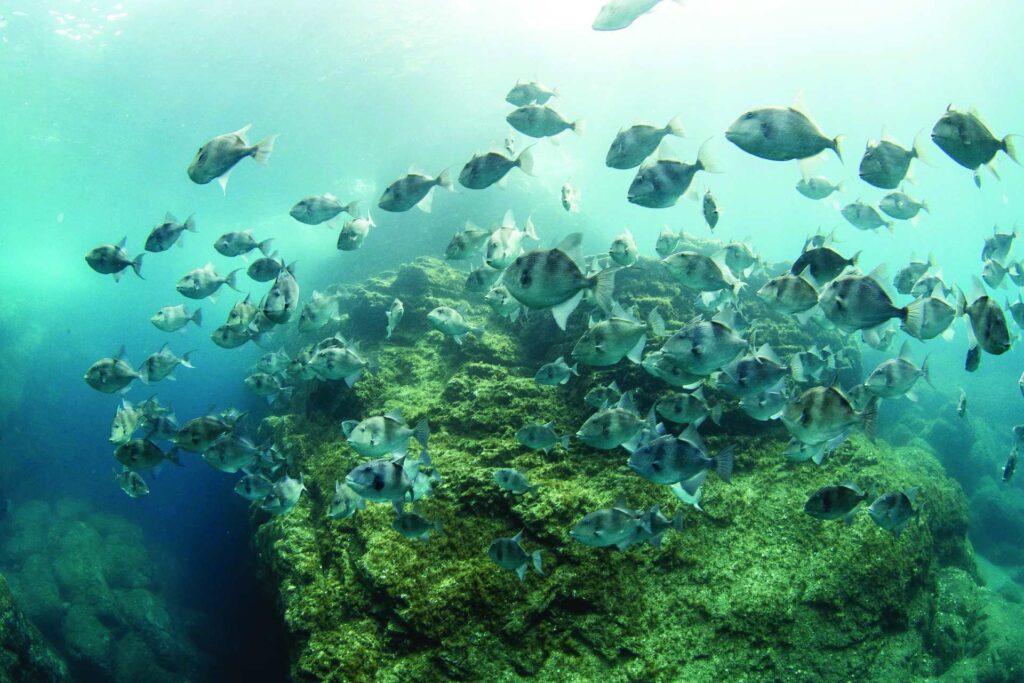
“The health and sustainability of the Azores’ marine environment are crucial not only for local communities but also for global marine biodiversity, climate stability, and oceanic health. Protecting this ecosystem is essential for preserving its ecological, economic, and cultural values.”
Since 2008, National Geographic Pristine Seas says it has conducted more than 45 expeditions around the world and helped to establish 29 marine reserves covering more than 6.8 million sq km of ocean.
Also on Divernet: CASE CLOSED? STRICT MPA ENFORCEMENT IS WIN-WIN, PRISTINE SEAS KICKS OFF 5-YEAR PACIFIC VENTURE, SOCORRO STUDY HOPED TO SILENCE MPA CRITICS, PRISTINE SEAS DIVES BIKINI + 3 OTHER ATOLLS