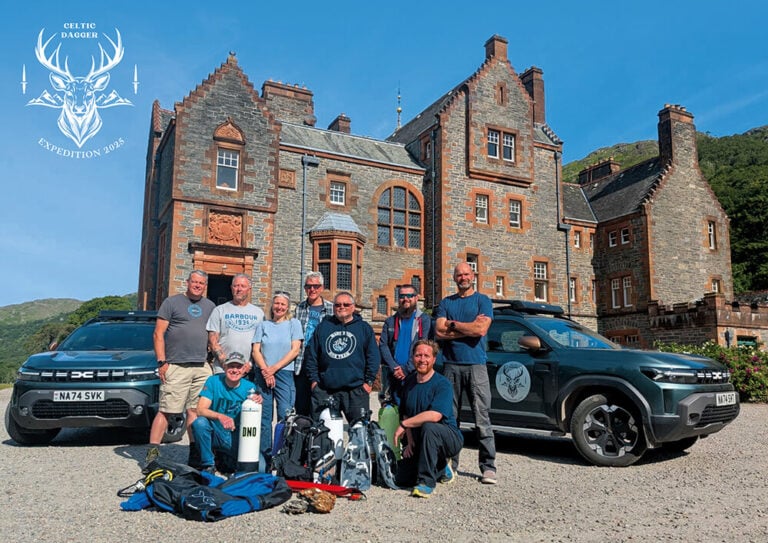
Dean Martin joins Monty Halls for his inaugural Celtic Dagger Expedition up into the wilds of Scotland to explore the origins of the British Commandos.
An Invitation Into History
It started with a conversation with Monty at the GO Diving Show in 2025, as his stand promoting this event was adjacent to mine with equipment manufacturer Dynamic Nord. We chatted about how this expedition was all about the long-lost story of a bunch of heroes from 1941, who had set up this wild and deadly task force based out of a Scottish manor house while training on a beach using live rounds. This was where the Commandos, as we know them today, all started. Monty went on to say: “Best thing is, nobody has ever dived the beach, and we have no idea what we will find.” My reply: “I’m in, when do we go?”
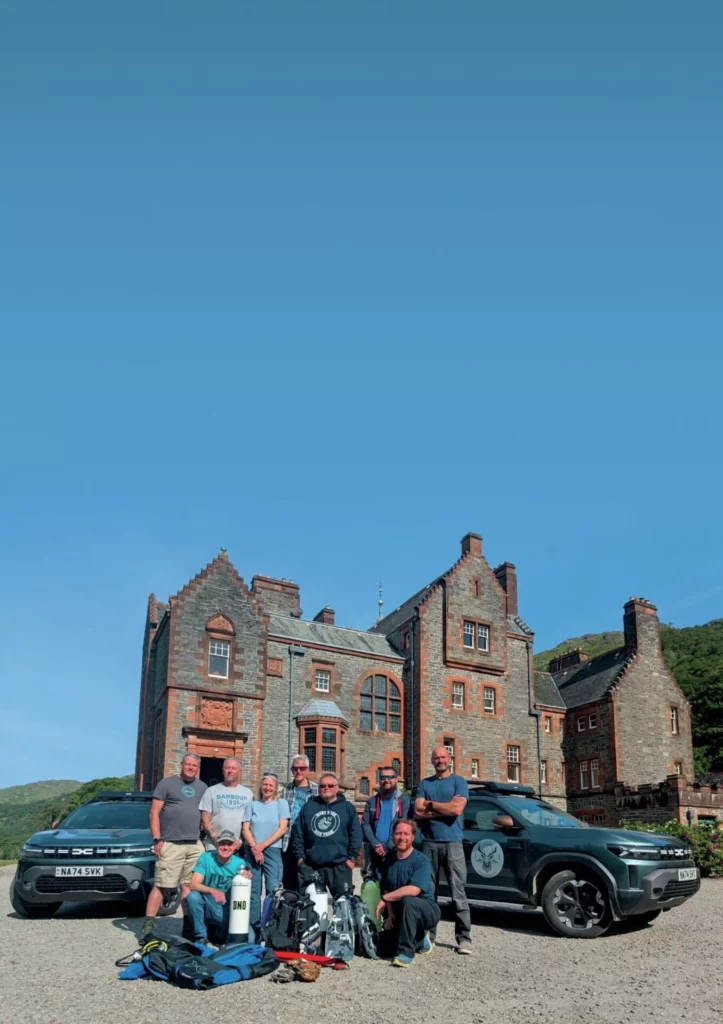
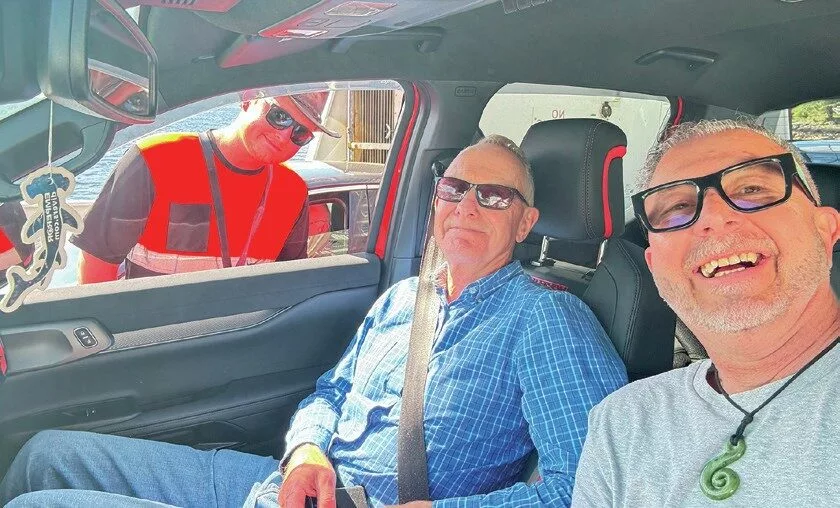
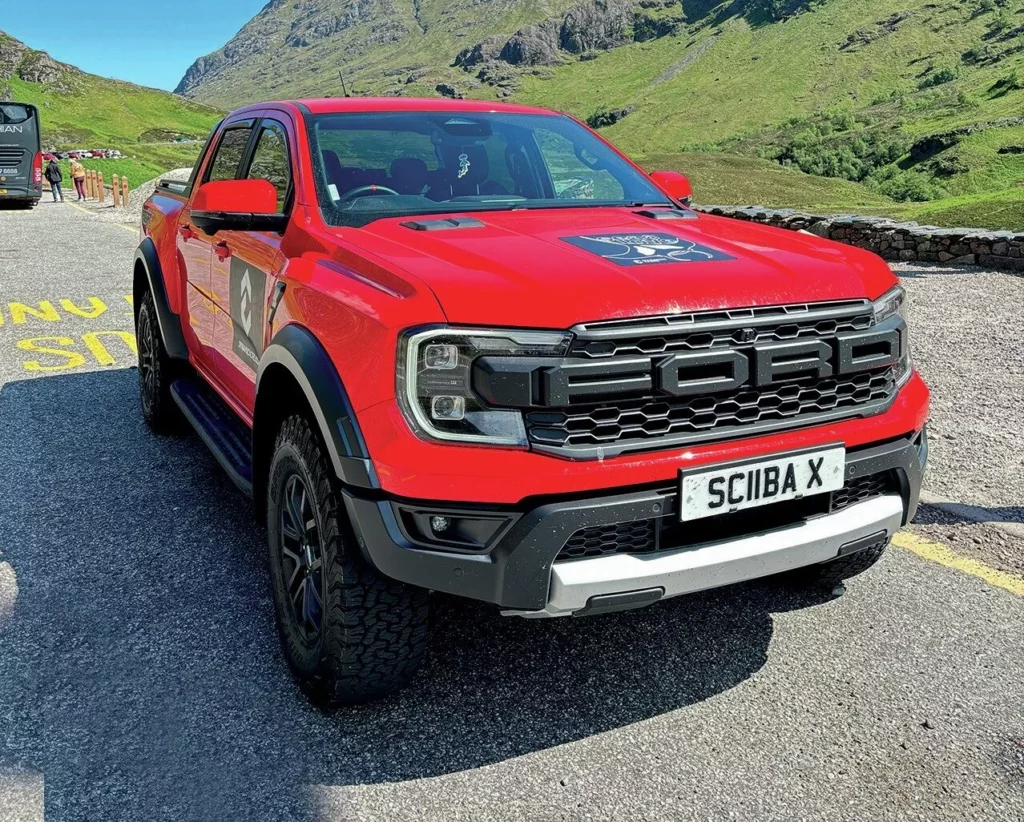
So, a few months pass and the team is put together by Monty, along with cameraman Greg. Oh, did I not mention we were filming the whole thing as a pilot, and to make things even more fun, Dacia had loaned us two of the new 2025 Duster 4x4s as expedition vehicles to make a promotional film for them while we were at it.
The Road North to Kinlochmoidart
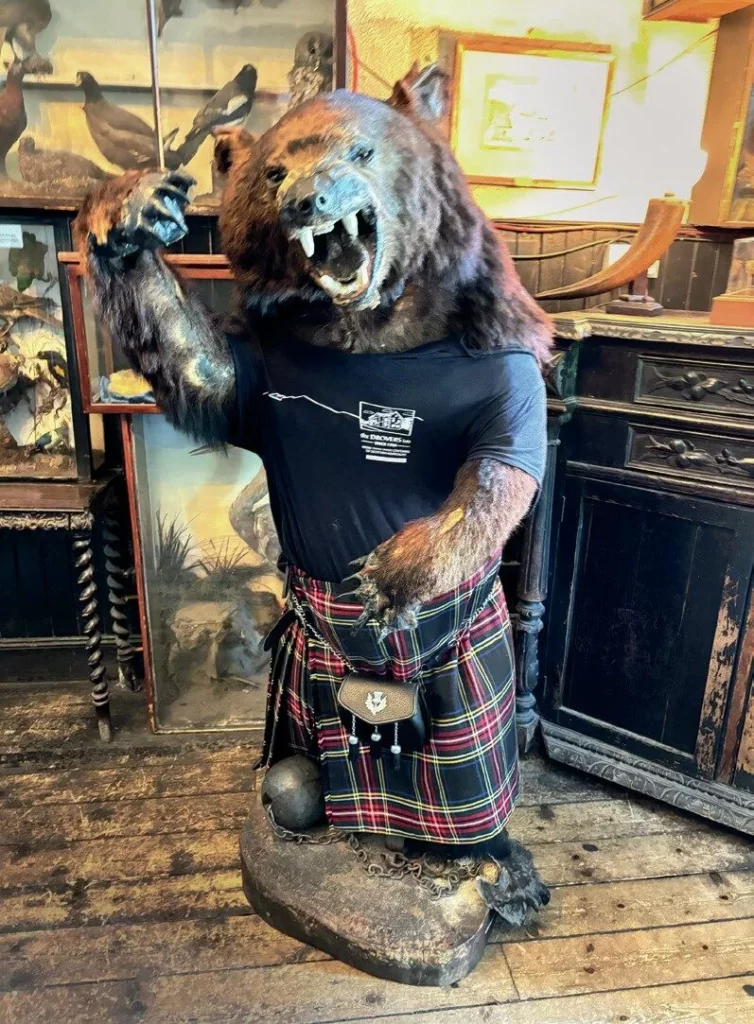
As I am based in the North West, the actual trip up to Scotland started the day before (Saturday) for a few of the others, as Monty is based in Devon and was collecting the team along the way. I joined them on the Sunday morning at Tebay Services M6 and we headed North, with Monty and Greg filming along the way. We all stopped on the way up at the Drovers Inn at Arrochar – a familiar meeting point to many of you on the pilgrimage to Scapa and Oban – for some food, before the final run to our base for the expedition, the majestic estate that is Kinlochmoidart, owned and run by one of Monty’s ex-Commandos (David Howitt – the Howitt’s of Kinlochmoidart). The trip up was like Wacky Races as to where everyone was enroute – we were keeping updated on the WhatsApp Group Chat as we knew on arrival you got to pick your room, so ‘first up, best dressed’. Some got large four-poster beds, others twin rooms with single beds.
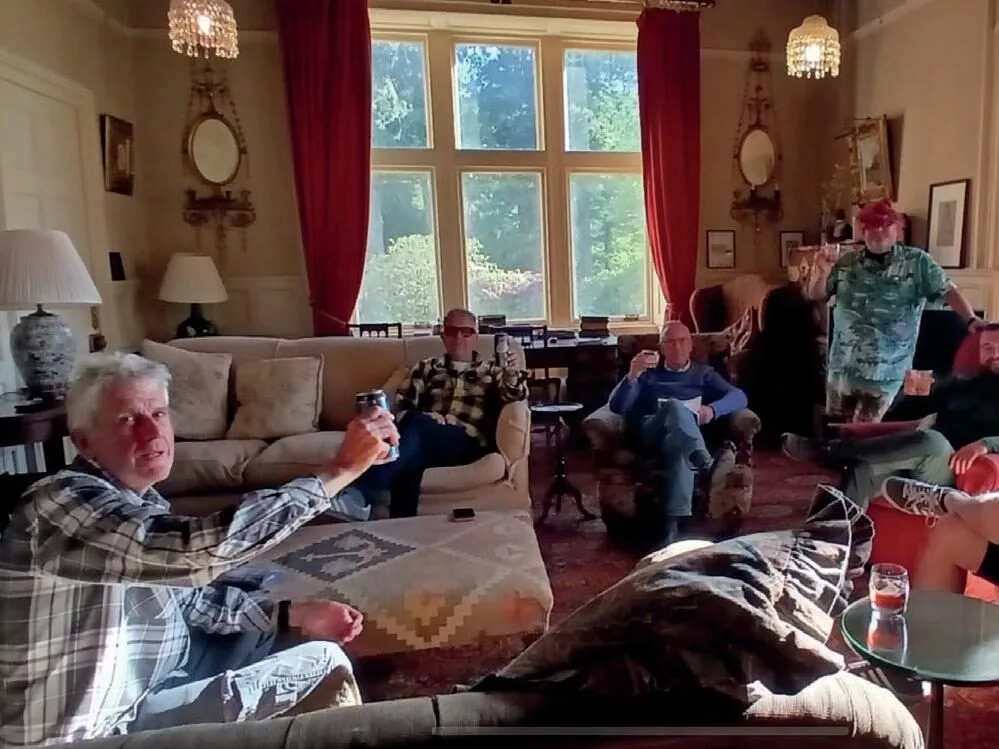
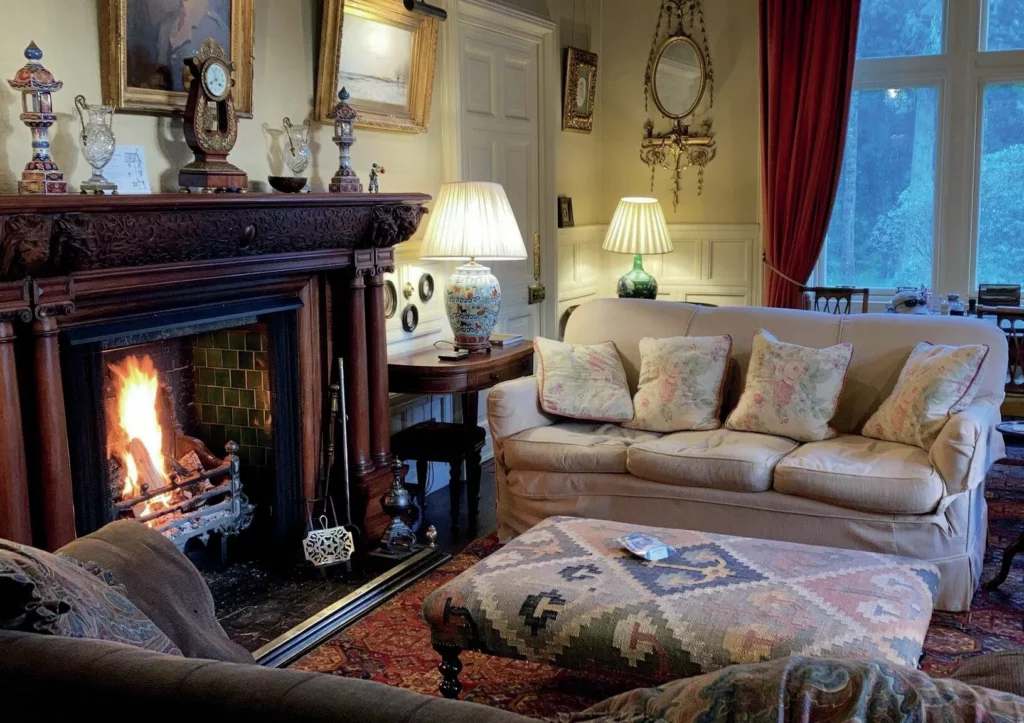
The estate is partially used as holiday lets and has a range of rooms and cottages that you can book to stay. The rooms are all in keeping with staying in an old Scottish estate. Built back in 1884, Kinlochmoidart House is one of the few remaining original works of the renowned architect William Leiper. It’s set at the head of Loch Moidart and surrounded by rugged hills covered by ancient woodlands. After everyone had arrived and were fed and watered, we had a briefing from Monty, introduced ourselves to each other, and then got prepping the dive kit for day one.
The Team
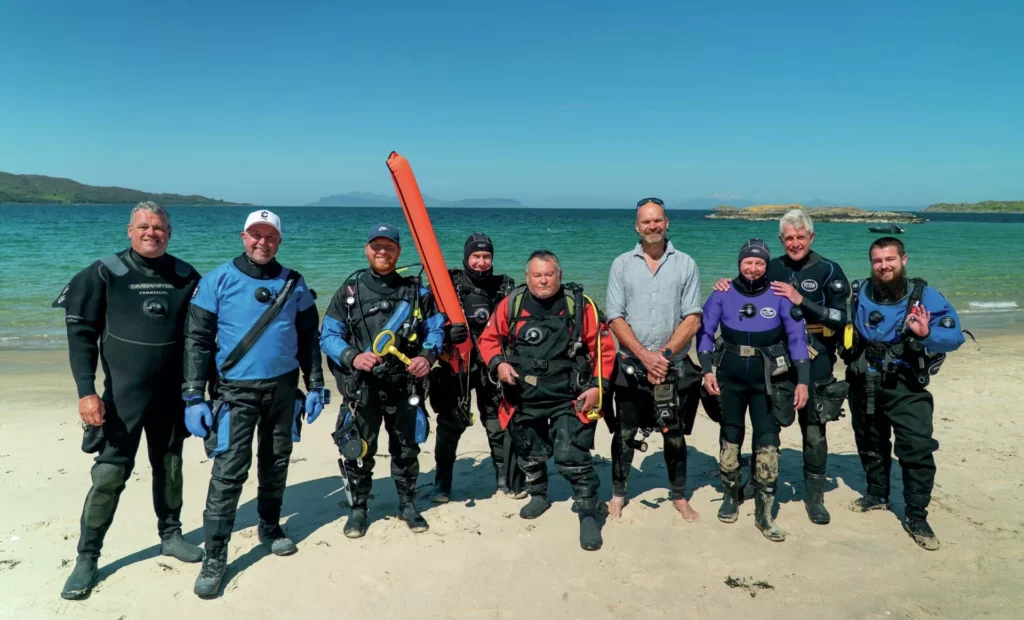
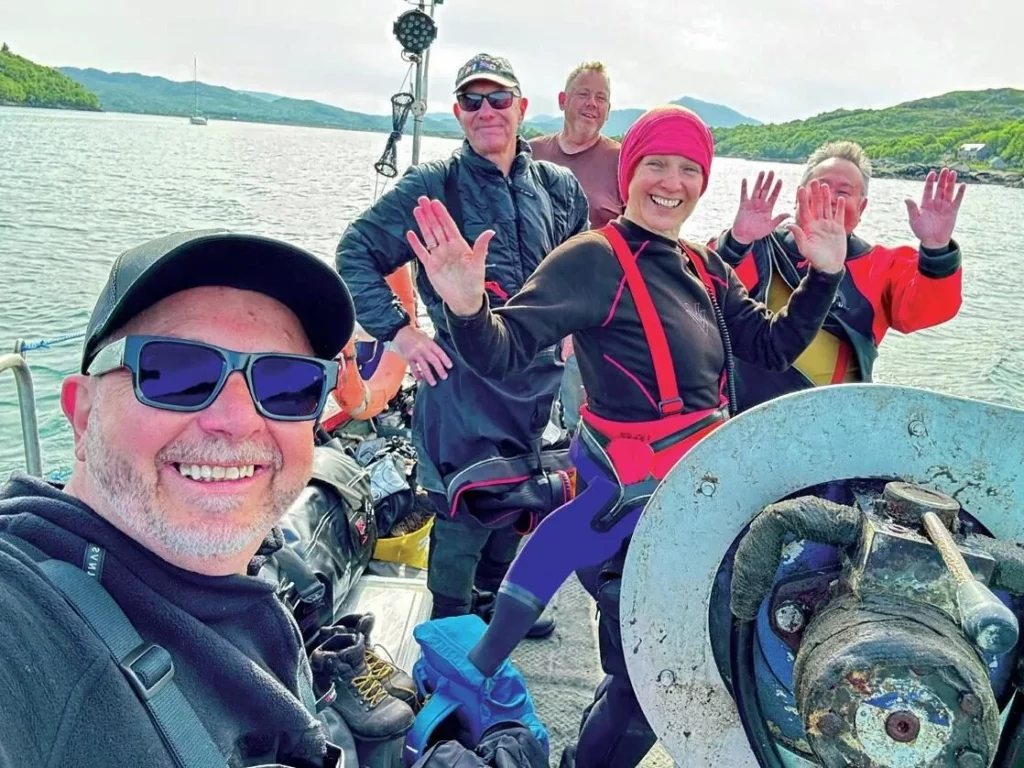
Monty Halls, Greg Lander Williams, Dean Martin, Michael and Nicola Slade, John Davis, Damien Love, David Rae, Luke Hammond and Mike Sheedy.
Day One – Searching the Seabed
Preparing for the Dive
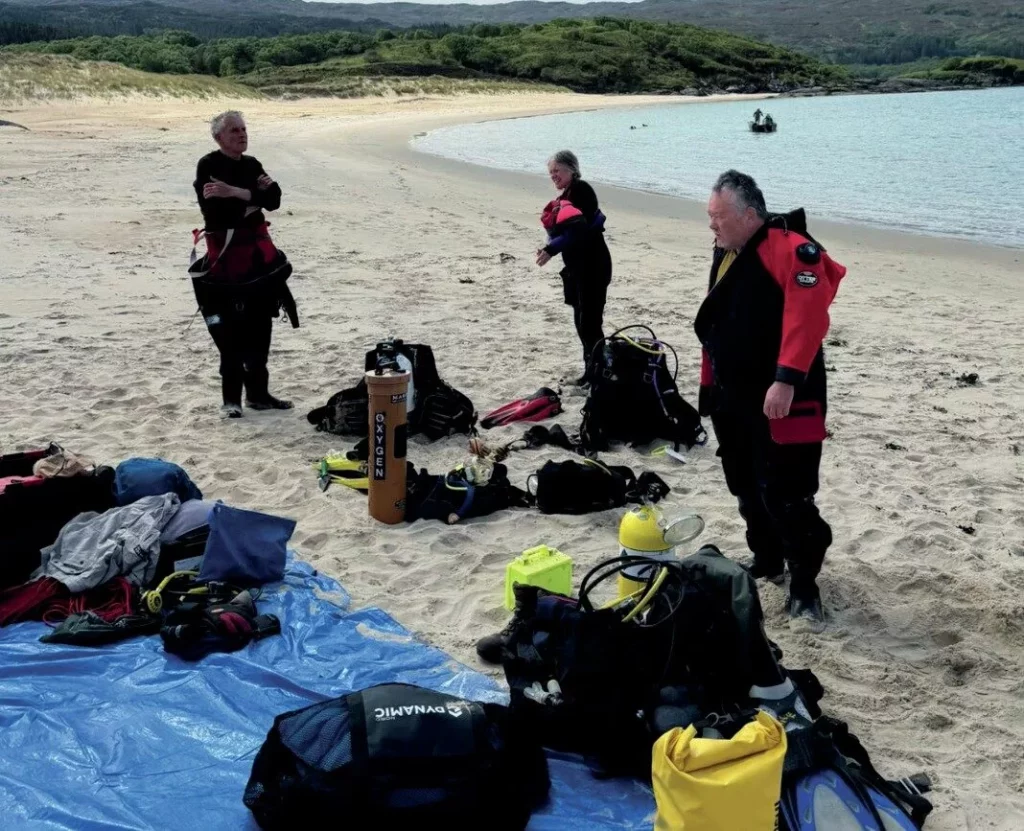
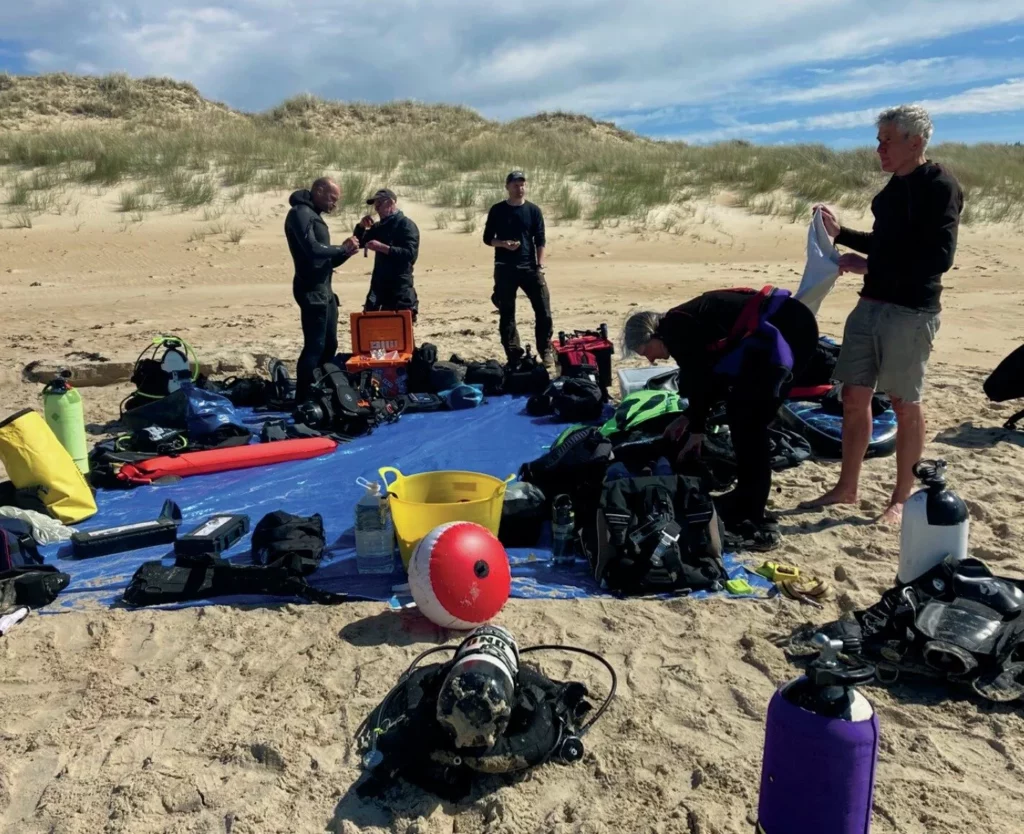
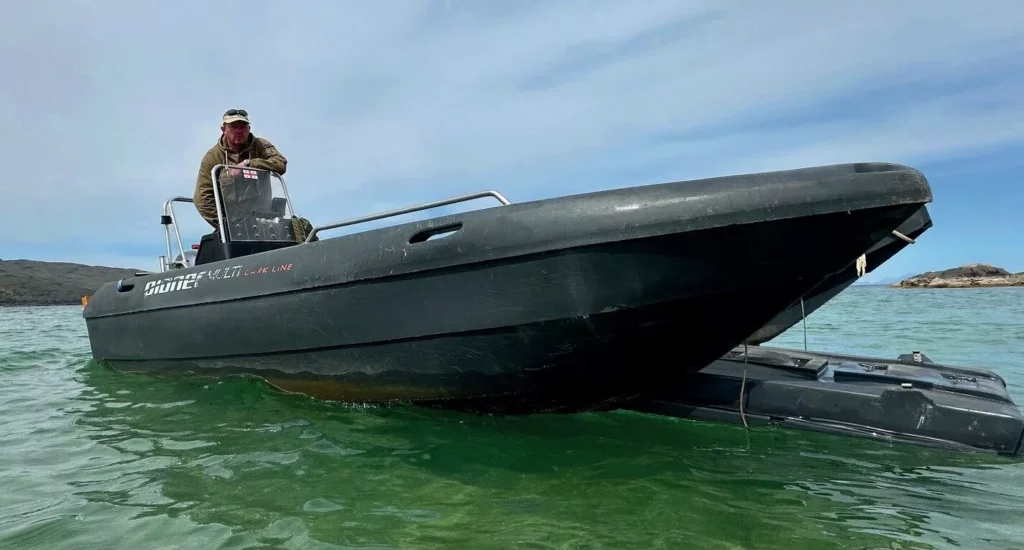
After breakfast, we had to get the trucks and cars loaded, and all rendezvous at the dock on the loch to be met by Craig Macleod and his boat to transport all eight sets of dive kit, along with underwater metal detectors, camera gear and food for a day. After a few trips back and forth to the beach by boat, we all made it. The scenery was just breathtakingly beautiful and set the scene for the week.
A large blue tarp was laid out on the beach and everyone’s kit was placed around the edges to keep the sand down to a minimum. The beach and adjacent dunes have already been giving up lots of ammunition over the years since 1941, from shell casings to mortar rounds, and tones of shrapnel, so what we were going to find in the sea was anybody’s guess.
What Were We Hoping to Find?
The plan of the day was to survey a section of the seabed where the rudimentary amphibious assault craft headed toward the beach. During World War Two, the British didn’t have such things; these were fashioned from whatever they could get their hands on, so we had no idea how close they would have jumped of the craft they were using. We were looking for things that could have been dropped, from weapons like Enfield No1 Rifles to Mk 4 Webley handguns, or even buttons from uniforms.
We were each assigned a section of the seabed to survey, after a briefing from Monty on what to do should we find something large and bomb-like. I remember jokingly mentioning if it looks like it’s intact, what should we do? Well, don’t touch it for one. And we should mark its position.
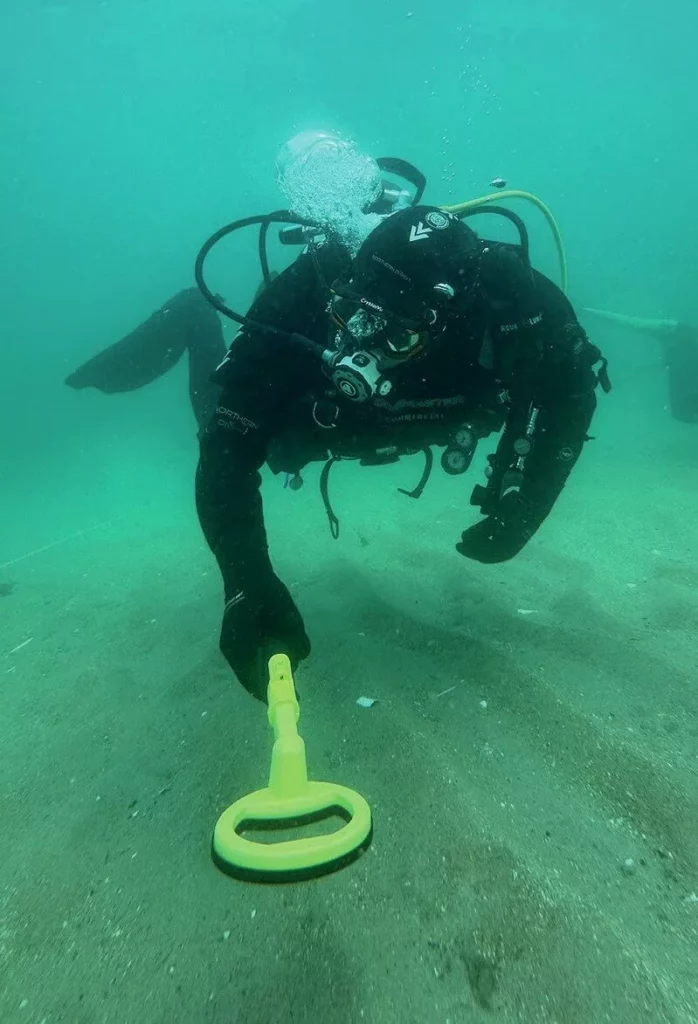
Comments from others were along the lines of ‘if it looks like this, don’t touch it’ or ‘if it looks like this, definitely don’t touch it’. So, after buddy checks, we entered the water aiming to find a piece of history. Armed with a handheld metal detector and a reel, we covered a large section of the seabed. Craig and David had already laid a shotted line that we could all use as a reference. Up and down the line and letting more line out on the reels, we each surveyed our section of the seabed, not knowing what the other teams had found until the dive was over. Unfortunately, on our section, we didn’t find anything or even get a single hit. As we walked back to the tarp on the beach to inform our other team members of our lack of finds, we heard from the others we were all in the same boat and nobody had had a single hit. Monty said it was still a result, as finding nothing was not conclusive to where we were searching was the correct spot, so at least that section was covered.
Training With Live Fire
Time for lunch and then we climbed into the dunes to look for signs of the sieges that were played out on the beach back in 1941 and we found things everywhere, from barbed wire to sections of large-scale mortar strikes, with shrapnel littered all over. These guys back in the day were some of the first to practise with live fire and just to walk up the dunes was hard enough in T-shirts and shorts, never mind full military dress with webbing and ammo, being rained down on by live rounds, with mortars and fire and smoke everywhere. We started to get a feel for what these guys had to go through in the early training of the Commandos.
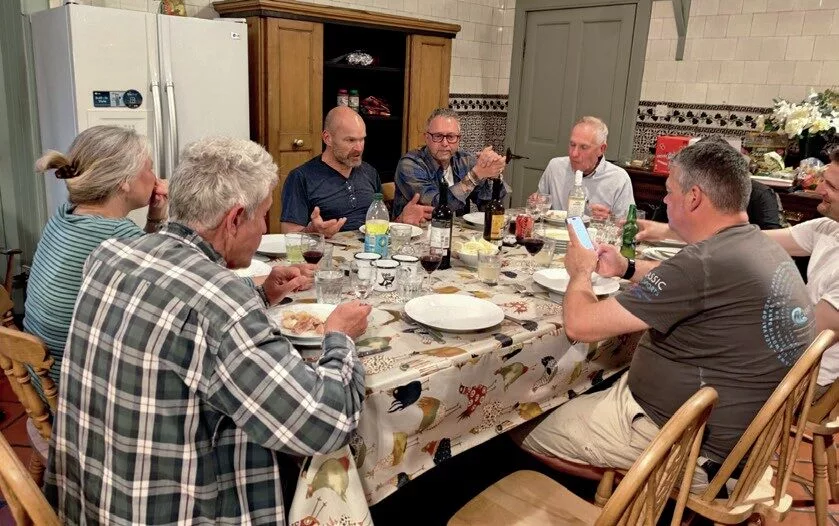
All too soon the day drew to an end, so we packed up and loaded everything back on the boats in the waves to head back to the dock and then on to Kinlockmoidart for dinner and a debrief. Craig would be taking all the cylinders for filling at the local seaweed processing plant so they were ready for us the next day. The rest of us cooked dinner – this was taken in turn by each team every evening and we ate well, it was a joint effort from cooking to washing up.
These guys back in the day were some of the first to practise with live fire and just to walk up the dunes was hard enough in T-shirts and shorts, never mind full military dress
Day Two – First Discoveries
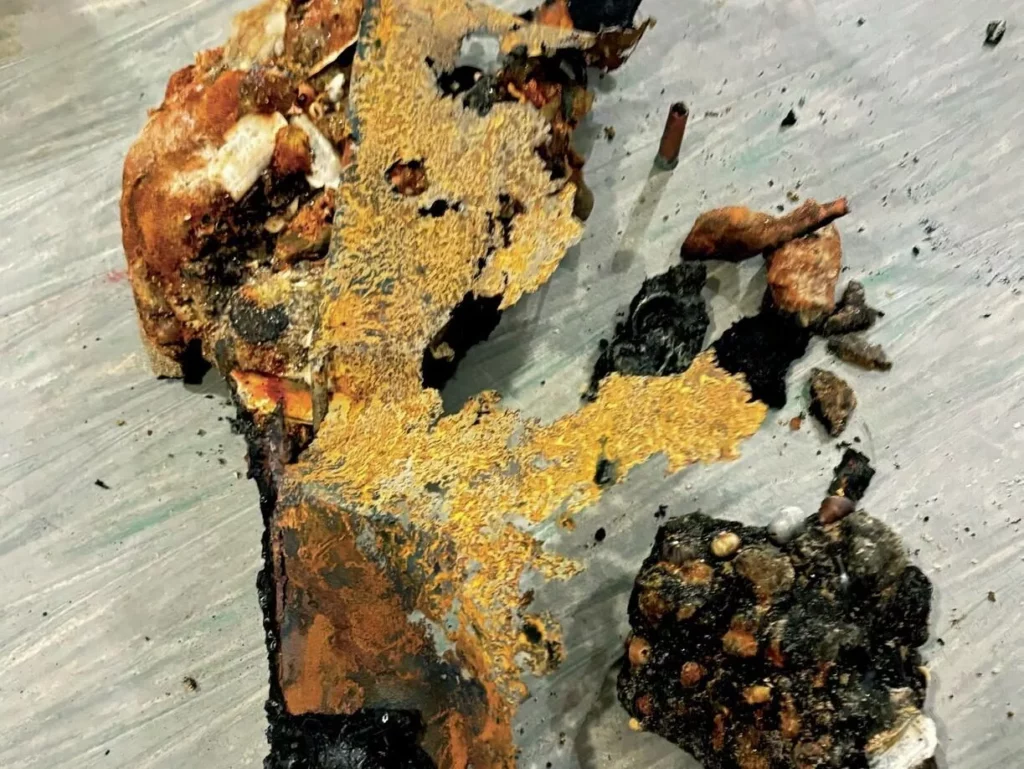
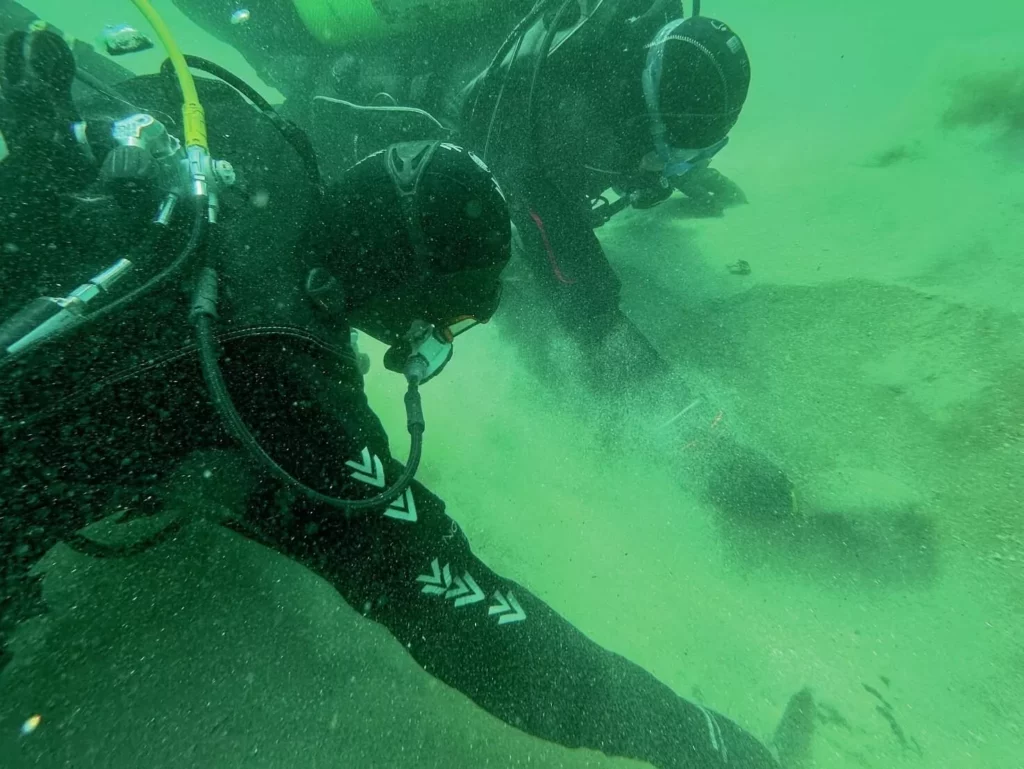
This started off the same as Day One to the beach, but now we had a new section of seabed to survey. After discussions the previous evening, we decided to go out a little deeper and as soon as we did, we started getting hit after hit, from shrapnel and shell casings to two large hits. We shall refer to these as the Big Flat Thing and the Big Round Thing. The Big Flat Thing took some digging out as when the sandy bottom was excavated, it was constantly fell back in to the extent. We took it in turns to widen the hole as big as we could to get it out. Eventually we got it and bagged it for later examination.
The Big Round Thing was found on the way back into the beach, this was also bagged for later evaluation. Job done – we had a main task of surveying the seabed, and tick, that was done. To look and find artefacts was another on the list – we could tick that also. Things were falling into place and we were all excited to see if we could work out what we had actually found as we packed up all the kit for the day and headed back to the manor house.
The Big Flat Thing and the Big Round Thing
Dinner this evening was a little livelier, as we had at this point found two things buried in the sand on the seabed, and now it was time to try and work out what they were.
After some discussions about the Big Flat Thing, we surmised it was from an oil drum of sorts that had some material in the bottom that had been burnt, as you could still see what looked like pitch and smelt of phosphorus, like when you blow a matchstick out.
This we think could have been placed on the beach to be used as a smoke distraction of some kind. The Big Round Thing looked like a pair of encrusted binoculars of some kind, but we couldn’t be certain, and further testing would need to be done.
Each evening, we had a lecture from either Monty, Greg or David on the story of the Commandos, with excerpts from Monty’s soon-to-be-released book on the subject, which brought where we were, and what we were doing, to life.
What comes next? Well, Part 2 of course…
You can also join Monty Hall’s on his 2026 expedition
With thanks to:
www.dacia.co.uk | www.kinlochmoidart.co.uk www.lochaline-boats.co.uk | www.dynamicnord.com
Frequently Asked Questions
What was the Celtic Dagger Expedition?
The Celtic Dagger Expedition was a historical and diving-led investigation into the origins of the British Commandos in Scotland during World War Two.
Where did the British Commandos originally train?
Early Commando units trained at remote Scottish locations, including beaches near Kinlochmoidart, using live ammunition and amphibious assault drills.
Who led the Celtic Dagger Expedition?
The expedition was led by Monty Halls, alongside divers, historians and filmmakers documenting the project.
Why were divers involved in the expedition?
Divers surveyed the seabed to search for submerged artefacts from Commando training exercises carried out in 1941.
What kinds of artefacts were the team searching for?
Possible finds included weapons, ammunition, personal equipment, and remnants of early amphibious landing craft.
This article was originally published in Scuba Diver Magazine
Subscribe today with promo code DIVE1 — enjoy 12 months for just £1!
