
Marine Conservation, science and research in Malaysia
Malaysia is a diver’s paradise, where every plunge reveals a world of vibrant corals, sea turtles, and swirling schools of fish. From the crystal-clear waters of Sipadan to the hidden gems around Tioman, the magic underwater feels like stepping into another world. However, this beauty can’t simply be taken for granted, we need to look after the ocean and her inhabitants. This is exactly what we are highlighting in this write up on all the fantastic projects that are pushing for policy change, conservation, restoration and research within the Malaysian waters. Some of the projects are actively taking volunteers which we will highlight.
TRACC (Tropical Research and Conservation Centre)
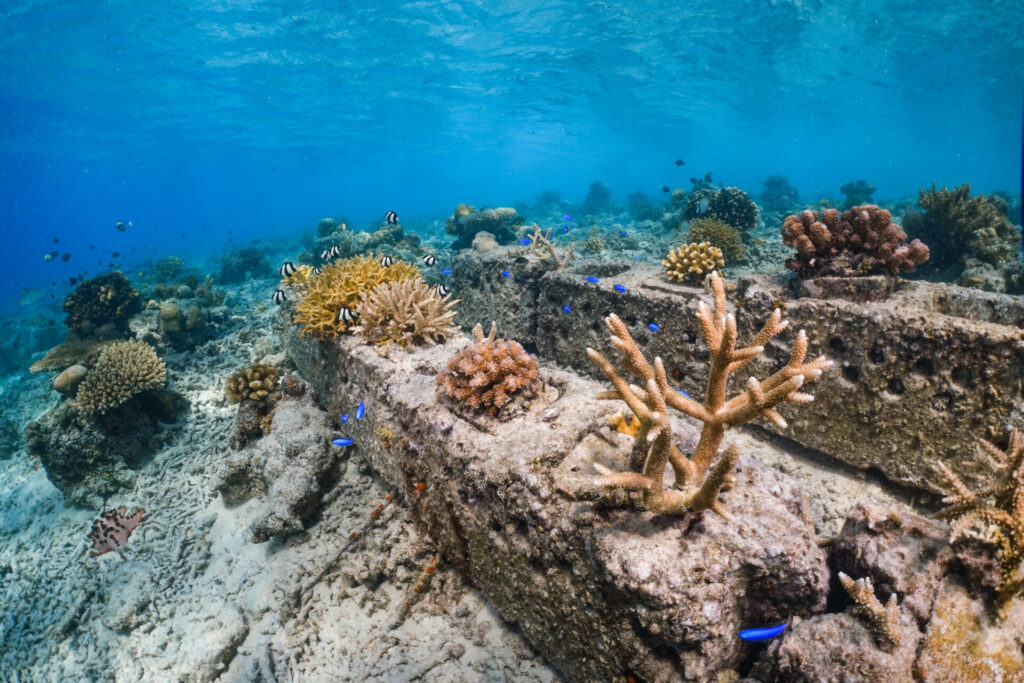
Operates on Pom Pom Island, Sabah, focusing on coral reef restoration and marine conservation. Their team of scientists, divers, and volunteers rebuilds damaged reefs using artificial structures and coral propagation. Their latest work is focussed on the reverse engineering of 3D printed reefs! Daily activities include coral planting, marine debris removal, and biodiversity monitoring. Volunteers gain hands-on experience in conservation diving while contributing to long-term ecological impact.
Reef Check Malaysia (RCM)

A non-profit founded in 2007, is dedicated to promoting a healthy ocean. A key pillar of its work is marine resource management, which RCM believes must involve all stakeholders, especially local communities. To support this, RCM established Community Marine Conservation Groups (CMCGs), composed of trained local islanders. These groups carry out vital conservation activities such as Reef Check surveys – an annual reef health’s monitoring survey, coral rehabilitation, ghost net and coral predator removal.
Coralku

A research-driven nonprofit in Malaysia, is restoring coral reefs using scientific climate-resilience screening methods on Lang Tengah Island, Terengganu. Locally, urgent action is needed to identify and protect the corals most likely to survive in a warming ocean—so we can focus restoration where it truly counts. With bleaching events on the rise, divers have a role beyond buoyancy control—supporting reef recovery.
Tengah Island Conservation (TIC)

Has expanded its conservation work beyond turtle hatchery, reef restoration, seagrass monitoring, coastal tree planting and also beach and underwater cleanup. TIC came up with the Integrated Island Waste Management initiative and Sustainable Tourism package under their Rumah Eko project. The Outreach and Education Program team rolls on spreading awareness and knowledge for the communities to become stewards of the environment.
Marine Research Foundation (MRF)

Based in Sabah, the Marine Research Foundation (MRF) is Malaysia’s first marine-focused NGO. One of MRF’s key projects promotes sustainable fisheries practices by reducing sea turtle bycatch in shrimp trawls through Turtle Excluder Devices, and deploying SharkCam, time-lapse cameras used to monitor shark and ray bycatch. MRF also partners with local divers to remove marine debris in Kota Kinabalu for underwater clean-ups, supported by the Mobula, a dedicated waste collection vessel.
Scuba Junkie SEAS

This grassroots conservation charity is based on Mabul Island, Sabah. It leads hands-on marine conservation through turtle nest protection, turtle rescue, coral reef restoration, and daily marine debris clean-ups. Blending action, science, and community, SEAS invites divers to get involved—whether by volunteering, adopting a baby turtle, supporting coral restoration, or joining a beach clean—all helping to protect the ocean we love.
The Perhentian Marine Research Station (PMRS)

Protects marine ecosystems through scientific research, monitoring, and community initiatives in Malaysia’s Perhentian Islands. It uses standardized ecological methods like Reef Check survey’s, CoralWatch, and Seagrass Watch to support conservation planning management. PMRS empowers local communities, especially youth, through its ‘Anak Pulau’ programme, training them in scuba diving, coral surveys, and practical interventions. PMRS collaborates closely with the Perhentian Turtle Project and Perhentian Eco Education Project, creating a comprehensive conservation strategy across the region.
Written by Robin Philippo
