
PT Hirschfield chats to prolific underwater photographer and article co-creator Malcolm Nobbs, who is based in Nelson Bay, NSW
Photographs by Andy Murch, Charles Hood and Malcolm Nobbs
Malcolm Nobbs: From First Dives to a Lifelong Passion
Malcolm Nobbs recalls his first trydives during a 1994 vacation in Israel with his late-wife Eve. Weeks later, English-born Malcolm commenced his BSAC Novice Diver course: ‘I did my qualifying dives in a thin wetsuit, in a quarry, in about 7 degrees C. Visibility was shocking, but I loved it.
I was hooked, though I quickly realised it was much nicer to dive in the Red Sea than in England’.
‘I was more enthusiastic about diving than Eve was. She was happy to do just a couple of dives a day, but I became obsessed.’
They travelled together for diving, including three trips to Cocos Island, Costa Rica (still one of Malcolm’s favourite locations). His logbook recorded over 200 dives a year for at least a decade (now with over 4,200 dives total).
After Eve passed away, Malcolm relocated to Sydney in 2009, where his daughter already lived. He found a kind of therapy and healing in Australia’s waters, eventually marrying Mary and relocating to Nelson Bay.
After early flirtation with shooting underwater video in England, Malcolm found himself drawn to making still images. He became an active Member of the British Society of Underwater Photographers (BSoUP).
Discovering the Art of Underwater Photography
England’s fresh water didn’t offer great diversity of marine life, beyond pike: ‘Soon after becoming a diver and getting a camera, I was entering competitions. I took good images of pike which won me an award, followed by a lucky run of awards.’
Malcolm realised that if he recognised competition judges and what they were looking for, entering a photo that ticked the boxes of each individual judge gave him an edge: ‘That wasn’t really what competitions should be about. So my new challenge was to write magazine articles; that was a skillset I couldn’t cheat.’
‘I was quite good at coming up with the concept of the article, getting shots and background information. But writing the article was torture. If you ever have trouble sleeping, you should read one of my early articles.’
In 2013, Malcolm asked an editor of a British magazine he was submitting to, ‘Don’t you find these articles boring?’ and was told, ‘Well, they’re ok, but you’re not the world’s greatest writer.’
The magazine then introduced him to writer Jamie Watts: ‘He’s as bad at photography as you are at writing. But put the two of you together, and either you’ll be awful together, or you’ll be geniuses.’
Malcolm had come from an entrepreneurial background. He’d frequently partnered with others who had good ideas but who didn’t know how to build businesses, helping them establish successful enterprises.
Collaboration came naturally to him. The Watts and Nobbs pairing worked like a dream, resulting in countless published articles globally.
Typically, Malcolm devises an article concept, conducts interviews and captures images, usually of something unusual. He shares that basic content with Jamie (now working as an expedition leader in Antarctica), who transforms Malcolm’s raw material into something magical.
Securing a broader audience for his images isn’t necessarily a motivator for Malcolm: ‘It strokes the ego a bit. But I want to do stuff that pleases me, not necessarily what pleases other people. What gives me a buzz is getting a really good photo that’s unusual.
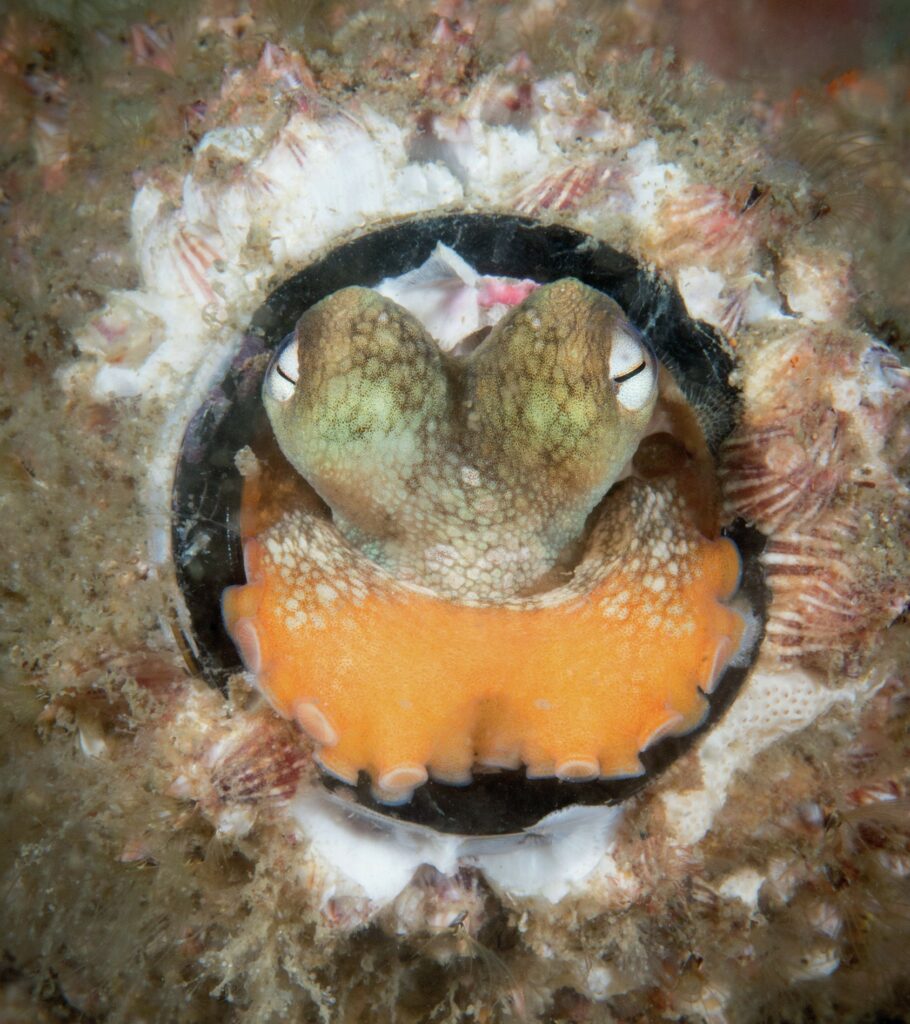
Or finding something I’ve never seen before. I can’t tell you how excited I get! Capturing marine life behaviour on a full moon night dive, especially at Sydney’s Clifton Gardens, leaves me exhilarated.’
Iconic Dives and Shark Encounters
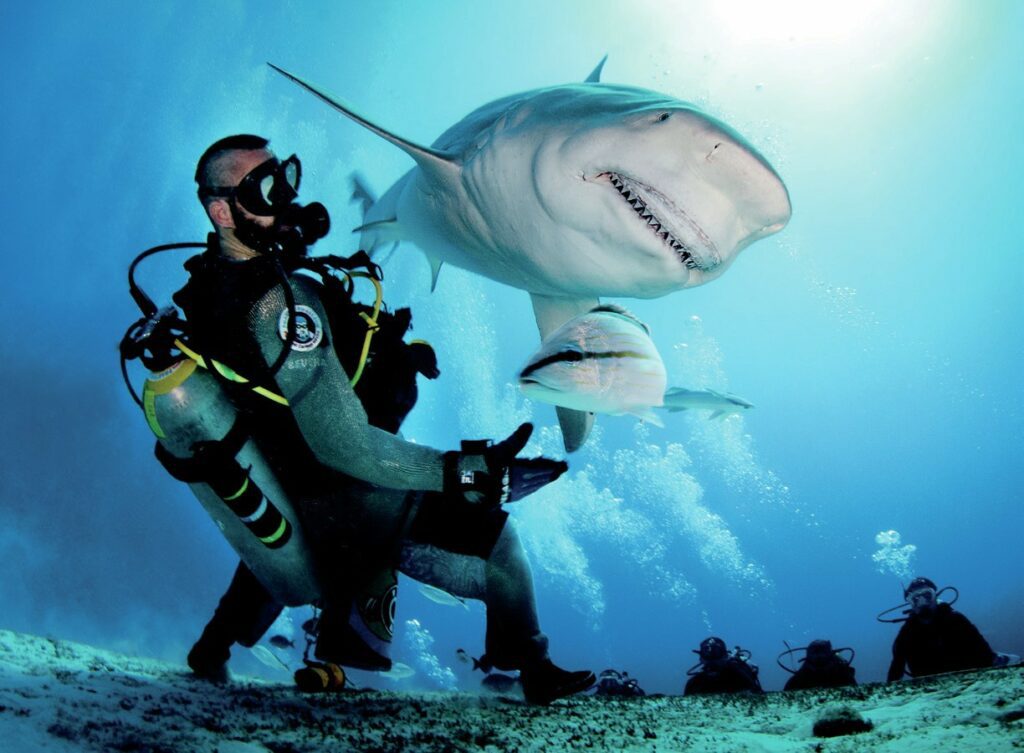
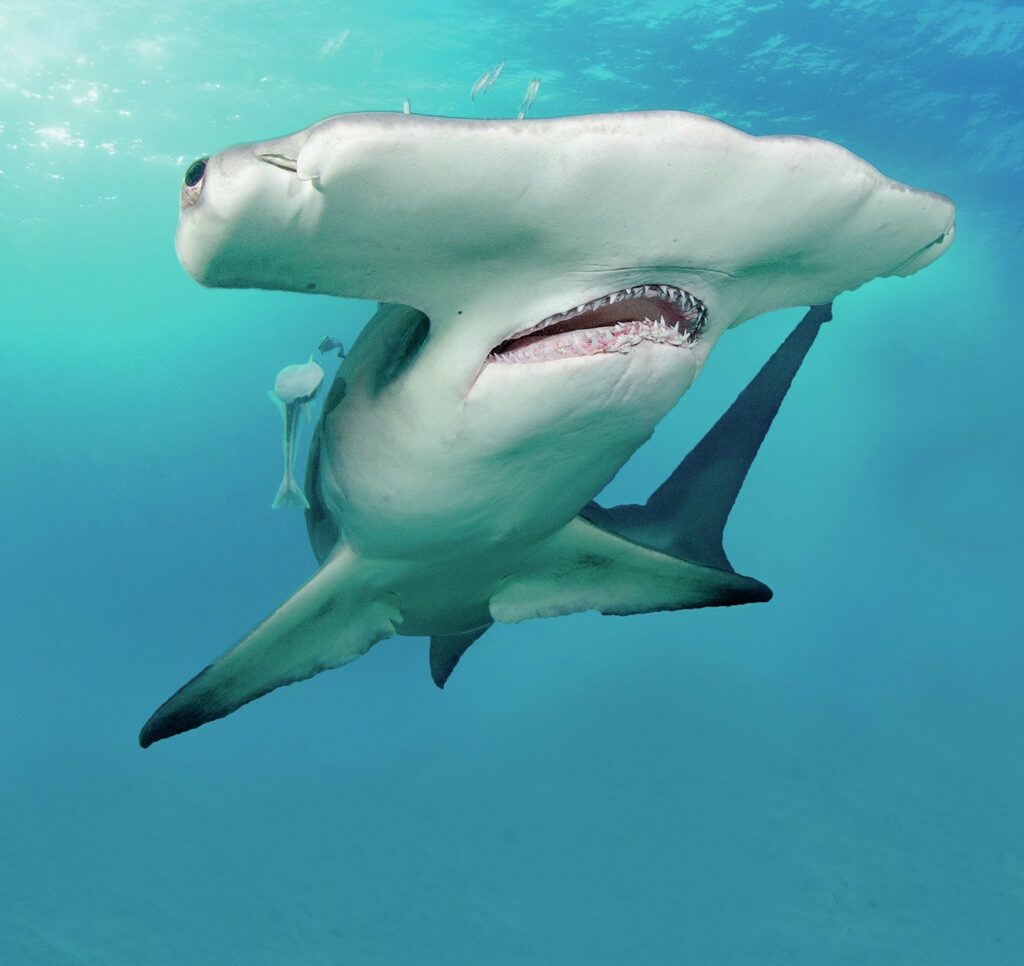
Malcolm’s favourite underwater memories are filled with sharks: thresher sharks in Malapascua, and a dusk checkout dive at Cocos Island in water teeming with reef sharks. He once giant-strided onto a great white at Cabbage Tree Island off Nelson Bay (He was the last diver in the water.
Ironically, he was the only diver not to see the white. He laughs, remembering that sharky splash as ‘one of the shortest dives of my life!’). A more relaxed close encounter with a white at nearby Halifax reinforced to him that these animals to be more revered than feared.
While he rarely dives with other people, one of his good dive buddies is Andy Murch of Big Fish Expeditions and sharksandrays.com. Andy has photographed more shark species than any other photographer, and Malcolm was pleased to recently show him his first crested hornshark at 30m at Fly Point.
Malcolm recalls swimming with Andy and five seven gill sharks inside a wreck in South Africa’s False Bay: ‘Seven gills have these friendly dopey, cartoon-character faces. But one was nibbling my first stage. Another was biting my dome port shield. I couldn’t see the one around the back and started getting a bit apprehensive.
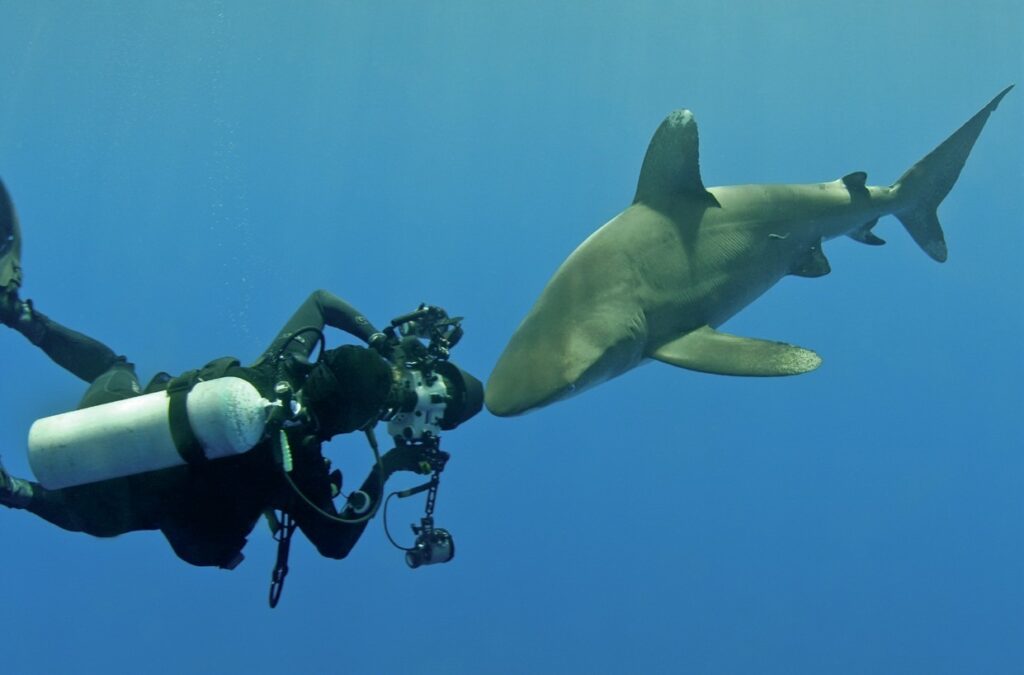
We decided to move away, but the sharks followed us, getting a bit aggressive.’ After that encounter, Malcolm couldn’t stop smiling, despite testing positive for Covid after the dive and being confined to quarantine.
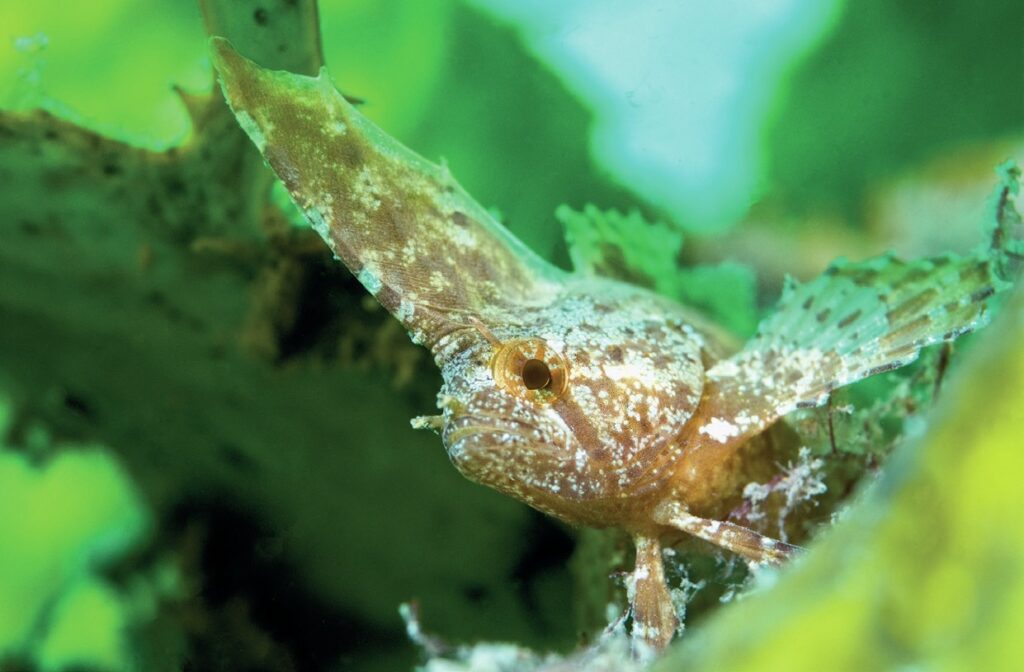
One picture he’s taken of a great white during an adventure with Andrew Fox has been constantly poached and used in the commercial world without permission. That image is testament to the success of Malcolm’s desire to depict even the most-maligned marine life as relatable, rather than intimidating.
Inspiring Divers Through Photography and Education
He concedes: ‘Most serious photographers know more about camera systems and settings than I do. But I have the gift of an eye for the shot I want to capture.’
His website is arguably one of the world’s largest scuba-related sites, showcasing 13,000 categorised, searchable marine life images, plus dive location reports for everywhere he’s dived. All of Malcolm’s published work is featured, alongside many humorous videos.
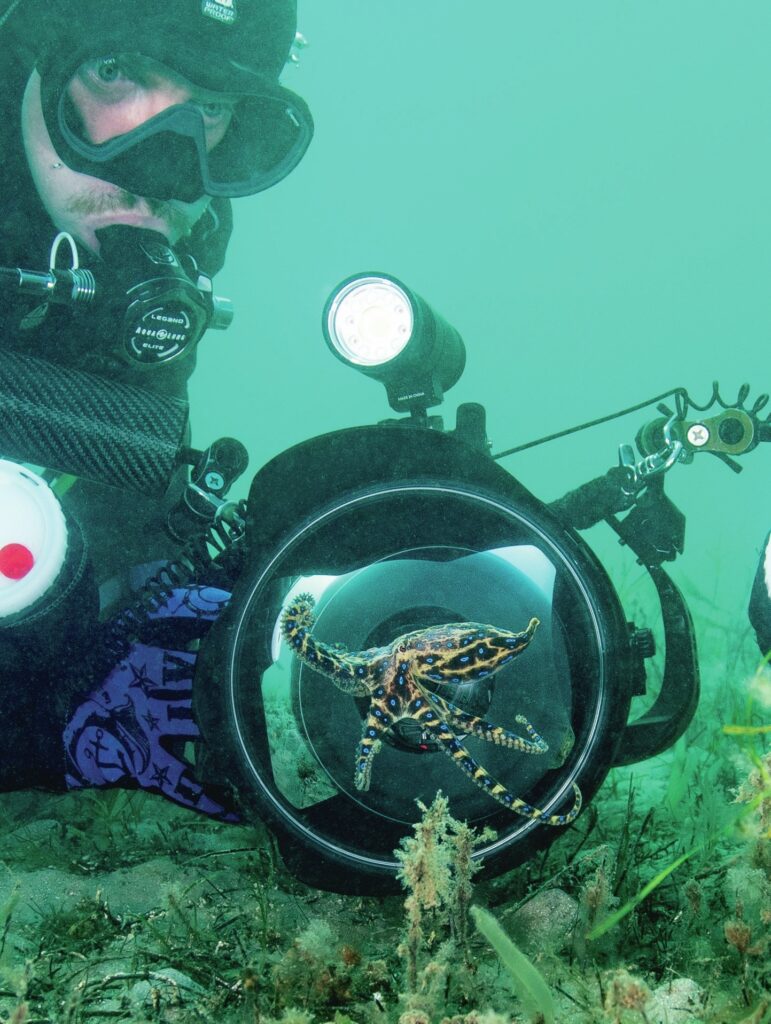
Malcolm’s marine life images balance drama with beauty, favouring a sense of serenity and intimacy over the dramatic approach others might use with the same subjects.
He usually seeks to establish eye contact between the subject and the camera: ‘I’m trying to show the fish as friendly and interested in us. I’d like to encourage people to go diving. Hopefully looking at images like mine will inspire them to do that.’
FAQs
Who is Malcolm Nobbs?
Malcolm Nobbs is a prolific underwater photographer and diver based in Nelson Bay, NSW, with over 4,200 logged dives and numerous published articles worldwide.
What inspired Malcolm Nobbs to start diving?
Malcolm’s diving journey began during a 1994 vacation in Israel and his subsequent BSAC Novice Diver course in England, where he discovered his passion for exploring underwater life.
What makes Malcolm Nobbs’ underwater photography unique?
He captures marine life with serenity and intimacy, often establishing eye contact between subject and camera, making even intimidating species appear approachable.
Where has Malcolm Nobbs dived and photographed marine life?
Malcolm has dived globally, including locations like Cocos Island, Malapascua, South Africa’s False Bay, and Sydney’s Clifton Gardens, documenting a wide range of species from thresher sharks to crested hornsharks.
How does Malcolm collaborate with writers and editors?
He partners with writers like Jamie Watts, combining his photography and article concepts with professional writing to create engaging, published content worldwide.
What resources are available on Malcolm Nobbs’ website?
His website (www.malcolmnobbs.com) features over 13,000 searchable marine life images, dive location reports, published articles, and educational videos for divers and photography enthusiasts.
This article was originally published in Scuba Diver ANZ #61
Subscribe today with promo code DIVE1 — enjoy 12 months for just £1!

sad