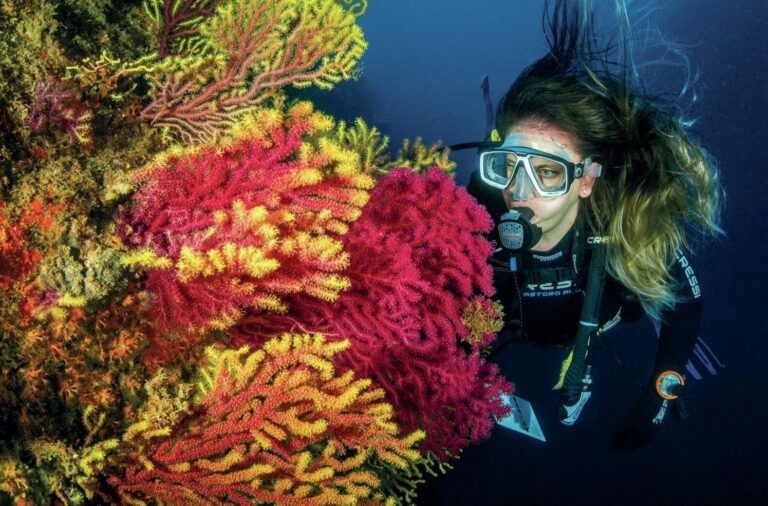
Two common medical questions answered by DAN experts: how to manage contact lenses safely underwater, and when it’s safe to dive again after low iron or an IV iron infusion.
Key Takeaways
- Maintain strict hygiene with contact lenses.
- Monitor for dryness and always carry backups.
- Do not dive until anaemia is corrected and energy levels restored.
- Always seek medical clearance before resuming diving post-infusion.

Wearing Contact Lenses While Diving
Is it safe to wear soft contact lenses while diving?
Many divers wear contact lenses without issue during their dives. It’s crucial, however, to be aware of potential challenges, such as increased dryness or irritation due to factors like dry air in the dive mask, prolonged wear, mask squeezes, or exposure to saltwater. Maintaining good hygiene practices, including thorough handwashing before handling lenses and avoiding contamination, is essential.
The general recommendations for divers who wear contacts include using preservative-free lubricating drops, ensuring the dive mask fits properly to minimise leakage, and having a back-up pair of glasses in case of discomfort or issues underwater. Individual tolerance and experiences may vary, and divers should be attentive to any discomfort, redness, or irritation during a dive. If any of those signs occur, discontinue the dive and seek medical attention. If you have specific concerns or problems related to wearing contacts while diving, consult an eye care professional or an ophthalmologist, especially one with expertise in dive medicine, who can provide personalised advice and recommendations.
Diving and Low Iron Levels
Does DAN have information regarding diving for individuals with low iron levels or who have undergone an IV iron infusion?
Anaemia itself may not categorically prohibit diving, but your doctor should clear you for diving only after considering multiple factors, including identifying the cause of your anaemia. One concern revolves around the impact of anaemia on exercise tolerance, a crucial aspect for divers who may need reserve strength and endurance for emergencies. Anaemia diminishes the blood’s oxygen-carrying capacity, potentially affecting stamina and the ability to respond effectively in challenging underwater situations.
A significant worry related to anaemia is its potential to induce a rapid or irregular heartbeat (arrhythmia). When coupled with exercise and the vascular fluid shifts that occur with diving, anaemic divers may face an increased risk of heart problems, particularly if they are predisposed to or have existing cardiovascular conditions. Anaemia imposes an augmented workload on the heart as it compensates for decreased oxygen levels.
Factors such as anaemia severity, response to the infusion, and overall health affect the waiting period before resuming diving after a required IV iron infusion. Following an iron infusion, the body requires time to replenish and utilise iron, enhancing haemoglobin levels and oxygen-carrying capacity. The recovery period varies; it can take weeks to months for the body to fully adjust and stabilise iron and haemoglobin levels. No diving should occur soon after receiving iron infusions and during recovery.
Clearance for diving hinges on individual response to iron treatment, normalisation of iron levels, improvement in anaemia, and the restoration of exercise capacity. Close monitoring and assessment by your physician team are essential to your return to diving.
If you have a medical question send an email to medic@dan.org.
For an extensive range of diving health and safety information and downloadable resources, research studies, incident summaries, and free e-Learning courses, take the time to explore the DAN website.
Frequently Asked Questions
Can saltwater damage or dislodge contact lenses while diving?
Soft contact lenses can tolerate short exposure to saltwater, but mask leaks or flooding may cause irritation or lens displacement. Always ensure a proper mask seal, and if your mask floods frequently, consider prescription dive masks as an alternative.
Are daily disposable lenses better for divers?
Yes. Daily disposables reduce the risk of infection and buildup from salt or bacteria. Simply discard them after diving and start fresh. If you wear extended-wear lenses, remove and clean them thoroughly after each dive day.
How long should I wait to dive after an iron infusion?
Divers should wait until their doctor confirms that iron levels and haemoglobin have normalised and exercise tolerance has returned. This can take several weeks to months, depending on the severity of the anaemia and individual recovery response.
Can mild anaemia affect dive performance?
Yes. Even mild anaemia can reduce endurance and increase fatigue underwater due to lower oxygen delivery to tissues. Divers may feel tired more quickly or struggle with exertion during strong currents or emergencies. Always discuss your condition with a dive medicine physician before returning to diving.
