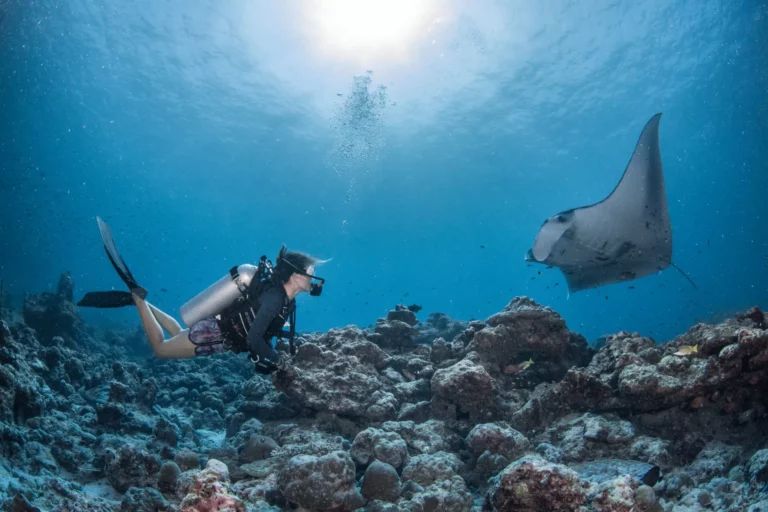
Manta tourism ranks among the Maldives’ most significant natural economic assets, but now precise monetary values have been assigned to the country’s ray population in a new study by the Manta Trust.
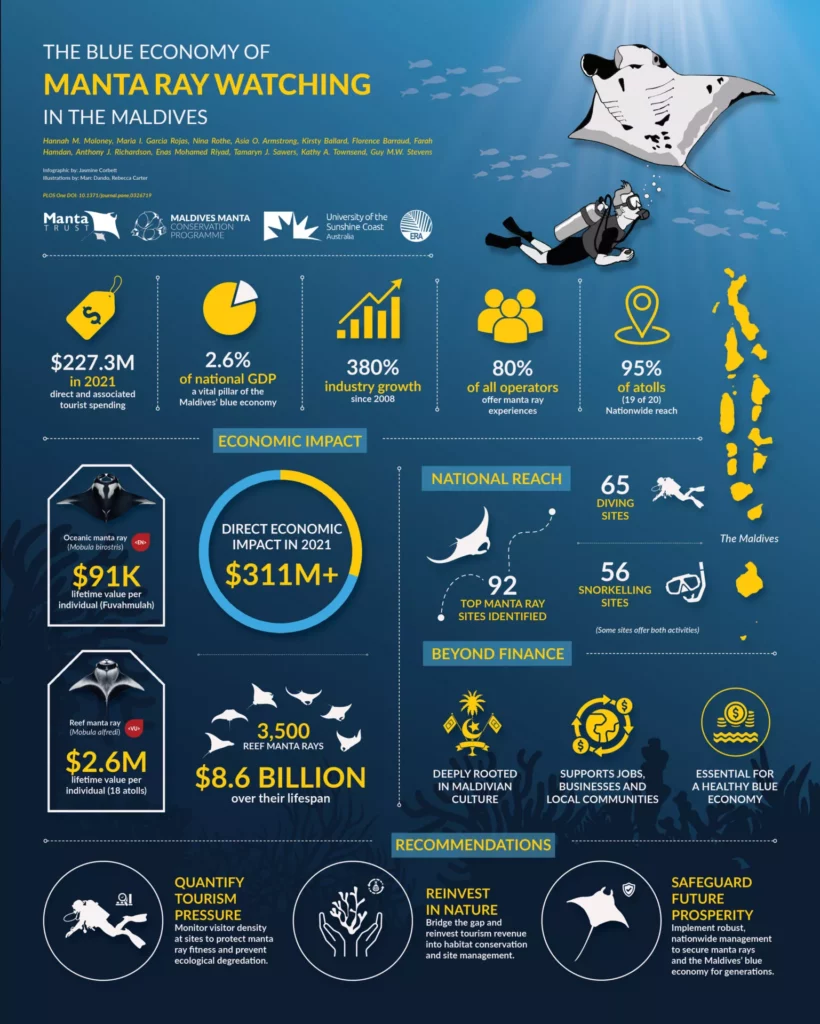
It turns out that manta ray watching generates more than US $227 million (£170m) a year to the Maldives economy – that’s $311m (£231m) with indirect spending included – and contributes some 2.6% of the nation’s GDP.
Working with an international team of researchers, the UK-registered marine-conservation charity based its valuation on tour-operator surveys and data-mining.
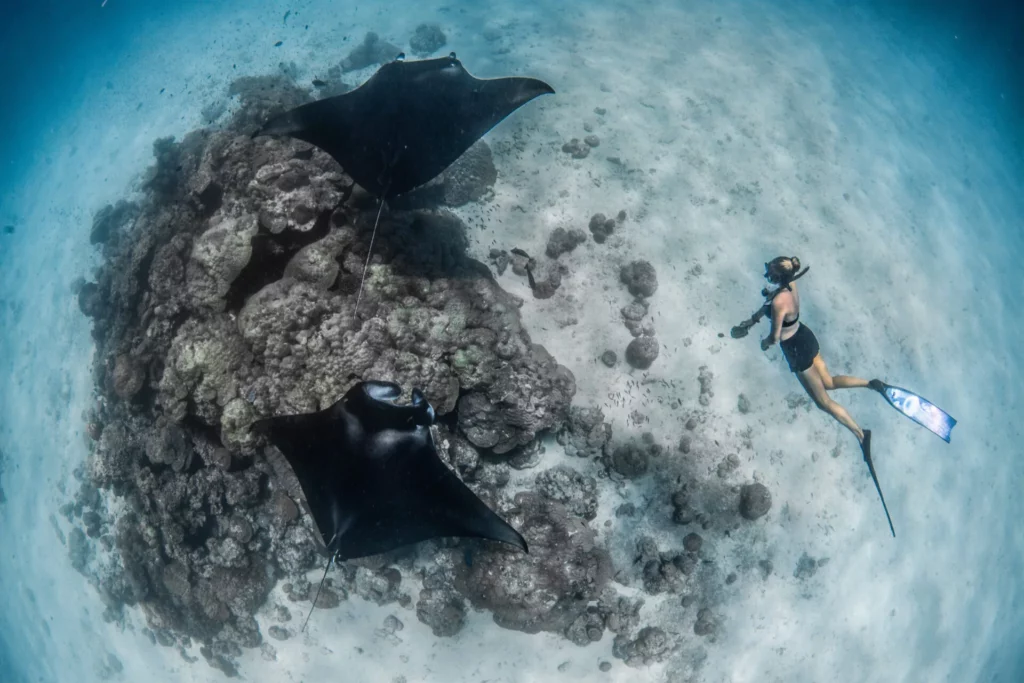
It was able to calculate the long-term value of the population of around 3,500 mantas, projecting that over the rays’ collective lifetimes they will be worth a massive $8.6 billion (£6.4bn) to the Maldives tourist industry.
That means that each individual reef manta rays contributes up to $2.6m (£1.9m) through repeated encounters with scuba divers, freedivers, snorkellers and other tourists.
Protecting the assets
“The reason it’s important to put a monetary value on wildlife like manta rays is that a lot of stakeholders, including politicians and other decision-makers, speak in terms of money,” explained study lead author Hannah Moloney, a PhD candidate at the University of the Sunshine Coast in Australia.
“They understand when there is an economic value attached to an animal or an ecosystem. If you can put a value on an animal, they’re often more likely to react, and that can help drive positive conservation outcomes.”
The findings are said to highlight an urgent need to match tourism growth with effective management, habitat protection and conservation reinvestment.
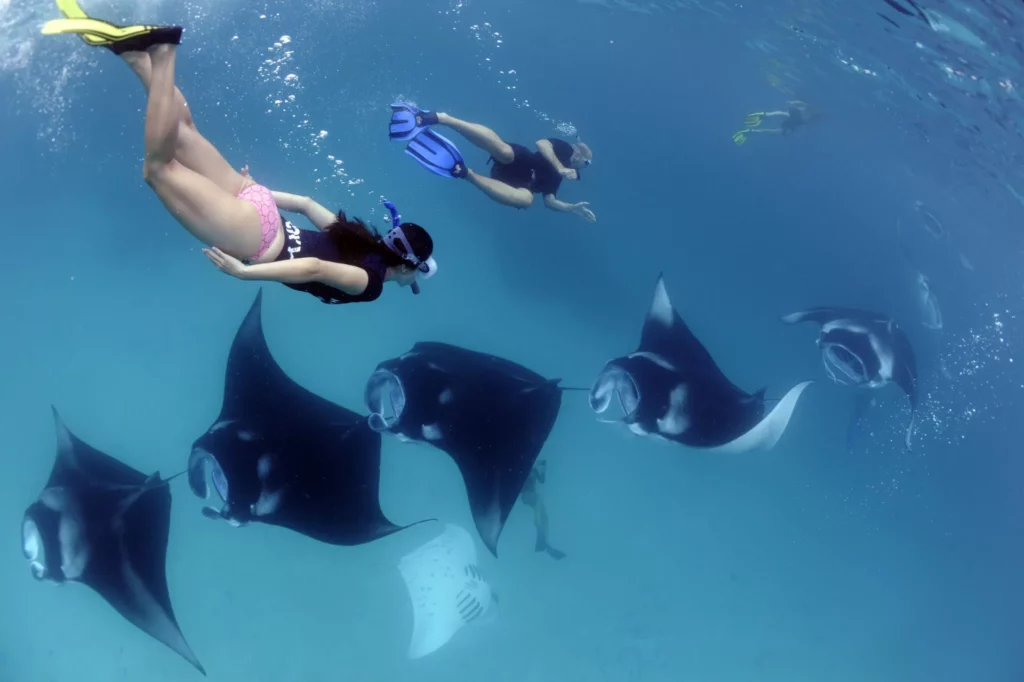
Manta ray tourism has expanded rapidly in the Maldives, growing by some 380% since 2008 and now operating across 95% of administrative atolls. Eighty per cent of tour operators offer manta encounters, principally at 92 key diving and snorkelling sites.
“What this study really shows is that manta rays are not just a conservation priority but a national economic asset,” said Manta Trust CEO Dr Guy Stevens.
“With that comes a responsibility to manage these populations properly – ensuring that tourism is sustainable, key habitats are protected and enough of the revenue they generate is reinvested back into their long-term survival.”
Reinvestment of tourism income into conservation should cover protection of key aggregation and foraging sites, improved monitoring of tourism pressure and implementation of nationwide safeguarding strategies, says the Manta Trust.
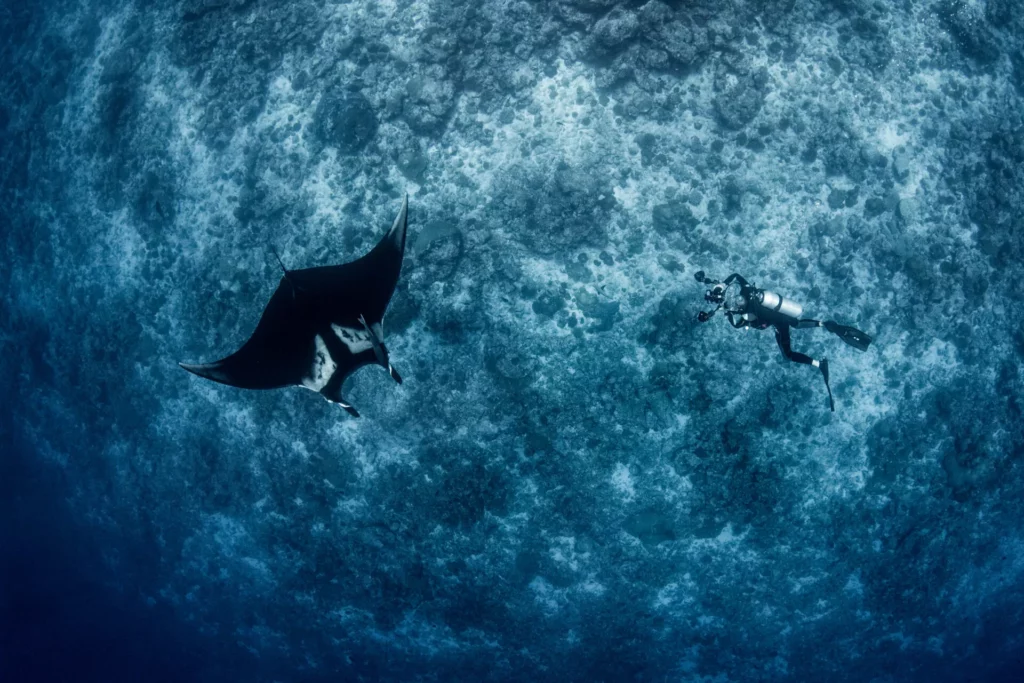
“The manta tourism industry is growing rapidly, and with that growth comes increasing pressure on manta rays and their habitats,” said Moloney.
“It’s really important that we identify which sites are under the most pressure and understand where the greatest risks are, so that we can take action to protect those areas before the impacts become more serious.”
The study is published in the journal in PLOS One.