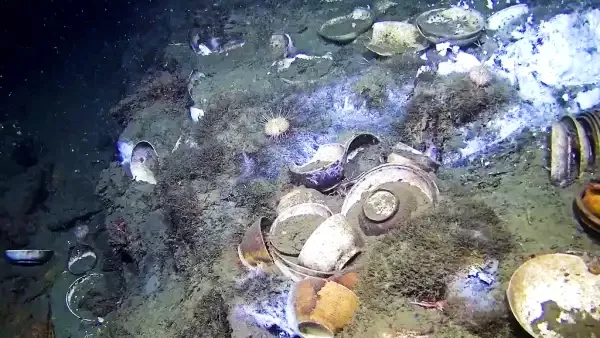
Maritime archaeologists exploring a newly discovered 18th-century merchant shipwreck 600m deep off southern Norway have discovered a combination of well-preserved items said to be unlike any other such cargo in northern Europe.
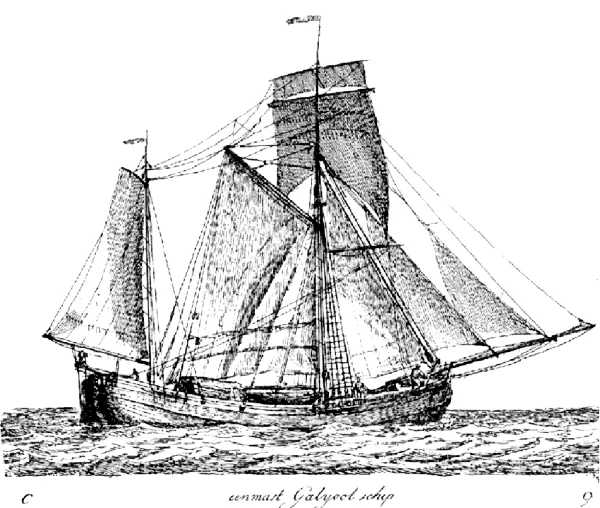
The rounded stern of the 22m vessel, dubbed “the Porcelain Wreck”, suggests that it could have been a galliot, though it has two masts rather than one. It would typically have carried a crew of five or six.
Thought to have sunk in the mid-1700s, the wreck was found by salvor Espen Saastad in the Skagerrak strait between Norway and Denmark.
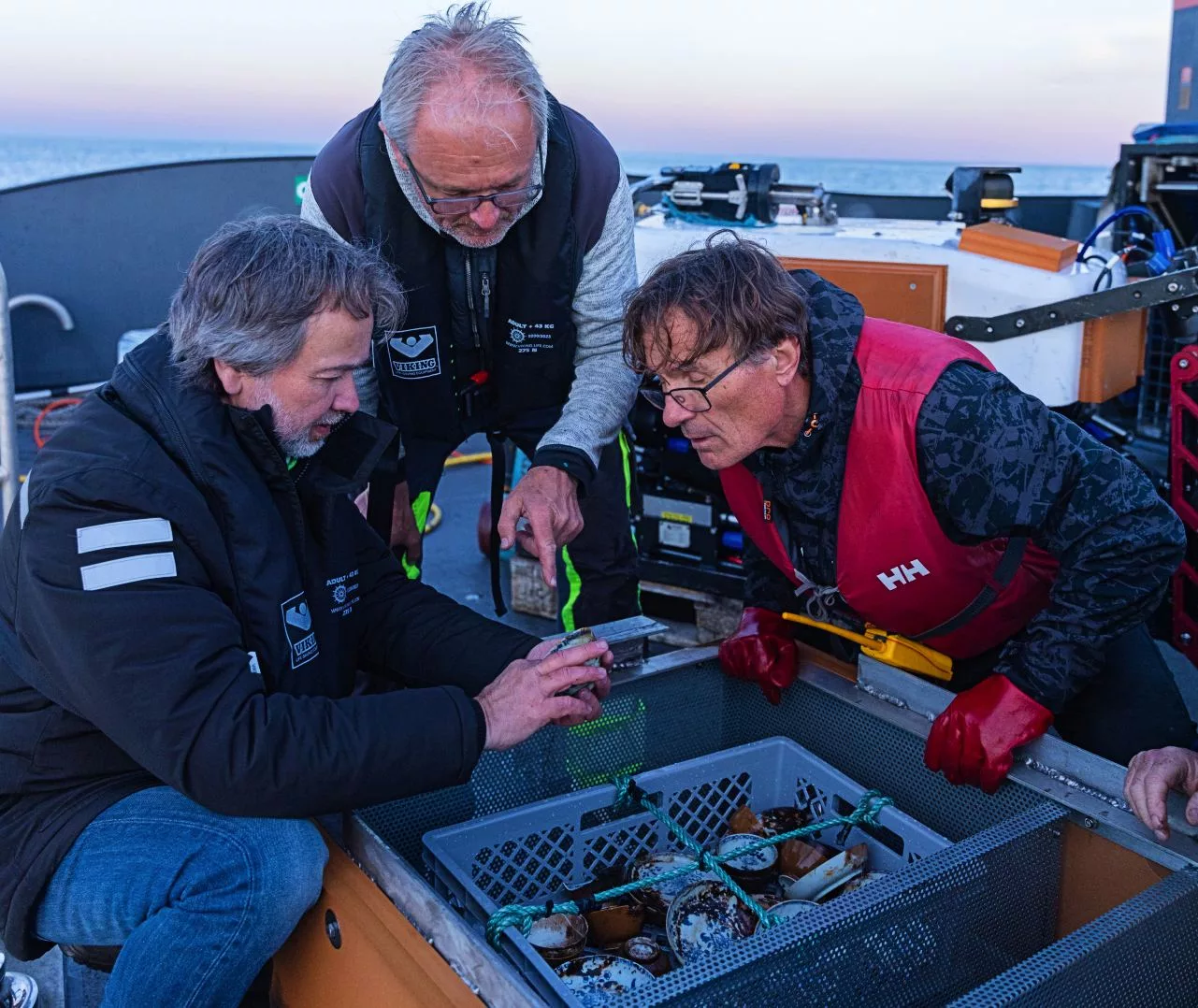
The owner of a small ROV and survey company, Saastad has been working with the Norwegian Maritime Museum (NMM) in Oslo to recover a selection of the artefacts. Maritime archaeologist Frode Kvalø from the museum is leading the project.

“As far as we know, this is the first time in northern Europe that marine archaeologists have carried out such a salvage from a wreck at such a great depth,” says the NMM.
Luxury products such as German or English chandeliers, stemmed glasses and porcelain figurines have been found at the site, along with barrels of grain and large quantities of tightly stacked white and blue Chinese bowls.
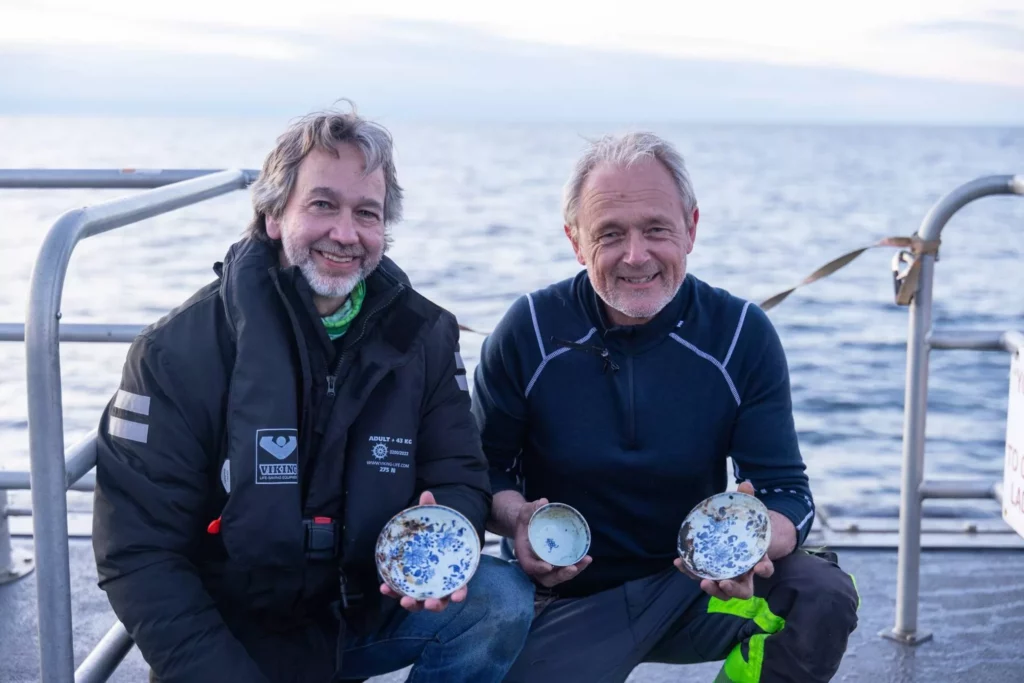
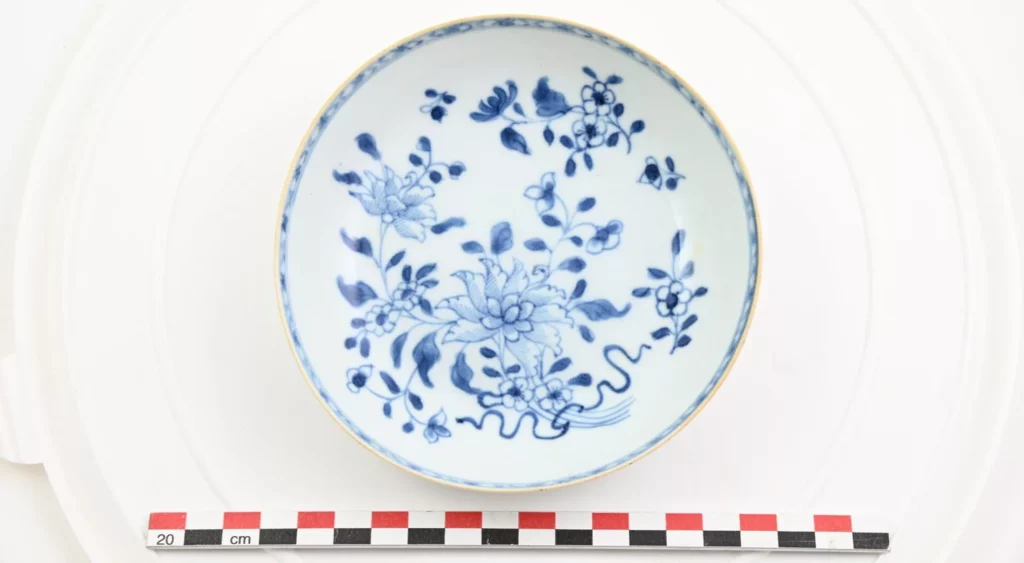
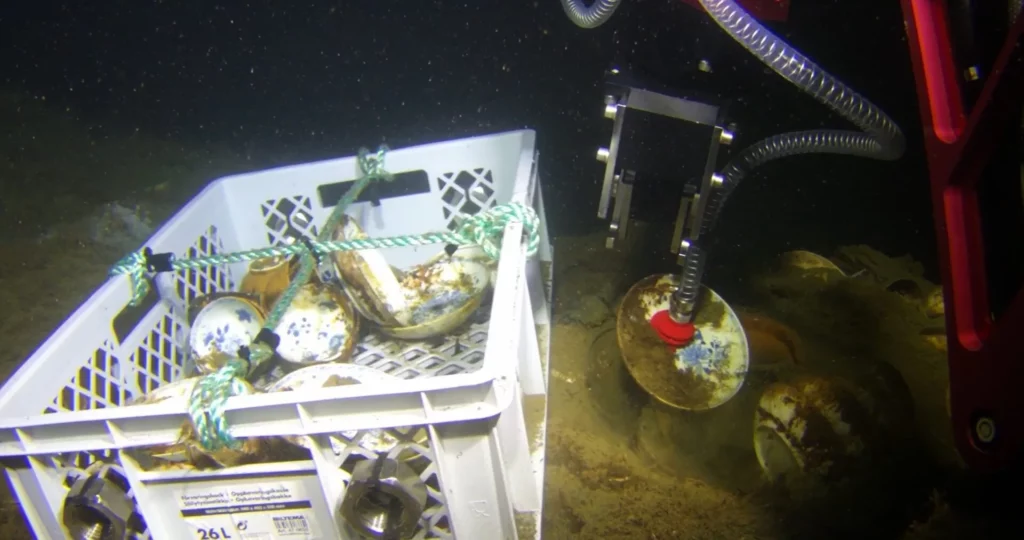
Some of this porcelain is Bataviaware and some could be Blanc de Chine. One cup bears what looks like a monogram, though it has yet to be deciphered, and for now the place of origin of the ship and its destination remain unclear.
Lübeck brick
Crates appear to contain textiles and the remains of organic materials, possibly tea, herbs or medicines. Another intriguing find in the galley was a brick stamped Lübecker Ratsziegelei, a brickworks that operated from the 15th century until 1772 in what became the Free Imperial City of Lübeck.
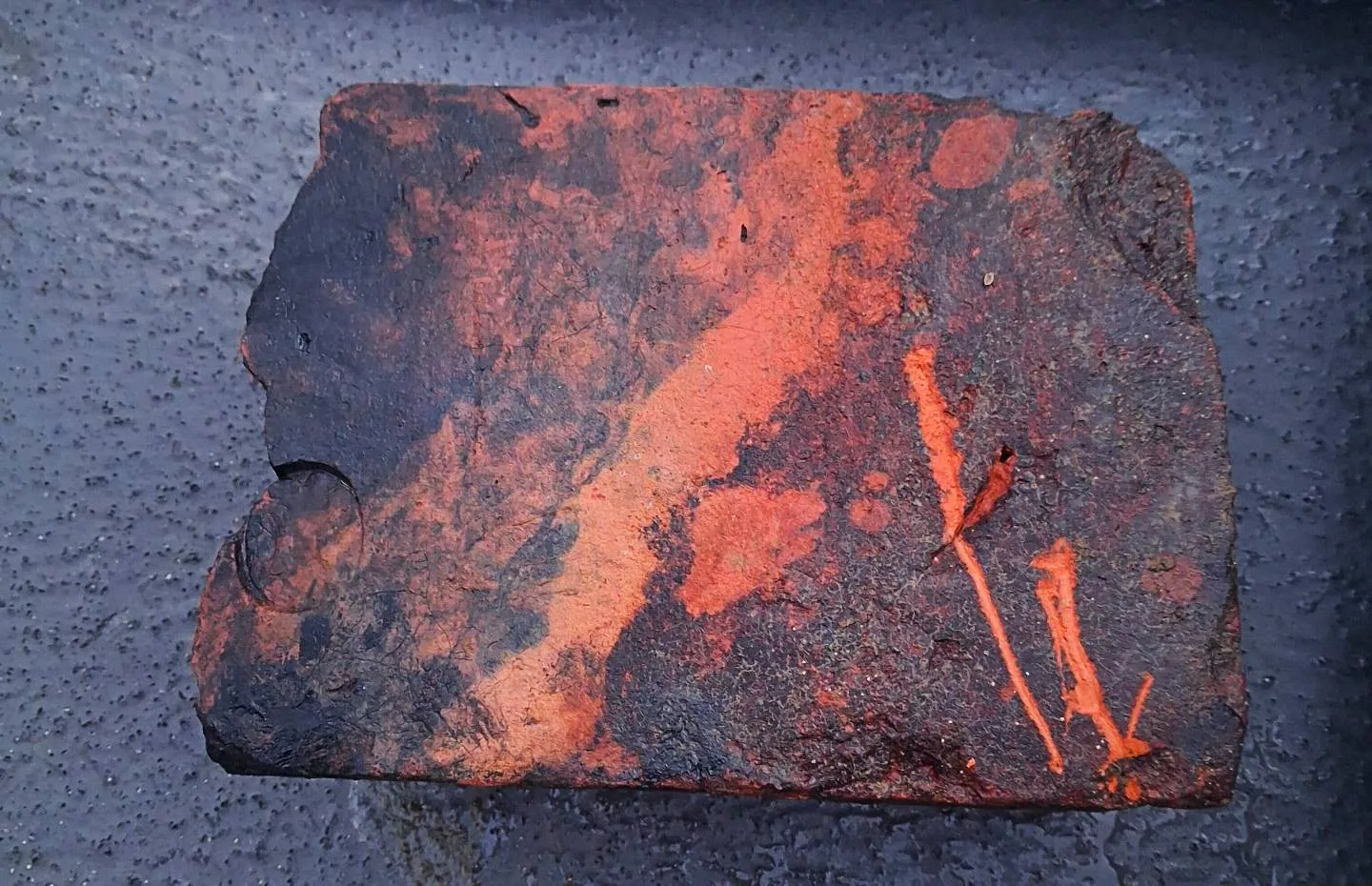
Grain samples have been taken from the wreck and are set to undergo DNA analysis.
The vessel stands roughly upright on its buried keel. Two anchors and hawse-pipes were found near the bow while, at the stern, the end of a sternpost can be seen but there is no sign of a rudder. Blocks, rope, what could be telescope, the galley and an iron stove can also be seen, though no guns.
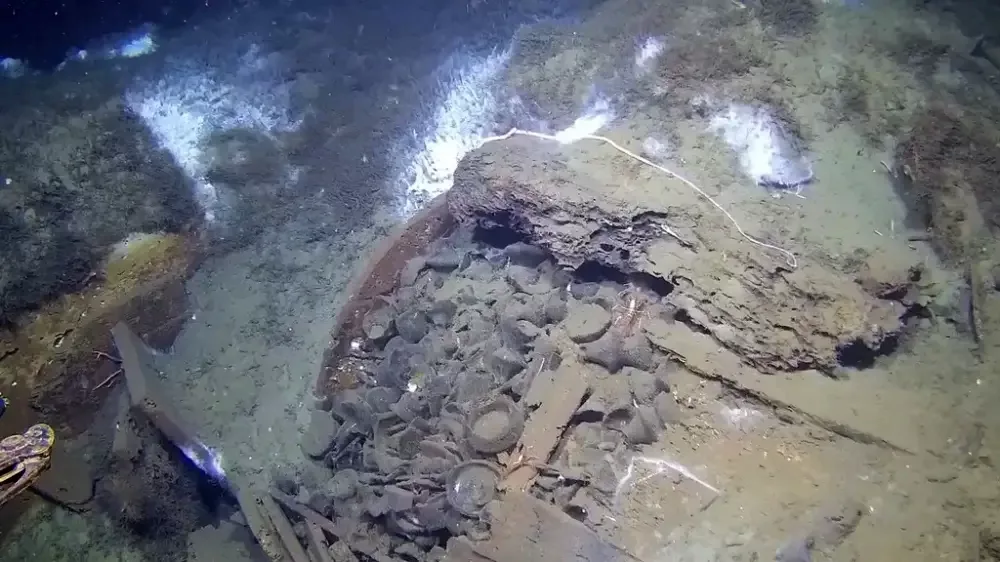
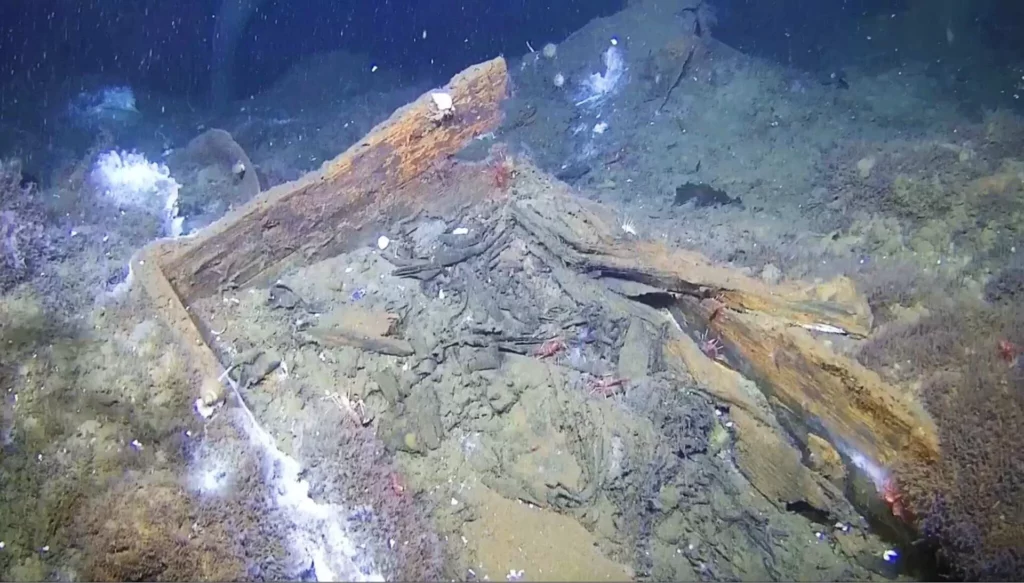
The hull’s shape is marked by its inner, outer and ceiling planking, and the cargo remains contained within that structure, except where some trawl damage has occurred.
The archaeologists have been exploring the wreck-site using a drone on a 1km cable equipped with a camera and a robotic arm with suction pads to manipulate artefacts. These are being conserved and documented at the NMM.
‘Rubbed my eyes’
“I had to rub my eyes when I grasped the scale of this find,” said Hanna Geiran, director-general of the Norwegian Directorate for Cultural Heritage. “It is almost beyond belief. I look forward to learning more.”
“This find is not only extraordinary, it’s also of considerable scientific value and demonstrates an important technological advancement in underwater archaeology,” stated Norway’s climate & environment minister Andreas Bjelland Eriksen.
“It provides us with new and valuable insight into Norway’s and northern Europe’s maritime history, and will be of great importance for archaeological research and dissemination, as well as cultural heritage management.”
The shipwreck is automatically protected under Norway’s Cultural Heritage Act, and there are plans for items of the cargo to be displayed at the NMM in the future.
Also on Divernet: The shipwrecks of Telemark