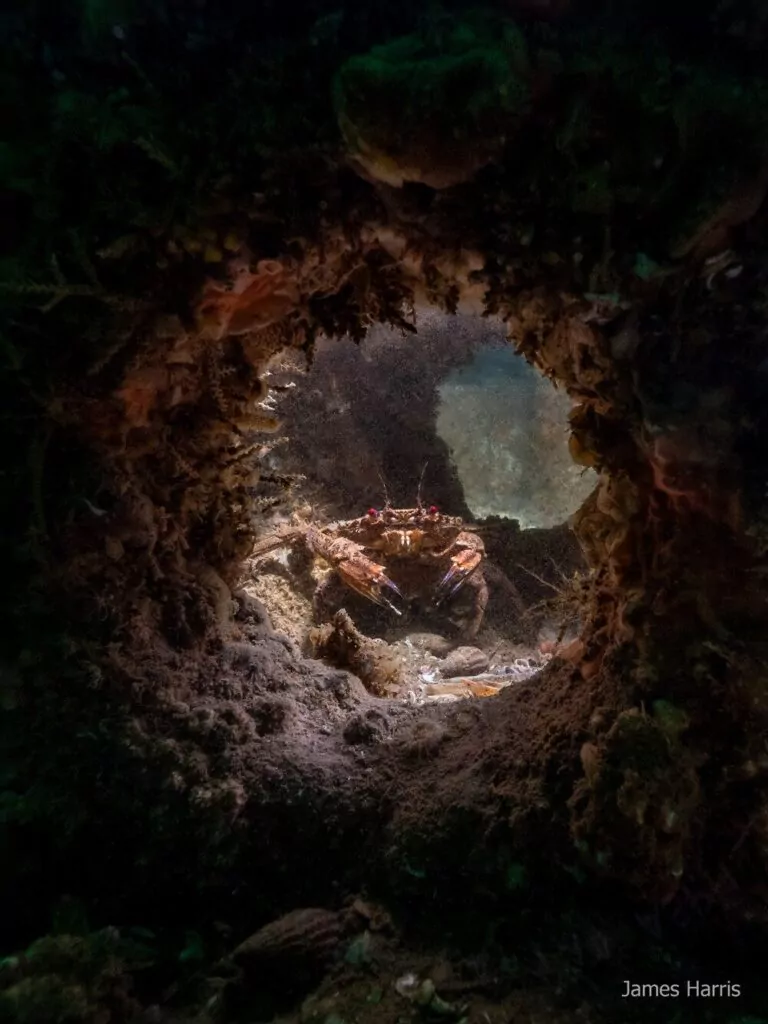
Those divers who studied the results of the recent Underwater Photographer of the Year 2025 competition very closely might have noticed one entry that celebrated “reef cube technology”, a means of creating complex, biodiverse artificial reefs.
Taken by British diver James Harris, the photograph showed a crab making use of a reef cube off Torquay in Devon and was “Highly Commended” in one of the contest’s 13 categories: British Waters – Living Together.
Also read: Divers install first ‘Minter Hotel’ off Sussex
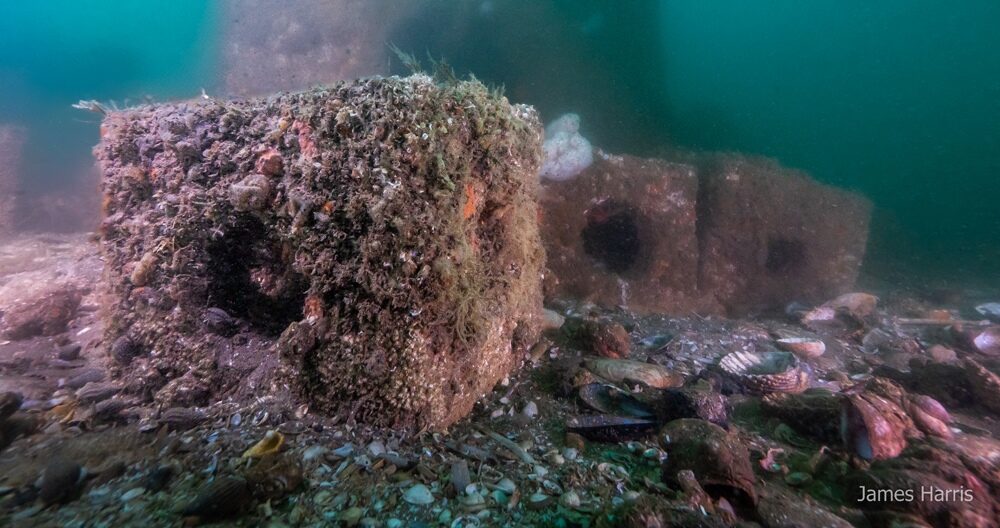
The reef cubes were conceived in 2015 by West Country divers who went on to form an eco-engineering company called ARC Marine to produce the plastics-free, carbon-neutral structures, which were designed to mimic natural shoreline complexities and could be interlocked.
After a pilot project at Torbay in 2018 the first intertidal reef-cube installation came in 2022 at Newlyn.
The Brixham-based company says that Harris’s photography reflects the role its installations play in offering shelter and security for marine creatures such as crustaceans, fish and molluscs.
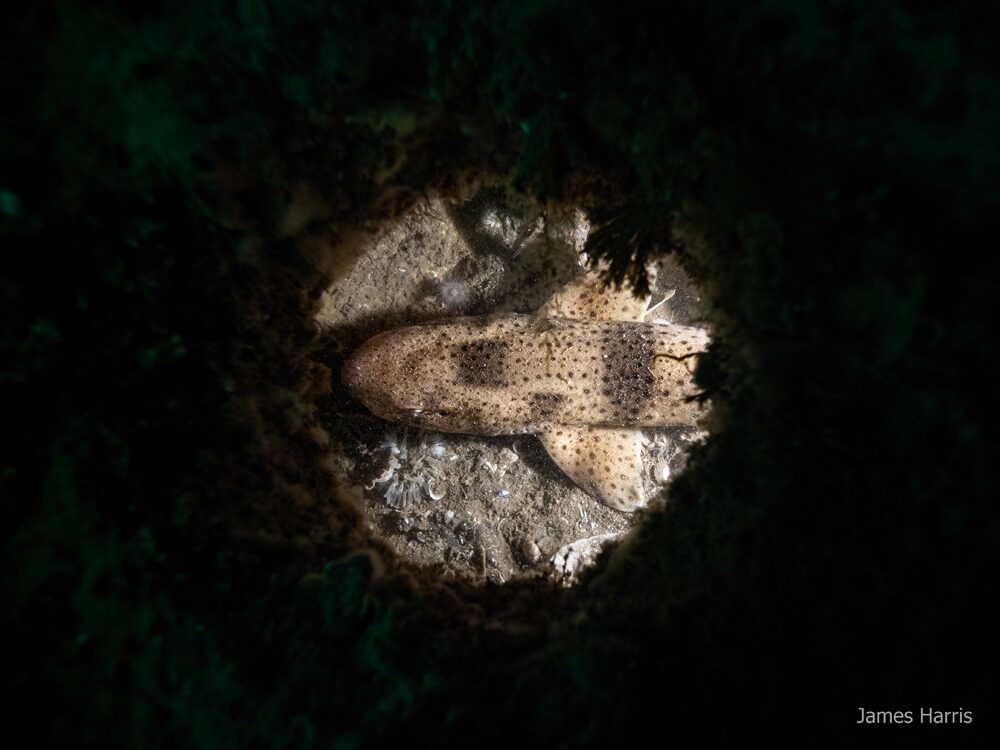
“This image is a great representation of how these structures create safe spaces for marine life, and we’re proud to see the marine life of Devon recognised for its beauty,” commented ARC Marine co-founder and CEO Tom Birbeck. “We often overlook the British coastline but the marine life is incredible and rivals any other place in the world.”
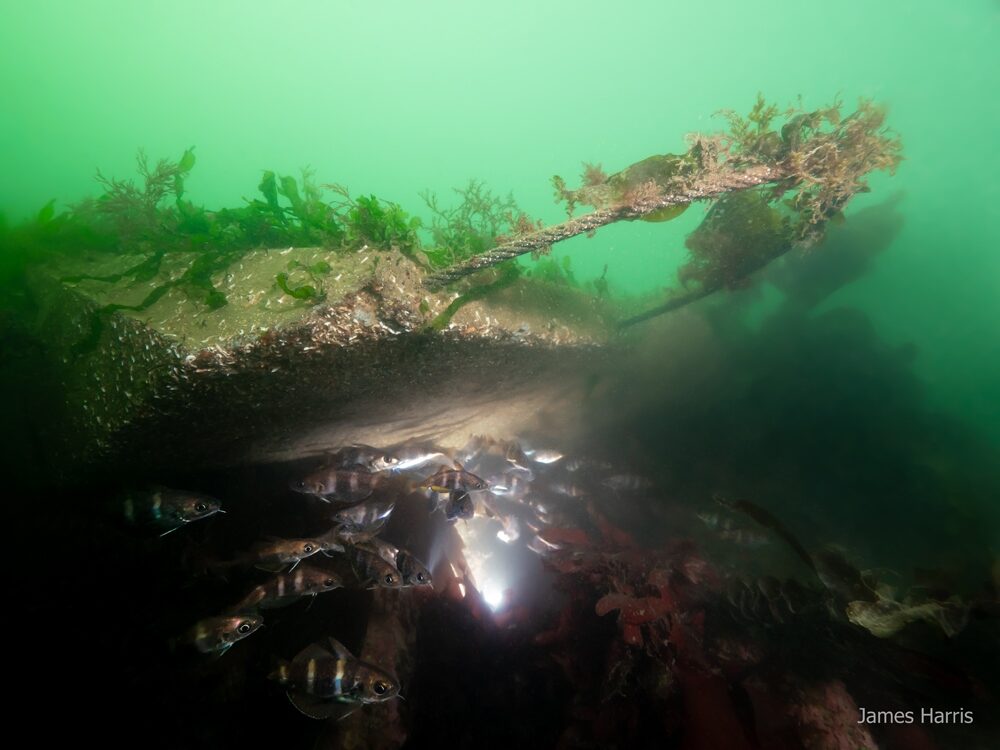
Other underwater photographs of the company’s products taken by Harris can be seen on this page.
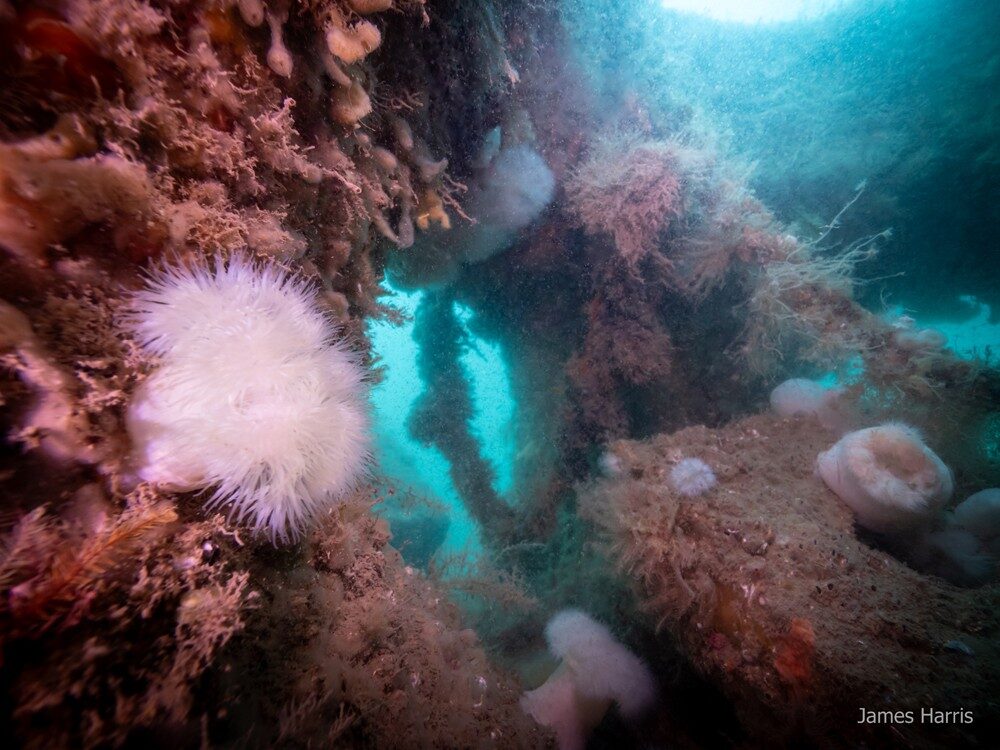
ARC Marine collaborates with dive operators, councils in Devon and Cornwall and environmental organisations to find ways of creating sustainable dive-sites that it says can support both marine life and the diving industry.
Birbeck says he wants to see divers not only exploring thriving reef-sites but engaging directly in conservation efforts, monitoring reef health and learning how technology can be harnessed to protect the oceans.
He would also like ARC Marine to start its own reef-restoration programme, with “citizen-science” divers helping with the data collection.
“Almost all of ARC Marine’s team are recreational divers,” says Birbeck. “It’s why we got into the reef-building business. We have long felt that the citizen-diver is an under-utilised resource that can kickstart a restoration revolution!”
Also on Divernet: Artificial-reef funding goes public, Divers have a starring role in Cornwall’s Climate Stories, Mother-love decides Underwater Photographer of the Year 2025