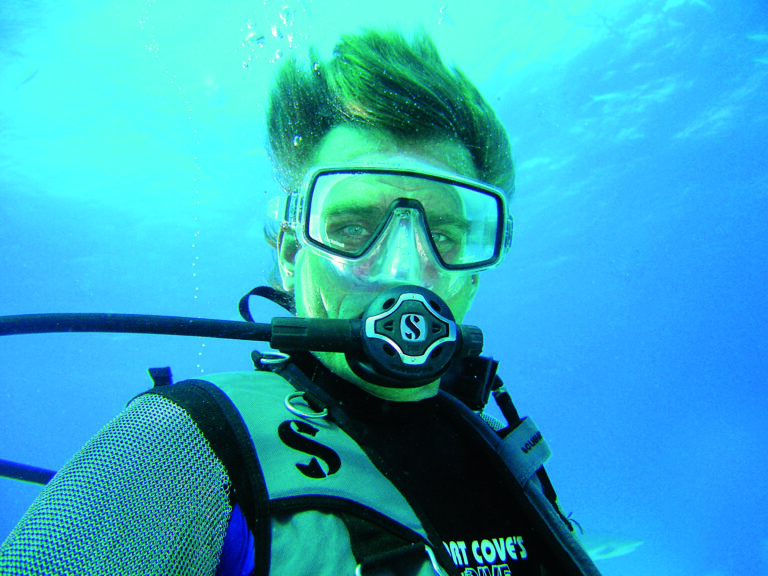
Stuart Cove is a dive-industry icon, having forged a career in which he became the go-to man when Hollywood wanted to film under water. We chatted to the man behind the legend
When did you start diving?
“I started in 1964, when my father, an avid diver, taught me to dive in our family swimming-pool. I was five years old. I became a gofer at the age of seven on my uncle’s dive-boat, where I worked during school vacations for $10 a week. While our guests were diving, I would sneak a tank, jump off the back of the boat and go diving on my own.”
You are world-renowned for being behind some of the most memorable underwater scenes in countless Hollywood movies. How did you get into the film business?
“A family friend, who was heavily involved in underwater film, was looking for divers for the crew of For Your Eyes Only, the 1979 Bond film starring Roger Moore. I was brought onto the team as a general crew-member and diver. One thing led to another and I began to pick up more and more work in the film and television industries.”
Of all of the movies you’ve been involved with, which stand out the most, and for what reason?
“There are two films that stand out in my mind. The first is Shoot To Kill, in 1988, starring Sidney Poitier, Tom Berenger and Kirstie Alley. In this action film there is a scene in which Poitier and Berenger have fallen off a boat and are fighting each other. I took the two actors into a swimming pool and taught them to dive and fight under water. I had them throwing punches at each other and came up with a couple of great sequences.
“After we got back to the set, and I explained what we had been up to, director Ridley Scott shockingly said: “Stuart, what the hell are you doing, we have stunt people for that!” I guess taking two A-list Hollywood actors in the back of your pick-up down to the local pool is not how it’s done!
“The second film was Never Say, Never Again, a Bond film in 1982 starring Sean Connery. I have had the pleasure of working with Sean on several projects and built a friendship over many years.
“On this particular day, we had been diving and Sean brought up a shell from the reef. While the cast and crew were eating lunch, he was showing it to the chef. As she turned and said “Sean, what a lovely shell”, he replied “Yes, but not as half as beautiful as you!” James Bond, through and through.”
You have dived with, and actually taught to dive, many A-list celebrities. Who took to diving straight away, and who needed a little more assistance?
“Over the past 40 years I have indeed worked with and certified many celebrities. Most of the actors and actresses have been very athletic, focused and taken to diving quickly. We forget that in an acting role these people are taught a new skill on most of the films they work on.
“To be proficient in diving, like most things, you have to do it a lot, work on it and practise. So my hat goes off to the talent that come to me for a couple of days, gets certified and now has to look at the role, act and task-load on top of that.
“This being said, I have greatly enjoyed my dive-buddies over the years, from Robert Redford, David Jason and Salma Hayek to Paul Walker, Gabrielle Reece and Tommy Lee Jones, and the likes of Brooke Shields, Daryl Hannah, Ron Howard, Billy Gates and Tom Hanks to, when they were young, Prince William and Prince Harry.“
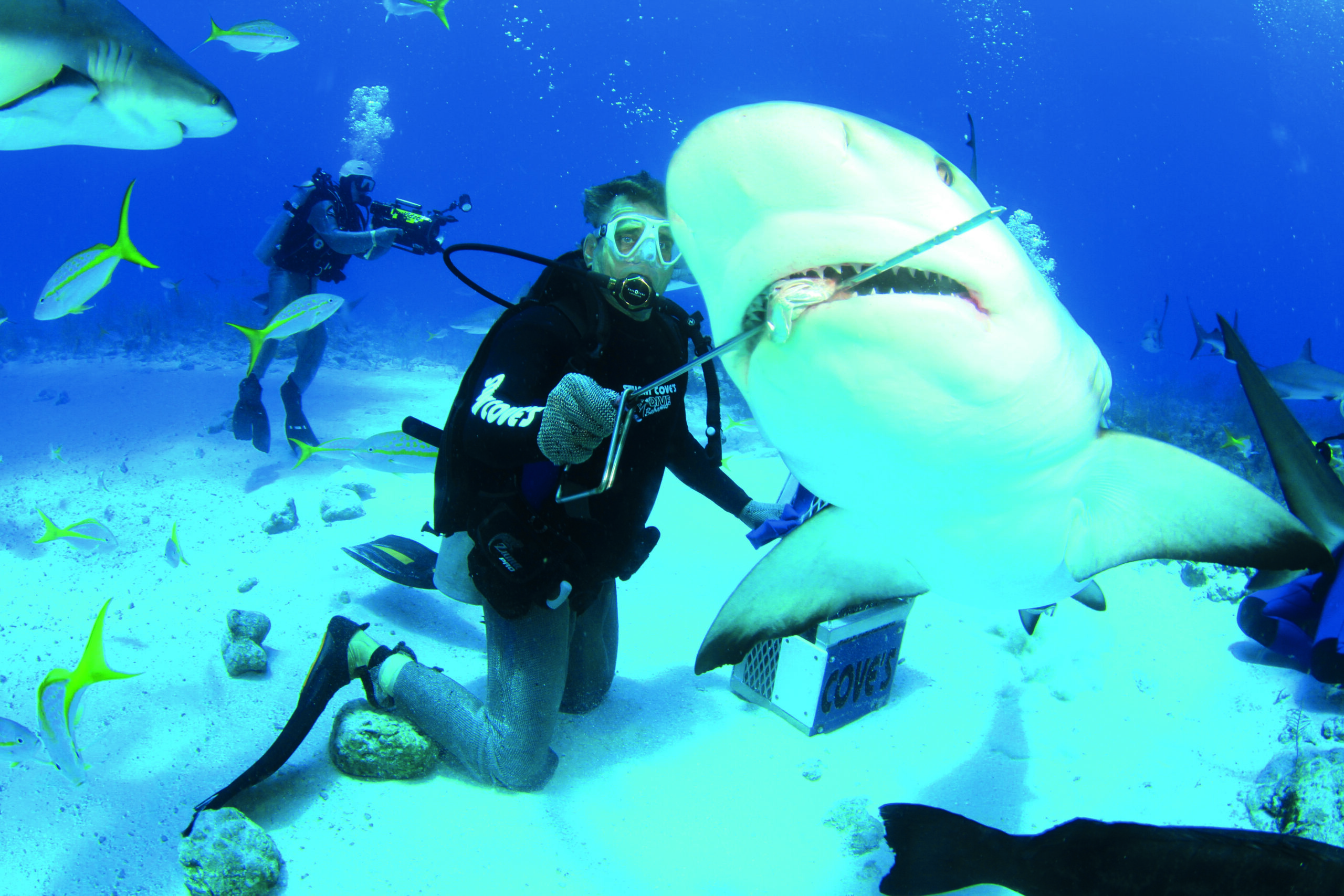
As well as movies, you are also synonymous with sharks. When did you first become hands-on with sharks, and what were the beginnings of your famed shark feeds?
“My first shark hands-on experience was working on For Your Eyes Only in 1979. In those days we worked with live tiger sharks, which were caught on long-lines. It is important to note here that this is no longer allowed, and all sharks are protected in Bahamian waters.
“However, in the late 1970s the environmental practises that we have today were of no concern, so we did what we needed to do to get the shot. It was by working with sharks on some of my earlier films and learning the skills needed to be safe while working with them that I became interested in them, and wanted other people to see what I was seeing.
“One particular encounter that made the light-bulb go off in my head comes to mind. While baiting a line one day in the water looking for sharks I was by myself, and an inquisitive hammerhead raced up to me from the deep.
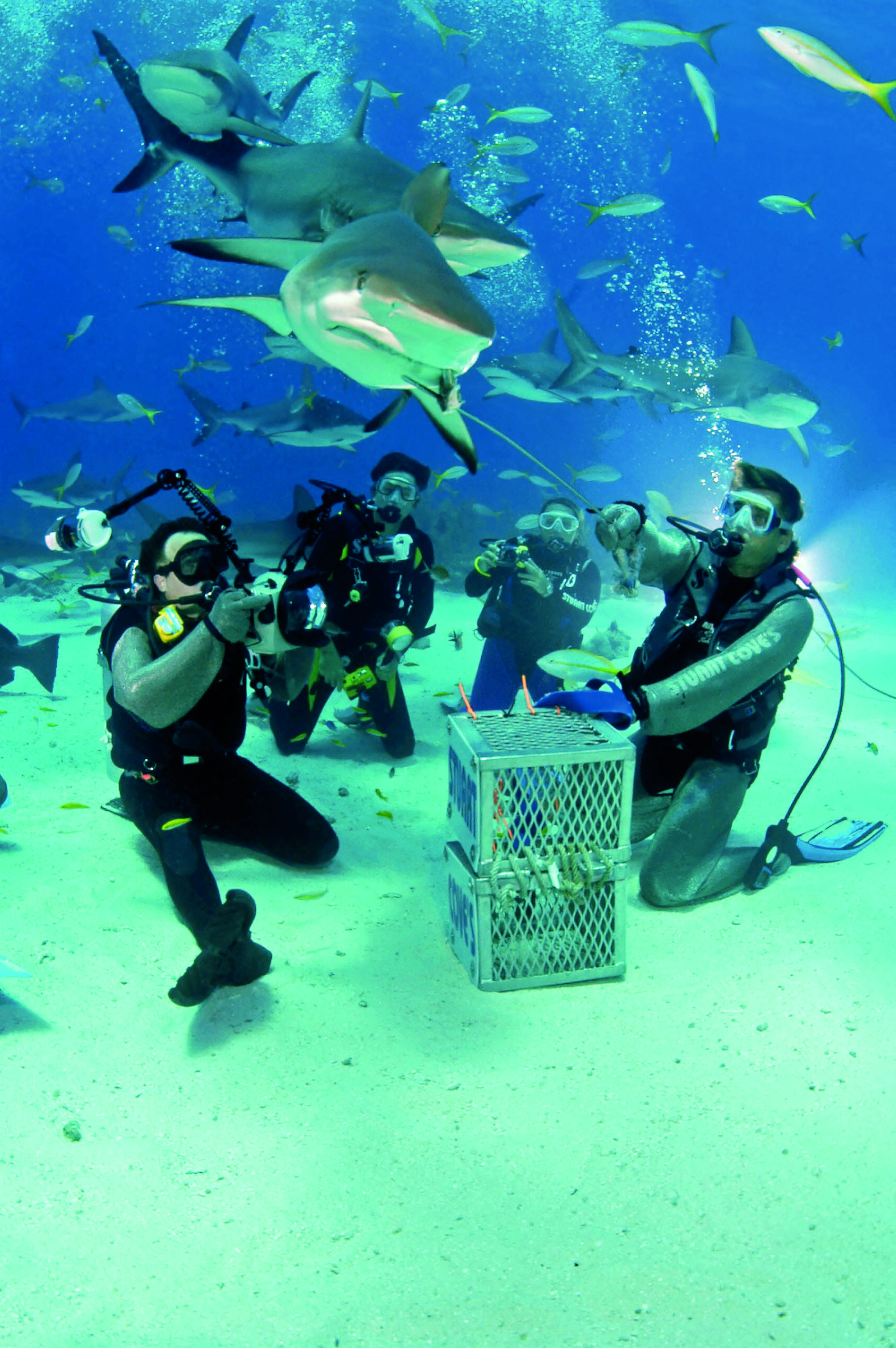
“It hung out for a while as I shouted for everyone else on the boat to jump in and have a look. There was no hesitation. It was exciting and I realised then from the reaction of the people I was with that actually people do want to see sharks – they just needed a means and a safe way to do it. It didn’t take me long to develop the shark-feed that we do today.
“I strongly believe that in making these animals accessible to people, and using our population of Caribbean reef sharks as advocates for their species, we are educating. The main focus now is to spread what we have learnt and increase the awareness about these vital apex predators.
Where is your favourite place to dive?
“The walls and reefs off the south-western tip of New Providence Island in the Bahamas. Otherwise known as ‘home’.”
In all of your years of diving, which was the most memorable moment?
“Doing what my dad did for me and introducing my own kids to diving.”
On the flipside, what is the worst thing that has happened to you while diving?
“In retrospect it‘s quite funny. I went diving with one of my best friends and his wife. We had had an amazing wall-dive and seen a lot of great things, but as we returned to the mooring-line, we found that my dive-boat was actually sitting on the bottom, at 14m, with all our stuff floating to the surface.
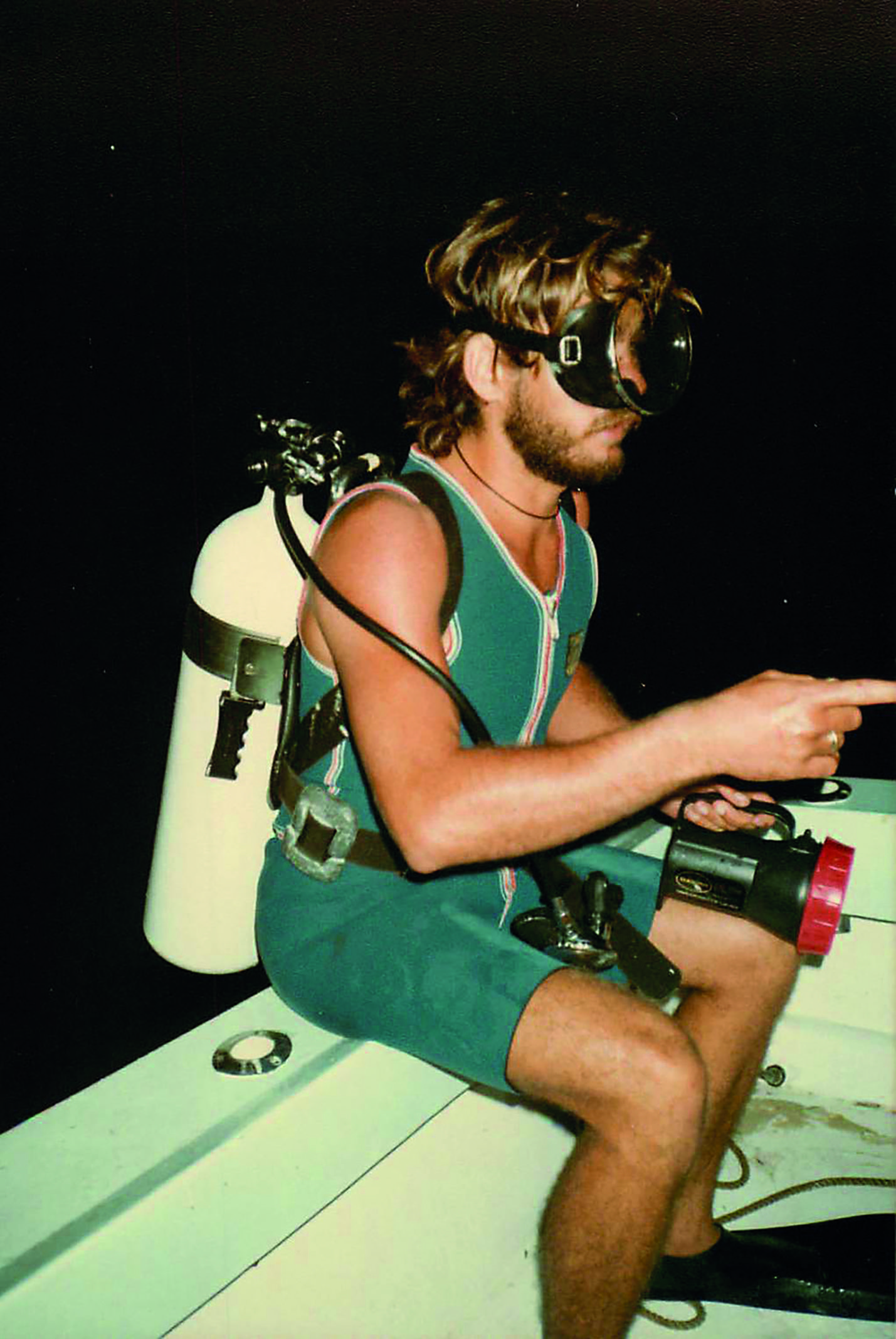
“I looked up and saw the captain treading water. We had recently reconstructed the back end of the boat for easy diving access, with a removable door. On her maiden voyage I had forgotten to close the door on the stern and ocean waves had flooded the bilge.
“Needless to say, this situation has been rectified!”
Stuart Cove’s Dive Bahamas is a true monster of a dive operation, with multiple dedicated dive and snorkel boats. What does the future hold for you?
Stuart Cove’s Dive Bahamas has some exciting changes coming up. Firstly, we are adding a hotel and restaurant component to our business, allowing our guests to stay on location at the dive-shop. There is also talk of a complete relocation of our facility to accommodate these changes, making our overall dive experience better.”
Photographs courtesy of Stuart Cove
FAQ
Q: Who is Stuart Cove?
A: Stuart Cove is a legendary dive-industry figure, best known for his pioneering shark diving in the Bahamas and his work as a leading underwater filmmaker for Hollywood movies.
Q: How did Stuart Cove get started in diving?
A: He began diving at the age of five, taught by his father in their family pool. By age seven, he was already working as a gofer on his uncle’s dive boat.
Q: What was Stuart Cove’s first break in the film industry?
A: His first major project was working on the James Bond film For Your Eyes Only in 1979, which opened the door to a long career in underwater filming.
Q: Which films stand out in Stuart Cove’s career?
A: Two key films he recalls are Shoot To Kill (1988), where he trained actors Sidney Poitier and Tom Berenger to fight underwater, and Never Say Never Again (1982), where he worked closely with Sean Connery.
Q: Which celebrities has Stuart Cove taught to dive?
A: Over the years, he has worked with many A-listers, including Robert Redford, Salma Hayek, Paul Walker, Tommy Lee Jones, Brooke Shields, Daryl Hannah, Tom Hanks, Prince William, and Prince Harry.
Q: How did Stuart Cove start his shark-feeding dives?
A: Inspired by early encounters on film sets and the public’s fascination with sharks, he developed structured shark feeds to give divers safe, thrilling encounters while raising awareness about shark conservation.
Q: Why is Stuart Cove passionate about sharks?
A: He believes making sharks accessible through diving experiences helps educate people and promotes their value as vital apex predators in marine ecosystems.
Q: Where is Stuart Cove’s favourite place to dive?
A: He loves the walls and reefs off the south-western tip of New Providence Island in the Bahamas, which he also calls home.
Q: What is Stuart Cove’s most memorable diving moment?
A: Introducing his own children to diving, just as his father did for him.
Q: Has he ever had a bad diving experience?
A: Yes—once, his dive boat sank during a trip because a stern door was left open, flooding the bilge. Fortunately, no one was hurt, and the issue was quickly resolved.
Q: What’s next for Stuart Cove’s Dive Bahamas?
A: The operation is expanding to include a hotel and restaurant, with plans for a possible full relocation to enhance the overall guest experience.
This article was originally published in Scuba Diver Magazine
Subscribe today with promo code DIVE1 — enjoy 12 months for just £1!

IMHO Stuart Cove is not a nice guy my experience diving there in the 90’s was ruined due to his ego, acerbic attitude, and it would seem by reports from many others over the years that I’m not alone in my opinion.
Shark feed dives should be illegal worldwide. They’re already illegal in Florida waters and have been for some time.
The recent news that a snorkeler off the coast of Israel was killed and eaten by Dusky sharks ( a species long considered docile to humans) is the most recent example. Other examples include a diver attacked and eaten after an attack at Tiger Beach in the Bahamas.
Naturalists have long agreed that feeding wild animals is a bad idea and leads to bad outcomes.
Mr. Cove should discontinue this practice as should others worldwide.