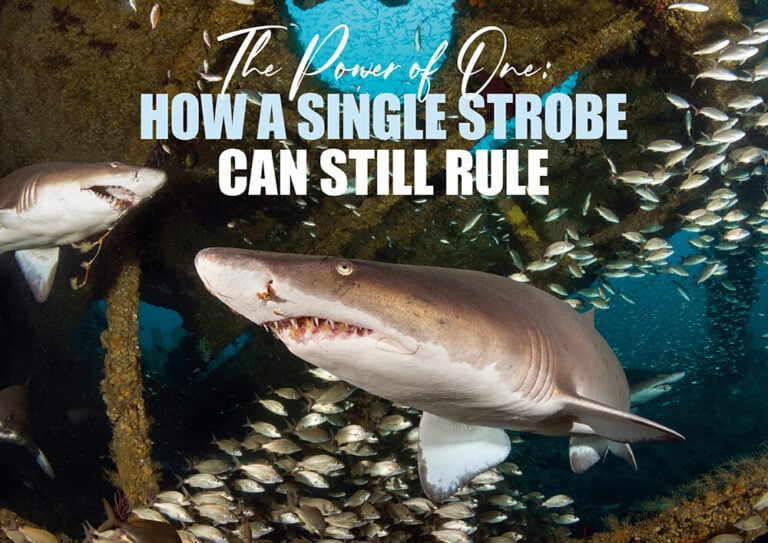
Here’s a question every underwater photographer has asked themselves – ‘Can you capture great wide-angle and macro photos with just one strobe?’ As Walt Stearns explains, the short answer is ‘absolutely!’
While two strobes offer the advantage of balanced lighting and provide a critical back-up should one fail, restricting yourself to a single strobe underwater photography is not a handicap -it’s an opportunity. Historically, it was the only option. From the Nikonos I to V to early SLR housings, a single bulkhead connection was the standard. Sync cords were temperamental, and adding a ‘Y’ cord to fire two flashes often doubled the frustration. Even as technology improved, the single strobe remained the mainstay for many due to budget, simplicity, and familiarity.
In the world of underwater photography, two strobes are great, but one is certainly not none. In fact, shooting with a single strobe can significantly streamline your system by reducing overall size and weight, simplifying handling, and – most importantly – forcing you to be more creative.
Wide-Angle Techniques: Recreating Natural Light with One Strobe
The goal of single strobe lighting for wide-angle is often to recreate the natural look of the sun. The ‘old school’ method for strobe placement involves positioning the flash high and angled slightly downward from the 10, 12, or 2 o’clock position. This mimics the direction of ambient light, adding color and detail without looking artificial.
To light this shot of a diver looking at a giant barrel sponge, the strobe arm was stretched out and up to the 2 o’clock position with a slight downward tilt. This effectively illuminated the most-colorful and important portion of the scene while respecting the natural direction of the overhead light.

For this image of a crocodilefish lying on light-colored broken coral, I took a minimalist approach. The single strobe was placed in the 1 o’clock position, aligning with the sun’s natural angle to further enhance the warm, bright light coming from above.
Creative Shadows: Using Side Lighting in Wreck Photography
Sometimes, the absence of light on one side is the key to a compelling image. A single strobe placed to the side can create dramatic shadows and texture – an effect often impossible to achieve with a dual setup.

While diving the Fujikawa Maru in Truk Lagoon, one of my strobes failed while approaching the air compressor, nicknamed R2D2. Instead of abandoning the shot, I placed the one remaining strobe to the far right in the 3 o’clock position to illuminate the compressor exclusively on one side. The resulting side lighting dramatically enhanced the texture of the rust-laden machinery and gave the iconic subject a more forlorn, evocative character.
Single vs. Dual Strobe: A Side-by-Side Visual Comparison
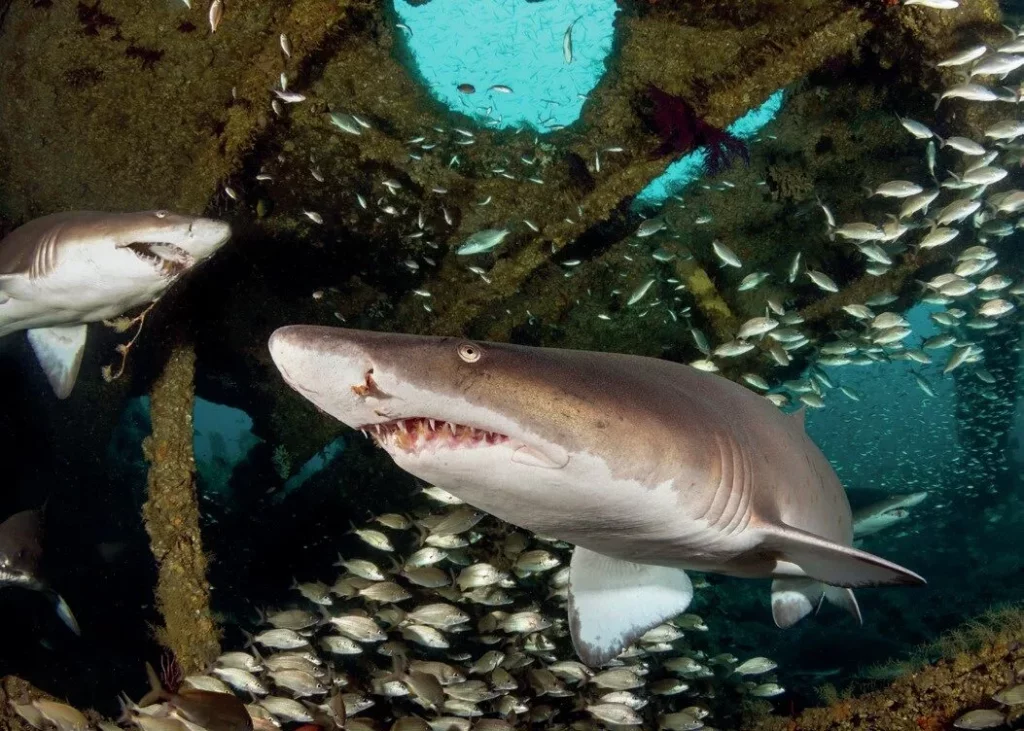
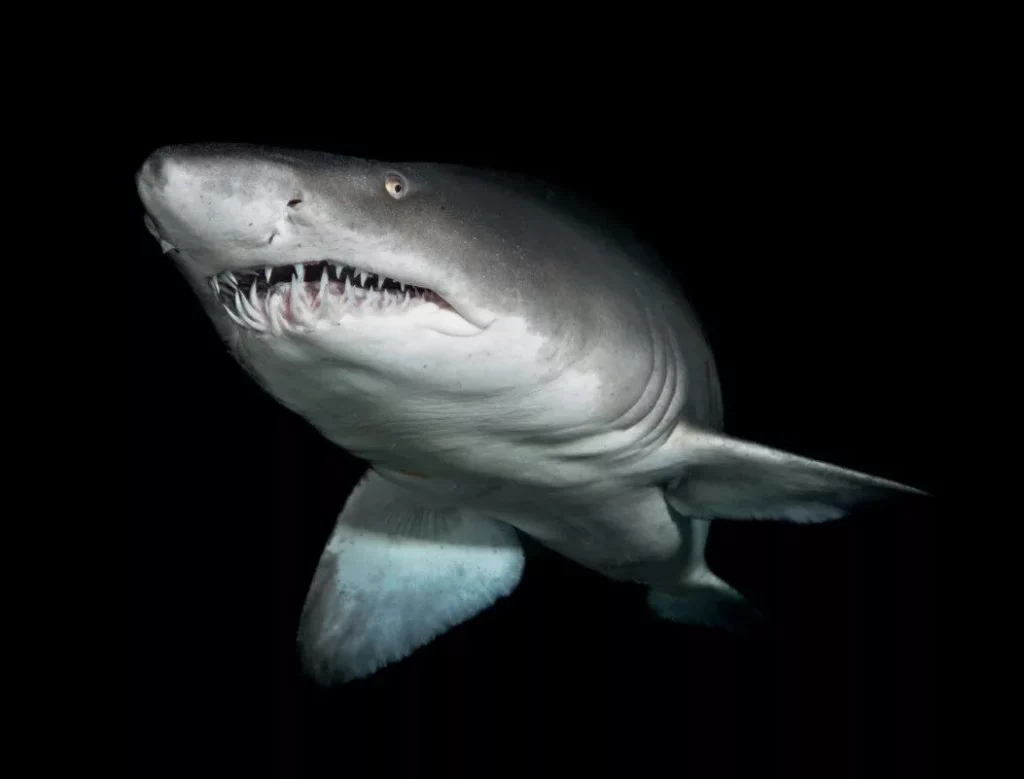
To illustrate how radical the difference can be, let’s look at two images of sand tiger sharks taken off the North Carolina Coast:
Setup One: Two Strobes
Placement and Technique: Placed equally at the 9 and 3 o’clock positions and aimed slightly upward.
Effect: The effect is a captivating, evenly lit scene. The light reveals the sharks inside the wreck and highlights a school of baitfish to detail their environment.
Setup Two: One Strobe
Placement and Technique: Placed only at the 3 o’clock position. The shutter speed was increased and the aperture stopped down to cancel out as much ambient light as possible.
Effect: The single, powerful light source creates a super dramatic appearance. The shark now seems to merge out of the void with its toothy smile taking center stage.
Macro Excellence: Precision Lighting for Small Subjects
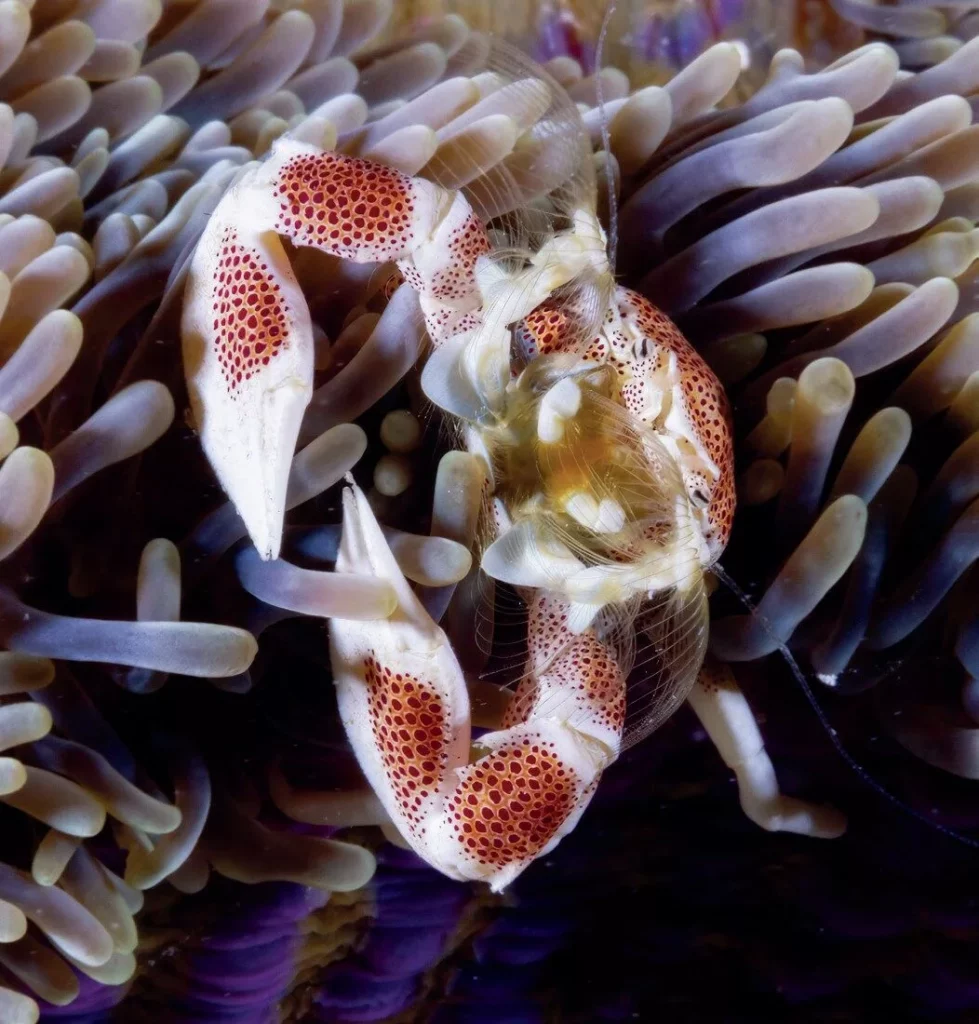
For macro photography, a single light source is often all you need – and for some photographers, it’s the primary intent rather than an alternative. This portrait of a porcelain crab was rendered with a single flash placed in the 10 o’clock position just off the lens. The result is a simple, clean, and effective image that captures a bit of the subject’s mood with soft shadows.
The Art of Isolation: Snooting
The most intriguing application for photographing small critters is using a snoot. A snoot is a conical or cylindrical device attached to the flash head that modifies the light into a narrow, focused beam. The object is to direct light onto a specific spot, ensuring the viewer’s attention is immediately drawn to the point of interest.
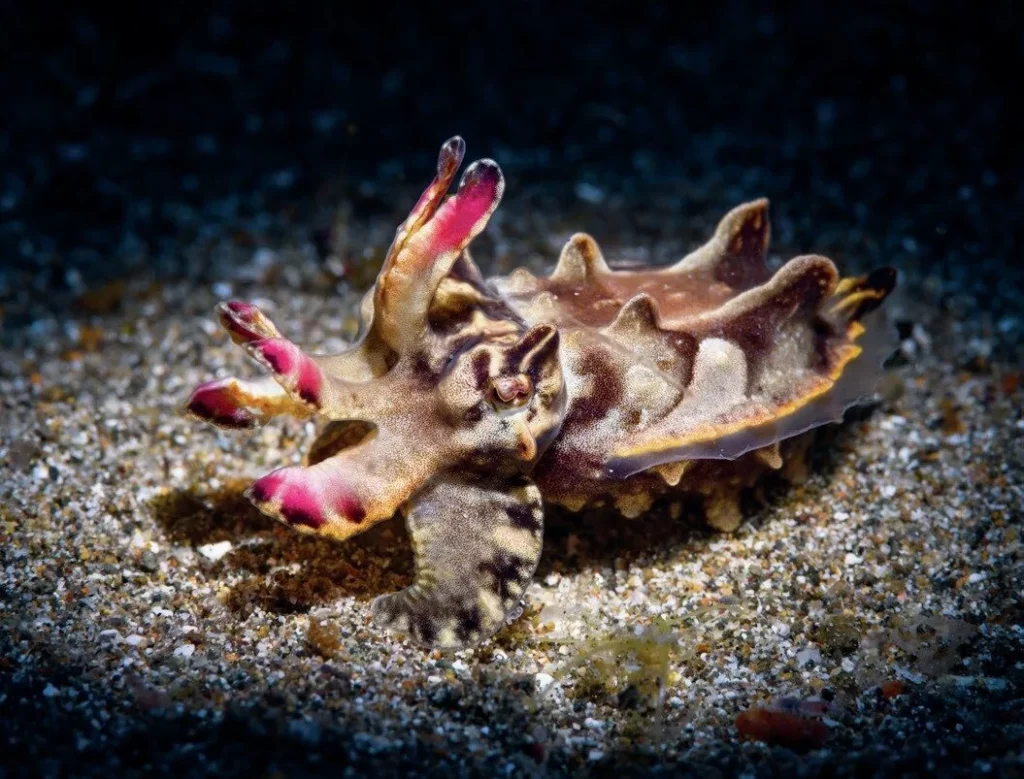
By aiming the end of the snoot straight down on this little flamboyant cuttlefish, I was able to illuminate the subject without spilling light into unwanted areas. This intentional isolation keeps all focus on the colorful center of the image.
Advanced Techniques: Rim Lighting and Backlighting
Another way to highlight your subject through a single light source is by using backlighting or rim lighting.
Rim lighting exposes only the contours of a subject without lighting its unwanted features. To achieve this stately profile on the seahorse, the single light source was placed not directly behind, but slightly to one side. This created a dramatic separation from the background, beautifully accentuating the seahorse’s profile and form.

Whether your subject is large or small, the key to captivating underwater imagery is not the quantity of light sources, but how you choose to light your subject. The objective here is to master the tools you do have instead of constantly focusing on what you don’t. By embracing the limitations and creative opportunities of a single strobe, you will undoubtedly become a more-thoughtful and effective underwater photographer.
Frequently Asked Questions for Single Strobe Underwater Photography
Can you take wide-angle photos with only one strobe?
Absolutely. By positioning a single strobe high and angled slightly downward (the 10, 12, or 2 o’clock positions), you can mimic natural sunlight and effectively illuminate large scenes.
What are the benefits of using a single strobe underwater?
Using one strobe reduces the weight and bulk of your camera rig, simplifies handling in currents or tight spaces, and encourages creative use of shadows and texture.
What is a snoot in underwater photography?
A snoot is a device that fits over your strobe to narrow the light into a concentrated beam. It is used primarily in macro photography to isolate a subject and eliminate distracting backgrounds.
How do you achieve rim lighting with one strobe?
To create rim lighting, place the single light source slightly to the side or behind the subject. This highlights the subject’s contours and profile, creating a dramatic separation from the background.
Is one strobe enough for macro photography?
Yes, many macro photographers prefer a single light source. It allows for more natural-looking shadows and precise control when highlighting small critters like crabs or nudibranchs.
This article was originally published in Scuba Diver Magazine
Subscribe today with promo code DIVE1 — enjoy 12 months for just £1!
