Alex Mustard focuses (‘scuse the pun) on vintage lenses
Photographs courtesy of Alex Mustard
“When I started, it was an achievement to get the flash gun to fire and finish the dive with an unflooded camera,” wrote celebrated veteran shark photographer Jeremy Stafford-Deitsch. Of course, his words were meant in jest, but there is no denying that underwater photography used to be very difficult indeed.
The equipment was a challenge to use and maintain, but the biggest problem was film. Partly it was the limit of just 36 clicks per dive, but mainly it was because it didn’t give the instant feedback of a digital camera.
While photographers saw great subjects and strived hard with the compositions, there was always an element of conservatism in the photographic approach.
Wide angle was typically exposed in available light with just a tickle of flash to avoid backscatter, while macro was shot with lots of depth of field to ensure the subject didn’t slip out of focus.
In short, excellence was measured in producing pictures that were in focus, well framed and had some colour.
Technology marches on and today photographers get their images to come out within their first couple of dives with a camera. Beyond that, the goal is to get their images to stand out.
This is especially true in the realm of macro photography, where every single critter has been photographed frequently before. Even species that are yet to be described by scientists usually will have won a few contests before they get their Latin name!
As a result, macro photography over the last decade or so has been dominated by a quest for different images. Popular techniques have been super macro, the use of artificial backgrounds, employing different-coloured light source and, the focus of this month’s column, using vintage lenses.

The key attraction for using vintage lenses lies in the Japanese word bokeh (pronounced to rhyme with ‘okay’) that describes the character of how a particular lens renders the out of focus elements of a picture.
There is good bokeh, bad bokeh and much debate over which lenses have which! But before we go any further, it is important to say that lens designers haven’t been sitting around over the last 100 years, and generally all vintage lenses are less sharp than modern lenses – we choose to use them not for how they record the subject, but for how they can transform everything else in the picture.
Since the lure of these lenses is purely aesthetic, and beauty is indeed in the eye of the photographer, there are no strict rules on what lenses to try.
Some lenses you might want to investigate are the TTArtisan 100mm, Helios 44M, Trioplan 100mm and 50mm, Pentacon 50mm, Revuenon 55mm, Primoplan 58mm, Diaplan 80mm and Petzval 85mm.
A few years ago all these lenses were available for pocket money, but their second-hand value tends to fluctuate depending on which is fashionable at the time. Most of us are unsure of which to choose, so foolishly choose the popular ones, driving the prices higher!
My advice is to go for a wider option than you think, because you want the bokeh to star in your shots. So if you usually shoot macro with the 60mm, then look at focal length no longer than 60mm, and so on.
Most of these vintage lenses require adaptors to use them on modern cameras and because they are completely mechanical, they are both manual focus and fixed aperture.
We usually choose to shoot them fully open (with the aperture on f/2.8 or similar) to maximise the bokeh and focus by rocking in and out.
None are out and out macro lenses, so they do not focus close enough for underwater use without help, so benefit from either an extension tube (10-12mm is good) or a close up dioptre lens.
If you feel that this style of photography is likely to appeal to you, then I’d look into getting a custom focus gear made, but only do this once you’ve decided on whether you will be using an extension tube, in order to get it correctly positioned.
Vintage lenses can be quite tricky to focus and it is best to start with slow or non-moving subjects. Mirrorless cameras definitely make focusing much easier because Focus Peaking (a viewfinder mode that shows what is in focus) works brilliantly with these lenses. Shooting the lens wide open means that depth of field is razor thin.
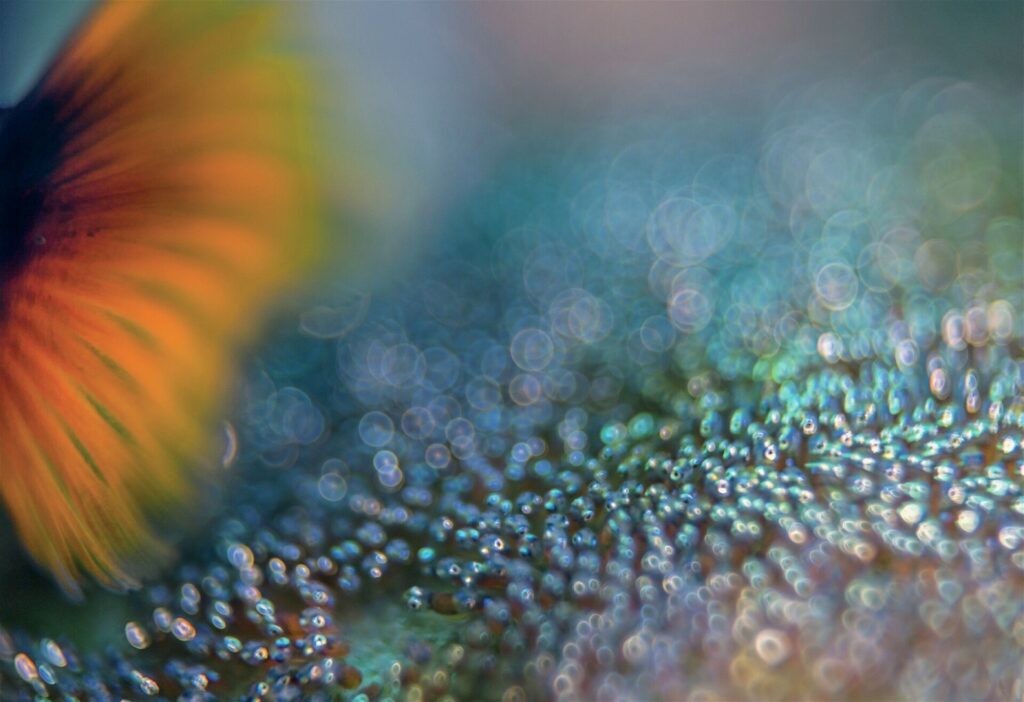
Fortunately, the open aperture also means that we don’t need much flash power, so I tend to set my camera on continuous shooting for moving subjects and blast off a series of frames in quick succession, picking the sharpest one after shooting.
It sounds a bit spray and pray, but since we’re no longer limited to 36, I put this down to making the most of technology!
The other consequence of shooting with an open aperture is having too much light, especially on bright, shallow dives. Even using the lowest ISO setting, when we shoot at f/2.8, the ambient light will often be far too bright at the maximum shutterspeed we can use with strobes.
There are two solutions. First, we can use a three stop neutral density filter in these conditions to bring things back into range. This darkens the whole image, but is not too dark to look through, although it does make focusing even tricker.
The second solution is to use flashes with HSS or High Speed Synch capability. This is a relatively new feature in underwater flashes and not all models currently have it, but because it allows us to simply increase the shutterspeed to quell the light, it is ideal and doesn’t impact focusing. The vintage and the modern working in perfect harmony.
Finally, we need to seek out subject matter that will give a beautiful bokeh and then find a subject in the right position to photography against it. Open water won’t blur in an interesting way, we need a detailed background that is the right distance behind the subject to be out of focus.
We should seek a background with bright highlights, which will show up in the bokeh. These should be a bit brighter than the main subject because when they are defocused their light is spread out, so its brightness diminishes.
Since the background is so important, I often search for this first. If the background will be illuminated with available light, then I tend to look for hard corals or seafans, backlit by the sun. If the background will be lit with my strobe, then I look for subject matter with bright flecks of colour (crinoids are a favourite). Then finally I wait for a subject to swim in front.
Many photographers carry artificial backgrounds to generate their bokeh, and while this is great for learning, but you should challenge yourself to find that beauty in nature.
This article was originally published in Scuba Diver Magazine
Subscribe today with promo code DIVE1 — enjoy 12 months for just £1!