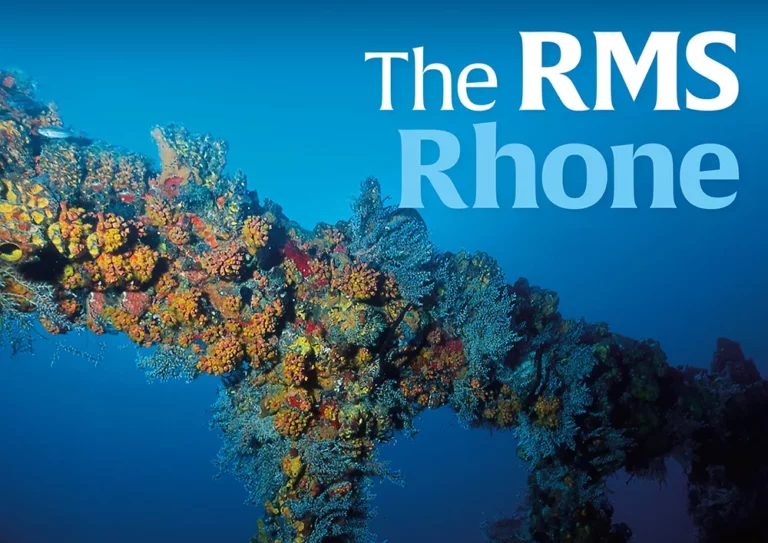
Lawson Wood explores the shipwreck of the RMS Rhone, one of the most-popular dive sites in the British Virgin Islands, and a film set in the classic movie The Deep
During the 1860s, Tortola in the British Virgin Islands was still a sleepy backwater and it was her neighbour, St Thomas (now in the United States Virgin Islands), which developed as a bustling port. Charlotte Amalie was ideally suited for ships of the line and had a huge natural harbour, which could accommodate vast numbers of ships.
The Royal Mail Steam Packet Company, found in London in July 1839, was the pioneering steamship company at the time and used the refuelling depot on St Thomas, which had been established by James McQueen in 1841. It was from here that the larger freight and passenger ships would dock and transfer their passengers and goods onto the smaller schooners which plied the trade routes between Cuba, Puerto Rico, Jamaica, Honduras, the Leeward and Windward Islands.
Twenty years later, when the Panama Canal was opened to provide the alternative route to the Pacific and reduce the journey time to Australia and New Zealand, twice each month all of the connecting steamers were collected in port together. The busy bustling harbour must have been amazing in those forgotten days. When yellow fever broke out in St Thomas a short time later, the transatlantic steamers avoided the island and transferred their operations to Road Harbour in Tortola and Great Harbour in Peter Island to refuel and transfer passengers and goods.
How a Hurricane Claimed the RMS Rhone
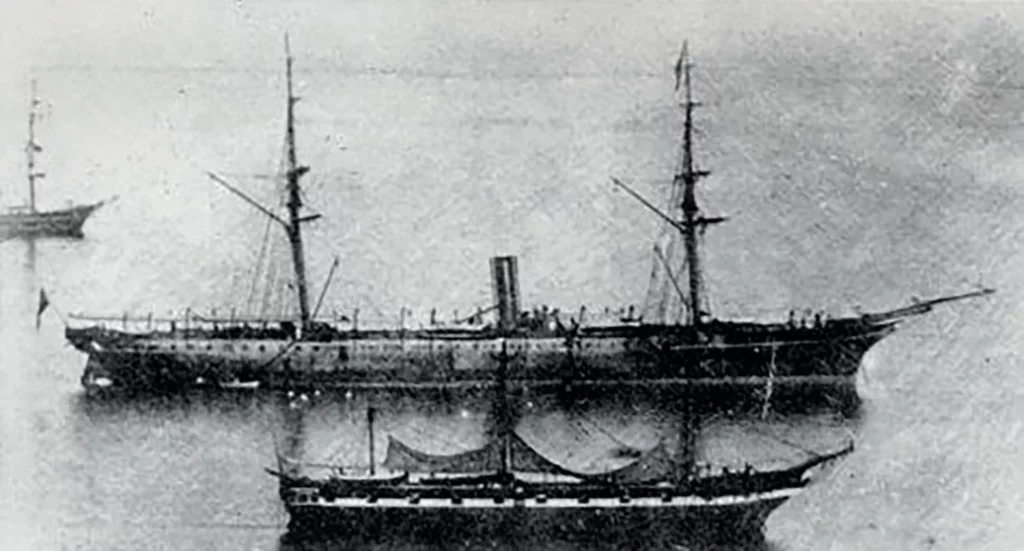
Built by Millwall Iron Works and launched on 11 February 1865, the Royal Mail Ship (RMS) Rhone was of 2,738 gross registered tons, 95 metres by 12 metres and able to carry 253 first class passengers, 30 second class and 30 third class passengers. She was regarded as one of the finest ships of the time, and her sea-faring capabilities were demonstrated when, according to the Royal Mail – A Centenary History of the Royal Mail Line 1839-1939, she successfully negotiated a hurricane on 11 January 1866 that sunk her sister ship, the London.
Did You Know?
The RMS Rhone was wrecked off the coast of Salt Island in the British Virgin Islands on 29 October 1867 in a hurricane, killing 123 people. She is now a popular Caribbean wreck dive site.
“The foremast and crow’s nest are still fairly intact, now lying partly on the seabed and the hatchway just to the front of the mast was the one used in The Deep (it is often said it is a ‘magic hatch’ – you go through one way in the BVIs and come out in Bermuda!)”
On the morning of 29 October 1867, the RMS Rhone was at anchor outside Great Harbour on Peter Island under the command of Captain Robert F Wooley, having left Southampton on 2 October 1867, and was in the process of taking on stores – £60,000 of bullion and a cargo of cotton for the return journey. Alongside her lay the RMS Conway, commanded by Captain Hammock.
Nothing disturbed the blistering heat of the still air that day, except for the fact that the barometer was steadily falling, indicating that this reduction in air pressure would herald a storm of some magnitude. Both captains did not like the look of the approaching weather, but felt that they were quite safe as the hurricane season was now over and at worse, this would perhaps only amount to a violent squall.
By 11am, the barometer suddenly fell to 27.95o and the worst hurricane ever to hit the Virgin Islands descended on the ships from the north west, tearing at their rigging and causing the anchors on both ships to drag. During a lull in the eye of the storm around noon, Captain Wooley decided to cross the Sir Francis Drake Channel to seek shelter in Road Harbour on Tortola. The Conway weighed anchor and as she crossed the channel, the storm hit again, removing her funnel and masts and driving the ship onto the shore at Tortola. Captain Wooley also decided to weigh anchor, unfortunately the shackle caught in a hawse pipe and parted, dropping the 3,000lb anchor and over 100 metres of chain. Captain Wooley ordered ‘full speed ahead’ and attempted to take the Rhone out to sea to ride out the storm. Having cleared the first rocky obstacles, the wind had changed direction to the south east, struck the ship and she foundered on Salt Island, split her hull and sank immediately.
Fortunately, the majority of the Rhone’s passengers had disembarked when the first indications of the storm were made known, so she only had 18 passengers plus a crew of 129 on board, but when she went down, she took all but one passenger and 21 crew with her. Captain Wooley was never seen again. Four of the crew, including a fireman, climbed the rigging and held onto the mast as she sank. Finding themselves still dry, they clung to the mast for 17 hours before rescue. The one passenger, an Italian, spent six hours in the water and was eventually swept into a small bay. All other members of the crew were picked up the next day, clinging to bits of the ship which had come free when the Rhone sank. There is a mass grave on Salt Island (Incidentally, a pound of salt is presented to the British Monarch each year as a tribute since its inception during Queen Victoria’s reign in 1867).
Later known as the San Narciso Hurricane, it was so severe that in Tortola, only 18 houses were left standing and in Kingston, Jamaica, only five houses were left – the islands had been swept clean by the might of the hurricane. At least 75 ships were lost and over 500 lives during that tempest.
The RMS Rhone now
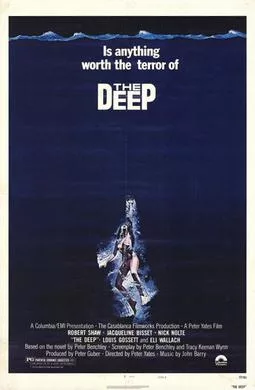
Now regarded as one of the top ten wrecks in the world, the area surrounding and including the RMS Rhone was declared a National Marine Park in 1980, the first of its kind in the British Virgin Islands. The wreck is well known for its starring role in Peter Benchley’s film The Deep (even though the film itself is set in Bermuda!), and it is probably one of the most-dived wrecks in the Caribbean.
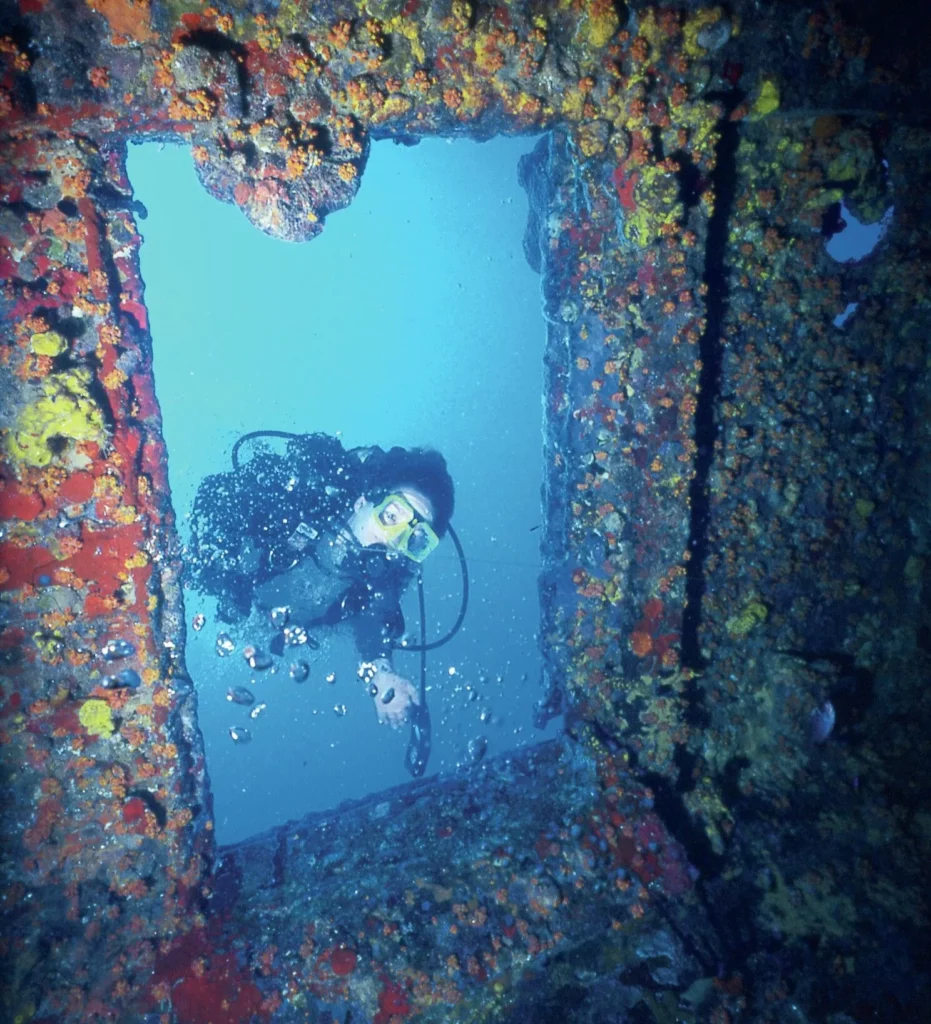
The Rhone now lies in two distinct parts from 6m to 27m. The forward part of the hull and bowsprit are in the deepest water, completely open – you are able to swim through the ribs of the ship, where there are numerous schools of snapper and squirrelfish. It is better to be accompanied by a dive guide on your first dive to allow you proper orientation of the ship in case you get split up from your group, which is easy to do due to the numbers of other divers who may accompany you on the dive. The guides all follow a particular route and take great delight showing you the one remaining intact porthole!
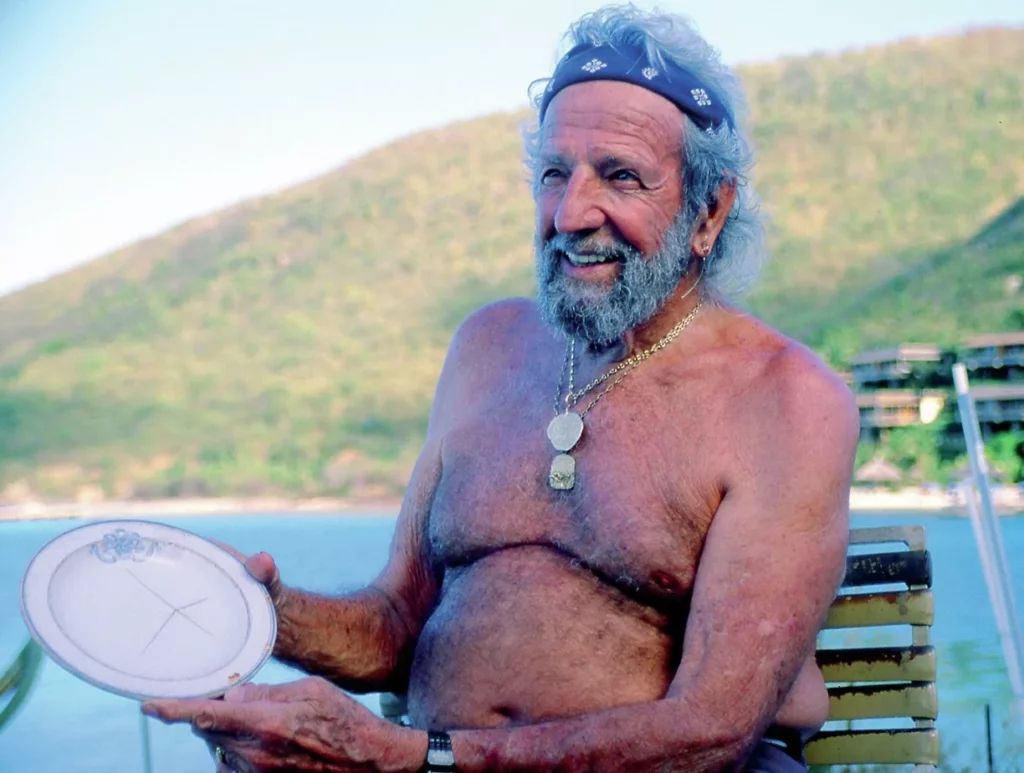
Sadly, the wreck has been plundered over many years and even although the area is now a Marine National Park, someone was arrested while my wife and I were on the islands. Anyone found illegally tampering with the wreck will be deported. When we first visited, the Receiver of Wreck for the BVIs was the legendary Bert Kilbride, who we spent some time with on Saba Rock, where he showed us his collection of salvaged items from the RMS Rhone. Sadly Bert died in 2008, aged 93.
The shaded areas of the ship’s hull are completely covered in orange cup corals and small colourful hydroids. Encrusting corals, small sea fans and plumes adorn the upturned port side of the hull. You are able to swim under the bowsprit and to enter it from the inside. All of the wooden decking has now rotted away, allowing easy access throughout the ship.
The foremast and crow’s nest are still fairly intact, now lying partly on the seabed and the hatchway just to the front of the mast was the one used in The Deep (it is often said it is a ‘magic hatch’ – you go through one way in the BVIs and come out in Bermuda!). Aft of this fore section of the wreck can be found the boiler and part of the mid-section of the wreck.
The second boiler is located midway between the two sections of the wreck and when diving this area (generally on your second dive) care must be taken with time and depth, particularly if you go on to the water pump, which is in 20m. The stern of the ship, still with her four-bladed bronze propellor embedded in the reef, is now completely opened up and you can swim along the entire length of the propellor shaft to the gear box, which is now home to squirrelfish, snapper, coral banded shrimps and brightly coloured corals.

Under the stern, next to the rudder, there are generally small schools of snapper. Grouper are dotted around all over the area and white-spotted filefish are common. Two large sections of rib stand upright, making an interesting backdrop to your photographs. Again, it is best to be accompanied by a dive guide on your first dive, who will show you a silver spoon embedded in the coral, the rack of huge spanners which were used in the engine room, the cracked porthole and numerous shards of pottery and glass.
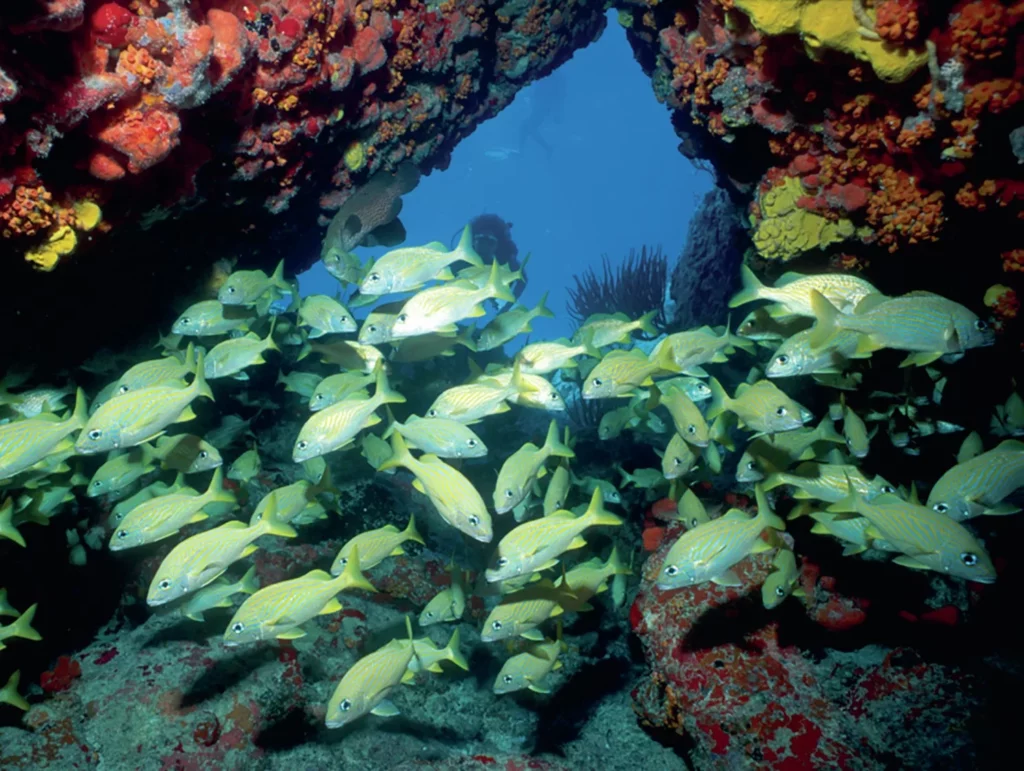
All of the diving operators in the British Virgin Islands (and United States Virgin Islands) visit the Rhone, certainly every week, sometimes more. It is still interesting to note that the USVIs also regard the Rhone as one of their best dives, even although they have to cross international waters to reach it.
The wreck of RMS Rhone is definitely one of the best dives in the Caribbean and even although it is heavily dived, it is amazing just how much marine life is present on and around the wreck. The addition of mooring buoys has completely removed all anchor damage and the fact that the area is a protected Marine National Park has ensured that what is there is protected.
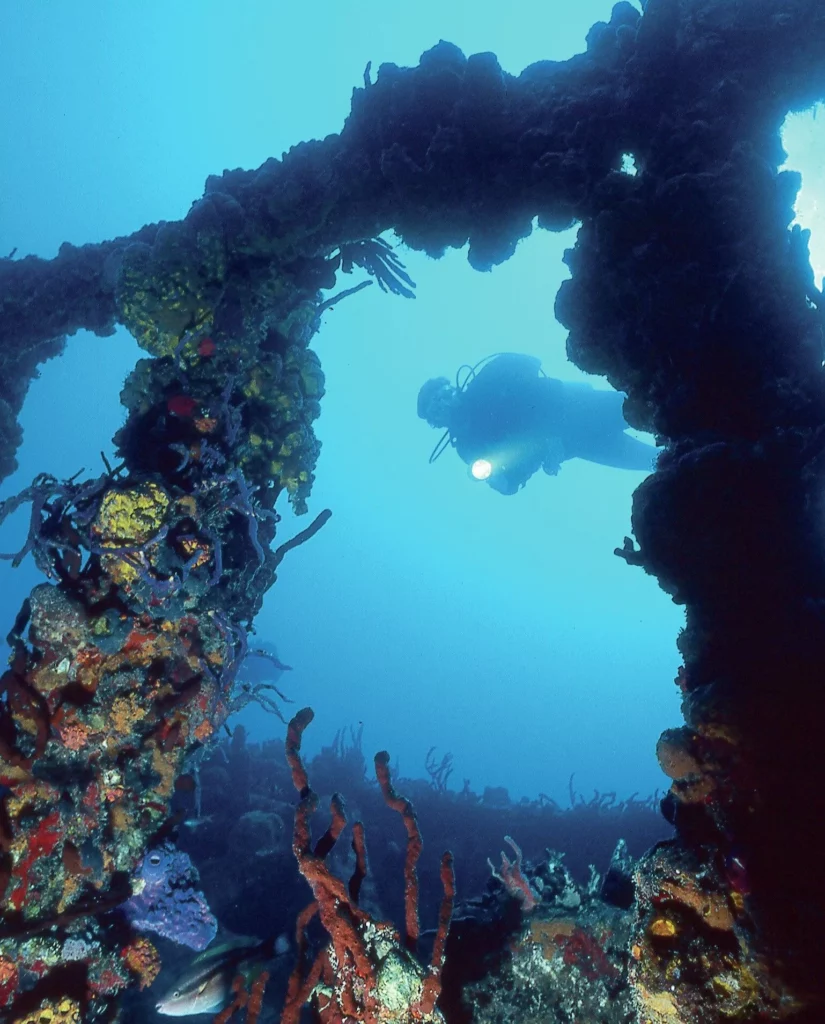
“Now regarded as one of the top ten wrecks in the world, the area surrounding and including the RMS Rhone was declared a National Marine Park in 1980, the first of its kind in the British Virgin Islands”
FAQs
Where is the RMS Rhone shipwreck located?
The RMS Rhone is located off the coast of Salt Island in the British Virgin Islands (BVI). It sits within the RMS Rhone Marine National Park, the first of its kind in the territory.
How deep is the RMS Rhone dive site?
The wreck is split into two main sections ranging in depth from 6 metres (20 feet) at the stern to 27 metres (90 feet) at the bow, making it accessible for both recreational and advanced divers.
What is the best time to dive the RMS Rhone?
While diving is available year-round in the BVI, the best conditions are typically from December to May. It is a highly popular site, so booking an early morning charter with a local operator is recommended to avoid crowds.
Was a movie filmed at the RMS Rhone?
Yes, the RMS Rhone gained international fame as the primary filming location for the 1977 classic underwater thriller The Deep, based on the novel by Peter Benchley.
Do I need a guide to dive the RMS Rhone?
While experienced divers can navigate the site, a dive guide is highly recommended for your first visit. The wreck is expansive, and guides can point out hidden details like the “lucky” brass porthole and the silver spoon embedded in the coral.
This article was originally published in Scuba Diver Magazine
Subscribe today with promo code DIVE1 — enjoy 12 months for just £1!
