
Don Silcock waxes lyrical about one of his favourite locations in Papua New Guinea: Beautiful Tufi
Photographs by Don Silcock
Journey to Beautiful Tufi
The sun was just breaking as we walked across the tarmac towards the small plane that would take us over the mountains. Anxious to leave on time and with a busy day ahead of them, the two-person crew ushered us into our seats as they continued their pre-departure checks.
Within minutes we were taxiing towards the runway for our take-off from Port Moresby’s Jackson Field and once airborne, the pilot turned the plane south-east – heading down the coast as we gained enough altitude to turn north and cross those 4,000 metre high peaks.
Early morning is the best time to make that journey over the Owen Stanley Range, as the soft light and the misty clouds make the almost-impenetrable mountains seem less daunting than in the cold light of day.
I have made that journey several times now, because on the other side of those mountains is one of my very favourite places in Papua New Guinea – Tufi.
Above and Below the Water
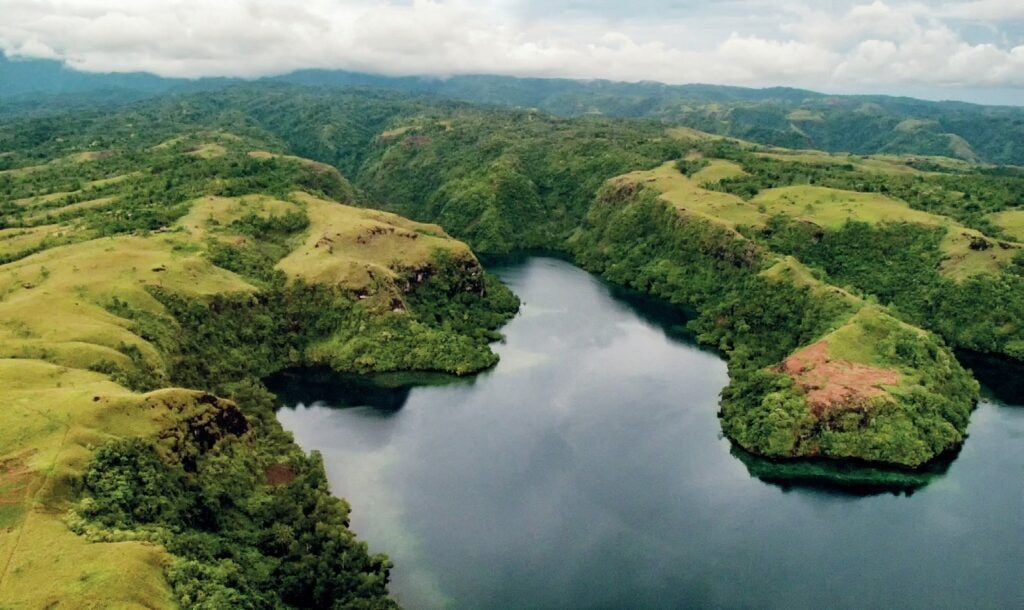
Picture if you will the stark but majestic fjords of Norway, or perhaps the South Island of New Zealand… but instead of harsh volcanic rock leading down to the water’s edge, there is lush tropical rainforest.
Almost universally referred to as ‘beautiful Tufi’, Cape Nelson on the north-east coast of the main island of New Guinea is one of the most spectacularly scenic places in all of PNG.
Besides the delightful above-water scenery, Tufi also has some wonderful underwater experiences. But, at the end of a great diving day, there are few places better to watch the sunset than the terrace bar overlooking the main Tufi Fjord.
That vista leads you all the way to Mount Trafalgar in the distance and, as the red ball of the sun disappears behind the extinct volcano, a wonderful calm descends on Tufi fjord as it retires for the evening.
Diving Tufi
As a diver though, the sundowners on the terrace and the incredible scenery are the bonus… the main game is what is underwater at Tufi and that falls into three very distinct and quite special categories.
First and foremost are the remote offshore reefs, starting some five nautical miles out from Cape Nelson, which are only really dived by guests at Tufi Dive Resort.
Then there are the tropical fjords with their special, almost unique, mix of fresh and salt water marine life.
And finally, there is the dive jetty with its accumulation of literally decades of flotsam and jetsam stretching all the way back to World War Two, when Tufi fjord was a forward operating base for US Navy PT boats.
Oh… and one last thing – down at 50m, just off the jetty, are the remains of two of those PT boats that sank during a refueling ‘incident’ in 1943!
The location
Cape Nelson’s incredible topography is the result of an ancient eruption of three volcanoes – the lava flow from which created the long and narrow coastal inlets as it poured into the Solomon Sea.
Geologists refer to such coastal inlets as ‘rias’, as a true fjord is created by glaciers – large but slow-moving rivers of ice that carve out U-shaped canyons over thousands of years – with the fjord being what remains after the climatic conditions change and the ice melts. But everybody refers to the coastal inlets at Tufi as fjords, and I have to say that saying you have been fjord diving sounds way cooler than ria or inlet diving…
The dive resort is built on the site of the original pub and hotel that served the small expatriate community when Tufi was a settlement for the Australian colonial administration prior to independence. The only way to get to Tufi is to fly over the Owen Stanley Range from Port Moresby – there are no roads…
Diving the offshore reefs
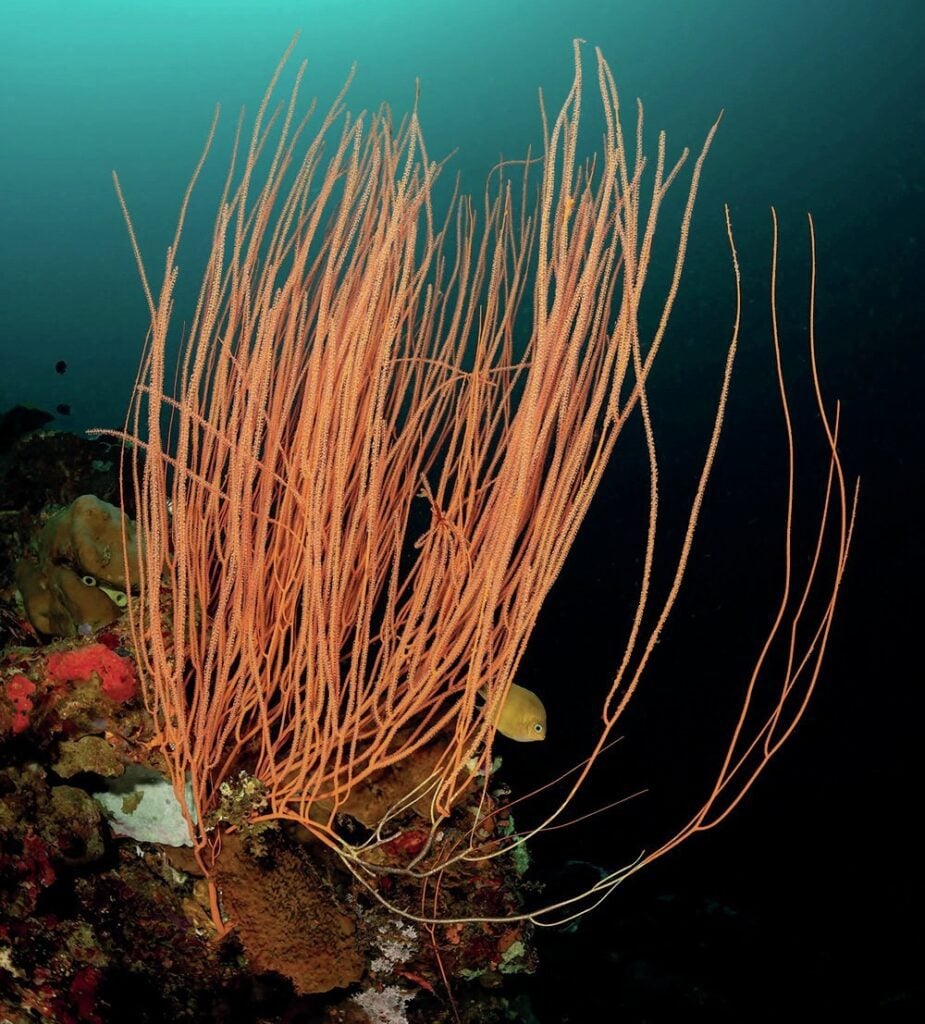
Located some five to 15 nautical miles out from Cape Nelson are a series of offshore reefs and seamounts that rise some 200m from the seabed and sit right in the path of the rich equatorial currents that flow both up and down the coast during the monsoonal seasons.
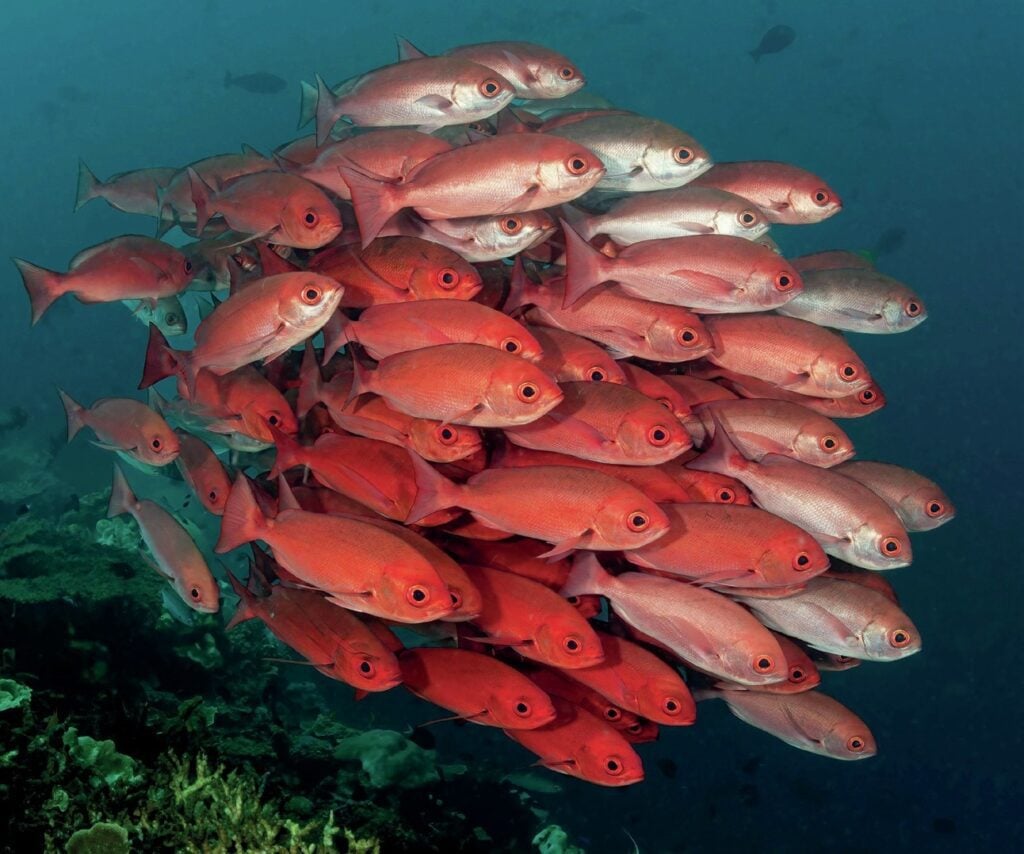
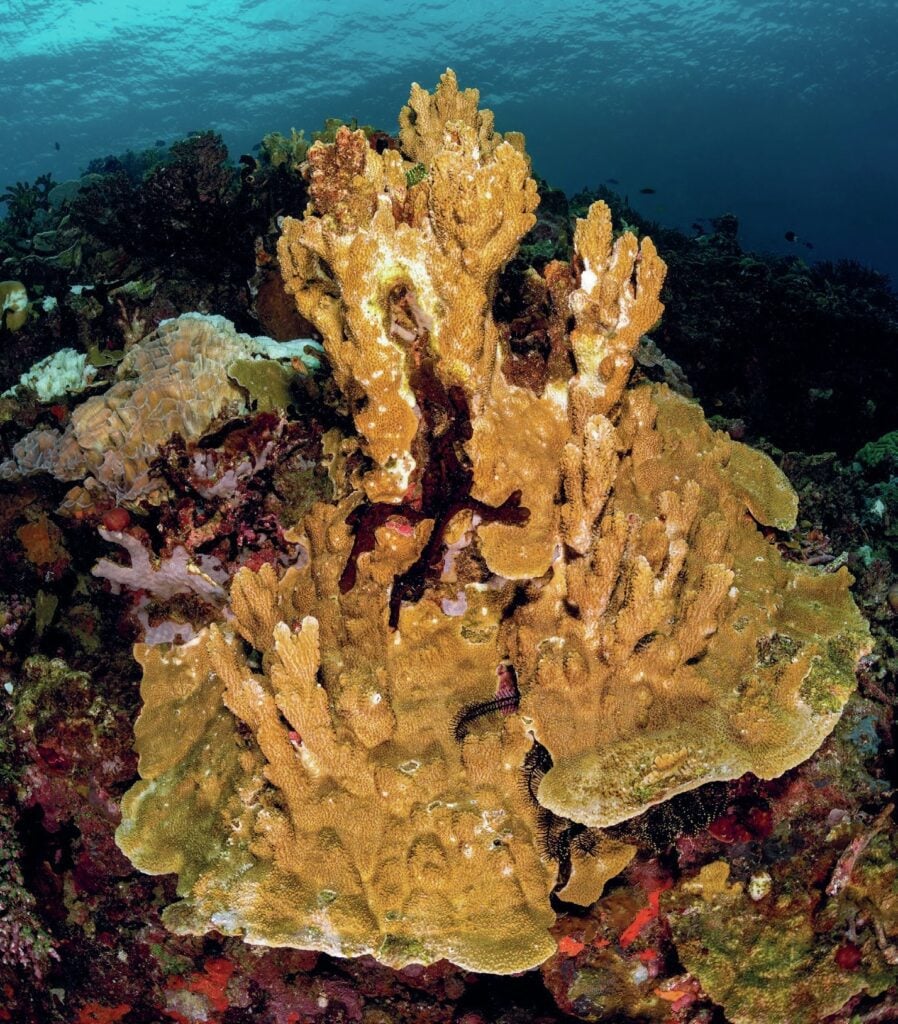
Only about 25 of those sites are within reasonable access time of Tufi and have also been surveyed, while the rest are largely unexplored. In the right conditions the diving on some of these reefs is simply sublime – think 30 metre visibility, beautiful hard and soft corals, large schools of schooling pelagics and the occasional passing hammerhead shark.
The key to the offshore reefs is being there at the right time of year because it’s all about the seasons and where the wind is blowing from.
In the winter dry season from mid-July to mid-September, the southeast trade winds can reach 25 knots and produce big seas that make it difficult to get to even the closest offshore sites.
In the wet season from mid-December through to mid-March, when the winds are from the northeast, the waters are calm, but the torrential rain and subsequent run-off from the major rivers greatly reduces the visibility.
The very best time to dive the offshore reefs are the doldrum periods from mid-March to mid-July, and mid-September through to mid-December, when the diving conditions are optimum – calm and flat with great visibility.
Diving Tufi Fjord
There are several fjords on Cape Nelson with Amuian Bay, Tufi and Maclaren fjords being the largest. They are all over 90m deep and, apart from Tufi and parts of Maclaren, are virtually unexplored underwater.
There are several sites in Tufi fiord that are easily accessed from the resort’s jetty, and they really do offer some different and interesting diving, plus a great contrast to the offshore reefs.
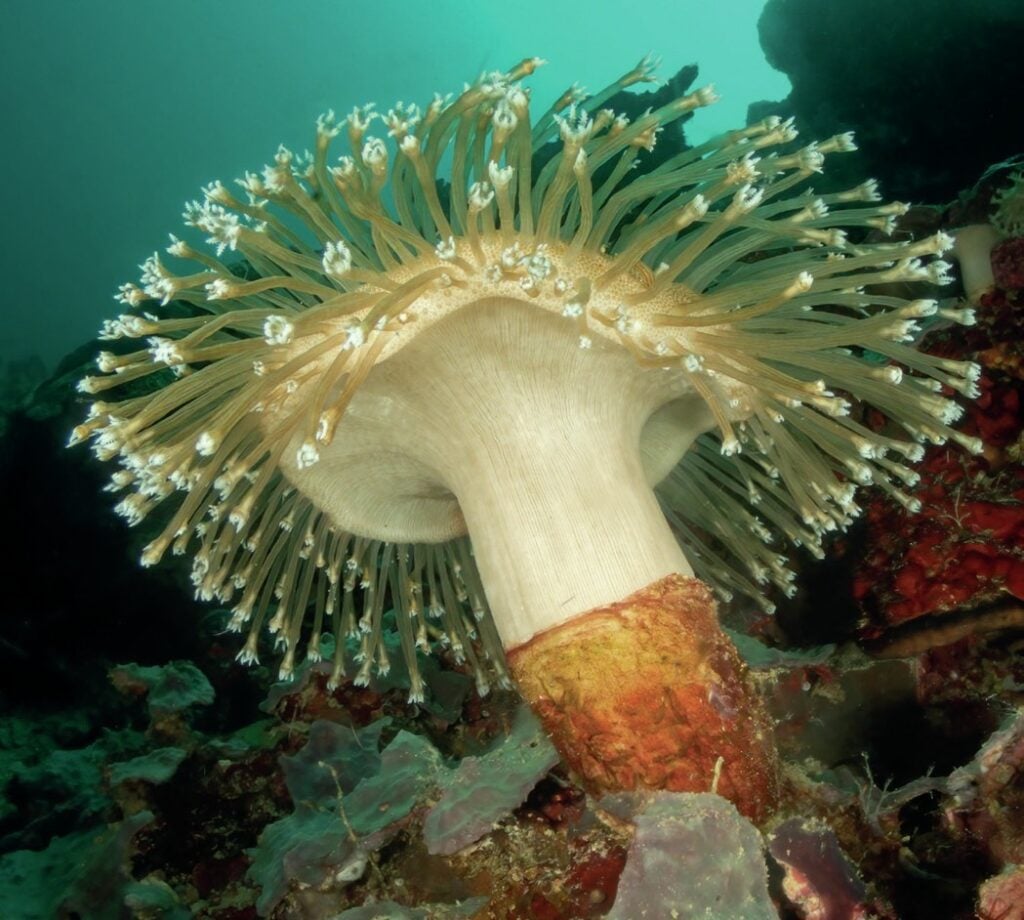
While the fjord is predominantly seawater, its shape and the large flows of fresh water in the wet season has created a kind of hybrid environment with a lot of sponges and marine growth that I have not seen anywhere else. Overall though the general ambiance is a little bit like freshwater lake diving.
Visibility can be challenging after heavy rain but is usually between five to ten metres and drifting along the side of the fjord and checking out what you can find is pretty cool and a great third dive after two morning dives out on the offshore reefs.
Diving Tufi Jetty and House Reef
The general area around the dive shop jetty and the remains of the nearby public wharf has been the loading and unloading point for the settlement and the surrounding area for a very long time. This means that it is very much a muck dive – commonly defined as a dive that takes place where there is no beautiful scenery.
Scattered around is the flotsam and jetsam of several decades, including a variety of World War Two debris from 1943, when the fjord was a forward base for US Navy PT boats.
Either side of the jetties there is a little bit of everything – from sea grass in the shallows around the bay, to hard and soft corals and elephant ear sponges on the headland.
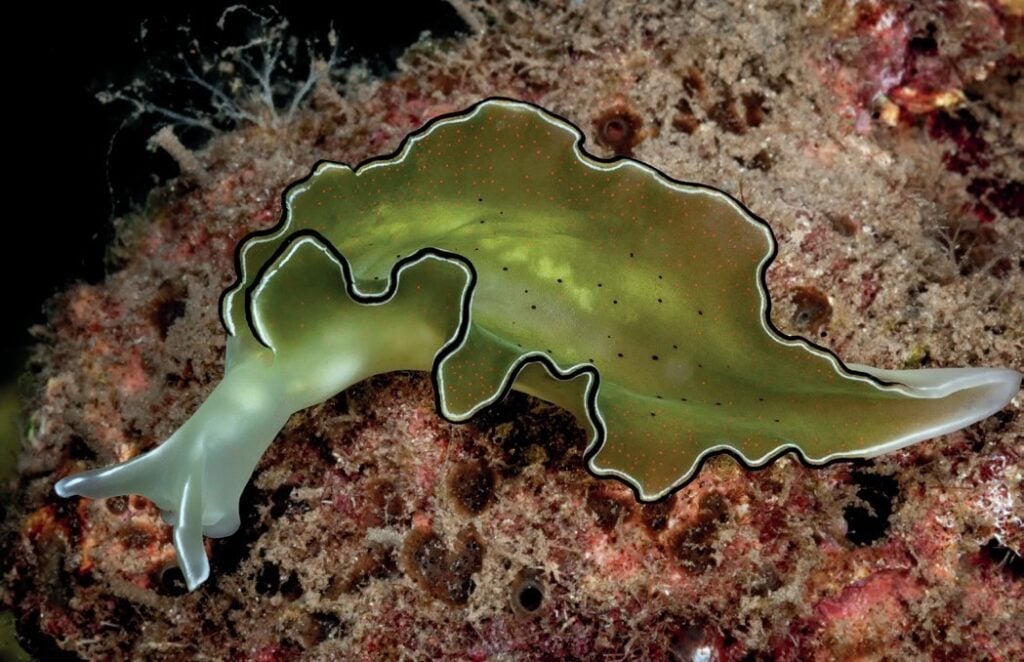
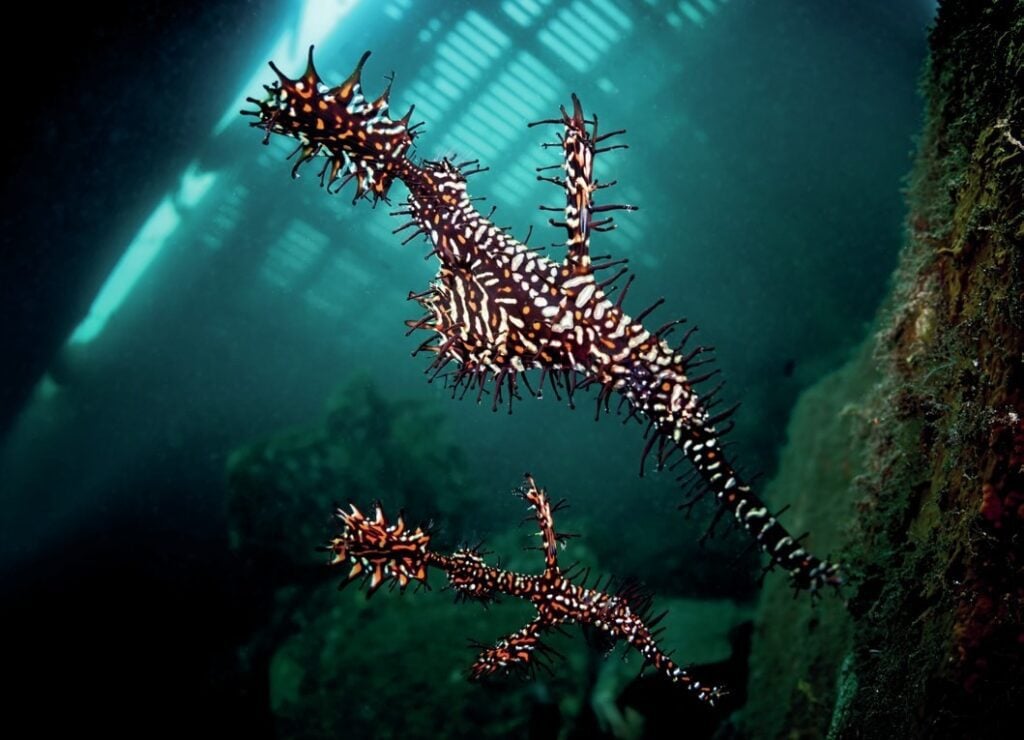
Around the jetties is a great place to find critters, particularly during the dry season from July to September, and in the peak diving months of October and November, when the water is cooler and the critters come up into the shallows.
To the north of the dive wharf, there is a small bay which can be a very pleasant late-afternoon dive as the sun goes down and creates a wonderful ‘Golden Hour’ effect, as the sun’s rays hit the water at a shallow angle and create cathedral lighting underwater.
Diving the PT boats
The wrecks of the PT boats are easily dived but given their depth of 50m, it is not a dive to be taken lightly…
A former fishing boat is anchored right above the wrecks, so entry into the water is from the dive wharf and then it’s a five-minute surface swim over to the boat.
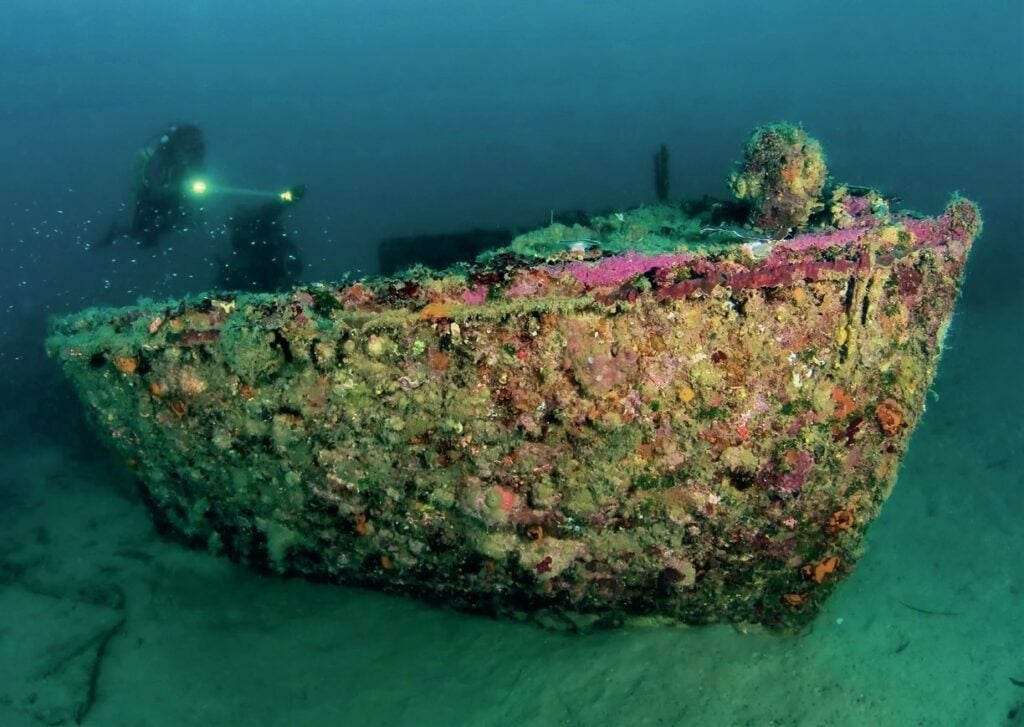
As you descend the mooring line, at about 35m you can see the wreckage spread out below on the sandy floor of the fjord. Near to the mooring is one of the original torpedo tubes still loaded with a live torpedo, and about ten metres away down into the fjord is the hull of one of the boats, the bow of which is still intact and clearly recognizable, as is the mounted machine gun just behind it.
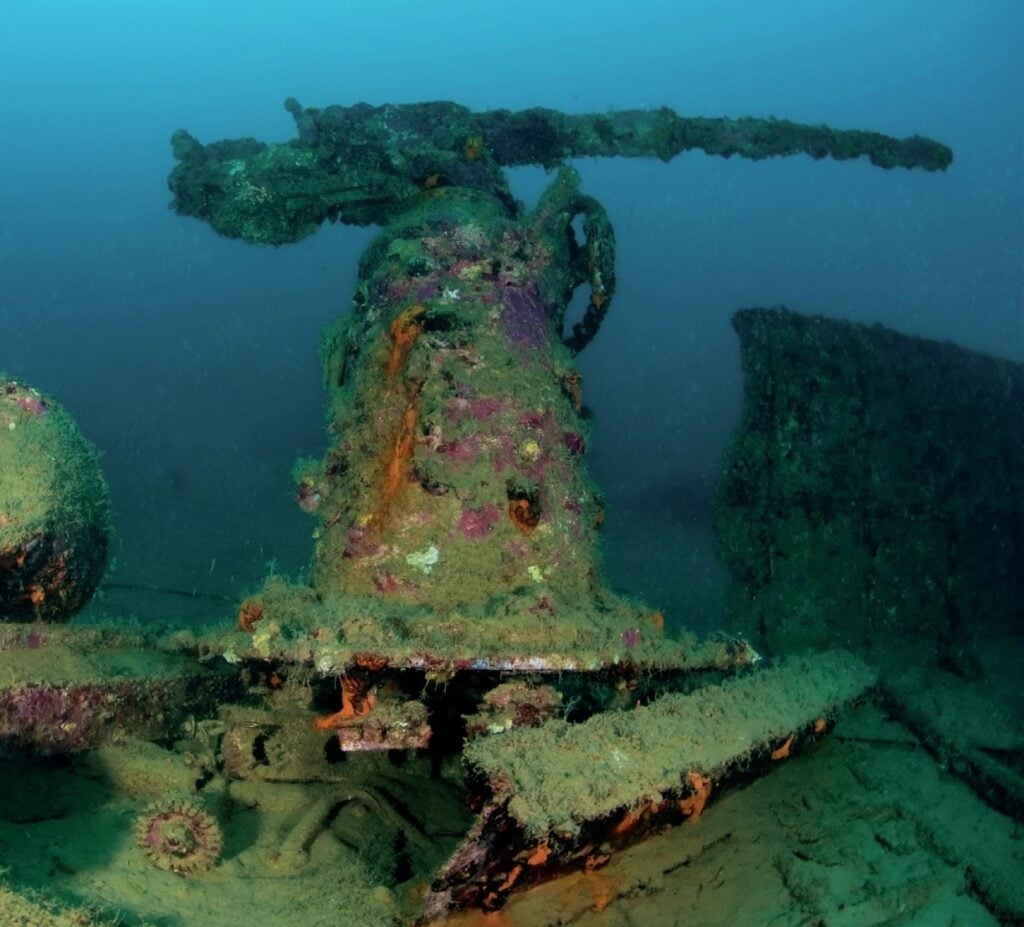
The gun’s mounting rails are lying in the sand, together with the gearing that allowed it to be turned and aimed, but there is not much left of the rest of the hull, probably because it was burned in the 1943 fire that sunk the boat.
Dive time at this depth is obviously quite limited, but as most of the wreckage is in a small area, there is usually enough time to see everything before heading back up the side of the fjord and shallower water. On the way you will pass fuel drums and another torpedo tube, complete with its loaded torpedo.
A special place
Tufi truly is one of the special places in Papua New Guinea and just getting there is an adventure in itself!
The dive lodge is excellent and well run, as is all the diving. The scenery both above the water and below is quite exceptional, plus if you want to explore the local villages and their culture, you will be warmly welcomed.
About the author
Don Silcock is based from Bali and his website has extensive location guides, articles and images on some of the best diving locations in the Indo-Pacific region and ‘big animal’ encounters globally.
Frequently Asked Questions (FAQs)
Where is Tufi located in Papua New Guinea?
Tufi is on the north-east coast of Papua New Guinea, at Cape Nelson, accessible by a scenic flight over the Owen Stanley Range.
What makes diving in Tufi unique?
Tufi offers three types of diving: remote offshore reefs, tropical fjords with a freshwater-saltwater mix, and the historical dive jetty with World War II PT boat wrecks.
When is the best time to dive Tufi’s offshore reefs?
The optimum times are mid-March to mid-July and mid-September to mid-December, when conditions are calm and visibility is excellent.
What marine life can divers expect to see in Tufi?
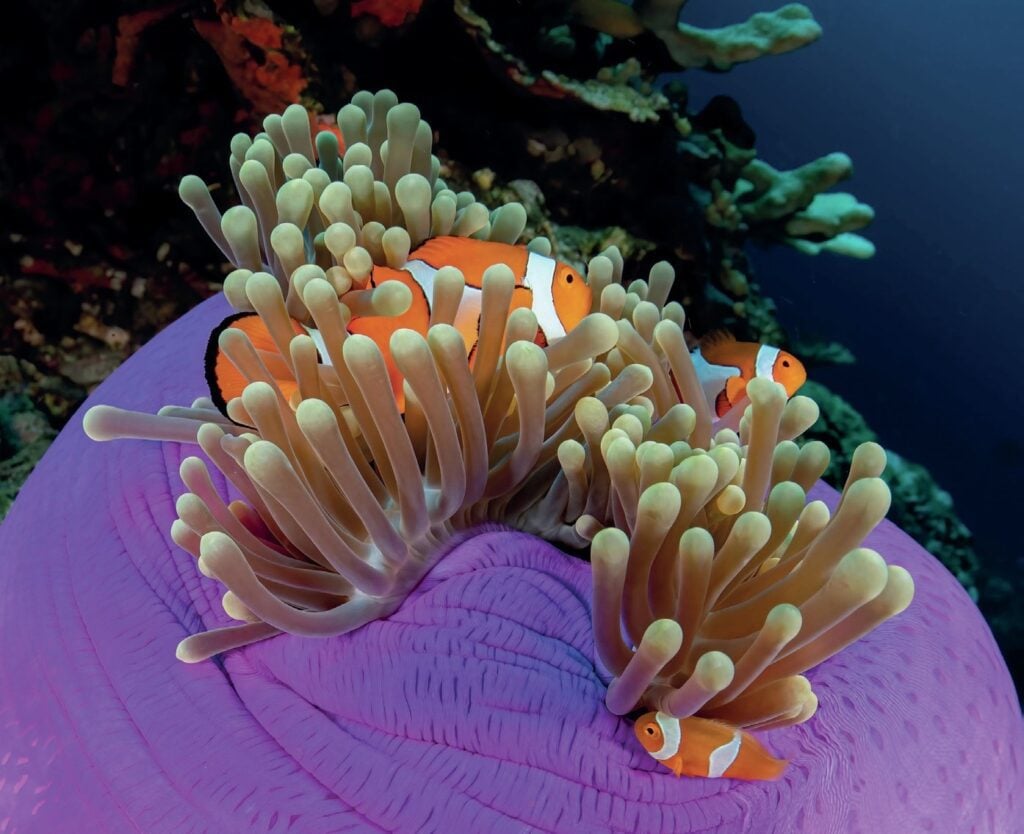
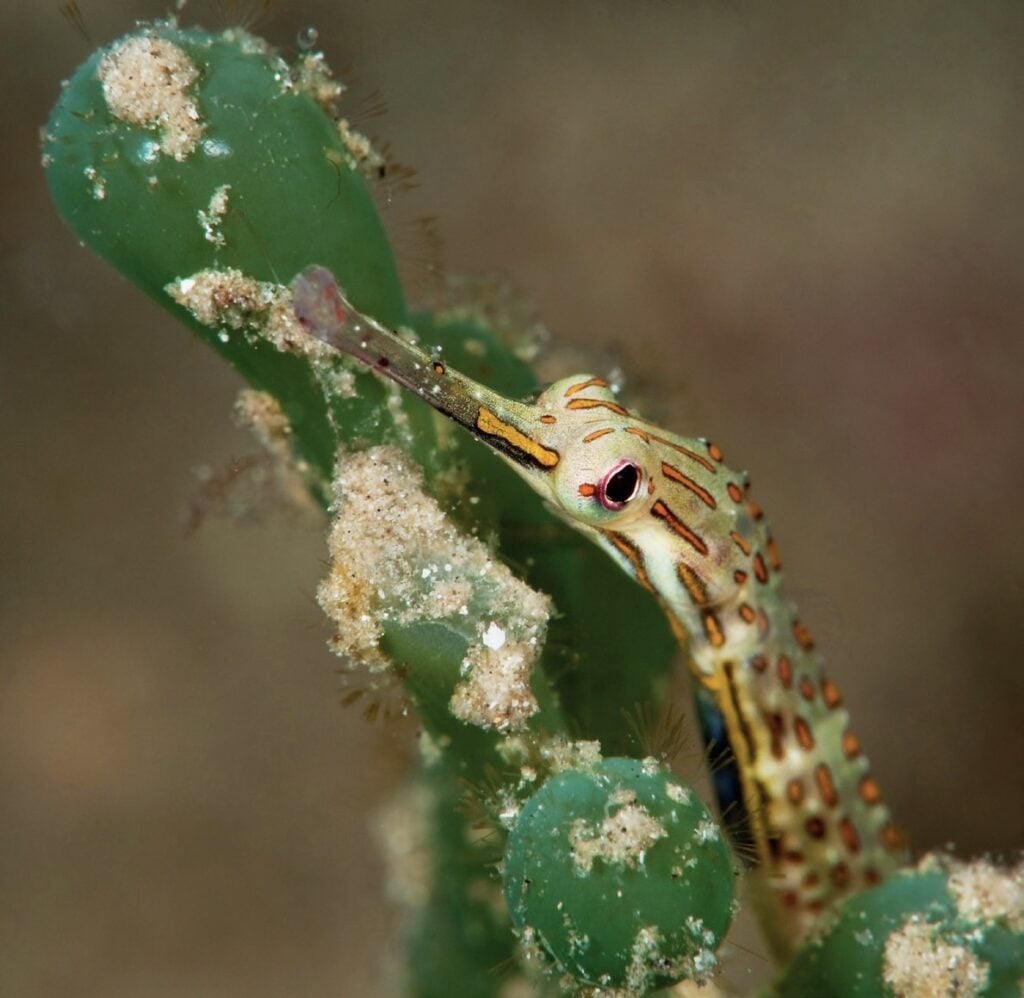
Divers encounter hammerhead sharks, schooling pelagics, hard and soft corals, nudibranchs, pipefish, and a variety of reef fish, as well as PT boat wrecks.
How do you get to Tufi for diving?
The only way to reach Tufi is by air, flying from Port Moresby over the Owen Stanley Range to Tufi’s small airstrip.
Are there accommodations suitable for divers in Tufi?
Yes, Tufi Dive Resort offers well-run lodging with easy access to dive sites, plus guided diving and equipment rental.
This article was originally published in Scuba Diver ANZ #61
Subscribe today with promo code DIVE1 — enjoy 12 months for just £1!
