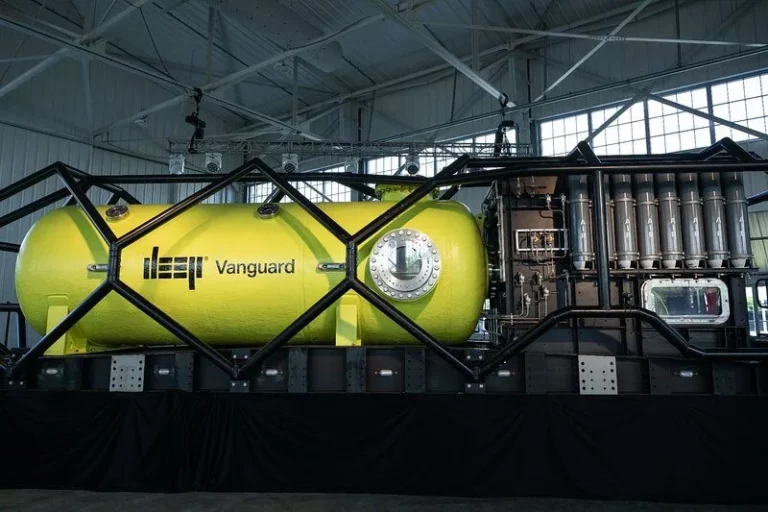
DEEP has announced that Vanguard, its pilot subsea human habitat, will be deployed at Tennessee Reef in the Florida Keys National Marine Sanctuary at a depth of 18m. It will be the first subsea human habitat deployed in the United States in 40 years.
Installation is planned for the end of April 2026, weather permitting, as part of a complex marine operation.
First unveiled in Miami in October 2025, Vanguard is now in the final stages of commissioning, including final outfitting, subsystem testing, and integrated acceptance trials.
Norman Smith, Chief Technology Officer at DEEP, said: “Tennessee Reef provides Vanguard with a home in one of the world’s most important marine environments. We couldn’t be more excited to begin this next chapter. Seeing Vanguard deployed and ready to host aquanauts underwater will mark the start of a continuous human presence on the seafloor, in service of science, learning, and ocean stewardship.”
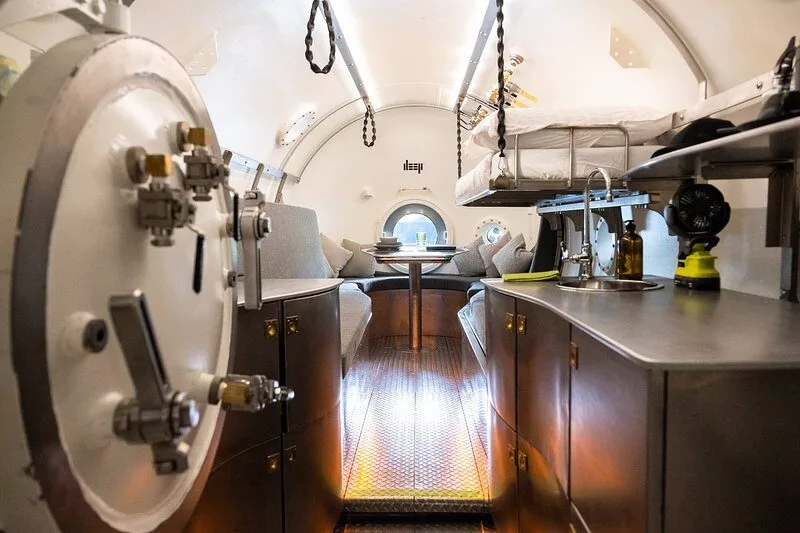
Vanguard is designed to enable up to four crew members to live and work underwater for days at a time, enabling extended time on the seafloor for ocean science, monitoring, and conservation.
Vanguard is DEEP’s pilot subsea habitat and a stepping stone to Sentinel, the company’s flagship habitat programme designed to support larger crews on longer underwater missions.
Why Tennessee Reef
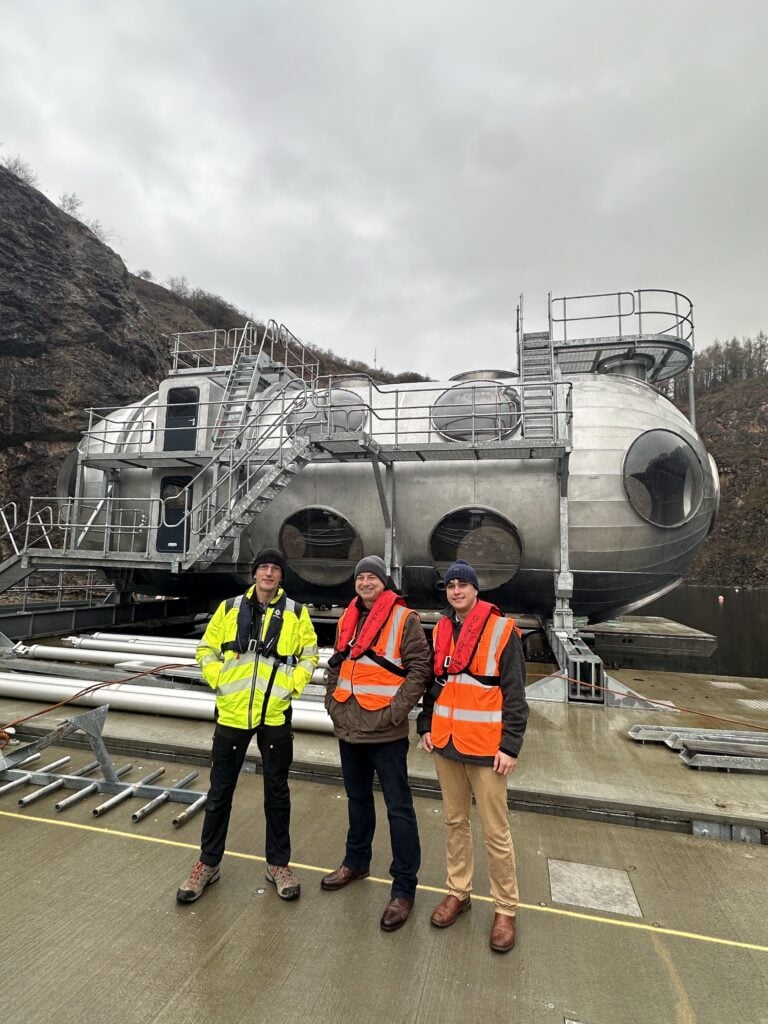
DEEP selected Tennessee Reef based on environmental, operational, and research criteria. The reef lies within a controlled-access conservation area of the sanctuary and is suited to long-term research experiments and seafloor equipment, while ensuring the safety of aquanaut excursions and local recreational activity.
The site provides proximity to coral reef systems and access to deeper surrounding waters of scientific interest. A suitable sand patch was identified for deployment, supported by benthic surveys confirming the placement area is free from living coral and other sensitive marine resources.
Main operating base
Vanguard will be operated from DEEP Station Florida (DSF), a shoreside base located in Marathon in the Florida Keys. The main operating base needs to be in proximity to Vanguard’s deployment location to support standard aquanaut evacuation protocol. DSF will also serve as the aquanaut training facility and will house emergency hyperbaric medical equipment.
Safety and certification
Vanguard is working towards being the first subsea habitat to be classed by DNV, which has provided independent technical oversight from the outset of the project.
Jonathan Struwe, Head of Underwater Technology at DNV Maritime, said: “From the earliest design tests, DEEP worked with us to ensure its systems and materials followed the highest subsea engineering standards. We look forward to strengthening this partnership asthey work towards full DNV class approval of Vanguard.”
About DEEP
On its mission to make humans aquatic, DEEP is developing subsea systems and habitats to enable a continuous human presence in the ocean.
