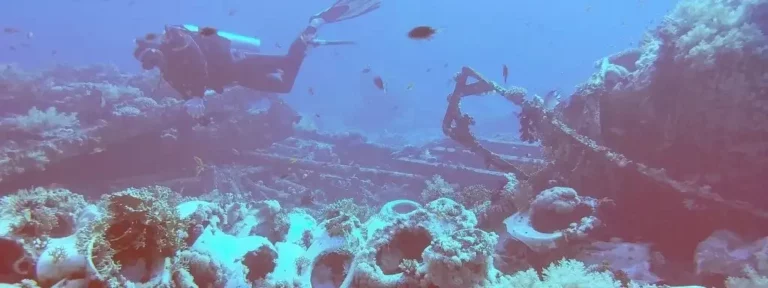
The skipper promised me a wreck, so it must be down here somewhere. But what is a wreck? And what does this one look like? If only the visibility was better, I might see it clearly. Then again, maybe the atmospheric gloom adds to the sense of mystery.
I follow the clues: twisted bits of metal sticking up, a shoal of fish darting through shadows, the glint of another diver’s torch. Then… a boiler! I’m on a shipwreck, or at least the remains of one, scattered across the seabed. It might be a wreck of a wreck, but I’m loving it anyway. And so is the marine life, which means there’s no shortage of entertainment on every dive.
My First Shipwreck Dive
My first wreck-dive was the Dredger in Portland. To this day, it still looks like a mangled piece of agricultural machinery tossed against rocks by an angry giant. I mostly remember the impressive spider crabs that had claimed it as home.
So, What Is A Wreck?
Divers love to debate what counts as a “great wreck,” though tastes vary. Here are the key features most people look for when they ask: what is a wreck worth diving?
- Size matters: Big wrecks impress. Larger ships are often more glamorous, better-known, and provide that iconic “Titanic bow” photo opportunity.
- Intact structure: Divers dream of portholes still in place and cutlery neatly stacked in the galley. Reality? Even untouched wrecks slowly decay, just like everything else.
- Upright position: Wrecks often roll over as they sink, making navigation less dramatic. The rare ones that stay upright feel cinematic.
- A back story: A famous history or wartime connection adds allure. The more divers talk, photograph, and write about a wreck, the more legendary it becomes.
- Accessibility: Everyone would dive the Titanic if it sat in 30m of water, just offshore. The most popular wrecks are those reachable by recreational divers, but not too easy — bragging rights matter.
The Problem With “Top 10 Wrecks”
I’ve always rolled my eyes at those “Top 10 Wrecks in the World” lists. They’re more about name-dropping than diving. The truth? A battered old dredger can deliver as much joy as the legendary Thistlegorm. In fact, the latter now risks being loved to death, pulled apart and scavenged by the pressure of mass diving.
Wrecks as Memories: More Than Rusting Steel
So, what is a wreck? And does it really matter? Whether pristine or broken to bits, wrecks are unforgettable. Every dive leaves a memory. And that, perhaps, is the best answer to the question: what is a wreck? It’s not just steel and rivets, it’s history, marine life, and the stories we tell after surfacing.
Frequently Asked Questions
What is a wreck when it comes to diving?
A shipwreck is the remains of a sunken or stranded ship, ranging from intact vessels to scattered debris fields.
Why do divers explore wrecks?
Divers explore wrecks for history, marine life, photography, and the thrill of discovery.
What is a good wreck for diving?
Size, intact structure, upright positioning, accessibility, and an interesting back story make wrecks more appealing to divers.
Are wrecks dangerous to dive?
They can be. Wrecks can pose hazards such as sharp edges, entanglement risks, overhead environments, and poor visibility. Proper training is essential.
Which is the most famous wreck dive in the world?
Probably the Titanic, but if we are talking about wrecks for divers then SS Thistlegorm in the Red Sea is one of the most popular wreck dives in the world, known for its intact cargo and dramatic history.
Originally written by Louise Trewavas
Subscribe today with promo code DIVE1 — enjoy 12 months for just £1!
