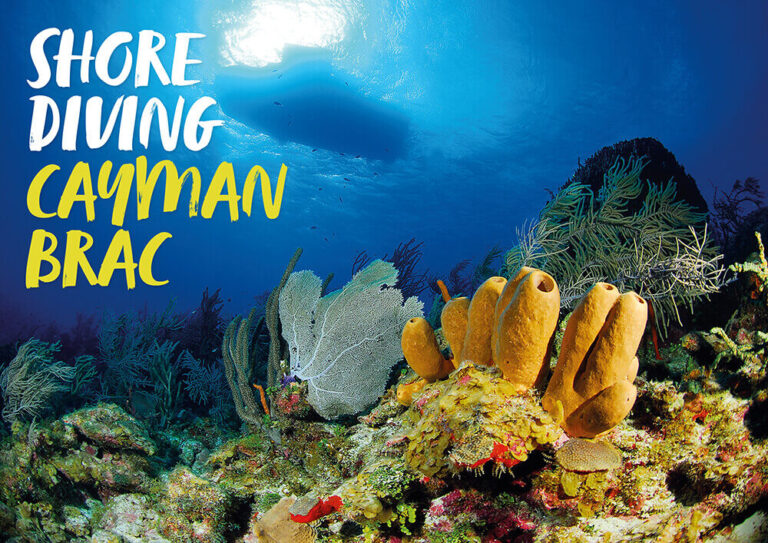
Lawson Wood lived in the Caymans for several years, and he reckons shore diving Cayman Brac could be among the best diving in the Caribbean.
I have been fortunate to have dived virtually all over the Caribbean and additionally, those islands which have been influenced by the Caribbean Sea, such as the Gulf Islands of Turks and Caicos and the Bahamas, not forgetting Florida and at the tip of the range – Bermuda. All of them have amazing dives and marine life. Not every location has every species, but some islands do stand out, such as the Cayman Islands (a British Overseas Territory) that is located in the heart of the Caribbean Sea.
Why Cayman Brac Is a Top Shore Diving Destination
Of the three Cayman Islands, Cayman Brac has gained its popularity not only for its pristine reefs and abundance of marine life, but also the fact that there are more superb shore diving sites located here than pretty much any other Caribbean island. More shore diving sites are being marked for visitors on Cayman Brac, and there are plans to have toilet facilities at most of the best access points.
Cayman Brac, Grand Cayman’s farthest sister island, is 20km long by just over 1.6km wide. It is roughly split into two, being the flat area to the west of the island where the airport is located, and the steep bluff with its remarkable ancient coral limestone cliff and caves to the east. The word Brac is Gaelic for ‘bluff’. The locals are known as Brackers!
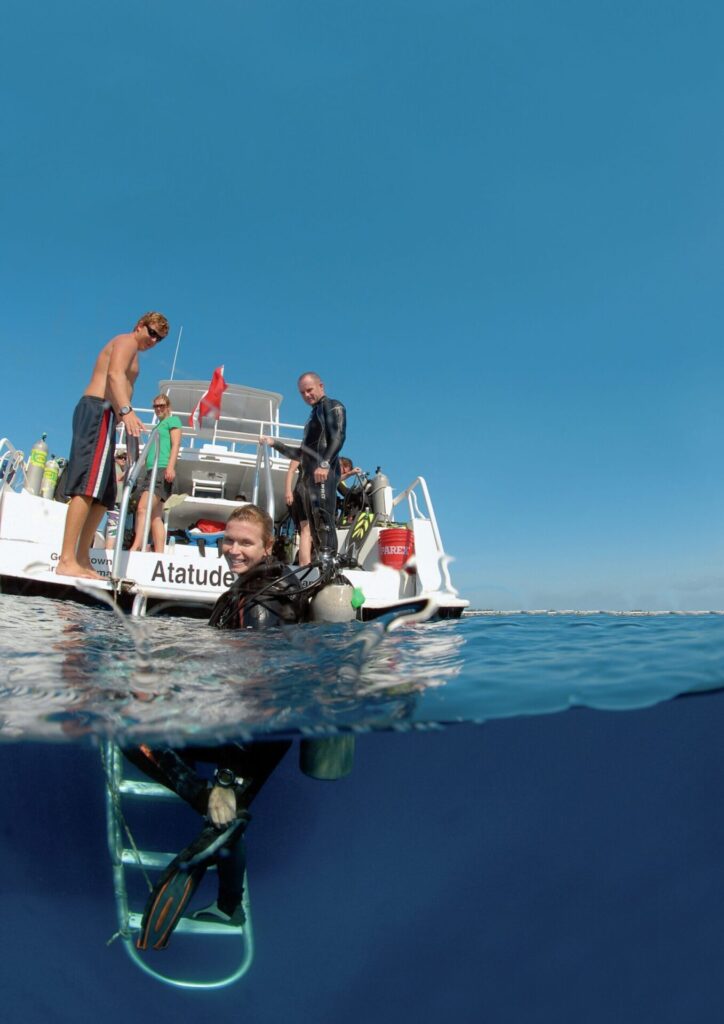
Situated 145km northeast from Grand Cayman, Cayman Brac now has a resident population of around 2,000. There are three hotels, but many visitors choose to stay at one of the local B&Bs or self-catering apartments. The Cayman Brac Beach Resort is the oldest established resort on the island, and this has a dedicated dive shop run by Reef Divers. They have four custom-built Newton dive boats to get you everywhere, including nearby Little Cayman. Nearby is the Brac Scuba Shack, which is suited to more-independent divers, yet still have their dedicated Newton dive boats and superb professional staff.
Exploring Cayman Brac’s Best Shore Dive Sites
The majority of all dives are undertaken along the north shore of Cayman Brac. However, there are a few excellent shore dives along the south shore too, particularly the remains of the shipwreck Prince Frederick, which sank at the shoreline in 1897. Public Beach is another excellent shore site with superb spur and groove coral formations.
Quite a lot of dive training is carried out here, and along the inner lagoon that stretches towards the west of the island. Public toilets are also located here.
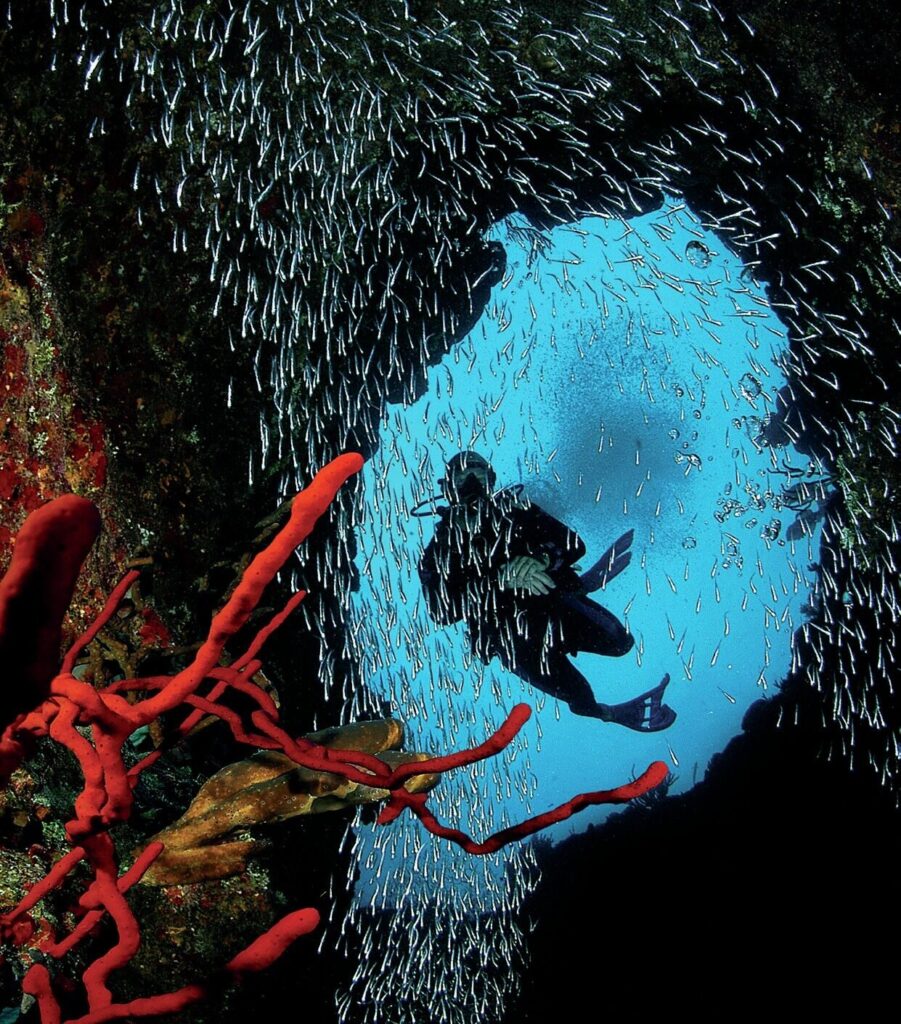
On the north shore, there are literally dozens of shore entry sites, mainly from the old fishermen’s launch sites or ‘Barcaderes’, which are modest slipways carved from the tough ironshore. There are also a few launching sites which have toilets available (always handy) and these are perfect for exploring the reefs in multiple areas. But saying that, there are literally hundreds of entry sites all along the shore as it has such easy access to the sea.
Average shore depths are 12-15m and less, but at the most eastern and western points of entry, there is direct access to the famous Cayman Brac Wall. Literally exceptional diving and so close to shore, it is difficult to pass these by as you can spend even more of your dive time in the amazing shallows on the way back to shore.
To the west is Buccaneer, a man-made marina excavated from the ironshore which was once a sea swimming pool for a former hotel. With direct access to the reefs and a longish swim to the famous 356 wreck, the sheltered bay is perfect for all levels of diver, yet gives the thrill of more exploration as well as safety at night.
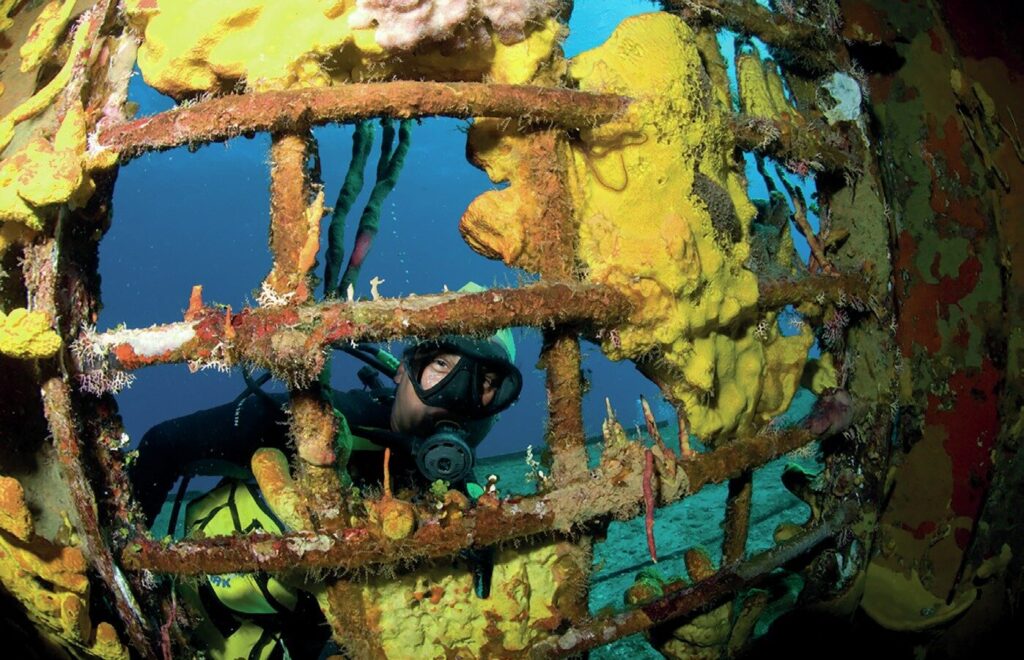
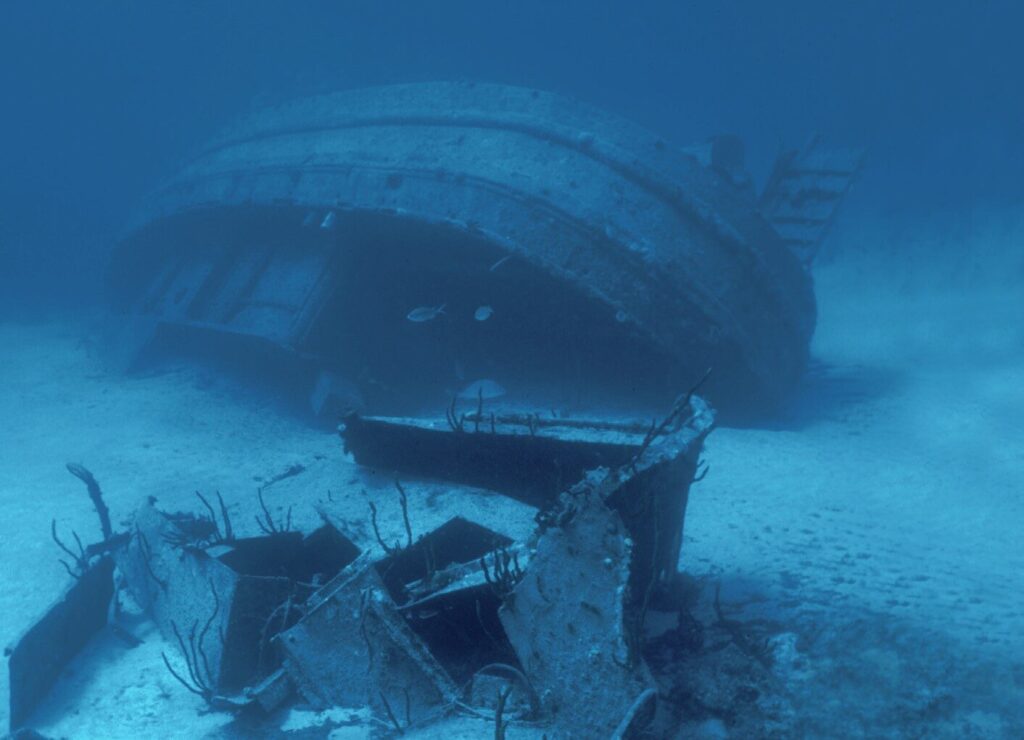
Located just northwest of Scott’s Pier is the Kissimmee Wreck. Near the airport, it sits in 12m of water and is almost upside down. This retired tugboat was deliberately sunk in 1982 as an addition to the reef system and provides an interesting start to a shore dive that can take you to the edge of the reef wall, as this is the closest point on the island to undertake this type of dive. The wreck is a favourite site for photographers and during the summer months, large numbers of rays can be seen. This location is also superb for night dives as there is easy access and the pier has overhead lights, which makes things easier for navigation. Here we always find octopus, squid, juvenile spotted drums and many species of shrimp.
Diving the Legendary MV Captain Keith Tibbetts Wreck
Virtually all of the wreck sites are along the north shore, as well as some absolutely cracking reef dives, both down the wall and in the shallows for more leisurely time. Undoubtedly the top dive is the renamed MV Captain Keith Tibbetts, This former Russian destroyer, Patrol Vessel #356, is a Brigadier Type-II-class frigate, built in 1984 at Nadhodka in the USSR at a cost of US$30 million. The ship is 95 metres long with a beam of 12.8 metres weighing 1,590 metric tons. Originally part of the old Soviet fleet stationed in Cuba as part of the ‘Cold War’, the vessel was never actually involved in any conflict. When the USSR dissolved in 1992, the newly created Russian Republic took over the operational control of the old Soviet base on Cuba. When the ship was finally sunk in September 1996, Jean-Michel Cousteau took the very brave move of staying on board the ship as she sank.
We watched as Cousteau, wearing full scuba gear, clung onto the guard rail as the ship vanished. Later that night, after we had completed filming for the day, he said ‘… fear did not come into it, this is something that I have always wanted to do and the preparations beforehand, to ensure that there would be no accidents, were meticulous – what did cause a moment of anxiety was when the aluminium superstructure cracked open in two places, splitting the living quarters with a resounding crack…’
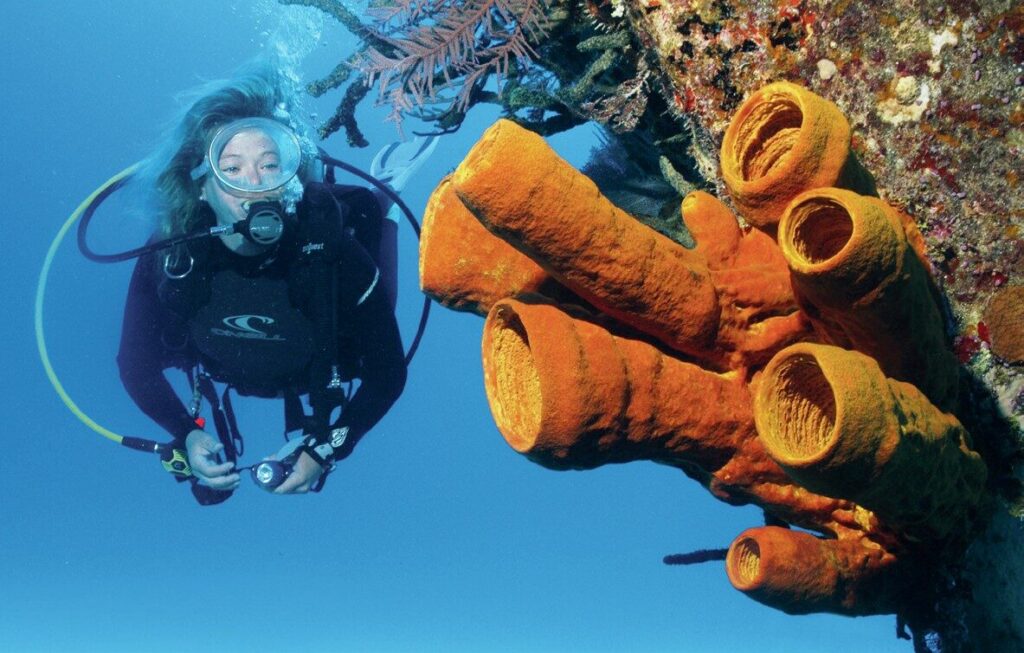
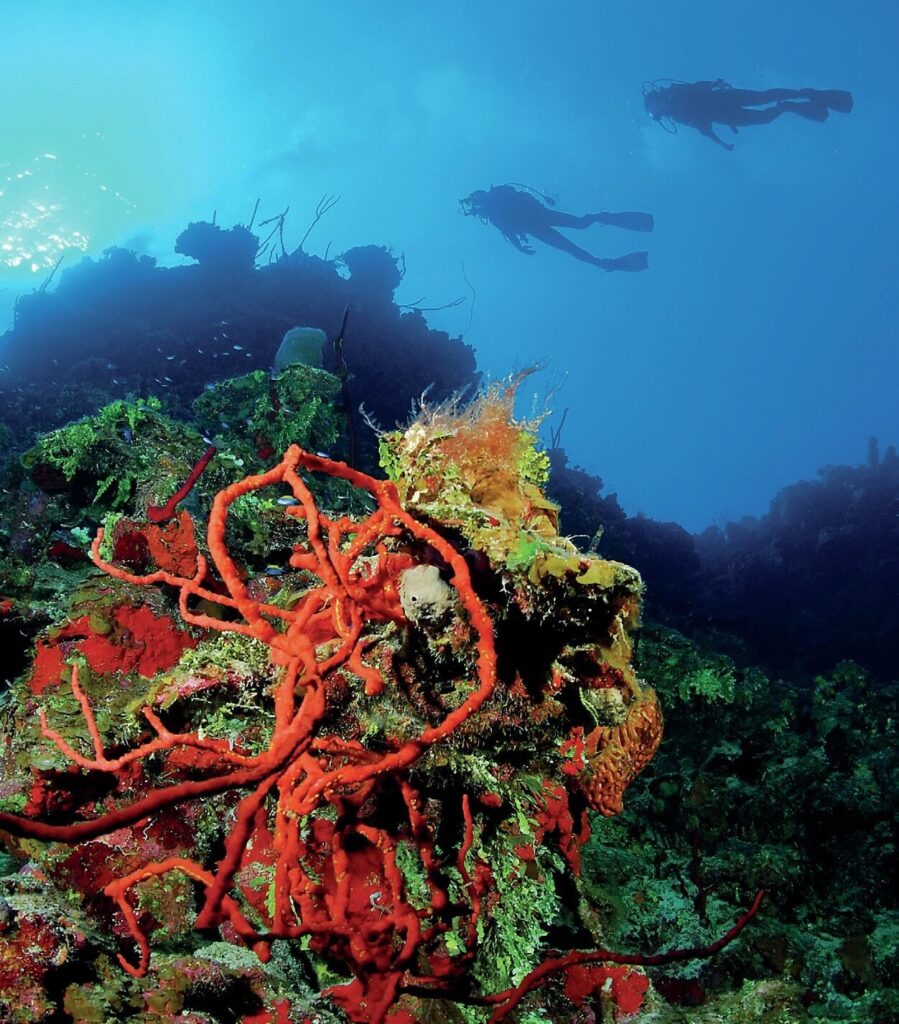
Now over 30 years on, underwater, the ship is simply massive, now pulled apart with her gas turbine engines exposed and her radar assembly lying on the sand to the west. The main part of the hull lists to port and is perfectly placed in a sand-chute which plunges over the wall. On either side of her are healthy sections of coral reef carpeted with huge barrel sponges, rope sponges and good quality corals, and under the bow at 25 metres is a field of garden eels. A large section of the superstructure has collapsed and the bow has now almost sheared off, lying at a much-more-acute angle over to port, but now the ship looks much more like a real shipwreck, rather than an old ship that was sunk as a tourist attraction.
Underwater Landscapes and Marine Life
“Average shore depths are 12-15m and less, but at the most eastern and western points of entry, there is direct access to the famous Cayman Brac Wall. Literally exceptional diving and so close to shore, it is difficult to pass these by as you can spend even more of your dive time in the amazing shallows on the way back to shore”
Further east along the coast at Stake Bay are more superb shore diving sites. Stake Bay is where the island’s Government Administration buildings and museum are located and there is a huge ramp slipway and stepped entry from the shore to make access nice and easy. This region of the north coast is quite protected and there are some simply massive barrel sponges and ginormous seafans and soft corals. This site also has two sculpture structures, the first is of dolphins and rays, and the second is by a local artist known as Foots and his rendition of his idea of Atlantis. There are statues, columns, a huge sun dial and other artefacts. These are now all covered in sponge growth and make for an interesting photographic backdrop. Perfect for a night dive, Stake Bay has lights to facilitate your return to shore.
Further east is the Cayman Brac Port and while diving is not allowed when it is in use, the diving just to the side of the dock and under the main columns is superb. All of the usual building site debris is now completely overgrown and sea spiders are the reward for diving here.
The most-easterly site along the north shore is the boat ramp in Spot Bay. Largely overlooked for some reason, just a very short swim brings you to the edge of the wall with deepwater gorgonian seafans with lots of decorator crabs everywhere. There are always tons of larger pelagic fish at this site and hammerhead sharks are more common early in the year.
Great emphasis has always been placed on the diving on Grand Cayman and the North Wall is undeniably outstanding, as well as the world-famous Stingray City, plus everyone raves about Bloody Bay Wall on Little Cayman, but many fail to appreciate the facts that Cayman Brac has much smaller diver numbers, and more shore diving sites, making for unlimited shore and night diving. Plus there are five major wreck sites accessible as shore dives, and the diving conditions and reefs are more than a match for the other islands both in the Cayman Islands and elsewhere in the Caribbean.
Planning Your Dive Trip to Cayman Brac
Cayman Brac is the smallest island in the Caribbean that has a full jet service. The Sir Charles Kirkconnell International Airport (CKIA) is serviced mainly through Grand Cayman, but does have direct flights from Miami also. There are eight jet flights weekly and a further ten flights or so daily operated by Cayman Express, which services both Cayman Brac and Little Cayman, linking them to Grand Cayman, almost like an aerial taxi service. The flight from Grand Cayman is well worth the time if only to view the colours of the sea and reefs from the air.
Once on the ‘Brac, you can have totally unlimited shore diving and, of course, being able to spend as much time as you want, without the restriction of time on dive boats.
Frequently Asked Questions
Why is Cayman Brac considered one of the best islands for shore diving?
Cayman Brac offers easy shore access to dozens of pristine reefs, wrecks, and coral walls — all with minimal crowds and exceptional visibility.
What are the top shore diving sites on Cayman Brac?
Must-visit sites include the MV Captain Keith Tibbetts wreck, Buccaneer, Stake Bay, the Kissimmee Wreck, and the scenic Cayman Brac Wall.
Can beginners enjoy shore diving on Cayman Brac?
Yes. Many sites like Public Beach and Buccaneer offer shallow entries, calm conditions, and ideal training environments for new divers.
What marine life can divers expect to see on Cayman Brac?
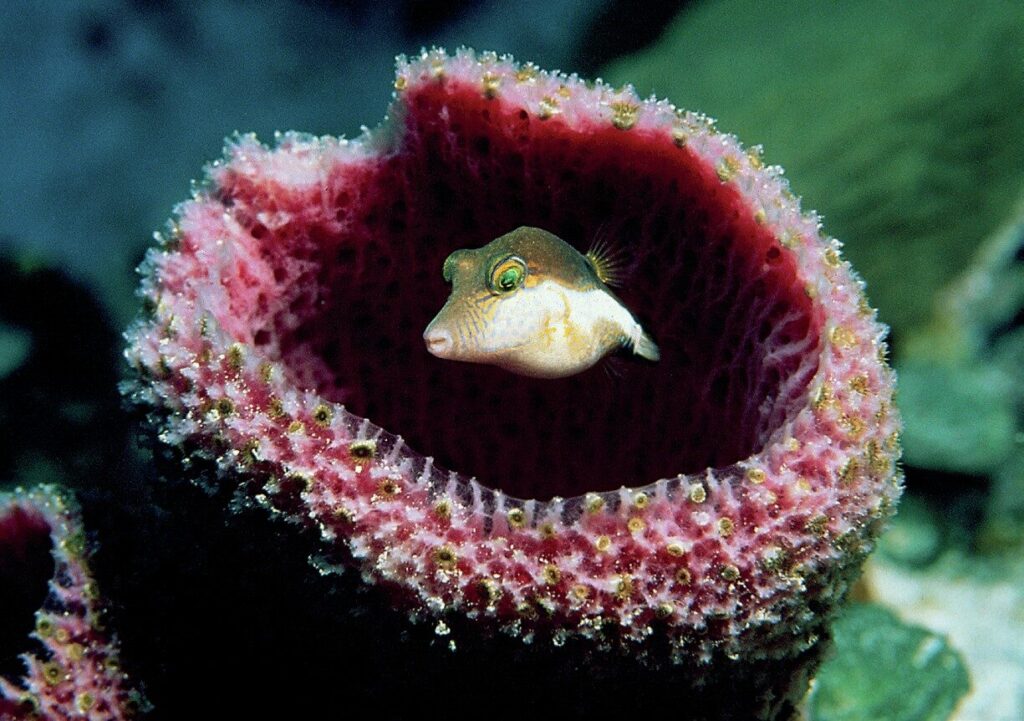
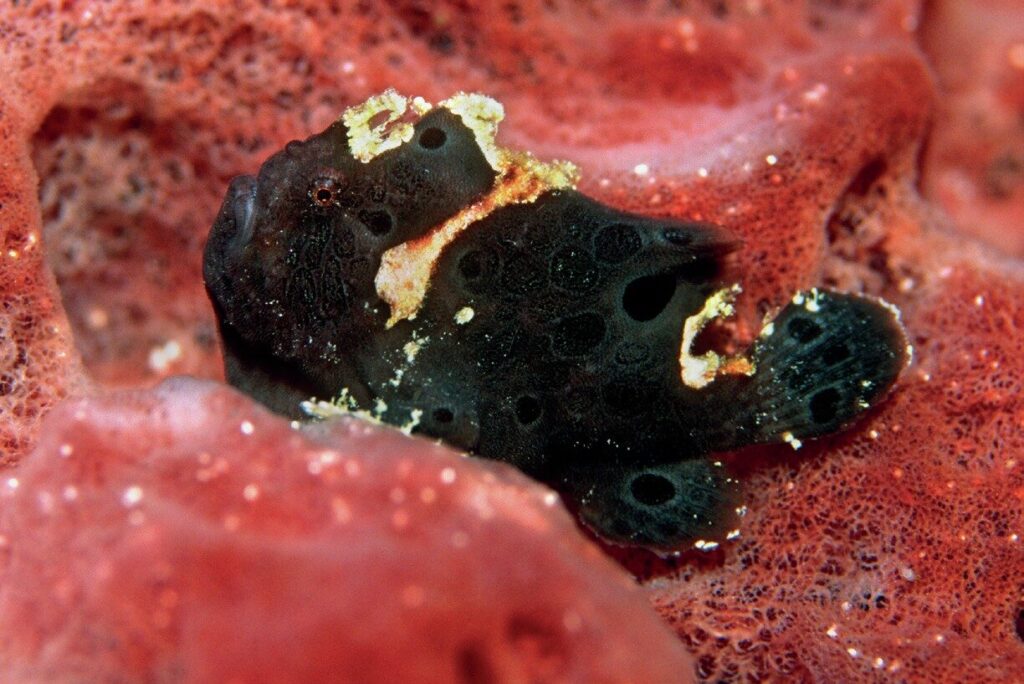
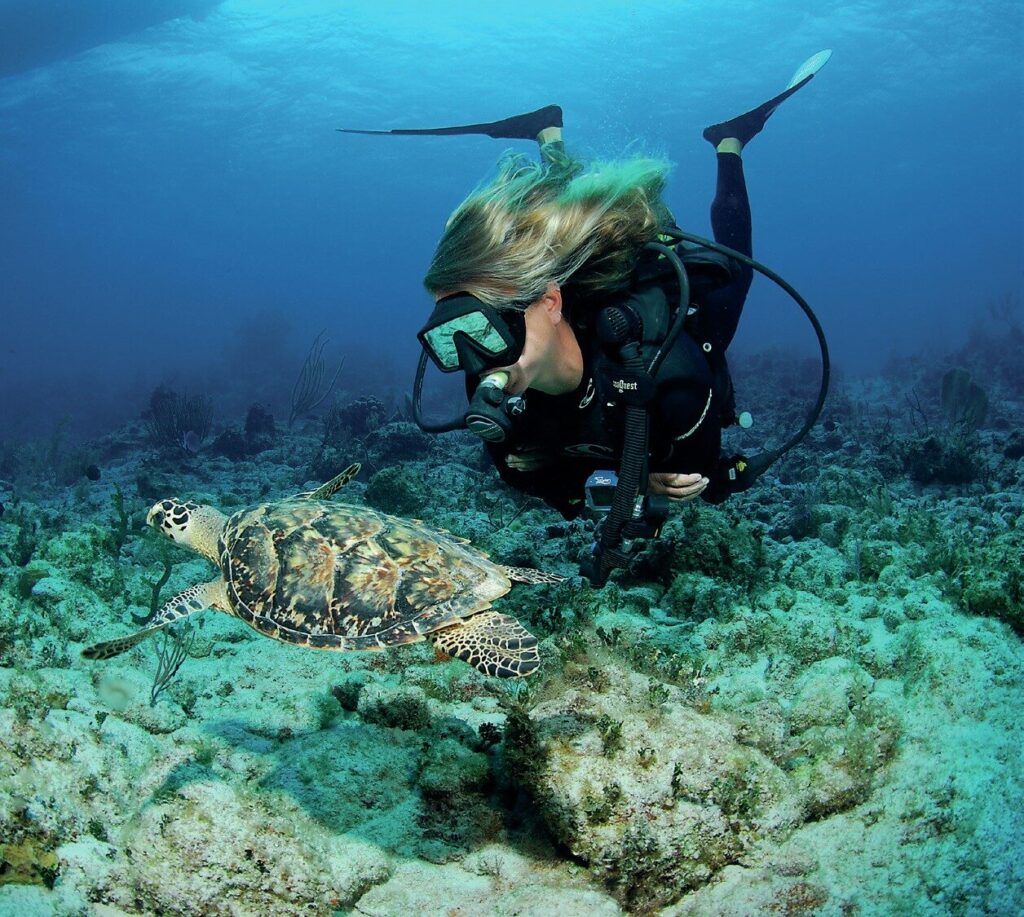
Expect vibrant corals, giant barrel sponges, turtles, rays, octopus, reef fish, and occasional hammerhead sightings along the outer wall.
Are night dives available from shore on Cayman Brac?
Absolutely. Sites such as Stake Bay and Kissimmee Wreck are popular for night dives, with overhead lights and easy shore navigation.
This article was originally published in Scuba Diver Magazine
Subscribe today with promo code DIVE1 — enjoy 12 months for just £1!
