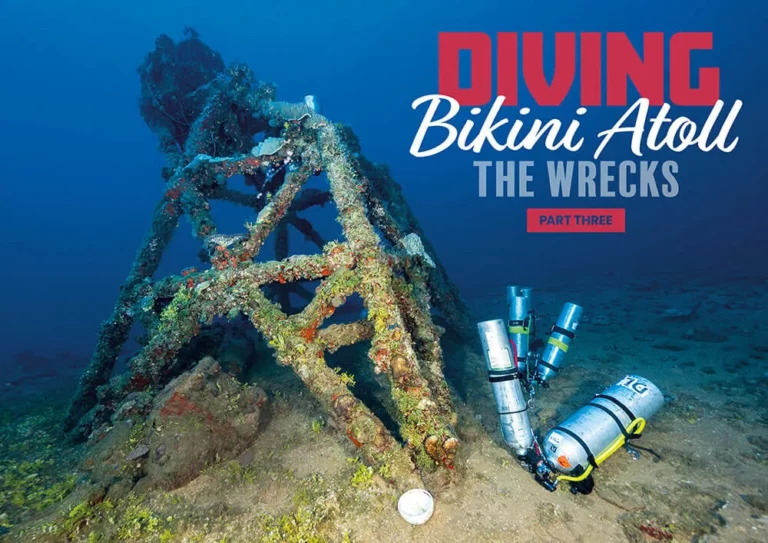

In this third and final instalment of his Bikini Atoll series, Don Silcock ventures inside the world-renowned wrecks that can be found at Bikini Atoll.
Read Part I and Part II of this series.
A Long Road to Bikini Atoll
My personal journey to Bikini Atoll began with a shore dive in Sydney in January 2021, when I started my first technical diving course -GUE Fundamentals. That was the beginning of an adventure that would eventually lead me to one of the most remote and historically significant dive sites in the world.
Three years later, with stops in Indonesia’s Gili Islands for TDI Sidemount and Advanced Nitrox (ANDP) training, and Amed in Bali for TDI Extended Range (ER) certification, I finally qualified to dive to 180ft – ready for the deep wrecks of Bikini Atoll.
But before embarking on that epic trip, I wanted to put all my training to the test. So, in April this year, I spent three weeks in the Solomon Islands, diving multiple wrecks in the 100ft-145ft range, exclusively on sidemount. It was the perfect opportunity to refine the skills I had learned and prepare for what lay ahead.
As I packed for the long trip to the heart of the Pacific Ocean, I felt as ready as I could be for the challenge. I had completed the necessary training, honed my skills in the Solomons, and, thanks to a lot of CrossFit sessions, maintained my physical fitness.
But no amount of preparation could have fully readied me for the awe-inspiring experience of diving Bikini Atoll’s nuclear fleet. The wrecks are unlike anything I’ve ever seen – simply breathtaking. The location is as remote as it gets, the history behind it is staggering, and the actual diving was (for me) nothing short of life-changing!
Diving Bikini Atoll on Air: Qualified vs Ready
Bikini Atoll was my first full-blown technical diving trip – a milestone that came about 45 years after I first started scuba diving. It felt quite surreal to be the least-qualified participant, and one of the few divers not using a rebreather. For this trip, the TDI Extended Range certification was the minimum requirement, and Master Liveaboards, the sole operator for Bikini Atoll, made that crystal clear both before the trip and when I boarded the Pacific Master in Kwajalein.
The Extended Range course prepares you for diving to 180ft on air, followed by staged decompression stops – from 70ft to 30ft on 50% oxygen, and then on 90% oxygen at 20ft.
Technically, I was qualified to dive at Bikini -but was I truly prepared? The honest answer is ‘sort of’… In that I knew what I was doing and could plan the dive properly, including calculating deco obligations, gas planning, and gas consumption.
What I wasn’t prepared for, however, was the level of nitrogen narcosis I experienced below 150ft. During my pre-trip research on decompression theory, I learned that divers tend to react in one of two ways when ‘narked’ and either remain calm or get anxious. In the 180ft training dives I did for my ER certification, I felt calm, relaxed, and in control when narcosis set in.
I had the same sense of calm at depth in Bikini, but when I later reviewed my photos, many were out of focus or incorrectly exposed – images that had seemed perfectly fine at the time.
The Moment CCR Became Inevitable
By the third day at Bikini, I felt like I was getting the hang of it. Though I still experienced nitrogen narcosis below 150ft, I believed I was adapting – yet, when I reviewed my images later, the reality was different. The second dive on day three was on the USS Arkansas, a Wyoming-class dreadnought battleship that stretches 560 feet and now lies nearly upside down on the sandy seafloor at 180ft.
All the wrecks at Bikini are dived the same way, with the Pacific Master moored on either the bow or stern and you descend the line, conduct the dive as planned and then return to the line to commence your ascent and the decompression.
On air and using sidemount, I typically planned for a 30-minute bottom time at 180ft, followed by 46 minutes of decompression. As an added safety measure, I also stayed at 20ft for an extra 15 minutes on 90% oxygen. At the end of the dive on the Arkansas, I was making my first gas switch at 70ft when I glanced down and saw the two rebreather divers who had entered the water at the same time still exploring the wreck.
They subsequently appeared at the deco bar sometime later, completed their stops and exited while I was still decompressing. That was the moment I knew CCR training is the way to go. Longer dives, no narcosis, shorter deco times, and… their gas costs (helium and oxygen) were about one-third of my oxygen bill at the end of the trip!
Liveaboard Diving Bikini Atoll
Successfully and safely operating a technical diving liveaboard operation in a very remote location – where the nearest help is some 30 hours sailing away – is not something to be taken lightly. The logistics around getting oxygen, helium, spare parts, enough food, fresh fruit and vegetables delivered to the Pacific Master are just a few of the ‘issues’ that have to be dealt with regularly. And yet operated as per the schedule and we dived the incredible wreck of Bikini Atoll, it was done safely but with no drama, there was plenty of food and the ship never missed a beat!
Wreck Penetration at Bikini Atoll
Penetration into some of the wrecks in Bikini is possible, but it is carefully managed and led by the very experienced dive guides on the Pacific Master.
It’s done on an incremental basis, whereby the initial penetration is limited and light from the entrance point is still visible. Lines have been carefully laid for all penetration and if you demonstrate good buoyancy and follow the agreed plan discussed in detail prior to the dive, you will be allowed to go deeper into the wreck.
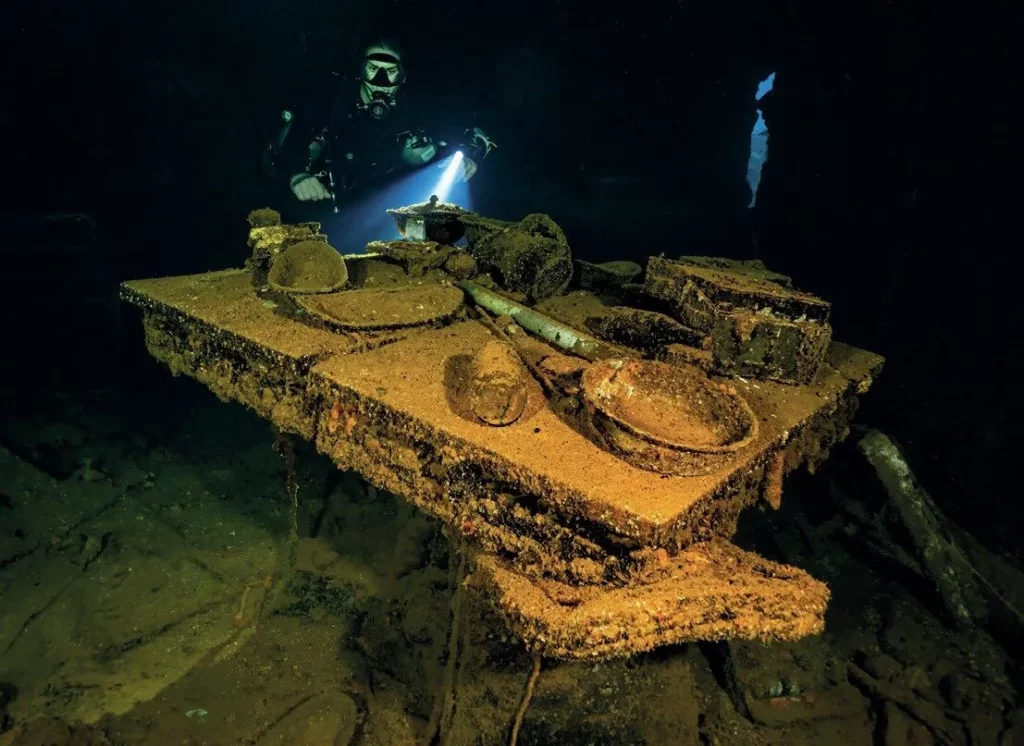
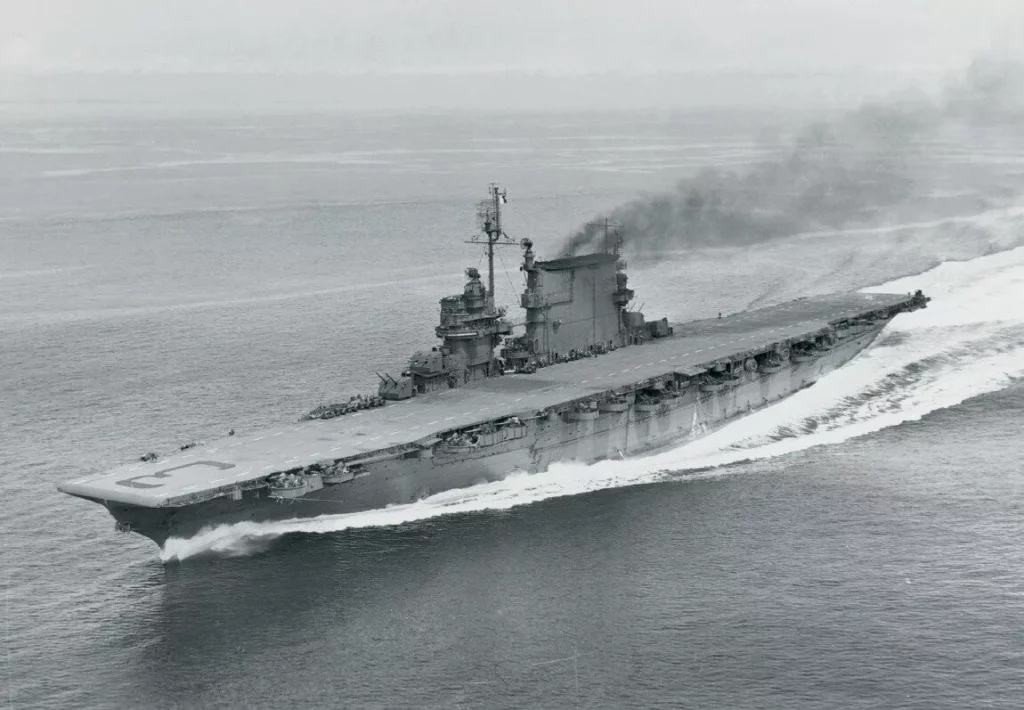
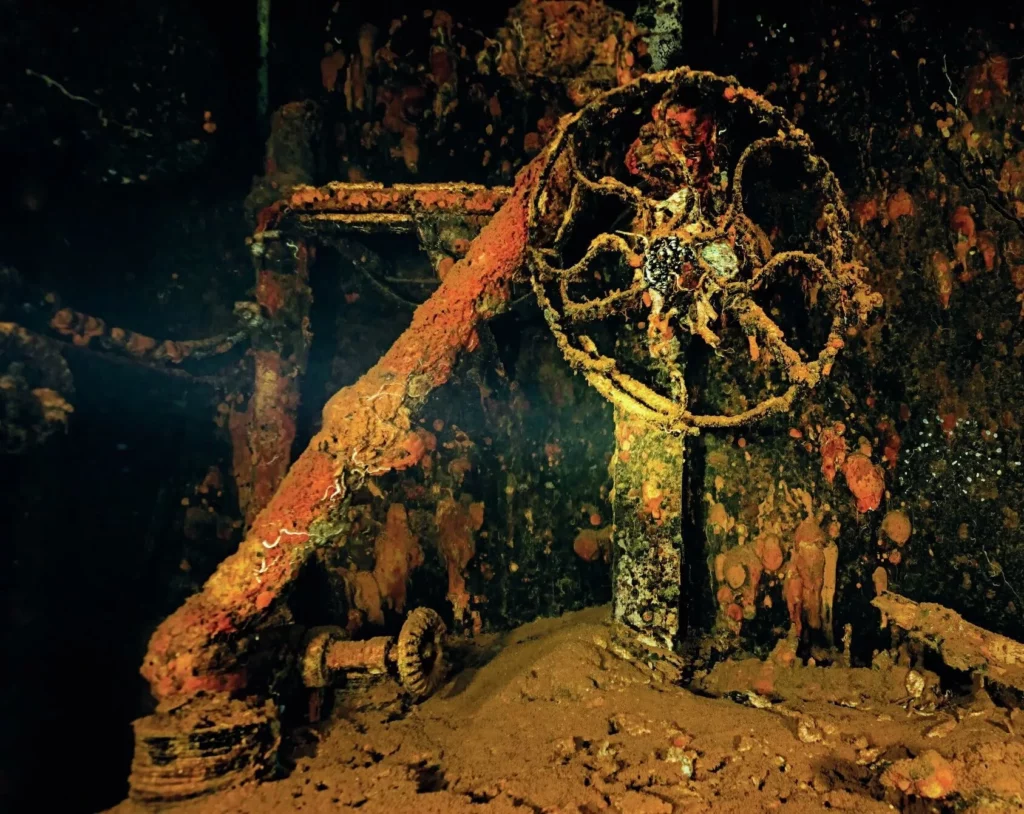
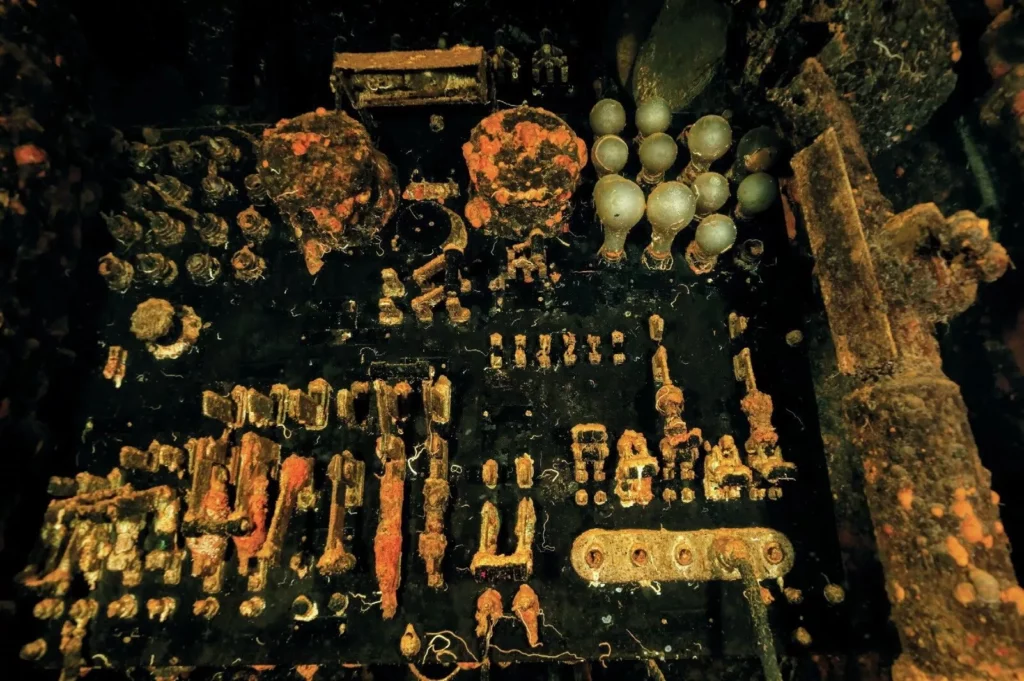
I waited till the last few days of the trip before participating in any of those dives and started with the captain’s quarters on the USS Saratoga, followed by the diving locker and then the machinist’s workshop.
Access to all of these is through the large forward aircraft elevator area, after your stage tanks are deposited on the main deck for later retrieval and to make it easier to navigate your way through the narrow passageways.
It’s a truly exhilarating experience, carefully manoeuvring your way through the narrow passageways into these sunken time capsules from World War Two and I personally loved every moment of it!
Lessons Learned from the World’s Ultimate Wreck Dive
Getting into technical diving late in life and after so many years of recreational diving was a challenging and at times daunting experience, but I have benefitted from it tremendously. I am now a much better diver than I ever thought I was. I am also a much safer diver than I ever was, with a much deeper understanding of all the physics and physiology of diving, which must be a good thing!
Diving the wrecks of Bikini Atoll was my endgame when I started this journey back in January 2021 with that Sydney shore dive – but it still is… let me explain!
Back then I figured that a trip to the Holy Grail of wreck diving would a fantastic experience and that I would then move onto something else. But I realised at Bikini that I was hardly even scratching the surface of what is there and that I needed to go back.
Why I’m Going Back to Bikini
I love a plan… and on the long journey back to Sydney (five and a half days because of canceled flights), I put mine together for the next two years. Already booked are two back-to-back trips to Bikini in 2026, and I will be doing both on a rebreather, because diving those wrecks on air is simply too restrictive and narcotic for me!
In between, I need to select and get trained on a CCR, then I need to get fully match-fit with it and hone my wreck-diving skills. Last weekend, I did my first rebreather dives up in Amed on a two-day CCR familiarisation course with Antoine Martin of Bali Dive Trek and tried both the Triton chest mount and KISS Sidewinder units.
I will decide which unit to buy before the end of the year and complete my initial Mod 1 (air diluent) training and then in October next year, I will spend a month in Truk Lagoon diving and photographing the wrecks there.
In early 2026, I will complete MOD 2 (trimix diluent) so that I am ready to return to Bikini Atoll.
As I said, I love a plan!
Don Silcock
Don is Scuba Diver’s Senior Travel Editor and is based from Bali in Indonesia. His website has extensive location guides, articles and images on some of the best diving locations in the Indo-Pacific region and ‘big animal’ experiences globally.
Frequently Asked Questions
Can you dive the wrecks of Bikini Atoll on air?
Yes, but only with advanced technical training such as TDI Extended Range. Air dives are possible but limited by depth, narcosis and decompression time.
How deep are the Bikini Atoll wrecks?
Most major wrecks lie around 180ft (55m), with some penetration routes extending deeper, placing them firmly in the technical diving category.
Is nitrogen narcosis a serious issue at Bikini Atoll?
Yes, primarily for those not on rebreathers. Divers commonly experience significant narcosis below 150ft when diving on air, affecting awareness, decision-making and task performance.
Why do most divers use rebreathers at Bikini Atoll?
CCR diving reduces narcosis, extends bottom time, shortens decompression and significantly lowers gas costs compared to deep air diving.
How remote is Bikini Atoll for technical diving operations?
Extremely remote. The nearest external assistance is over 30 hours away by sea, making planning, logistics and safety systems critical.
This article was originally published in Scuba Diver Magazine
Subscribe today with promo code DIVE1 — enjoy 12 months for just £1!
