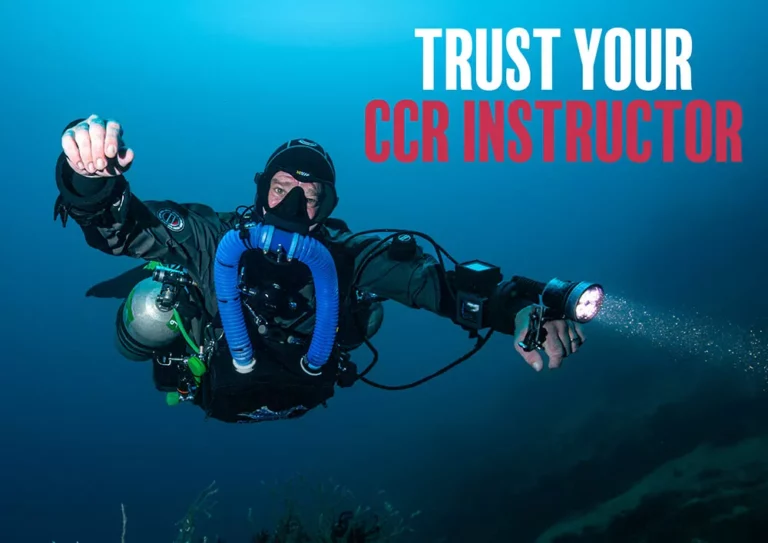
“Don Silcock looks back on his descent into the world of technical diving and explains why, above all else, you must be able to trust your CCR instructor.
My personal journey into the complicated and, at times, damn scary world of technical diving began with a tentative toe-in-the-water GUE course in Sydney. Over the next three years, that small step took me all the way to closed-circuit rebreathers (CCRs) and depths of 50m in north-east Bali. I’m far from done, though. I’m currently preparing to return to Bikini Atoll next year to dive the deep nuclear wrecks again, but this time on CCR, instead of narcosis-inducing air. Looking back over those three years and the series of training courses I’ve put myself through, one thing stands out above all else -you really must be able to trust your instructor.

Why the instructor matters so much
Rebreather diving is profoundly different from open circuit. The technology is impressive and the opportunities that extended bottom times offer are immense, but there is very little room for shortcuts or complacency. Basically, a CCR is only as safe as the diver operating it.

“With more than 3,000 dives over 40 years, I felt I’d earned my stripes, so having my credibility meter reset to zero on that first GUE course came as quite a shock”
Good instructors understand that their primary responsibility is to train you to instantly recognize when something’s going wrong, identify and analyze the issue, and – most importantly – execute the correct procedure automatically, no matter how stressed you are in that moment. Because the uncomfortable truth is, if you can’t do that, you could die.
Why you must trust your CCR instructor…
No amount of classroom theory can get you there. The only way to build that level of proficiency is to practice the skills underwater, under pressure, and under stress.
A great instructor ensures you understand the fundamentals, then gradually increases task loading until you’re performing under realistic stress conditions -exactly as you would in an emergency. Sounds a bit like torture, doesn’t it? Well, having gone through it, I can assure you that at times it felt like torture. What got me through was the trust I had developed in my instructor, Antoine Martin.
Back to zero
Almost every new tech diver crosses over from recreational open-circuit diving, and most of us arrive with a degree of pride in our experience. I certainly did. With more than 3,000 dives over 40 years, I felt I’d earned my stripes, so having my credibility meter reset to zero on that first GUE course came as quite a shock. Gradually, that meter climbed again – peaking on my first trip to Bikini Atoll after several days of 55m dives. But on the long journey home to Sydney, I realized something – if I wanted to continue those kinds of deep adventures, doing them on air wasn’t sustainable. CCRs were the way forward.
Which meant another reset – back to zero in what felt like a parallel universe. Closed-circuit diving is complex, demanding, deeply technical, and absolutely unforgiving if you get it wrong.
Stockholm Syndrome?
Bonding with someone who seems to be torturing you might sound like Stockholm Syndrome… But the trust I built with Antoine Martin began during my first training course with him – TDI Extended Range (ER), the qualification that allowed me to make that first trip to Bikini Atoll.
TDI ER certifies divers to 55m on air, with decompression using 50% and 100% oxygen. In sidemount configuration, that means four tanks – and you must be able to remove and replace your deco tanks in the correct positions.
About the author
Don Silcock is Scuba Diver’s Senior Travel Editor, a SEACAM Ambassador, and the Operations Manager at Papua Diving’s Raja Ampat SEACAM Centre. Based in Bali, he writes extensively about diving destinations and ‘big animal’ encounters. His website contains detailed location guides, articles, and photography from around the region. www.indopacificimages.com

To test that ability, Antoine had us remove our masks and replace them with blindfolds. We then had to remove the deco tanks, follow a guideline through numerous obstructions, and return to reinstall them – correctly.
During that exercise, he deliberately entangled me in the line to see whether I’d stay calm and work it out.
I did, though I took it personally at first. Later, I realized it wasn’t torture – it was (very) tough love.

Time for CCR training
When I decided to cross the Rubicon into rebreathers, I realized that before you choose a unit, you must chose a mentor. The decision to trust youyr CCR instructor is the most important safety check you will perform. I reached out to numerous people for advice – but the first person on the list, and ultimately the last, was Antoine. If you are considering this path, understanding the requirements for closed-circuit rebreather training is the first step in finding the right mentor.
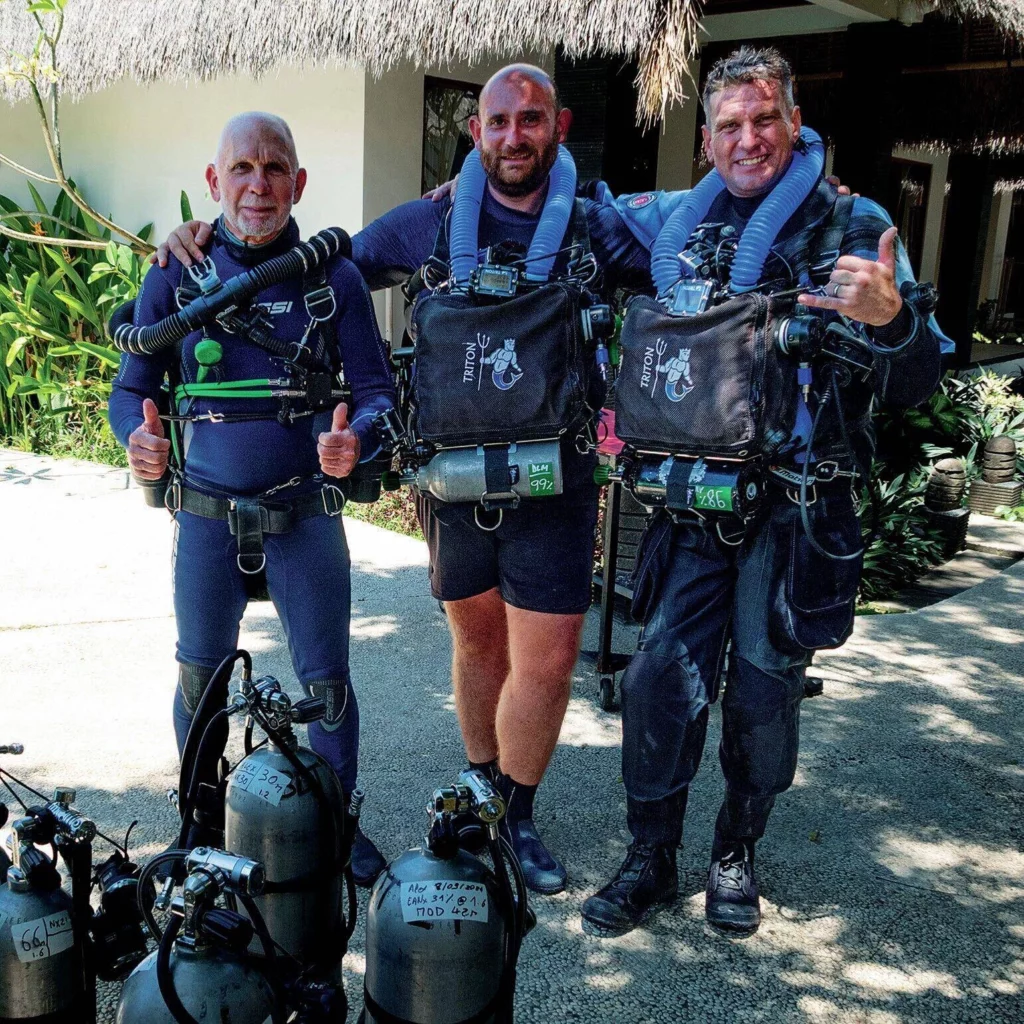
Highly qualified and deeply experienced in both technical and CCR diving, he guided me through the maze of rebreather choices and even let me test the two most-logical options for my needs. In the end, I chose the French Triton CCR for its simple, effective design and travel-friendly weight, and I signed up for training with Antoine at his facility in Amed, north-east Bali.
The course was, without question, the hardest thing I’ve ever done. Seven intense days that pushed me physically, mentally, and emotionally to the limit. There were two or three moments when I almost quit – but each time, what kept me going was that same trust.

“In the end, I chose the French Triton CCR for its simple, effective design and travel-friendly weight, and I signed up for training with Antoine at his facility in Amed, north-east Bali”

Did you know
Closed-Circuit Rebreather (CCR) diving involves recycling the diver’s exhaled gas to allow for significantly longer, silent, and more efficient dives compared to traditional open-circuit scuba.
Are we there yet?
Short answer – no. Passing the course is just the price of admission. It’s a bit like earning a pilot’s license – you’re certified to fly, but you still need hours in the air to become truly competent.
That’s where I’m at now, steadily building experience. Because the last place I want to still be learning is Bikini Atoll – one of the most-remote diving locations on the planet.
In summary
Technical and rebreather diving isn’t for everyone. But for those who take it seriously, it opens up an entirely new dimension of the underwater world.
Done properly, it’s safer, more efficient, and far more rewarding. But you must be confident, capable, and composed – otherwise, you’re a liability to yourself and to those around you. The first step on that journey is simple to say, but hard to do – find the right training facility, then learn to trust your CCR instructor completely.
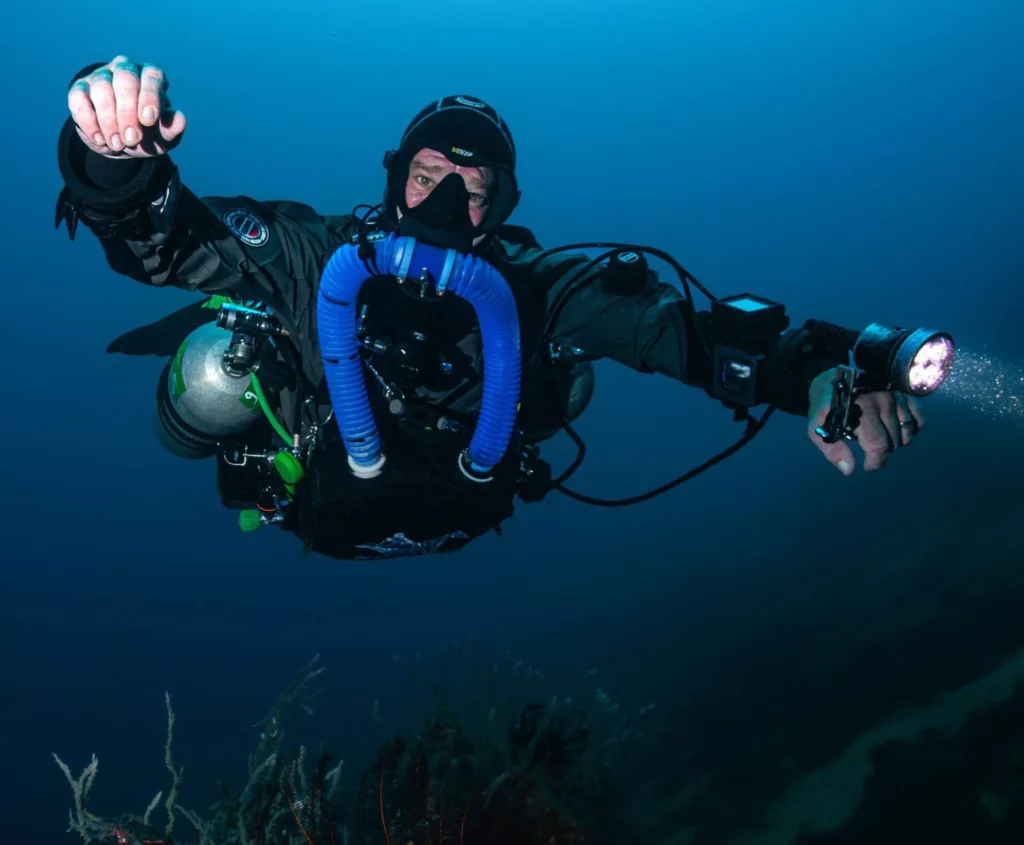
“Technical and rebreather diving isn’t for everyone. But for those who take it seriously, it opens up an entirely new dimension of the underwater world”
FAQs
Why is the relationship with a CCR instructor unique?
Because rebreather diving is “absolutely unforgiving,” you must trust your CCR instructor to push you beyond your comfort zone. Their role is to ensure your emergency responses are automatic, even under extreme stress.
How do you know if you can trust your CCR instructor?
A trustworthy instructor focuses on fundamentals and “tough love.” They should have extensive experience with the specific unit (like the Triton CCR) and a proven track record of training divers to handle high task-loading.
What is “task loading” in CCR training?
Task loading involves performing complex skills—like managing deco tanks while blindfolded—under simulated stress. You learn to trust your CCR instructor to keep you safe while they simulate these realistic emergency conditions.
Does prior experience help with CCR training?
While 3,000+ dives provide a foundation, CCR training often resets your “credibility meter” to zero. You must trust your CCR instructor to rebuild your skills for the parallel universe of closed-circuit diving.
Is passing a CCR course enough to be competent?
No. Passing is just the “price of admission.” To become truly competent, you must take the drills learned from a CCR instructor and build hours of experience before attempting remote dives like Bikini Atoll.
This article was originally published in Scuba Diver Magazine
Subscribe today with promo code DIVE1 — enjoy 12 months for just £1!
