
@ianyi329
#AskMark: I can’t turn my dive computer off, am I missing something?
Some diver computers, watch-sized computers especially, don’t turn off unless you remove the battery. Watch-sized dive computers are made to be worn all day and act as a wristwatch on the surface. LCD screens use very little energy and tend to stay on at all times, while modern color screens will dim to save battery. It isn’t unusual for a watch-sized computer to stay on all of the time.
Large-screen computers tend to go into sleep mode on the surface after a few minutes to save battery life, regardless of the type of screen. You should be able to turn off most large-screen computers however, if any dive computer continues to display a depth while on the surface, there may be an issue with the pressure sensor that needs to be replaced. It depends on why your computer isn’t turning off, but some dive computers simply don’t. If you’re ever unsure, it’s best to pop into your local dive center so they can advise.

Have a question?
Get in touch with Mark on our YouTube channels, and you might see your question in the magazine!
@rancidschannel3206
#AskMark: How do rope signals work?
In most cases, underwater ropes are an entanglement problem and should be avoided. In some circumstances, it can be necessary to attach a rope to a diver from the surface to maintain physical contact with the diver and even communicate using a series of Bells and Pulls. A Bell is a short yank on the rope, while a Pull is a longer sustained pull that is easily distinguished. Think of it similar to Morse code but, instead of spelling out messages, the number of bells or pulls is the message.
The meanings of each can vary between dive teams but, a single Pull can be an alert to get the diver or tender’s attention that you want to say something. Three bells can mean head right, and four bells go left. If you don’t have electronic communications or they fail during the dive, a good dive team can continue the dive using rope signals. It takes a while to remember all of the signals but, a good buddy team can organise a complicated search pattern only using a piece or rope.

@Njwanta
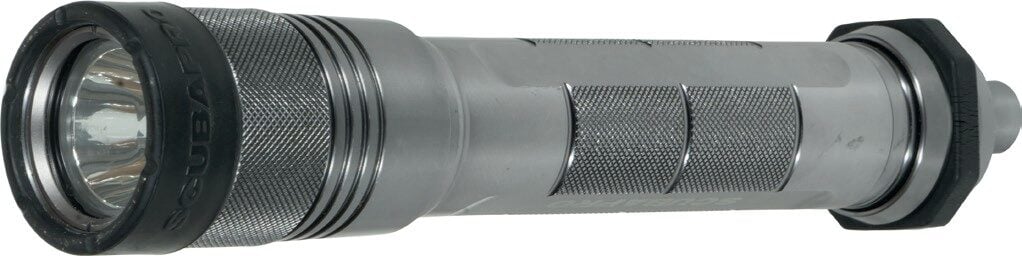
#AskMark: Can I use my dive torch above water or will it get too hot?
Sort of. Most dive torches are far more powerful than surface torches because dive torches have water around them to dissipate the heat produced by the bulb. Without that water, your dive torch will get hot if you use it at full power for extended periods on the surface. If you continue to use a dive torch at full power on the surface you’ll soon feel it getting warm and it can lead to heat damage of the circuitry after a while.
Many modern torches have ‘surface modes’ and temperature sensors that either limit the power of the torch so that it doesn’t produce too much heat. Or a sensor monitors the temperature and shuts the torch down if it gets too hot. I would avoid using your dive torch at full power and feel the head of the torch after a few minutes to see how hot it’s getting.
But I use some of my dive torches all the time around the house and early dog walks, just be careful that they don’t overheat.
This article was originally published in Scuba Diver Magazine
Subscribe today with promo code DIVE1 — enjoy 12 months for just £1!
