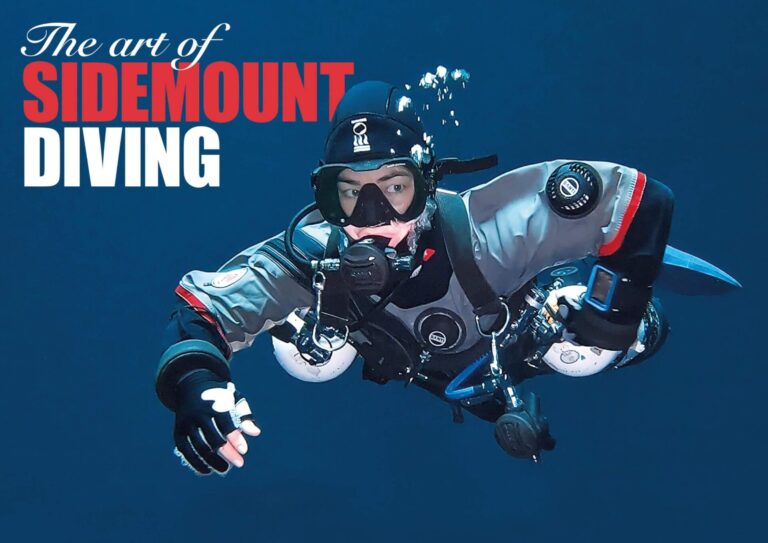
Kerrie Burow ventures into the world of sidemount diving under the expert tutelage of Speaking Sidemount’s Steve Davis

Embarking on a journey to learn sidemount diving, a few months ago I participated in an intensive four-day SDI Sidemount Diver course followed by a focused one-day sidemount workshop, both led by instructor Steve Davis in Australia’s cave country, Mount Gambier.
The experience was a deep dive into the intricacies of sidemount diving, blending theory, hand’s-on practice, and real-world application. Over the course of these five days, I navigated challenges, honed essential techniques, and gained invaluable insights into the art of sidemount diving.
Why Sidemount Diving?
Sidemount diving has become more than just an alternative diving configuration – it’s a philosophy that emphasises comfort, streamlining, and redundancy. Unlike a backmount technical setup, sidemount divers wear their cylinders clipped to their sides. This configuration is especially useful for overhead environments like caves and wrecks, where manoeuvrability is key. For me, sidemount represented an evolution in my diving journey, aligning perfectly with my growing love for photography in underwater caves.
Learning sidemount diving with an instructor as experienced as Steve – and being able to do a course of his in Australia – was an opportunity I jumped at. Steve’s reputation as a meticulous yet approachable instructor made him the ideal mentor for this chapter of my diving education.
About Steve Davis
Steve Davis is a Kiwi and a highly regarded sidemount diving expert, known for his contributions to the diving community as the host of the excellent ‘Speaking Sidemount’ podcast. As the founder and lead instructor of Sidemount Pros, Steve has dedicated his career to sidemount diving, exploring caves, wrecks, and open water exclusively in this style. Through his podcast, he connects with top sidemount divers, instructors, and explorers worldwide, creating a space to exchange stories, techniques, and insights while inspiring others to embrace the unique challenges and rewards of sidemount diving.
Preparation for the four-day course
Steve’s preparation emails set the tone for the course. “Thank you for your payments and completing the eLearning,” he wrote. “We’ll focus on my Sidemount Diving Fundamentals eBook as the course manual, but if you have any questions from the eLearning course, we can cover these on the first day.” He suggested bringing a notebook for those inclined to take notes and outlined our first day: a meet-and-greet, a course overview, and an equipment workshop to fit harnesses, cylinders, and regulators. By the time the training began, I had arranged accommodation at The Habby in Mount Gambier and my equipment needs with Darren (‘Daz’) at the Habby/ Dive Experience. He also managed the gases and site access for Kilsby’s, ensuring that everything was in place for the course. The communication and logistical support were seamless.
Foundations
Our training began with a meet-and-greet for the four students, Steve the instructor and Daz the instructor intern, followed by a comprehensive course overview and safety discussion. Steve’s approach emphasised safety, precision, and the importance of building a strong foundation. We spent the morning focused on equipment, setting up and fitting our gear, and drilling key skills on land, such as buoyancy control, regulator switching, and trim.
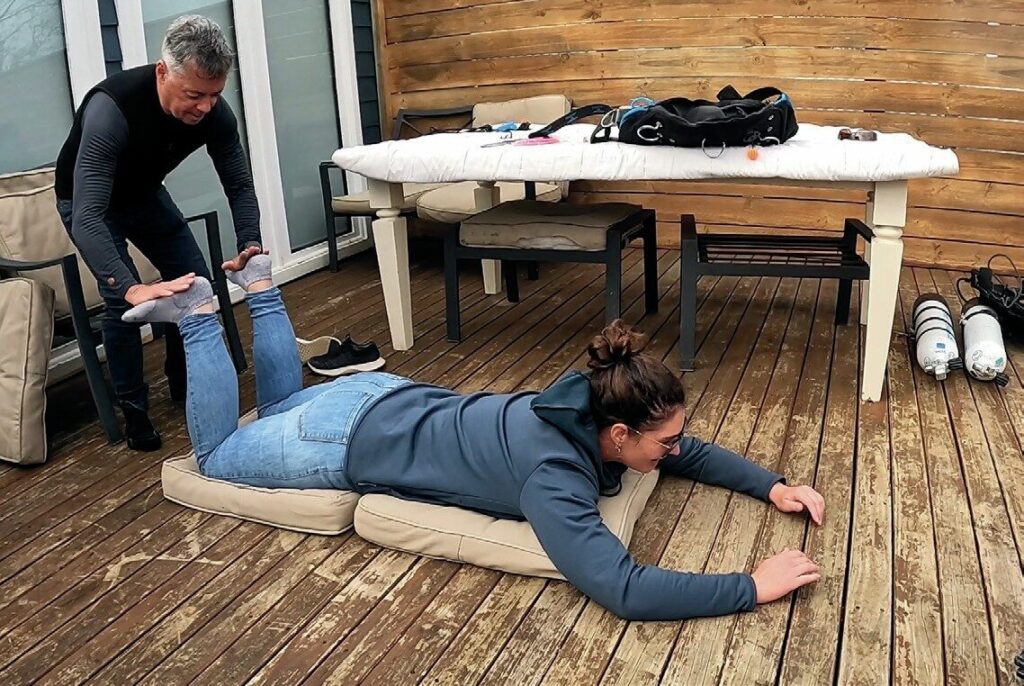
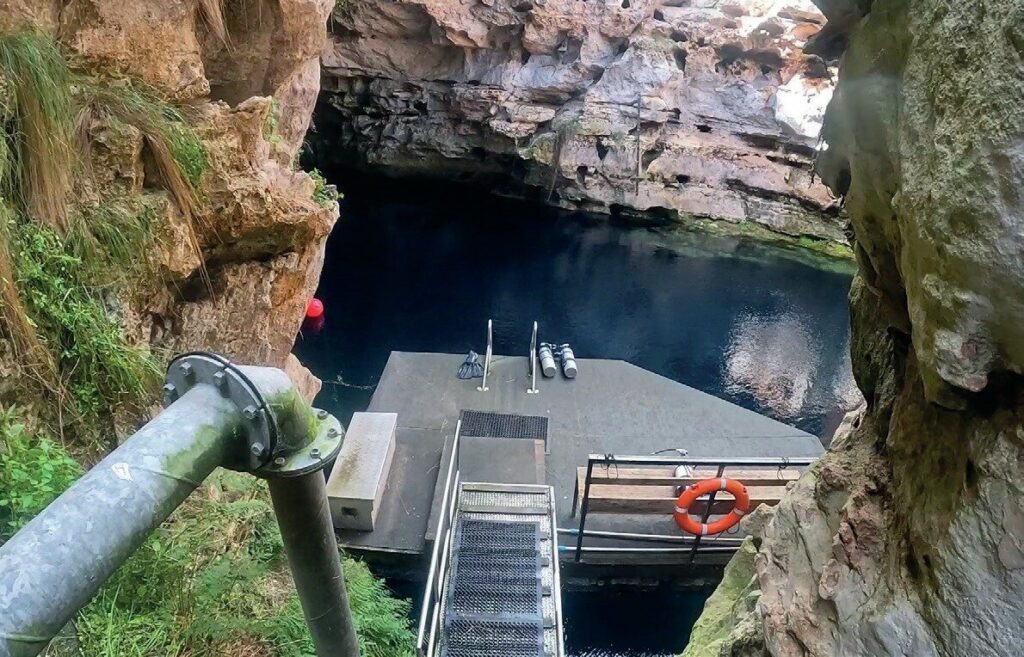
After a quick lunch, we made our way to Kilsby’s Sinkhole for our first dive slot. Daz coordinated our entry and safety protocols, ensuring a smooth transition from land to water. Descending into the crystal-clear waters of Kilsby’s Sinkhole is always a surreal experience, and this time didn’t disappoint. Steve’s calm presence was reassuring as we performed the first skills -donning and doffing cylinders, practicing regulator switches, and perfecting trim.
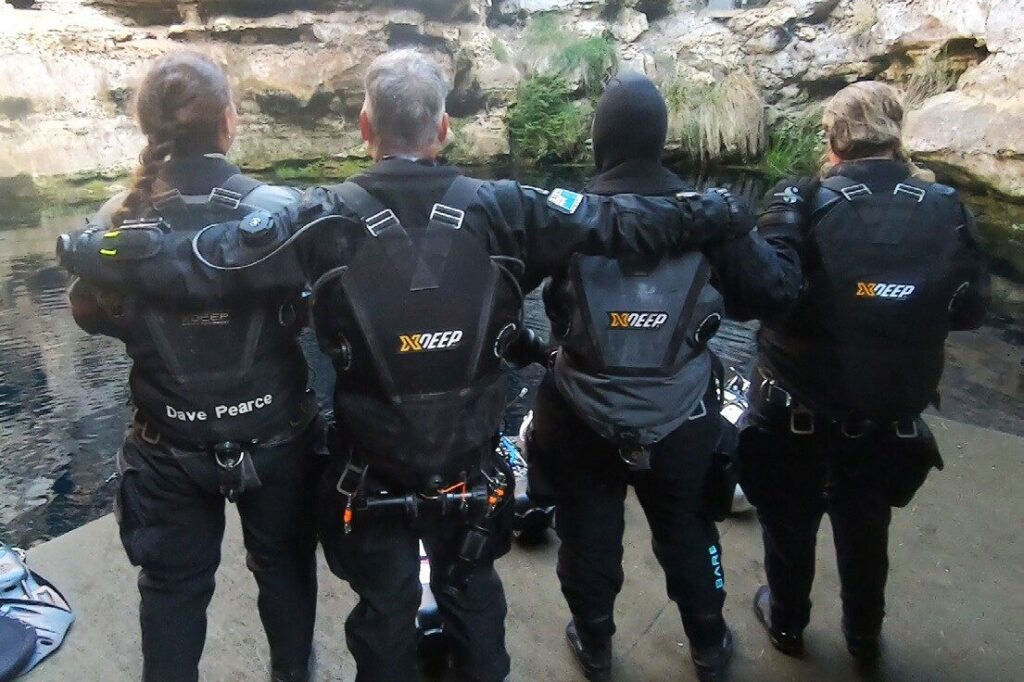
“It was a day designed for sidemount enthusiasts, featuring engaging discussions, equipment reviews, and skill-enhancing land drills”
Buoyancy mastery: A critical skill
One of the highlights of our training was refining buoyancy -a skill that sidemount divers must master to maintain stability and conserve energy. Steve’s methodical instruction helped me understand how to use micro-adjustments in breathing and trim to fine-tune my position in the water column with my new sidemount equipment.
At Kilsby’s, where the water visibility can exceed 40 metres, any buoyancy error becomes glaringly obvious. Steve used a fixed horizontal line to challenge us to maintain perfect buoyancy. Hovering inches above and in front of a cave cookie placed on the line without moving was a skill we worked on with increasing confidence during the course.
Steve’s feedback was immediate and constructive and Daz, as an instructor intern, filmed us on a GoPro in order to provide us with valuable video evidence of our performances during the skills and drills.
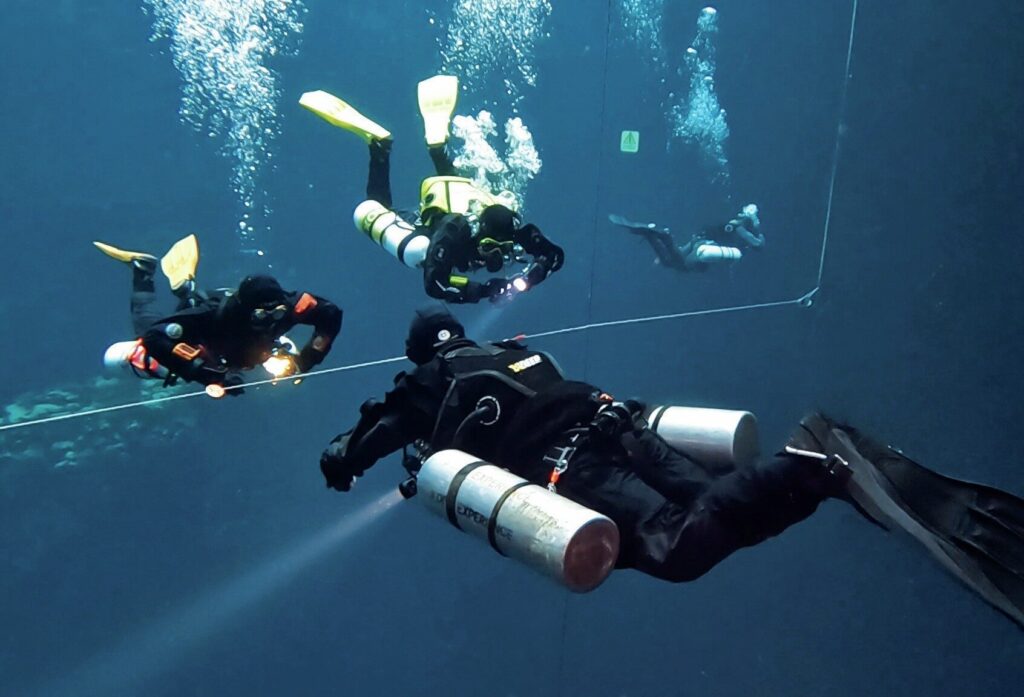
Kilsby’s Sinkhole isn’t just a training site; it’s an underwater cathedral with its sheer limestone walls and sunlit shafts piercing through the depths. Steve used the site’s features to simulate real-world sidemount scenarios. We practiced maintaining trim and buoyancy while performing air-sharing drills, and simulated equipment failures – all under the watchful eye of our instructor.
Building confidence through problem solving and repetition
A hallmark of Steve’s teaching is his emphasis on problem-solving. He believes that the best divers aren’t just skilled but are also adaptable and prepared for the unexpected. During one session, Steve simulated a free-flowing regulator scenario, requiring me to switch to my back-up regulator while isolating the issue.
The exercise was a reminder of the importance of muscle memory and situational awareness. Steve’s calm demeanour and clear guidance helped me execute the procedure efficiently. After surfacing, we debriefed, discussing what went well and areas for improvement. Steve’s ability to turn every challenge into a learning opportunity was one of the most-valuable aspects of his instruction.
By the third day, I was starting to notice a significant improvement in my comfort and proficiency with sidemount diving. Repetition was key. Steve’s training sessions were structured to build skills incrementally, with each dive reinforcing the lessons of the previous one.
Steve reminded us during a surface interval that sidemount is a journey, and the goal isn’t just to pass a course but to develop a system that works for you and to dive it consistently. His words underscored the importance of practice and continual learning.
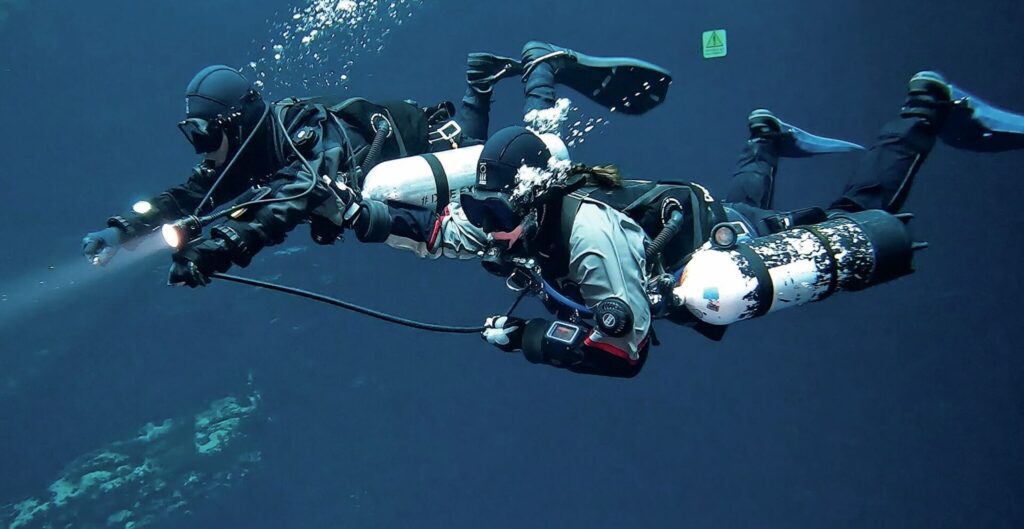
Our final course day at Kilsby’s was a culmination of everything we had learned. Steve challenged us with scenarios that incorporated navigation, buoyancy control, and emergency drills. Descending into the depths, I felt a sense of flow that had eluded me on the first day. Each skill was starting to feel intuitive, each movement deliberate.
The Sidemount Diving Workshop
For those already qualified in sidemount diving or looking to build on their Sidemount Fundamentals training, Steve held a one-day sidemount workshop the day after the sidemount course. The workshop offered a perfect blend of practice, learning, and camaraderie. It was a day designed for sidemount enthusiasts, featuring engaging discussions, equipment reviews, and skill-enhancing land drills. The highlight was the diving in Kilsby’s Sinkhole, followed by a debrief, video reviews, and a relaxed social gathering back at the Habby. With a BBQ to wrap up the day, this workshop was not only an opportunity to further refine my sidemount skills but also to connect with fellow cave divers. Coming straight after the Sidemount Fundamentals course, this workshop was an ideal extension for me to further cement skills and confidence.
Reflections
Sidemount training with Steve Davis at Kilsby’s Sinkhole was more than just a course and an add-on workshop; it was a learning experience that deepened my appreciation for sidemount diving. Steve’s expertise, patience, and passion for teaching made every moment invaluable. His emphasis on safety, precision, and problem-solving has left a lasting impact on my approach to sidemount diving.
For anyone considering sidemount training, I wholeheartedly recommend seeking out an instructor who embodies the qualities that Steve Davis brings to the table. If you ever find yourself in Mount Gambier while Steve is running either a sidemount course or workshop, don’t miss the chance to participate and learn from one of the best sidemount instructors on the planet.
“At Kilsby’s, where the water visibility can exceed 40 metres, any buoyancy error becomes glaringly obvious”
Frequently Asked Questions
What is sidemount diving?
Sidemount diving is a scuba configuration where cylinders are mounted on the diver’s sides rather than the back, improving balance, comfort, and access — especially useful in caves and wrecks.
Who is Steve Davis?
Steve Davis is a New Zealand-born sidemount expert, instructor, and host of the Speaking Sidemount podcast. He’s known worldwide for his training programs and exploration of caves and wrecks in sidemount style.
Where can you learn sidemount diving in Australia?
Mount Gambier, South Australia, is one of the best places to learn, with its famous sinkholes such as Kilsby’s and Ewens Ponds offering ideal conditions for advanced diving instruction.
Why choose sidemount over backmount diving?
Sidemount offers greater manoeuvrability, redundancy, and comfort — particularly in overhead environments where traditional backmount gear can restrict movement.
What is Kilsby’s Sinkhole?
Kilsby’s Sinkhole near Mount Gambier is a world-class freshwater dive site known for its incredible visibility, vertical limestone walls, and popularity among technical and sidemount divers.
This article was originally published in Scuba Diver Magazine
Subscribe today with promo code DIVE1 — enjoy 12 months for just £1!
