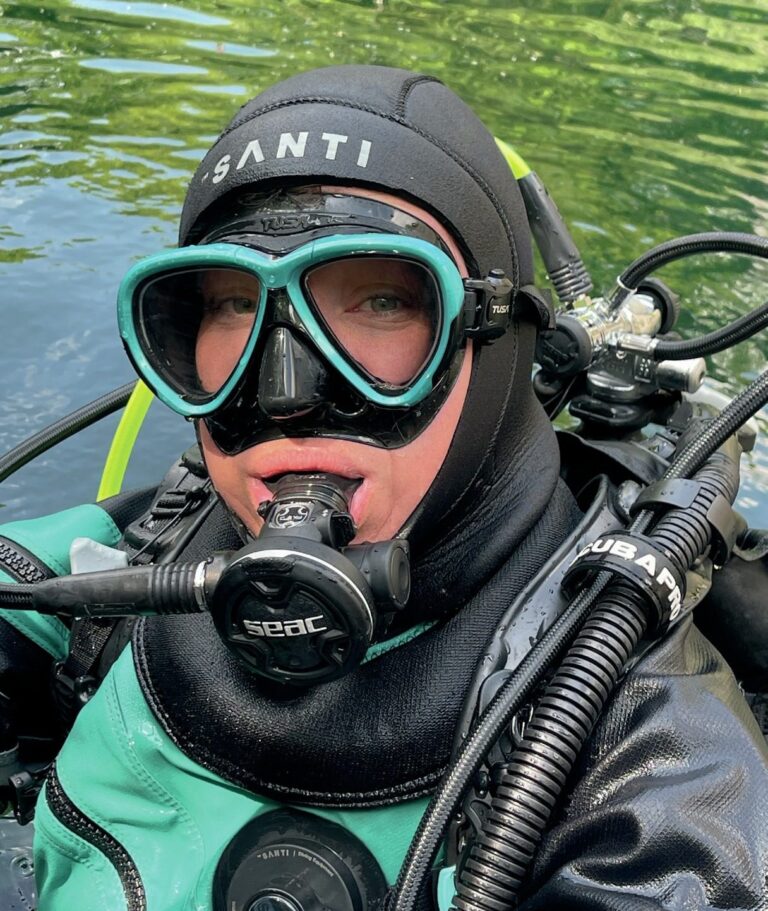
Mark Evans: The Seac Sub PX100 is a cost-effective route to owning your own regulator, and for the money, it offers decent performance, good build quality and stylish looks.
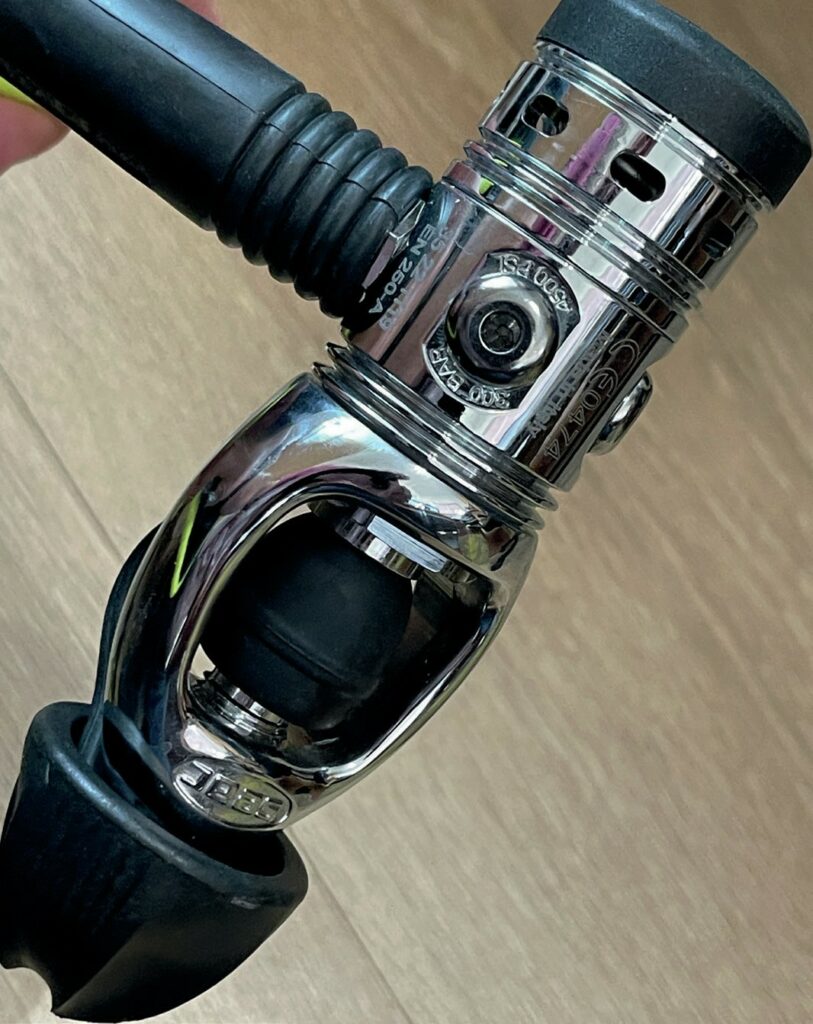
The first stage is a simple piston first stage, made from chrome-plated brass, that is equipped with one high-pressure port and four low-pressure ports. It can be supplied in DIN or A-clamp.
The second stage is also designed with functionality in mind – it has a large diaphragm to ensure natural breathing at depth, and the venturi lever allows you to adjust the venturi effect with a simple switch.
The reg body is constructed from plastic and thus is quite light, and with the ergonomic mouthpiece, it sits nicely in your mouth and there is no jaw fatigue after long dives.
Despite its simplistic design, the Seac Sub PX100 is ready for cold waters, being rated for below 10 degrees C thanks to the integrated heat sink in the first stage, but as this is also quite compact, it is relatively lightweight, which means it is perfect to accompany the travelling diver on their adventures abroad.

Linking the first and second stages together are light, flexible braided hoses – a nice touch to see these fitted as standard. In the water, the second stage sat well in my mouth, and the mouthpiece was very comfortable.
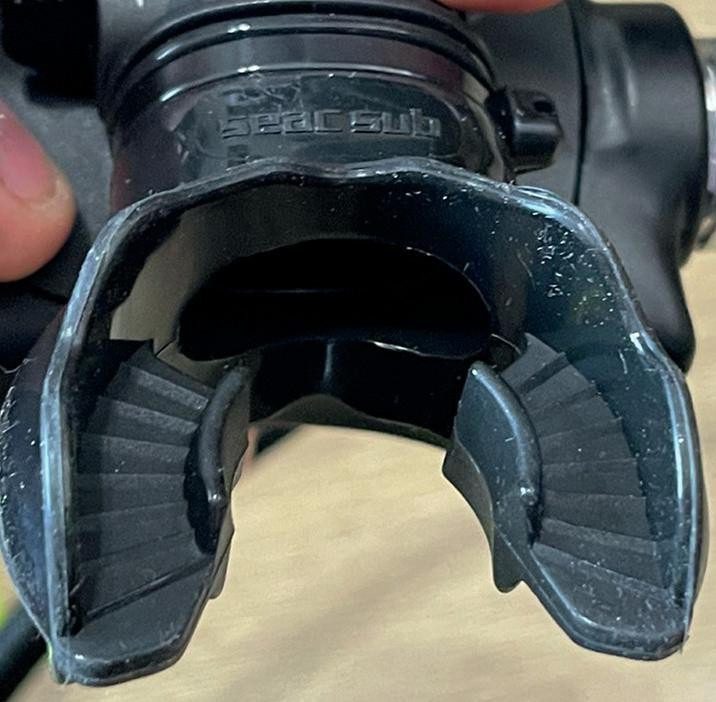
As the second stage is very light, I barely had to grip the mouthpiece to hold it in place. The large purge was easy to locate and operate even with thick gloves on, and it was very effective.
Similarly, the venturi lever can be found and twisted with ease even while wearing thick neoprene gloves or drygloves. There is a distinctive difference between the ‘dive’ and ‘pre-dive’ settings.
I did my usual ‘reg test’, in that I twisted and contorted myself into all sorts of positions to see if this affected the breathe, and even upside down and on my side, the breathe remained dry.
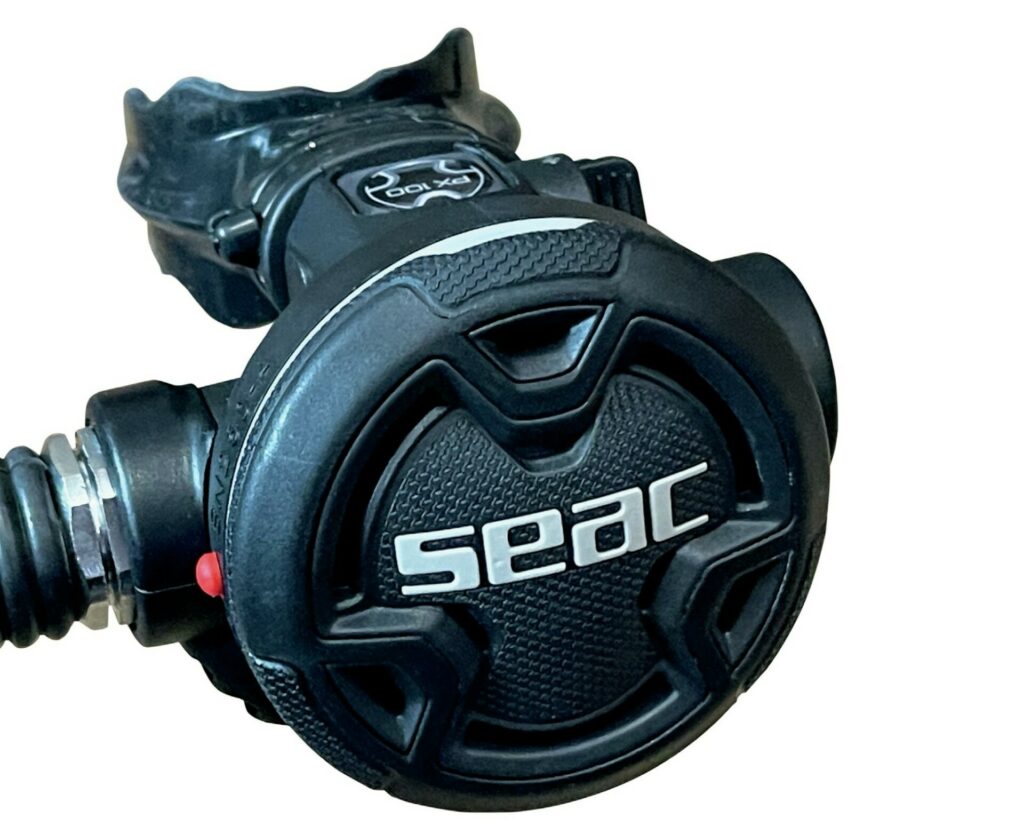
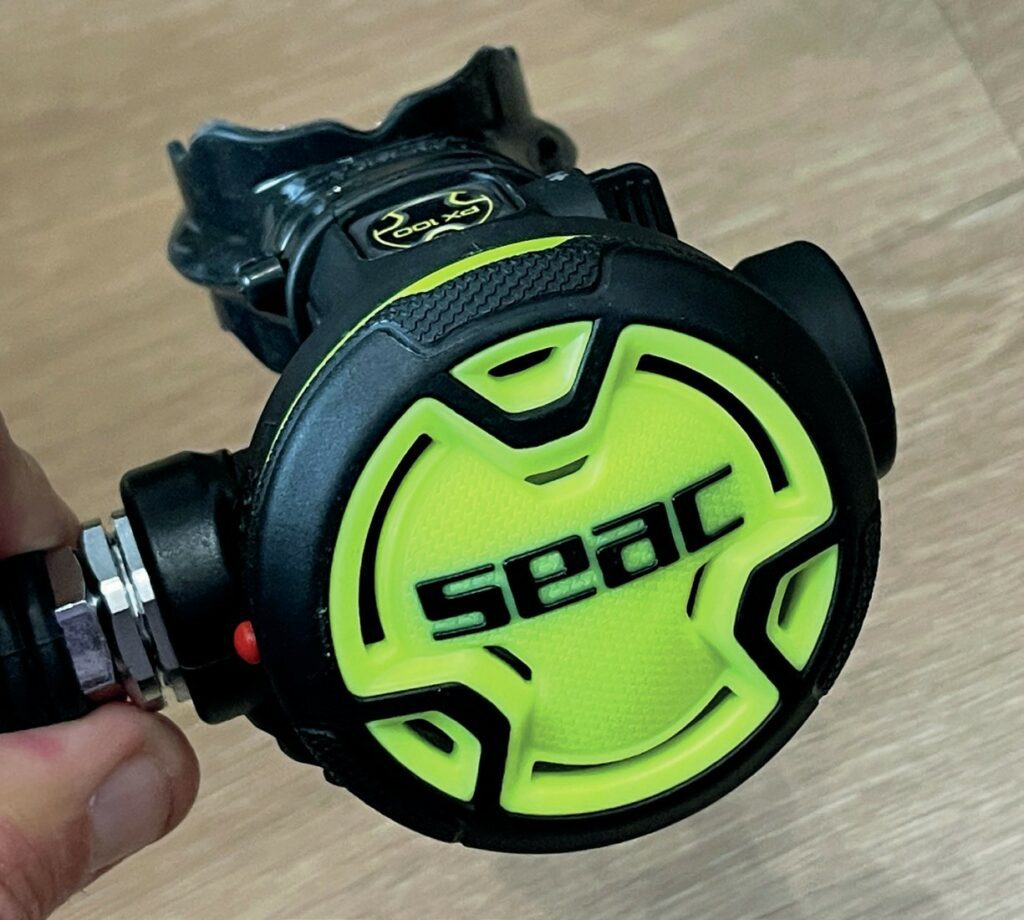
The exhaust valves kept the exhaled bubbles well clear of my face – there is nothing worse that bubbles coming up in front of your mask.
I tried purging it for several seconds, and there was not even a hint of freeflow, and the water temperature was in single digits. The large purge was a pleasure to use, and quite fierce if you pressed it all the way in.
As with all cylindrical first stages, the hose routing is not quite as clean as a first stage where the ports are positioned so they sit either side of the diver’s head and the hoses naturally come over or under both shoulders.
However, if you sensibly mount your primary reg, octo reg, BCD hose, SPG and drysuit whip, you can organise reasonable hose routing and avoid any ‘bunny ear’ loops sticking up behind your head and being a snag hazard, as well as looking untidy.
All components are made in Italy. You can get a PX100 ‘set’ – comprising the first stage, primary second stage and an octo – for $595.

See what Mark Newman thought of the Seac Sub PX100:
Frequently Asked Questions
Is the Seac Sub PX100 good for beginners?
Yes, it’s affordable, easy to use, and lightweight, making it ideal for new divers.
Can the Seac Sub PX100 be used in cold water?
Yes, it’s rated for below 10°C thanks to its integrated heat sink in the first stage.
Does the PX100 come in DIN and A-clamp versions?
Yes, divers can choose between DIN or A-clamp fittings for flexibility.
How comfortable is the second stage?
Very, it’s lightweight with an ergonomic mouthpiece, reducing jaw fatigue even on long dives.
Is the Seac Sub PX100 good for travel?
Yes, it’s compact, light, and fitted with braided hoses, it’s perfect for travelling divers.
Did the Seac Sub PX100 make the list of best regulators in 2025? Read here to find out.
Subscribe today with promo code DIVE1 — enjoy 12 months for just £1!
