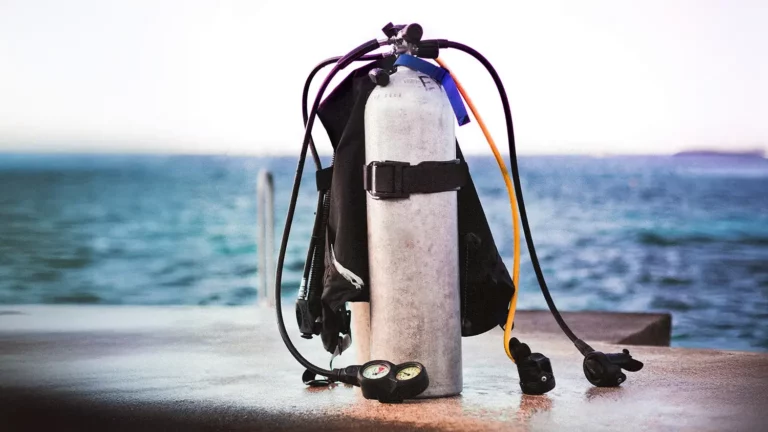
Scuba regulators have come a long way since the early days of Jacques Cousteau’s demand regulator. Today’s regulator market features advanced piston and diaphragm designs, with balanced, unbalanced, and even over-balanced systems. Diaphragm stages tend to resist freezing in cold water, while piston stages offer higher airflow and durability. Balanced first stages deliver consistent breathing effort regardless of tank pressure or depth, while unbalanced options still serve budget-minded divers well. So as with anything in life, the perfect choice depends on exactly what you are looking for.
Best Scuba Regulator Line Up 2025
Our 2025 lineup spans entry-level to professional-grade regulators, priced in GBP and USD. We’ve looked at 12 current models based on breathing performance, cold-water reliability, weight, travel-friendliness, and ease of servicing. Brands include Scubapro, Apeks, Atomic Aquatics, Mares, XS Scuba, SEAC, Aqualung, Dive Rite, Cressi, and Halcyon. Expect a selection of balanced and diaphragm regulators, intuitive second-stage breathing adjusters, and swivel-friendly ports for hobble-free hose routing.
Whether you’re prepping for cold-water excursions, tech diving, or light travel gear, this list has something for you. Each pick emphasises both first and second-stage performance: effortless breathing, reliability, and practical design for divers with real-world requirements.
Scubapro MK25 EVO + S620 Ti – £880 / $1185
The Scubapro MK25 EVO and S620 Ti is a solid setup built for demanding conditions and experienced divers. Chosen as our best all-rounder in 2024, the MK25 EVO is a balanced piston first stage that delivers ultra-fast airflow and consistent breathing at any depth or tank pressure. It features five low-pressure ports on a swivelling turret, ideal for technical or sidemount configurations plus two low pressure ports..
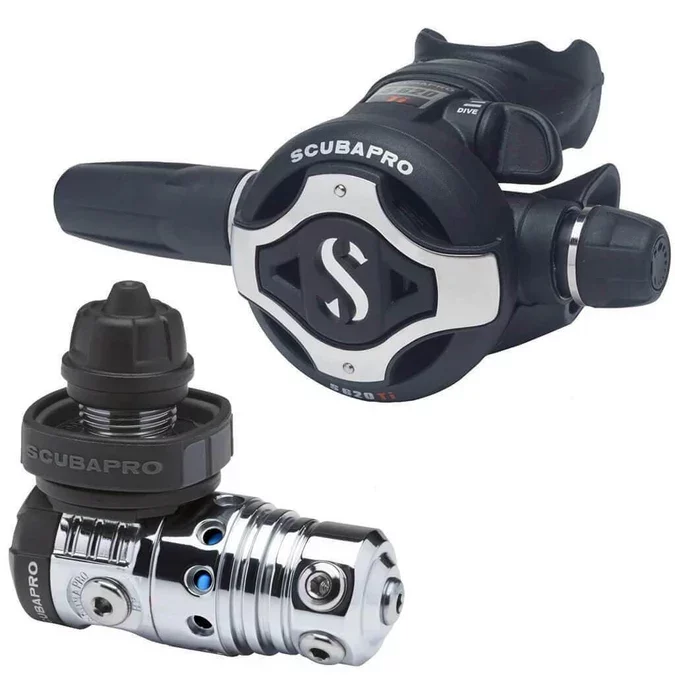
Paired with the S620 Ti second stage, featuring a lightweight full titanium barrel, adjustable inhalation resistance, and venturi control, this regulator excels in both cold and warm water. With Scubapro’s Extended Thermal Insulating System (XTIS), it remains ice-resistant while maintaining top-tier breathing performance. It’s a solid long-term investment for divers who prioritise smooth, effortless inhalation and rugged durability.
Pros:
Excellent airflow and cold-water performance
Titanium lightness
Cons:
Premium price
Not the prettiest system out there
Apeks EVX200 – £792 / $1099
Released in late 2024, the Apeks EVX200 replaces the famed XTX200 with meaningful refinements for serious and technical divers. Its chrome‑plated brass first stage features integrated heat‑exchange ribs, a ribbed diaphragm clamp, and full environmental sealing with an Auto Closure Device (ACD), making it exceptionally resilient in cold or silt‑laden waters. The over‑balanced diaphragm technology boosts medium‑pressure delivery faster than ambient pressure, ensuring effortless breathing even at depth
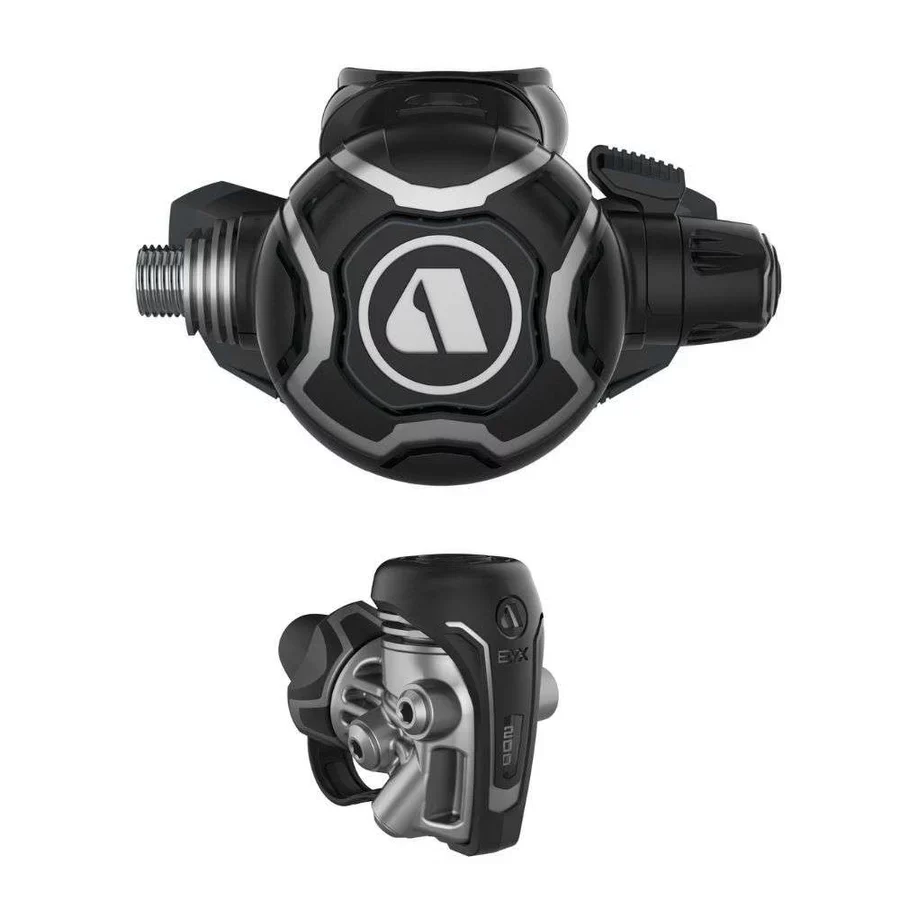
The second stage includes adjustable inhalation resistance, venturi control, and swappable exhaust tees for bubble direction are both particularly useful for photographers. This regulator breathes smoothly even under demanding depths and air consumption rates, and its modular design allows easy maintenance and configuration. Whether you’re diving the North Sea, a silty wreck, or crystal clear cold caves, this reg offers consistent performance and confidence under pressure.
Pros:
Extreme cold-water reliability
Modular and serviceable
Tech-ready
Cons:
Heavier than minimalist travel options
More expensive than entry-level gear
Atomic Aquatics T3 Titanium – £2049 / $2370
Yes, it’s pricey as the flagship of the Atomic Aquatics range, but if weight, corrosion resistance, and breathability top your checklist, the Atomic T3 is hard to beat. Built almost entirely from titanium, this ultra-light regulator (just 771g) is designed for serious divers who travel often and dive in varied environments. The first stage is a balanced flow-through piston with a sealed chamber for cold-water use.
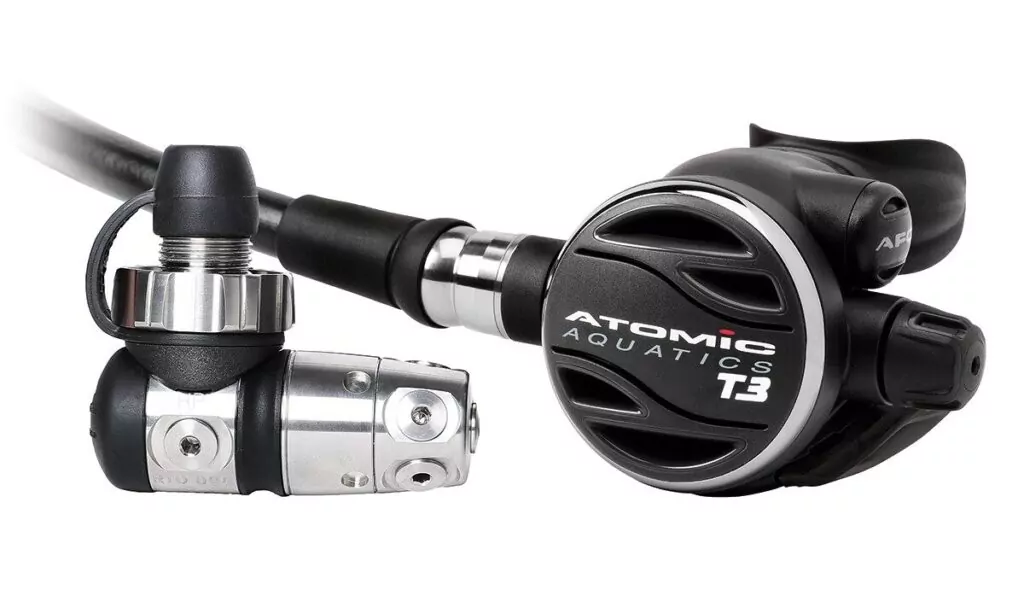
The second stage features Atomic’s signature AFC (Automatic Flow Control) that adjusts Venturi as depth changes. It also includes a manual knob for fine-tuning inhalation. Lifetime service intervals (every 3 years or 300 dives) add to its long-term value and helped make it the best long term choice on our 2024 list. The build quality is exceptional, though its price tag makes it a thinker if diving is not your priority in life.
Pros:
Incredibly lightweight
Corrosion-proof titanium
Excellent performance
Cons:
Expensive upfront
Parts and servicing can be pricey
Mares Ultra 62X + Ultra ADJ – £320 / $495
The best travel regulator on our list from 2024 is both compact and cold-ready. The Mares Ultra 62X + Ultra ADJ second stage is a favourite among divers who want excellent performance in a lightweight, travel-friendly package. The 62X is Mares’ smallest and lightest first stage, boasting Auto Sealing Technology (AST) to prevent water ingress.

The paired Ultra ADJ second stage offers soft purge, breathing resistance adjustment, and Mares’ Twin Power System to boost airflow on demand. With a weight just under 1kg, it’s ideal for air travel, yet surprisingly robust in colder conditions. A great balance between performance, portability, and price, especially for divers who are likely to hop between tropical and temperate waters.
Pros:
Lightweight and travel-friendly
Solid cold-water features
Cons:
Polycarbonate body less rugged
Adjustment knobs are small with gloves
Scubapro MK17 EVO2 + C370 – £465 / $789
Launched late in 2024 and ideal for divers who value cold-water reliability without overspending, the latest iteration Scubapro MK17 with the C370 second stage combines ruggedness with streamlined design. The MK17 EVO 2 is a balanced diaphragm first stage, sealed against contaminants and freezing. This makes it a go-to option for both temperate and cold-water diving.
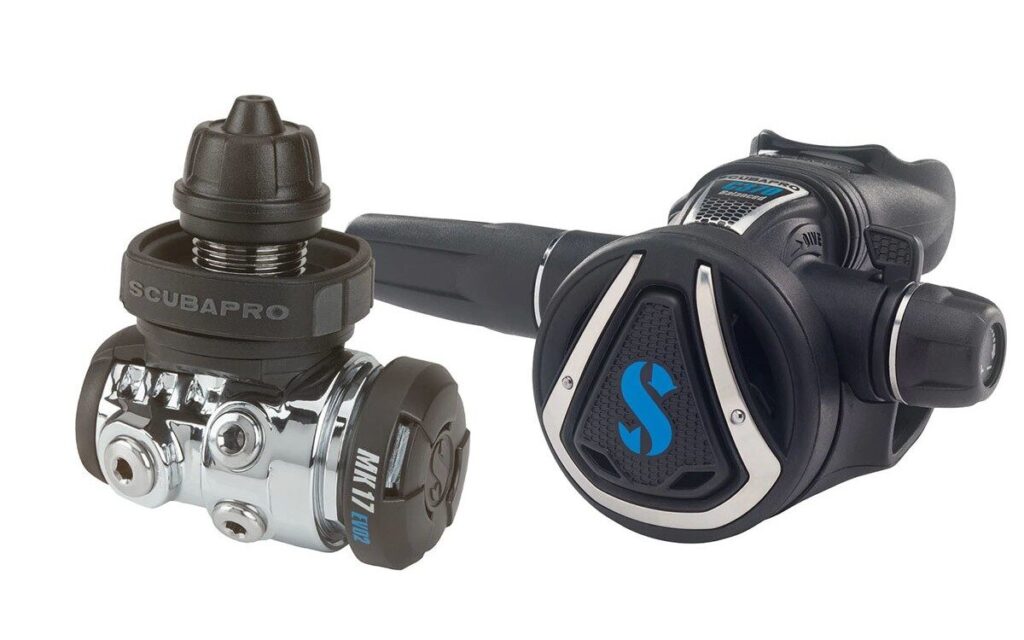
The C370 second stage is compact and lightweight, offering smooth breathing thanks to a balanced valve and adjustable inhalation effort knob. While it lacks the S600’s titanium and venturi control, the overall performance remains impressively close for the price. Its straightforward design and excellent build quality make this set perfect for both beginner divers who want to grow with their gear and pros looking for a backup reg that still packs a punch.
Pros:
Fully sealed
Lightweight and affordable
Smooth operation
Cons:
Fewer tuning options
Second stage lacks high-end feel
XS Scuba Xplore – £275 / $365
The XS Scuba Xplore is a well-priced balanced diaphragm regulator that delivers surprising performance for its price. It includes both Venturi and breathing resistance adjustments on the second stage, a rarity at this price point. The balanced diaphragm first stage provides consistent airflow regardless of depth or tank pressure, while being sealed for cold-water protection.
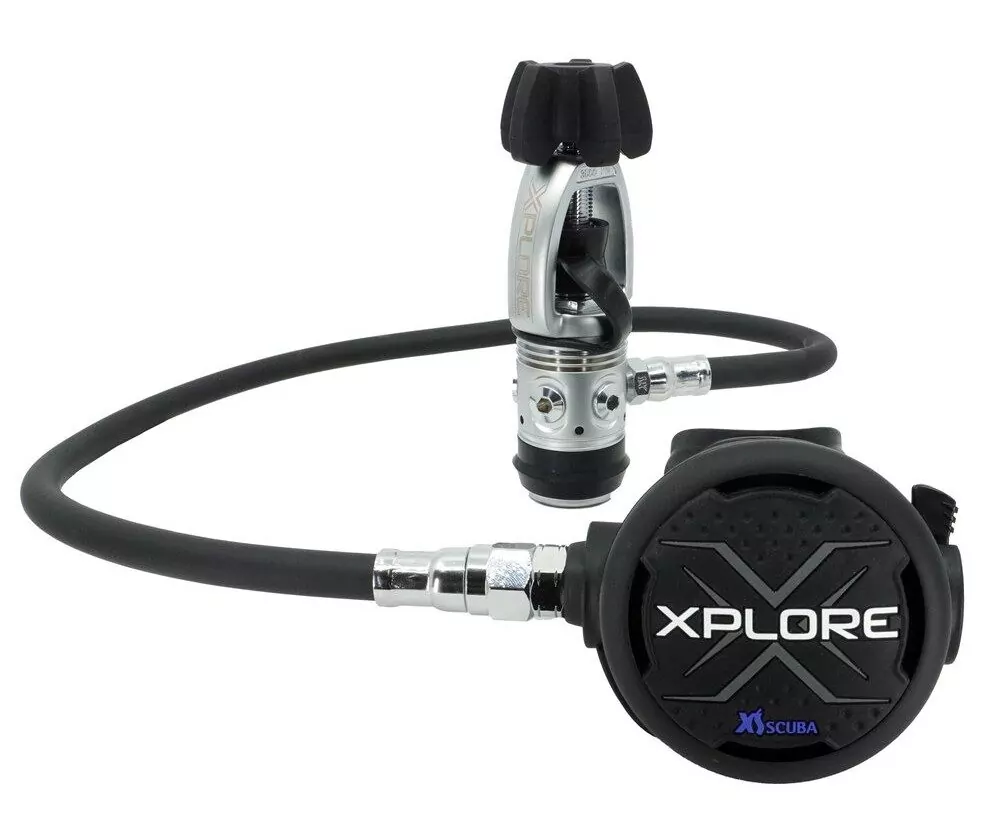
Its compact design and intuitive controls make it a smart pick for divers seeking reliable gear without premium pricing. Though it may lack the brand prestige of Apeks or Scubapro, performance tests put it neck-and-neck with more expensive models. A solid all-rounder for recreational divers who value function over flash.
Pros:
Great value
Adjustable breathing effort
Cold-water sealed
Cons:
Limited support outside the US
Less recognised brand in service circles
SEAC IT500 Ice – £669 / $659
The SEAC IT500 Ice is a sleek, modern regulator that balances style with real-world performance. The balanced diaphragm first stage offers excellent breathing across a range of depths, and it’s environmentally sealed to keep out silt and cold. Its low-profile design includes a unique T-shaped layout for easy hose routing.
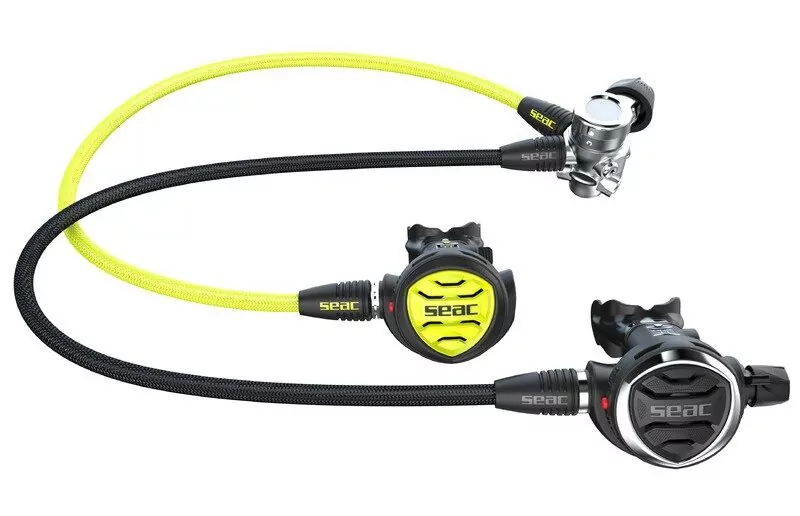
The second stage is compact but packs features like a large purge button and adjustable Venturi control. What makes the IT500 stand out is its smooth, dry airflow even when task-loaded or under rapid demand. Test divers consistently rate it for comfort and breathability, especially in moderate cold-water conditions. It’s a solid choice for recreational and advanced divers who want something reliable and slightly different from the mainstream brands.
Pros:
Quiet, smooth breathing
Price includes 2nd stage octopus
Cold water rated
Cons:
Slightly less known brand
Parts may be harder to find internationally
Aqualung Helix Pro – £413 / $649
The Aqualung Helix Pro is designed for divers who need reliability in warm and colder waters without the weight or price of top-end models. The over-balanced diaphragm first stage is environmentally sealed and compact, ensuring everything stays fully dry with the Aqualung auto closure device. Its compact size makes it easy to pack while still delivering smooth performance.

he Helix second stage includes a heat exchanger and the breathing resistance is low even at depth. It’s also easy to use with gloved hands thanks to oversized controls. For divers exploring chilly waters or planning to dive year-round, the Helix Pro offers peace of mind and performance. It’s particularly appealing for newer divers who want cold-rated gear without breaking the bank.
Pros:
Great cold-water features
Compact and well-built
Mid-range price
Cons:
Not as light as titanium options
ACD adds minor servicing complexity
Dive Rite FT1 + XT2 – £490 / $650
This tech-friendly setup is Dive Rite’s answer to demanding dives and varied configurations. The FT1 balanced diaphragm first stage includes five low-pressure ports and a rotating turret for flexible hose routing, ideal for side- and backmount setups. It’s environmentally sealed, making it suitable for cold or silty environments.
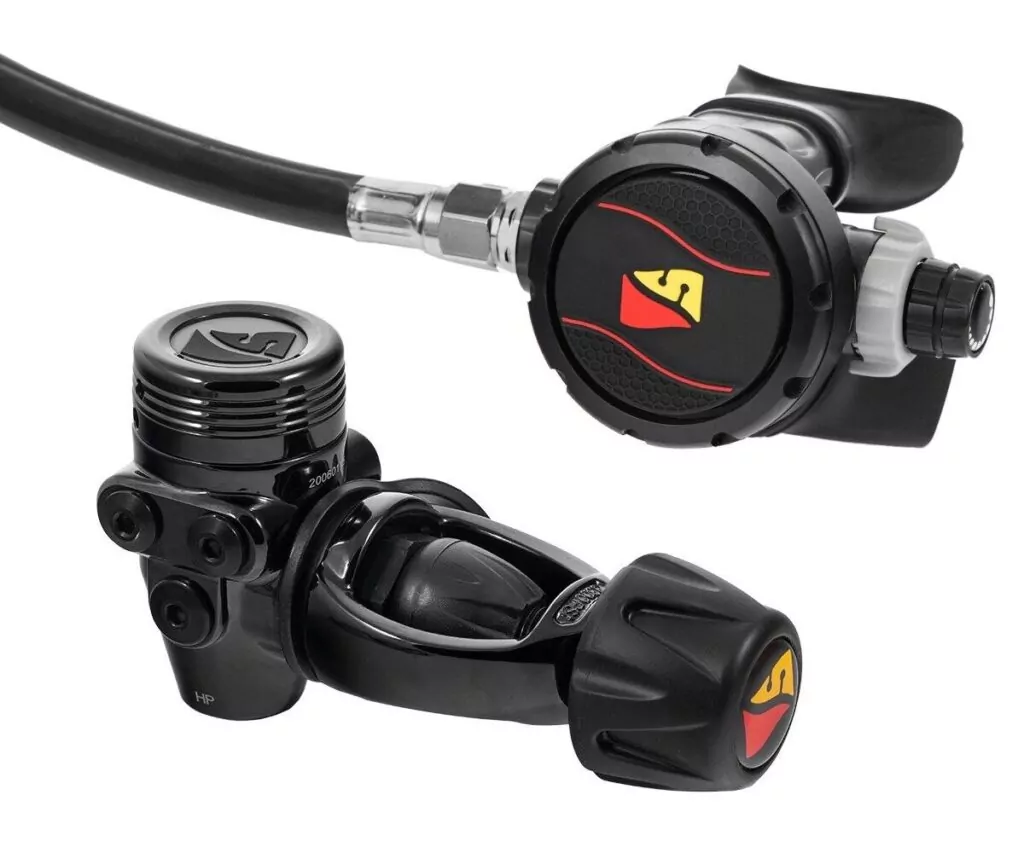
The XT2 second stage is lightweight, rugged, and delivers smooth, adjustable airflow: built for cave, wreck, and tech diving. Dive Rite regulators are known for modularity and field-serviceability, with rebuild kits widely available. While not as glamorous as some mainstream brands, the XT2/FT1 combo is well-regarded by instructors and experienced divers for its no-nonsense design and reliability in extreme environments.
Pros:
Durable and tech-ready
Cold-sealed
Is there a better looking reg?
Cons:
Less mainstream recognition
Heavier than travel-specific models.
Cressi MC9 SC + Compact Pro – £330 / $390
The Cressi MC9-SC with the Compact Pro second stage is a lightweight, travel-ready regulator that doesn’t flinch in cold or silty water. The first stage is a balanced diaphragm design with complete environmental sealing (“SC” stands for Sealed Chamber), making it a serious contender for cold-water or temperate diving despite its compact size. With two HP and four LP ports, it offers solid flexibility for hose routing in a lightweight chrome-plated marine brass body.
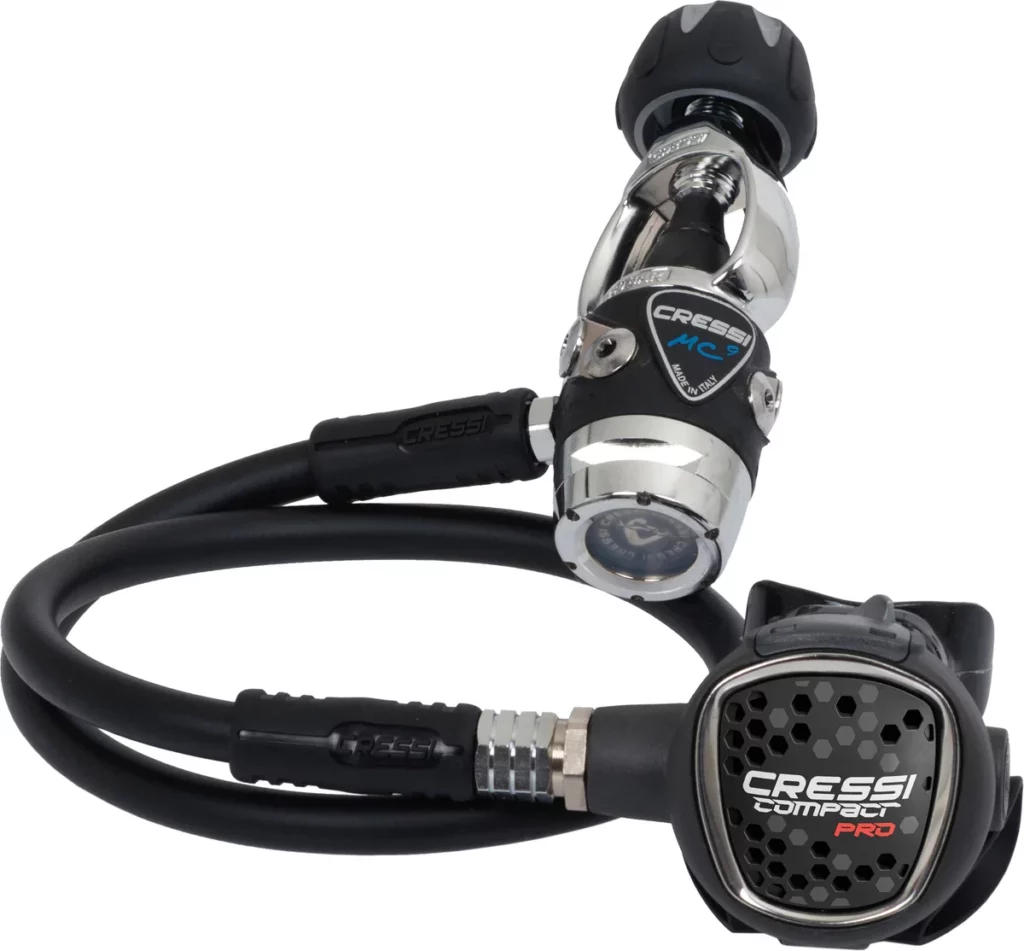
The second stage is a pneumatically balanced Compact Pro offering smooth inhalation, a Venturi switch to limit free flow, and a surprisingly dry breath for a reg this small. It’s ultralight and built with anti-freeze materials, making it a favourite for travelling divers who want more performance than most tropical-only kits deliver.
Pros:
Fully sealed for cold water
Lightweight
Excellent value
Cons:
Slightly plasticky feel
Not ideal for tech or deep diving workloads
Halcyon H-75P + Halo Second Stage – £720 / $950
A minimalist’s dream with a rugged, cold-proof pedigree, the Halcyon H-75P and Halo second stage combo is a top choice for tech divers and purists. The H-75P is a high-performance, balanced piston first stage with an environmentally sealed chamber and swivel turret for clean hose routing.
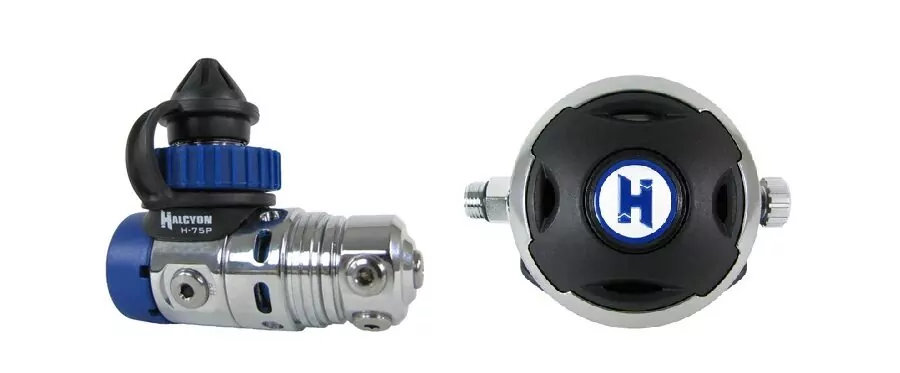
The Halo second stage is large but highly responsive, with crisp inhalation and Venturi control, delivering reliable airflow even in silt-heavy or freezing conditions. Everything is built for durability – fewer moving parts, overbuilt construction, and compatibility with DIR setups. While it’s not flashy or featherweight, its reputation in cave and wreck communities is unshakable. Ideal for working divers or anyone who prefers a regulator that does one thing exceptionally well.
Pros:
Bombproof in cold/silty water
Easy hose routing
Field-serviceable
Cons:
Bulky second stage
Limited mainstream appeal outside tech circles
Mares Rover 2S – £180 / $199
No best of list would be complete without the Mares Rover 2S. For entry-level divers or those needing a no-fuss backup, this reg set offers proven impressive quality for a modest investment. The piston-based first stage is simple, reliable, and virtually bulletproof. Its compact second stage includes the Vortex Assisted Design (VAD), which helps reduce breathing effort even without any user adjustments.
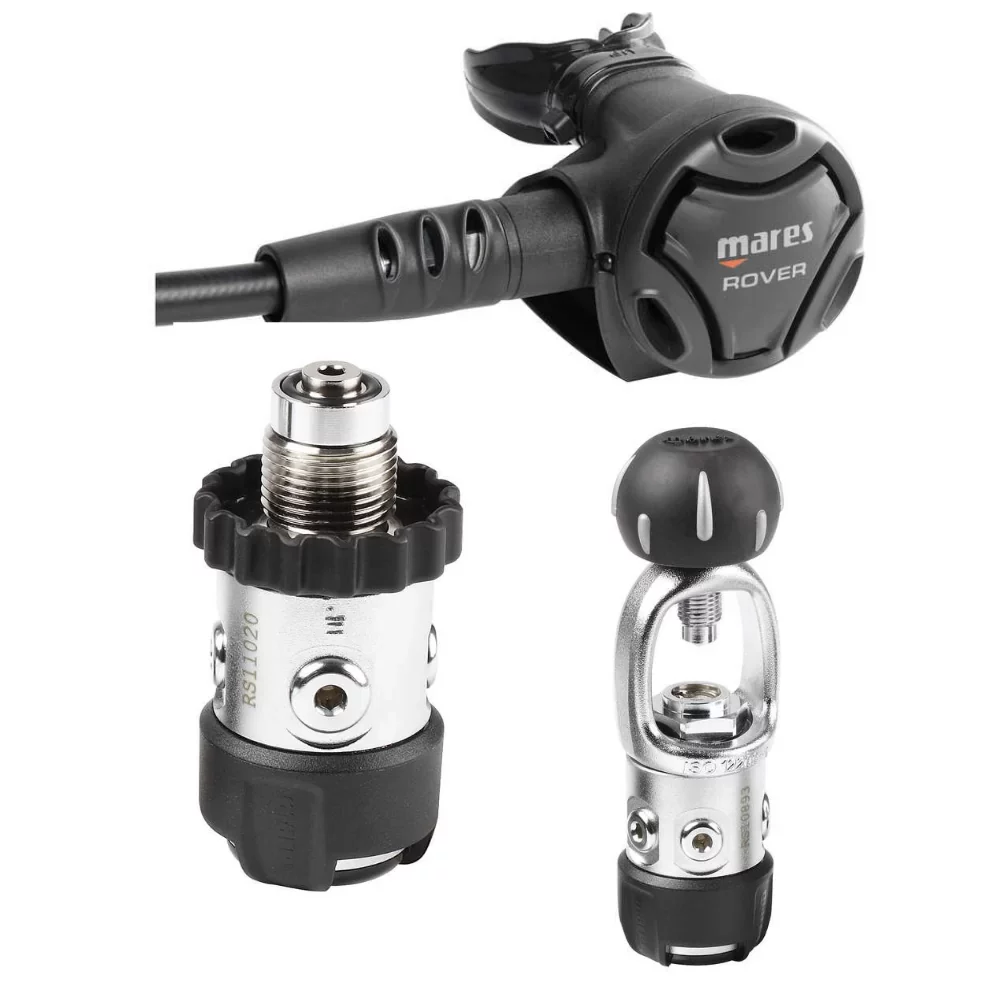
It’s not balanced or sealed, making it more suited for warm water and recreational diving, but it breathes far better than you’d expect at this price. The minimal moving parts mean lower servicing costs and fewer failure points. Dive centers around the world use the Rover line as their rental workhorses for a very good reason.
Pros:
Inexpensive and reliable
Easy to maintain
Good breathing for the price
Cons:
Not suitable for cold water
Limited airflow under high demand
Summary
Best Overall: Scubapro MK25 EVO + S600 Ti – Not the cheapest, but to be best overall you can’t be. Performance, cold capability, and ease make it a standout package.
Best for Cold Water: Halcyon H-75P + Halo Second Stage – Trusted by techies for a reason. Ultimate freeze (and bullet) proof.
Best for Working Pros: Apeks EVX200 – With great servicing availability, a trusted name, and solid dependability Apeks have made a solid daily work horse.
Best for Travel: Mares Ultra 62X + Ultra II – Ultra-compact, auto-sealing, great performance across the board, the Ultra is travel-ready when you are.
Best Budget: Mares Rover 2S – Solid performance, easy servicing and a great price. The reg that will just keep on giving.
Final Word
Choosing the right regulator means balancing where you dive, how you dive, and when and where you’re likely to get your reg serviced. Do you need environmental sealing, swivel ports, titanium, or just a trusty everyday bulletproof reg? A well-chosen regulator not only improves comfort and breathability but can also travel with you for years.
Always follow the manufacturer’s service schedule, typically annual or per dives logged, as neglect can lead to malfunction, not just inefficiency. Besides enhancing breathing and reliability, servicing gives you peace of mind underwater, and that’s priceless.
Frequently Asked Questions
Balanced vs. Unbalanced: Which should I pick?
Balanced regulators maintain consistent effort no matter tank pressure or depth, making them worth the investment if you’re likely to be on demanding or deep dives with any regularity.
Is piston or diaphragm better?
Piston regulators offer higher flow and durability whereas diaphragm units resist freezing and contamination better. The choice is very much dependant on your dive environment.
How often should my reg get serviced?
Most manufacturers recommend annual service or around every 100 dives (though this varies). Cold-water, tech diving, or rentals demand more frequent checks to stay safe and resale-ready. Also, like anything with moving parts, inactivity is your enemy so if you only use your regs once a year on holiday, at least get them checked before you leave.

“The build quality is exceptional, though its price tag makes it a thinker if diving is not your priority in life.”
Isn’t diving everyone’s priority in life? BTW, you mention the parts are expensive for the Atomic Aquatics, but I believe all parts are covered by the Lifetime Warranty, or at least almost all parts.
As a former diver, these all look fragile compared to the Poseidon regs that kept me in the deep and decompressing a decade or so ago, and proved very good with cameras.