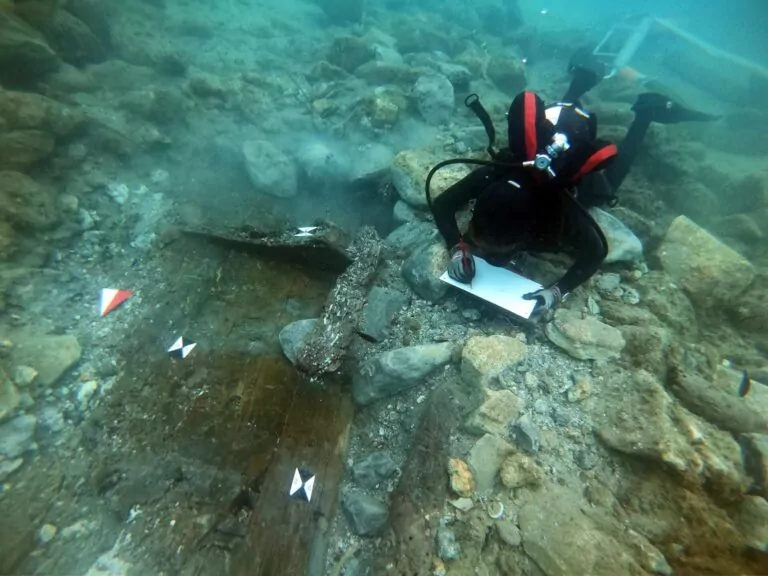
A shipwreck dating back to the 5th or 6th century BC has been excavated near Sicily, along with four stone and two iron anchors lying nearby.
The archaeologists involved in the project believe that studying the merchant vessel can help illuminate the centuries when ancient Greece occupied Sicily before Rome took over the island around 200 BC – and how trade rivalry was shaped between the Greeks and Carthaginians as they fought for supremacy at sea.
Also read: Sicily diver finds shallow rudder, deep gun
The wreck was first reported to Sicily’s Superintendence of the Sea (SopMare) in 2022 by the BCsicilia association, which carried out initial mapping of the site. The ancient wreck was buried beneath sand and rocks at a depth of around 6m at Santa Maria del Focallo, near Ispica on the southern tip of the island.
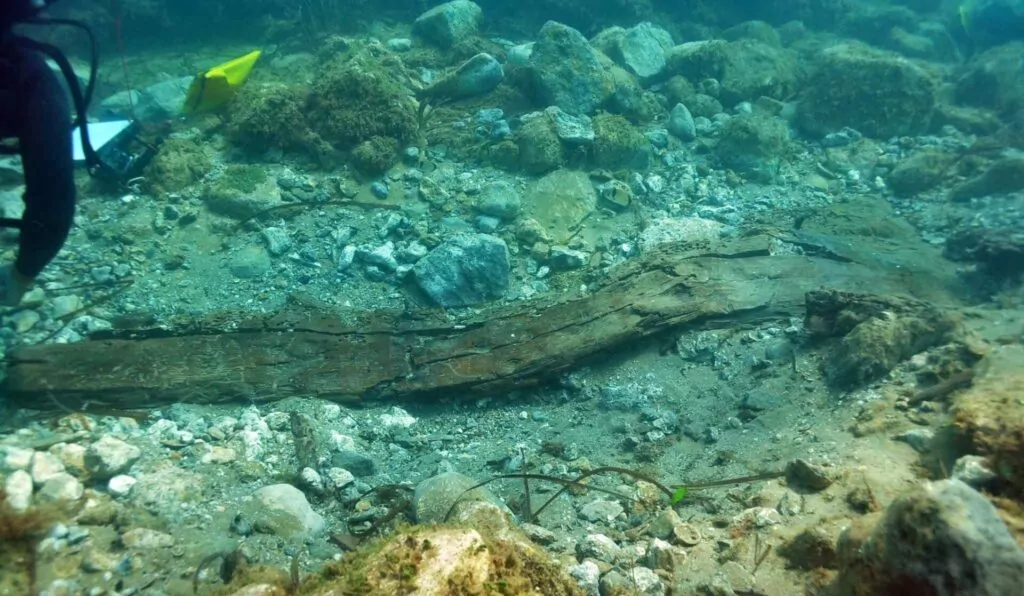
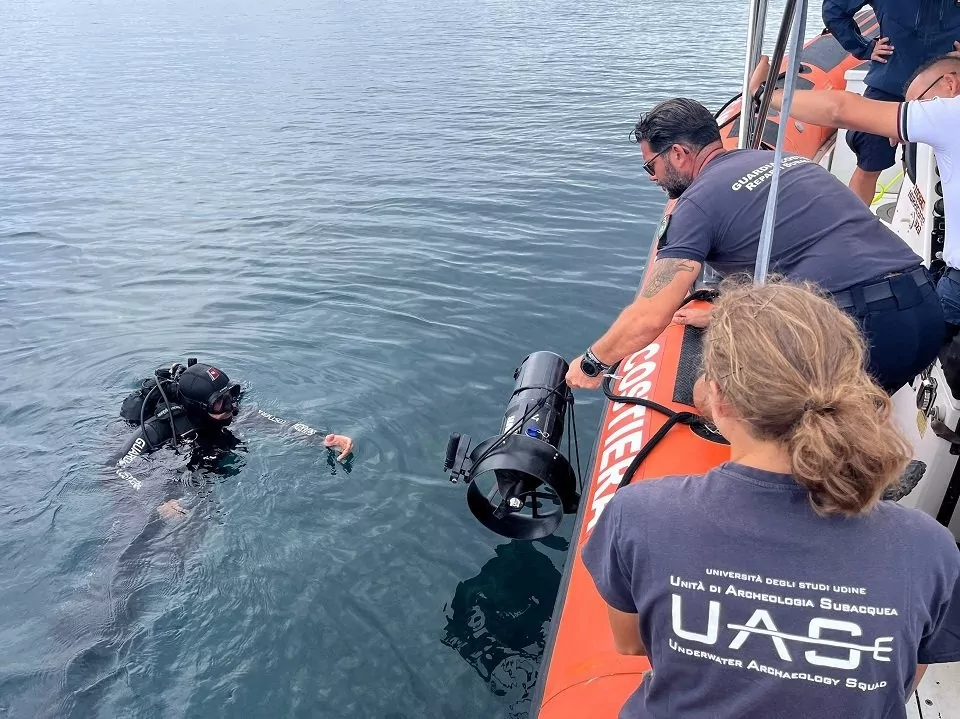
A preliminary underwater inspection was carried out in June 2023 by SopMare and underwater archaeologist Prof Massimo Capulli from the University of Udine, and this September a three-week excavation was carried out, though a report was issued only recently.
Also read: Divers find another rare rudder – marking buried treasure wreck?
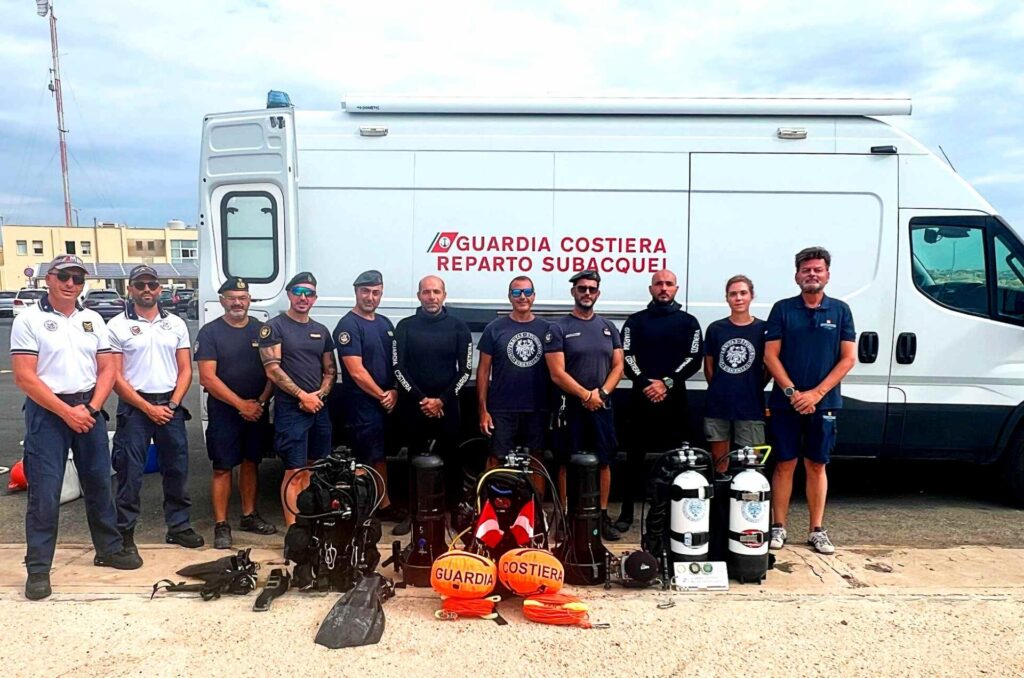
The excavation was carried out by dive-teams from Udine’s Department of Humanities & Cultural Heritage and the Underwater Archaeology Unit of the University of Friuli, overseen by SopMare, with Messina Coast Guard divers joining in later and the Port Authority of Pozzallo providing technical and logistical support.
Mortise-and-tenon
The wreck consists of a hull built using the “on the shell” technique by which planks are connected using mortise-and-tenon joints.
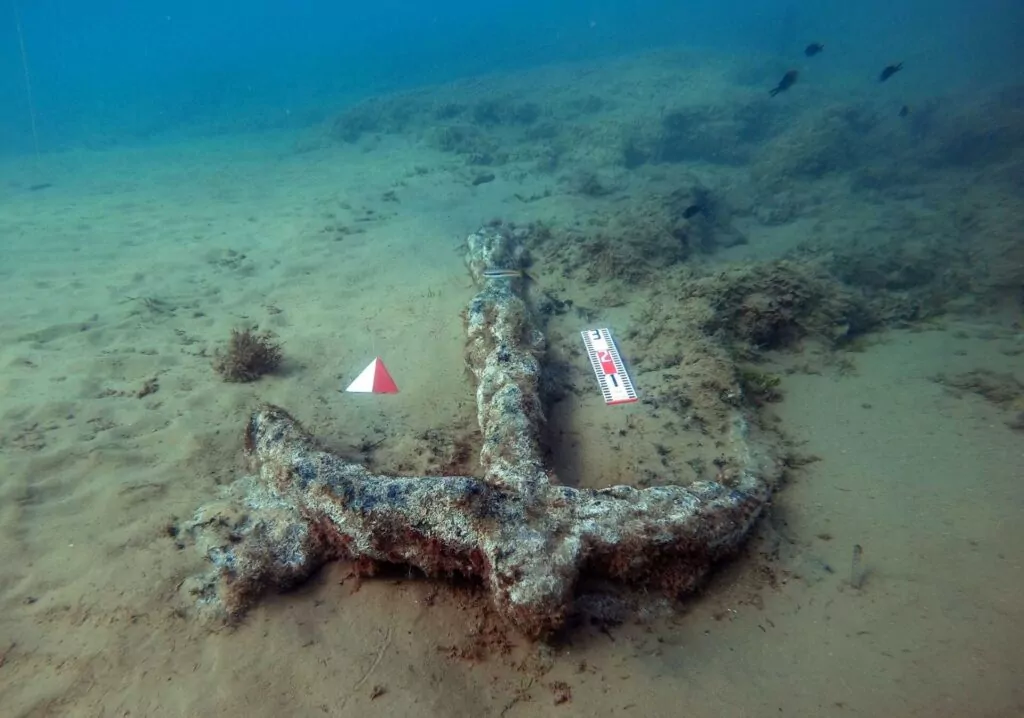
The stone anchors are thought to be either prehistoric or Byzantine, but the two T-shaped iron anchors probably date back no further than the 7th century AD. One of the stone anchors is in pieces but appears to conform to a three-hole type that would originally have carried two wooden flukes.
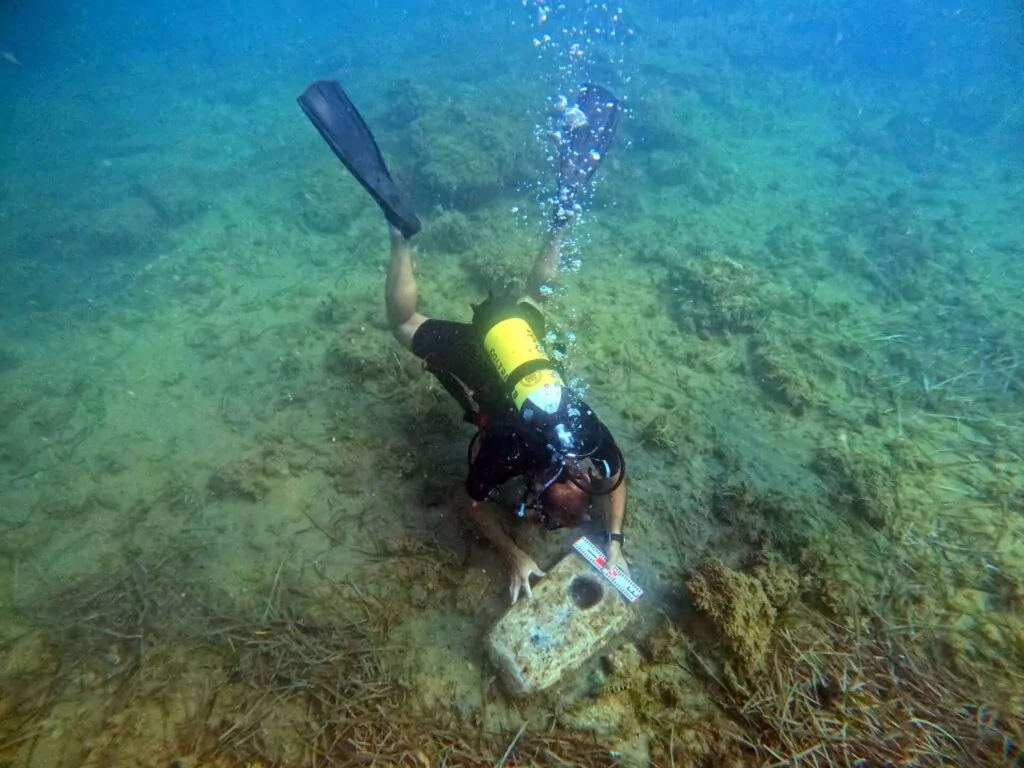
A new 3D model of the wreck was generated using underwater photogrammetry, and material samples were collected for analysis.
The project represented the fifth underwater archaeology phase of Sicily’s “Kaukana Project”, begun in 2017 to map the undersea coastline between Ispica, Kaukana and Kamarina. Unpredictable weather conditions in September had required the divers to exercise caution in order to keep the shallow site protected, said project co-ordinator Prof Capulli.
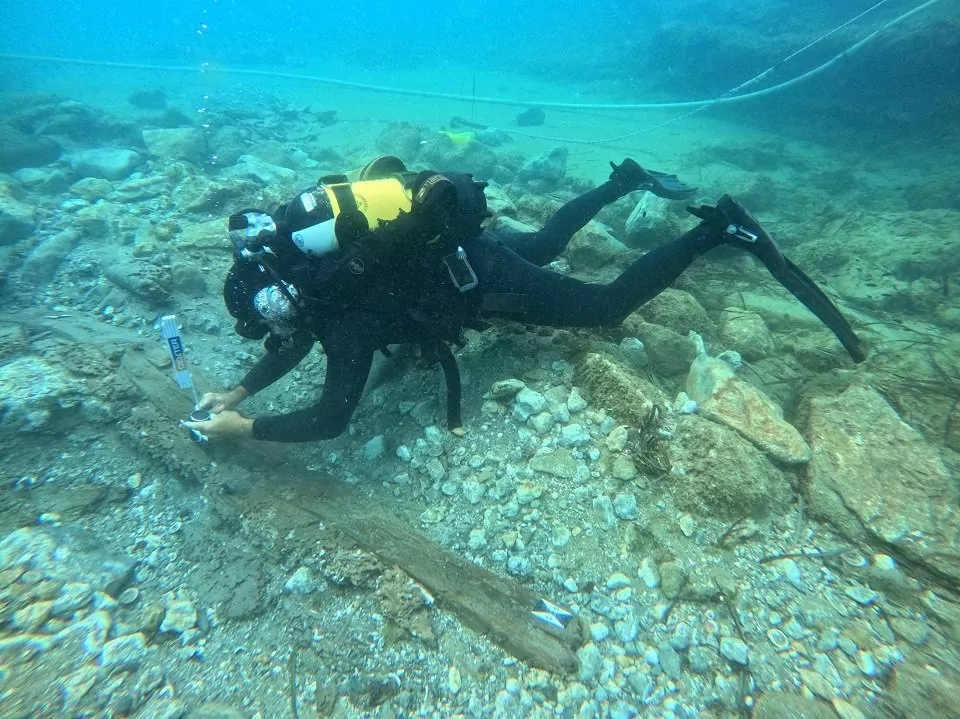
“The general condition of the hull, long subject to attack by wood-eating molluscs, is extremely delicate and requires not only expertise but also great caution,” he said.
“This wreck belongs to a page of history in which the transition from archaic to classical Greece took place, and in which the colonies of Sicily also played a large part.
“We are faced with material evidence of the traffic and trade of a very ancient era, when Greeks and Carthaginians fought over control of the seas, centuries before Rome forcefully appeared in the Mediterranean.”
Also on Divernet: DIVERS RAISE ‘ATLANTIS GOLD’ SHIPWRECK IN SICILY, DOLPHIN ANCHOR LIFTED IN SICILY, UNDERWATER ‘TUB’ TURNS OUT TO BE ANCIENT HORSE, DIVES UNCOVER ANCIENT WINE TRADERS