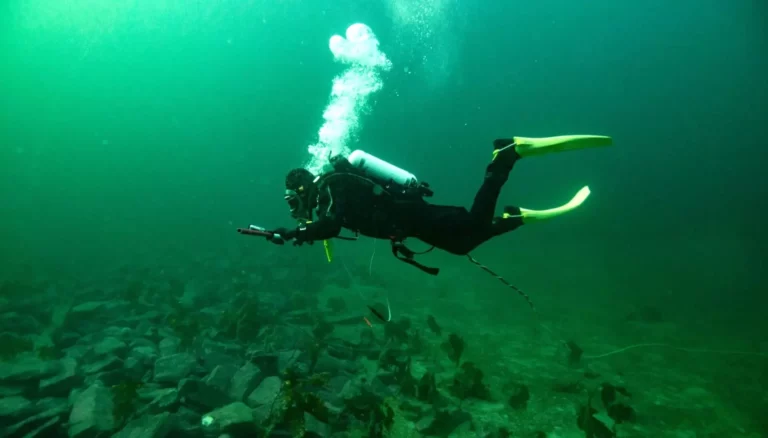
Marine archaeologists who have scuba dived to investigate a stone structure in western Norway believe it could be one of the earliest examples of a mediaeval whale‑trapping system. Such traps are described in historical documents dating back more than 1,100 years.
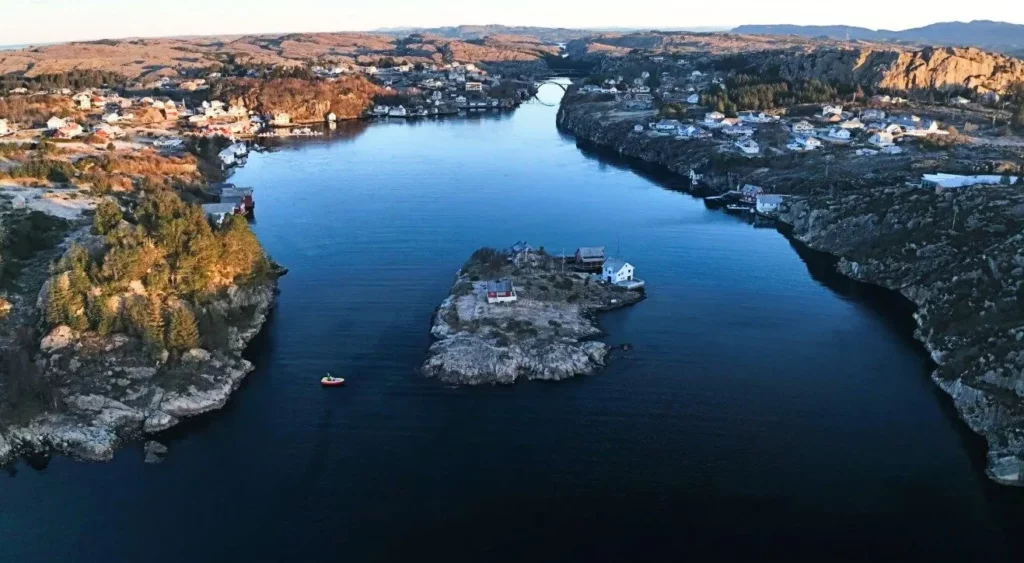
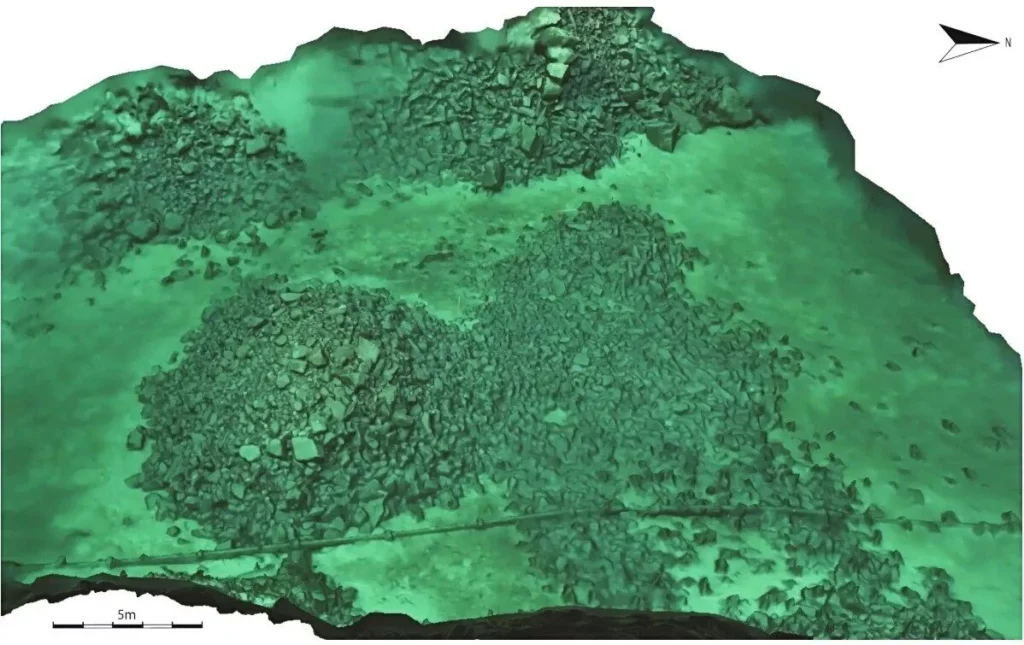
The structure was located in Grindasundet, a channel near Telavåg in the Øygarden archipelago outside Bergen. Initially a sonar survey revealed a broad belt of stones that appeared to have been deliberately placed, stretching for more than 25m and up to 9m wide across the seabed.
Scuba diving beneath surface ice confirmed the presence not only of these submerged stones but of a 4m-high circular mound of rocks 15m in diameter. Each component of the belt and mound would have had to be transported to the site by boat to be dropped into place.
Museum co-operation
The fieldwork and interpretation has been project-managed by marine archaeologists Elling Utvik Wammer of the Norwegian Maritime Museum, Anders Schouw of Bergen Maritime Museum and Svein Vatsvåg Nielsen of Stavanger Maritime Museum. They form part of the Inter-regional Marine Archaeological Co-operation (IRMAS)
Written sources from as early as 900 AD describe whales and other large marine animals being driven into narrow inlets and trapped for processing and subsistence.
As time went on constructions of timber and rope weighted with stones were used to funnel the mammals into gated areas, and the practice continued over the centuries.
The submerged stone structures at Grindasundet are likely to be the remains of such a mediaeval trapping barrier, say the researchers.
3D modelling
Coastal communities in Scandinavia are recorded as having exploited marine mammals extensively well into the Viking and mediaeval periods, and slab‑lined pits believed to have been early blubber-processing facilities have been documented in northern Norway.
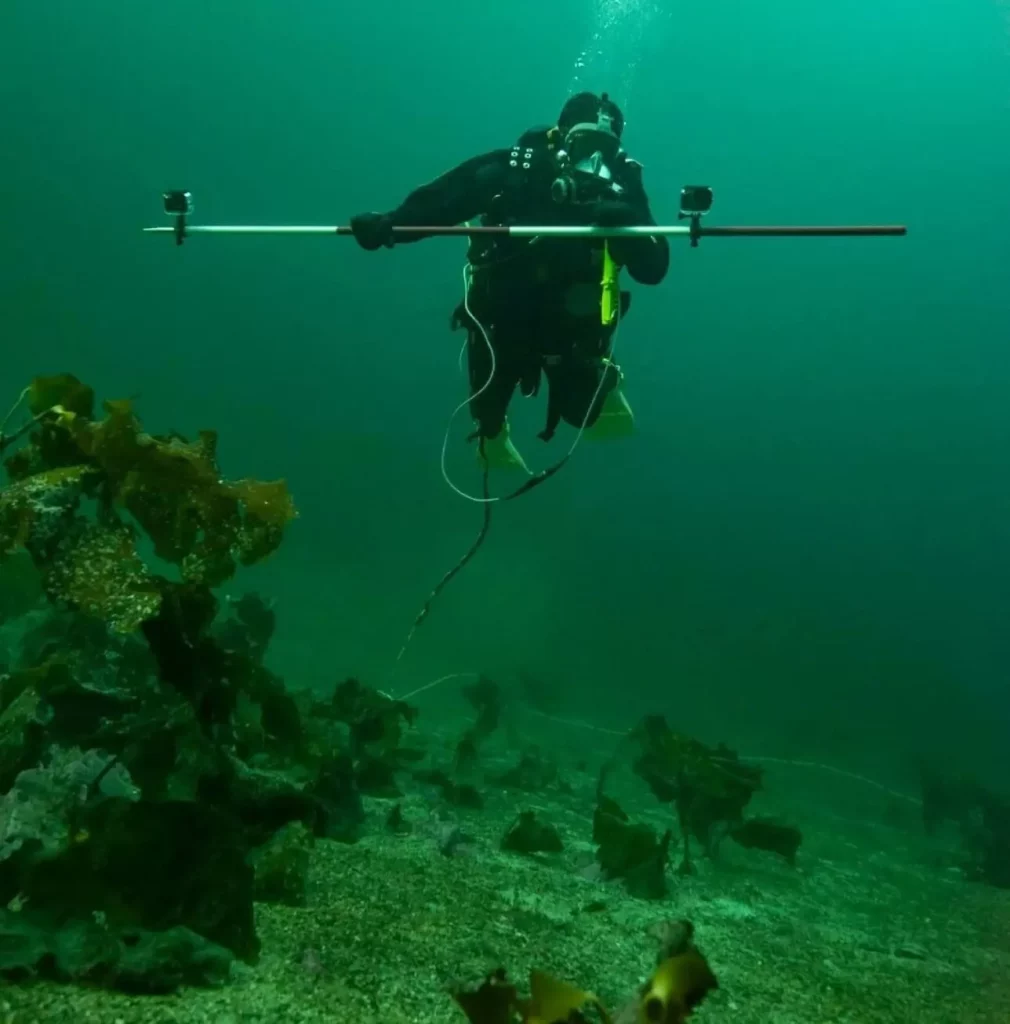
The team mapped the site using sonar-scanning followed by photogrammetry from the diver surveys to enable detailed 3D models to be produced for analysis.
The new underwater evidence has yet to be fully published in an academic journal, but a scientific article on the findings is expected later in 2026 and further fieldwork is planned for summer, including investigation of other trapping sites in the Øygarden region. The research is supported by the Norwegian Directorate for Cultural Heritage.
Also on Divernet: Norwegian wood: lake shipwreck intact after centuries