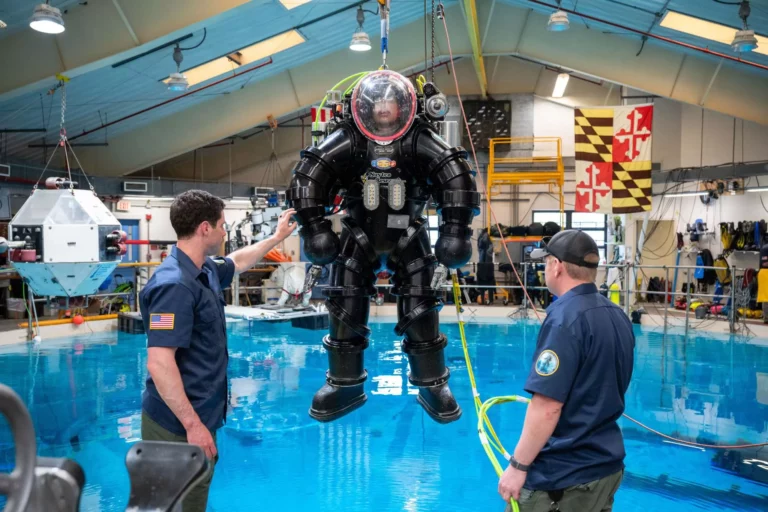
If 227kg doesn’t sound that light for a diving suit, it really is all relative. The deepwater suit that US Navy divers have just started testing at sea is designed to replace traditional atmospheric diving suits (ADS) that typically weigh twice that much, and to enable divers to move and work safely at depth with a freedom never previously possible.
The first open-water testing of this revolutionary ‘lightweight’ diving suit designed to allow military divers to work for long spells down to 92m (300ft) took place recently over the space of a week in Liberty Bay, Washington state.
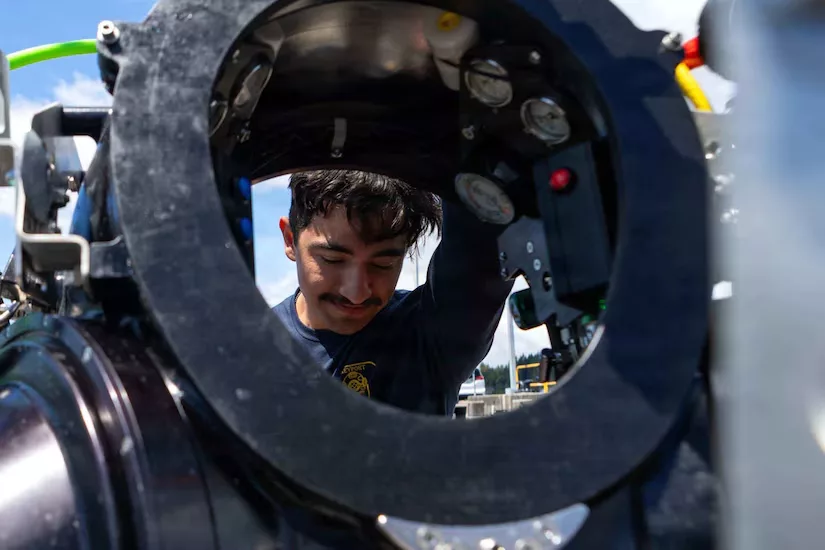
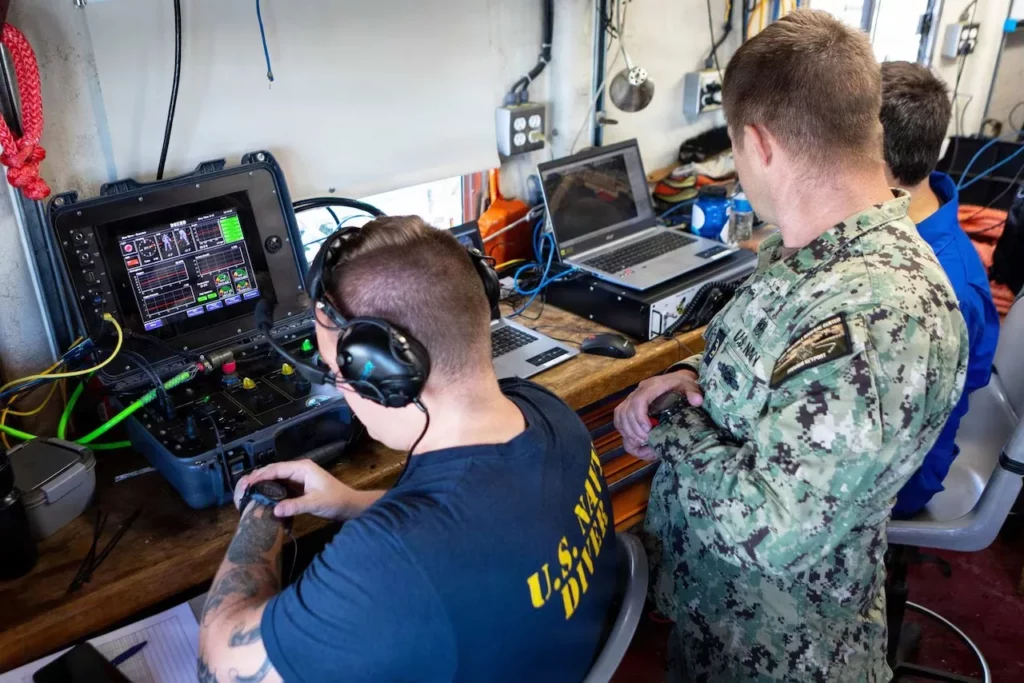
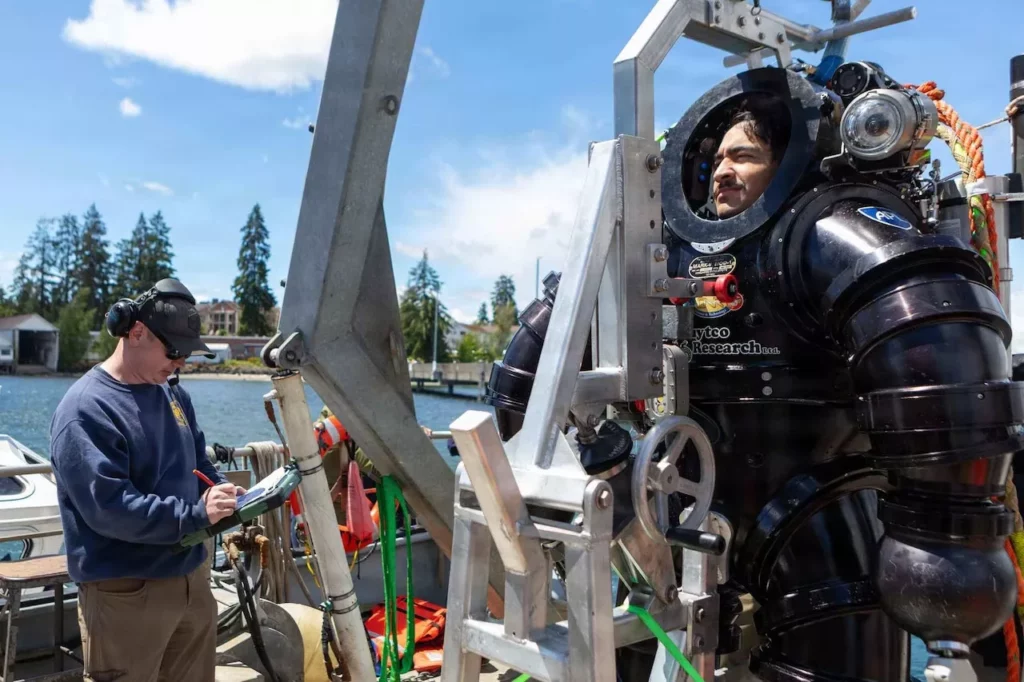
The Gen-0 prototype Deep Sea Expeditionary with No Decompression (DSEND) dive-suit was tested by three navy divers at the Naval Undersea Warfare Centre Division.
Critical real-world Navy missions such as deep-sea salvage, underwater rescues, explosive ordnance disposal and ship’s-hull maintenance were all able to be simulated on the Puget Sound seabed, which lies in the 30-60m depth range.
The JIM suits of the 1970s were the original modern ADS, successful at maintaining divers at 1 atmosphere of internal pressure at any depth down to around 450m. They weighed more than 400kg.
In the 1980s and 1990s came the more flexible but still heavy Newtsuits, while the current century saw the development of the highly articulated Hardsuit / Exosuit. For Navy divers extreme (three-figure) depth is likely to be less of an issue than for commercial divers, so the lighter DSEND is primarily focused on underwater mobility.
Comfortable indefinitely
Regarded as a highlight of the recent evaluation was the successful recovery of an unmanned underwater vehicle sunk for the exercise. The divers, working in tandem with an ROV and topside engineers, were able to locate it, rig a lifting device using the suits’ mechanical grippers and secure it for recovery.
The DSEND system “allows divers to descend without restrictions and not worry about bottom-time and air-limitations”, explained one of the testers, Navy Petty Officer 1st Class Onofre Lopez.
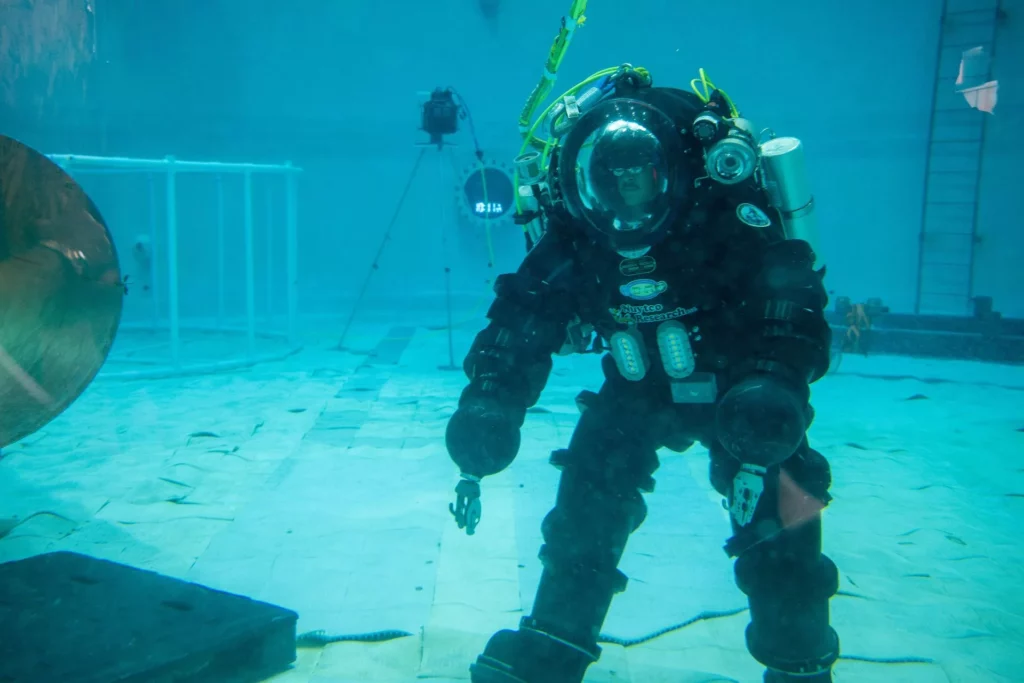
“Bottom time is at a premium when you’re on surface-supplied air,” he said. “There’s a little bit of growing pains as far as balancing the suit but, other than that, it allows us to stay comfortable essentially indefinitely.”
The rigorous testing was said to have exposed the suit to factors that included variable visibility, limited traction and silty or muddy seabeds, enabling the divers to assess its manoeuvrability. A prototype thruster pack was used to enhance their speed and buoyancy, counteracting the suction effects of heavy boots in muddy terrain.
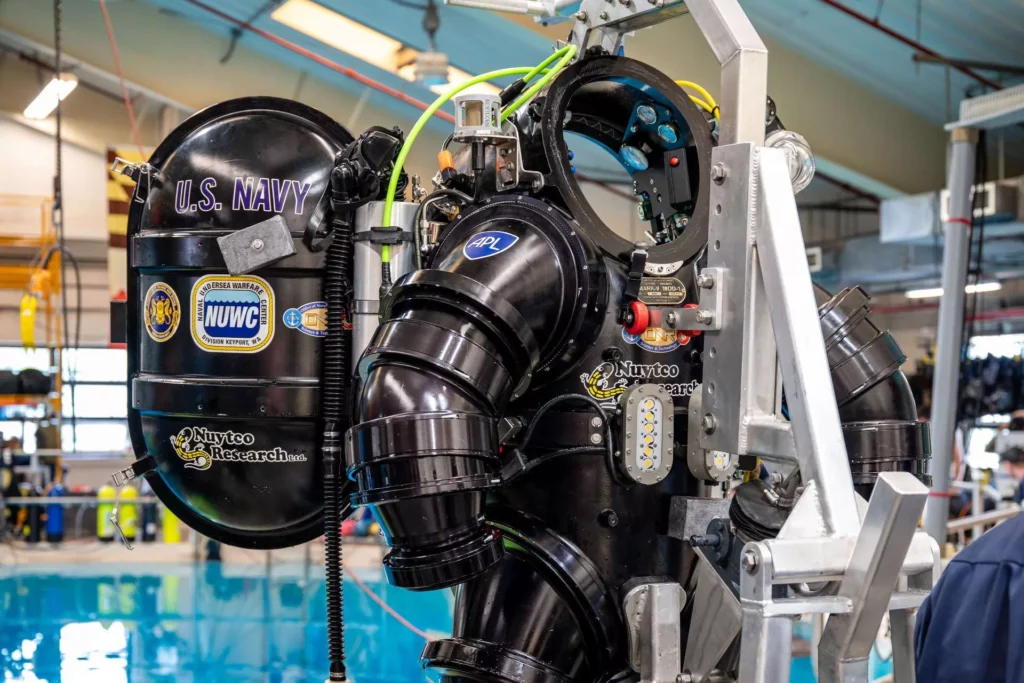
The evaluation was sponsored by the Office of Naval Research in partnership with Naval Sea Systems Command (NAVSEA) and all the data gathered is intended to inform the design and performance requirements for the first DSEND suits to go into service.
“The overall goal of the program is to be able to do one-atmospheric diving, to reduce and eliminate the risk of decompression sickness and reduce the effects of bottom time on the diver,” said Navy Chief Warrant Officer 2 Chris Lansford.
The team also evaluated mechanical gripper dexterity, rotational joint durability in lo-vis environments and fine motor skills. Divers successfully adapted hand-pods for underwater tool usage, demonstrating the physical versatility required for salvage operations.
The evaluation also featured a newly designed diver life-support system with enhanced ducting and a larger carbon dioxide absorbent volume to optimise the divers’ internal environment.
Only time will tell if any of the latest military diving developments, such as the lightweight materials, high‑mobility pressure‑tight joints and smart‑armour concepts, ever filter through into recreational diving – but if it happens, it won’t be for the first time.
Also on Divernet: ‘Smart armour’ for deep divers of the future