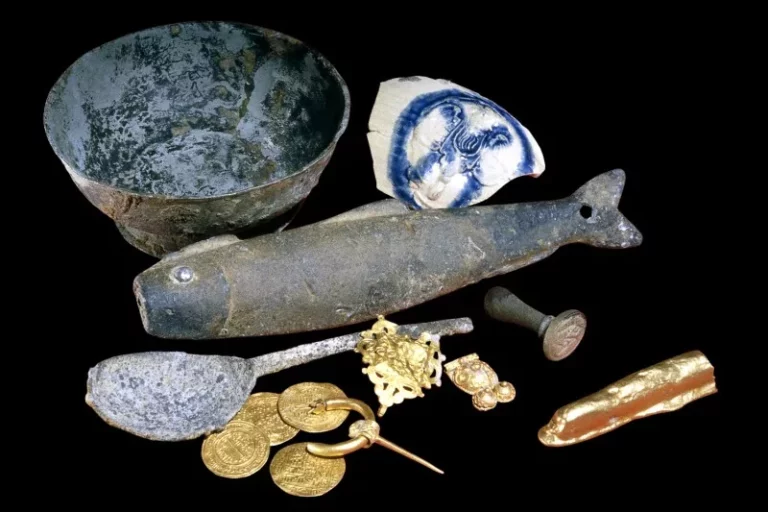
The wreck of a 400-year-old sailing vessel discovered off Salcombe on England’s south coast in 1995 containing 400 gold coins and other treasures has finally been identified as Dutch merchant ship the Dom van Keulen.
The vessel had been sailing from North Africa to the Netherlands in the autumn of 1633 when it was caught in a storm. Thirty-one years ago scuba divers from the South West Maritime Archaeology Group (SWMAG) came across what turned out to be a 30m-long wreck-site some 18m deep.
Alongside cannon and anchors, they found gold coins from the Moroccan Sa’dian dynasty along with gold bullion and jewellery, Dutch pottery and pewter and assorted items such as a fish-shaped sounding weight.
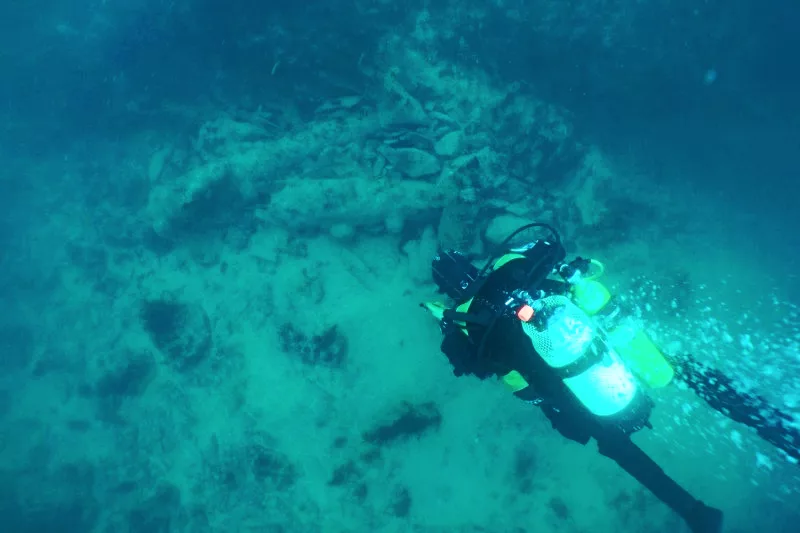
Large, well-documented collections of Sa’dian coins are rare, and the unusual shipwreck has provided evidence of a 17th-century trading network connecting Morocco (then referred to as the Barbary Coast), the Netherlands and Britain. At the time Dutch merchants would trade manufactured goods for West African gold, highly valued for its purity.
Much of the coinage found on the “Salcombe Gold Wreck” was intended to be melted down to produce Dutch gold coins, one of the most widely accepted trading currencies at the time.
‘Tempestuous weather’
Now the team that was able to positively identify the wreck have published details of their investigation in a research volume, a collaboration between researchers from Bournemouth University (BU), the British Museum and the SWMAG divers.
However, it was an independent historian, Ian Friel, who uncovered key documents in the National Archive in which Dutch merchants described the “tempestuous weather” that had caused the Dom van Keulen to spring a leak. After anchoring 400m offshore at Salcombe in Devon, all the crew had been able to take to their boat and reach safety.
BU maritime archaeologist Prof Dave Parham edited the book with Islamic art expert Venetia Porter from the British Museum, where coins and other finds from the wreck are kept.
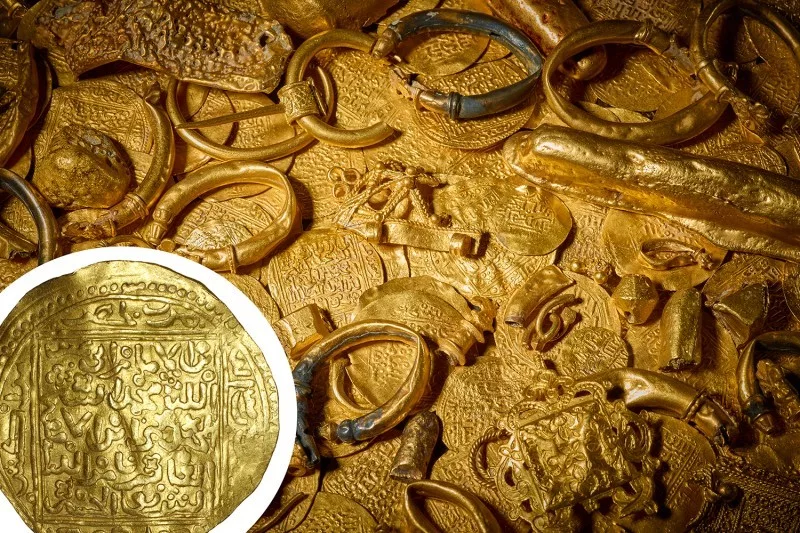
“Among its cargo were 150 bags of gum arabic, 64 bags of saltpetre, 320 goatskins and 9,000 Barbary ducats – gold Moroccan coins,” says Parham, adding that the crew were thought to have been able to salvage much of the cargo at the time.
The identification of the shipwreck “provides important context for the wealth and architecture of the Sa’dian Sharifs, the trade in African gold, and tangible evidence of the flourishing 17th-century maritime trade linking Morocco, the Low Countries and Britain,” he says.
Protected Wreck
“The story can now be told of how a Dutch ship carrying North African gold was wrecked off the English coast, making this a discovery of international importance,” comments British Museum head of research Jeremy D Hill. “It reminds us how much there is still to be found under our seas.”
The wreck-site is a designated Protected Wreck, managed by Historic England. Diving is restricted to licence-holders and the site monitored by the nearby National Coastwatch Institution’s Prawle Point station.
Devon & Cornwall Police’s marine unit has also long undertaken patrols as part of Operation Birdie, a national initiative to tackle illegal interference with historic wreck-sites.
An open-access version of the book, From Morocco To The Coast Of England: The Story Of The Dom Van Keulen And Its Remarkable Cargo, can be found online, with physical copies available from the British Museum shop for £40.