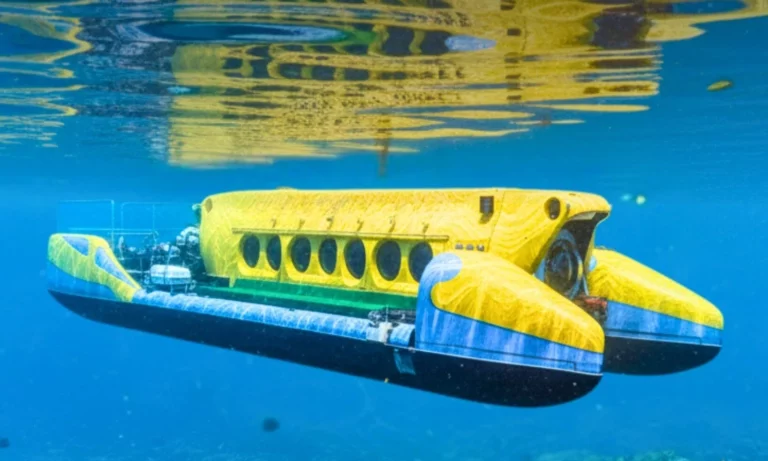
Two close encounters involving the same tourist submarine clashing with dive-boats have been reported in the Cayman Islands.
The Subcat Catalonia, operated by Down Under Submarines, was involved in a collision with a liveaboard on 7 January, soon after having had its communications cable cut by a dive-boat captain who felt that his scuba divers were being endangered by the bigger vessel’s proximity. Both encounters were reported by the Cayman Compass.
Fifteen minutes into a dive the 20m yellow submarine, with five passengers onboard, was said to have made an uncontrolled ascent beneath the 34m dive liveaboard, which was tied in to a mooring buoy at the Doc Poulson artificial-reef site in Grand Cayman’s West Bay.
The submarine made contact with the liveaboard, though no-one was reported hurt in the incident.
Sydney, Australia-based Down Under Submarines relocated to Grand Cayman in late 2024 in a bid to fill a gap left by a previous operation that had closed during the Covid-19 pandemic.
Its Subcat Catalonia can dive to 30m and is claimed to be the world’s “sole operating hybrid tourist submarine”. Passengers pay $159 (£119) for a 90-minute dive.
‘Miscommunication’
Down Under’s cperations manager Andrey Alexeenko, who had been piloting the submarine at the time, blamed the collision on miscommunication with his surface support vessel, telling the news outlet that the crew should have communicated the liveaboard’s position to him well before he began to ascend over a coral ridge.
He admitted that the submarine, which can accommodate 28 passengers and two crew, normally needed to carry at least 12 passengers for stability and said that, with only five onboard, sandbags had been used to provide additional weight.
“Due to momentum, in this situation it was not possible to slow the rate of ascent before we made contact with the hull of the dive-boat,” he explained.
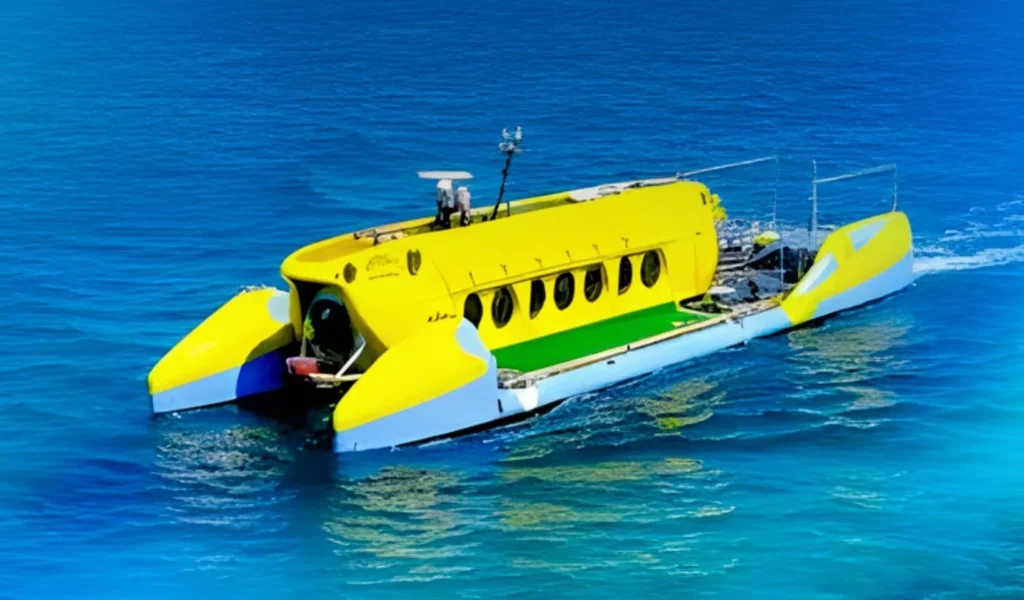
Alexeenko had later sent a scuba diver to check both vessels for signs of impact damage. He said that the sub’s main cabin had been unaffected and that damage was limited to superficial scratches on the glass-fibre exterior.
There were no visible signs of damage to the rudder, propellors or steel hull of the liveaboard, he said, and Cayman Compass reported that the vessel had appeared to continue operating as normal.
The Maritime Authority of the Cayman Islands stated only that the matter was under investigation. Following a meeting with the authority, Alexeenko said that he had apologised to the liveaboard’s captain, and would be seeking an alternative dive-site on Grand Cayman’s west side that was not regularly used by other operators.
Shaggy’s encounter
Alexeenko had recently filed a criminal complaint against dive-centre Shaggy’s Personalised Diving, relating to another incident that occurred while the Subcat Catalonia was diving near the Doc Poulson wreck.
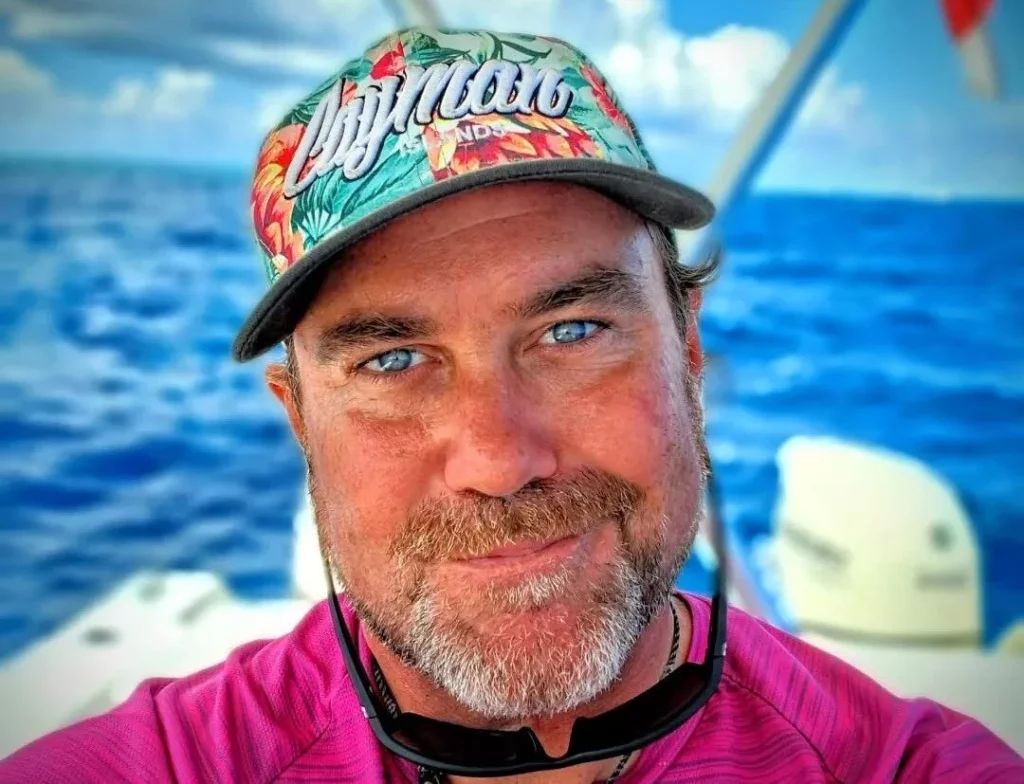
Alexeenko claims that while he had been at the helm with passengers on board, the other company’s owner James ‘Shaggy’ Thomson had intentionally cut the VHF communications cable linked to a float trailed by the submarine to enable communications with its surface support vessel.
The action had forced him to abort the dive, he said, claiming that it had cost him more than $3,000 to bring a technician from Spain to repair the cable.
Thomson had shown the Cayman Compass video of the Down Under Submarines cable and float visible at his dive-boat’s stern while his divers were entering the water, and argued that the cable was getting entangled in his engine. His vessel is an 8m dive catamaran designed to take six divers and two crew.
“I was concerned for the safety of my boat and customers, so I didn’t hesitate,” he said. “I wasn’t going to allow my boat to be dragged under water by a 62ft submarine that weighs over 60 tons, so I cut the cable.”
He had shown the video evidence to local police when they had contacted him, and said that he would have called them himself but had “wanted to give the guy a chance”.
Alexeenko maintained that fending off the cable and float would have sufficed to avert any danger, though he added that he planned to buy a dinghy to help keep the comms cable and buoy away from other vessels.
Thomson, who says he has worked in the Cayman diving industry for 15 years, pointed out that local etiquette dictated that an operator should avoid a dive-site where another vessel was already moored, or at least check in with it by radio.
“I was also concerned that the sub came close to my customers while they were under water and, while I am not certain, it seems possible they might have got sucked into the thrusters of the sub,” he said.
Also on Divernet: Insider guide to diving Grand Cayman