The final season of excavation of an Adriatic underwater site at Sukošan in Croatia has completed the process of revealing a spectacularly well-preserved Roman shipwreck. And, with every last detail now recorded, the ship is set to be reburied in the sand that kept its timbers protected for 2,000 years.
Maritime archaeologists from the International Centre for Underwater Archaeology (ICUA) in Zadar discovered signs of a wreck in the form of a piece of timber with an iron nail four and a half years ago, while researching the ancient Roman harbour of Barbir. The vessel lay little more than 2m deep.
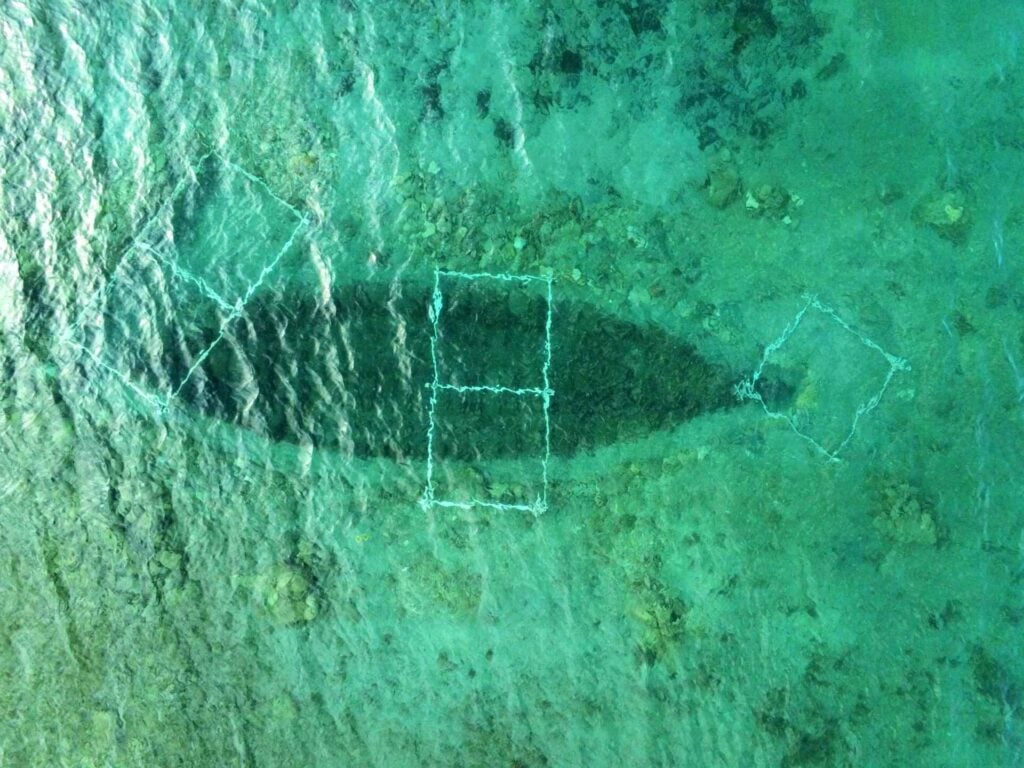
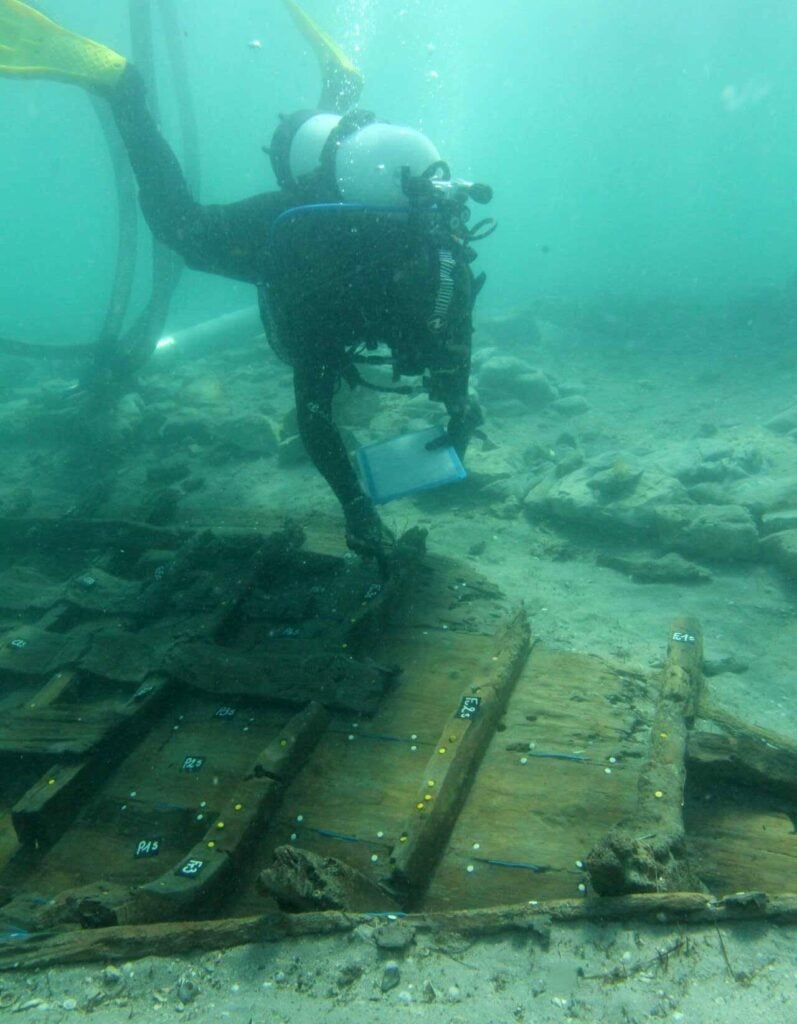
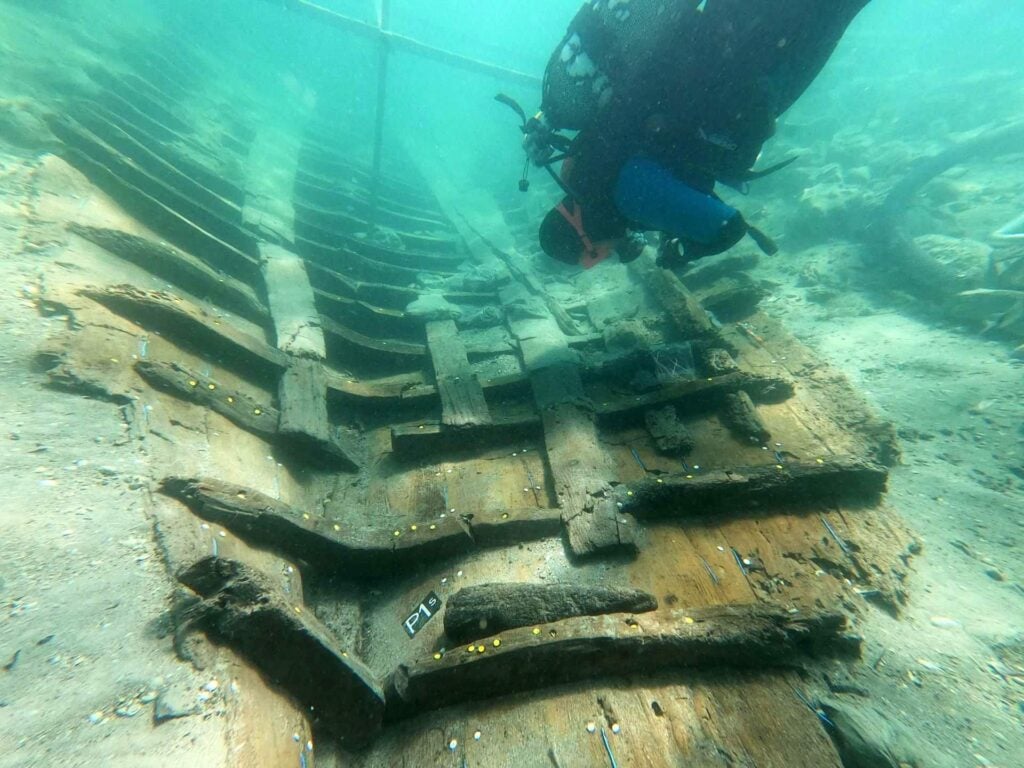
The project had started with the discovery of 30 Roman bronze coins in the vicinity, as reported on Divernet in 2022.
During annual summer excavations the team had gone on to expand the search area, with what turned out to be an intact 12.5m Roman shipwreck with a beam of 3m dated to the 1st–2nd century AD. A coin from the reign of the emperor Trajan was found at the site, along with amphoras probably used by the crew.
Hundreds of olive pits were also found along with remains of grapes, peaches and walnut shells.

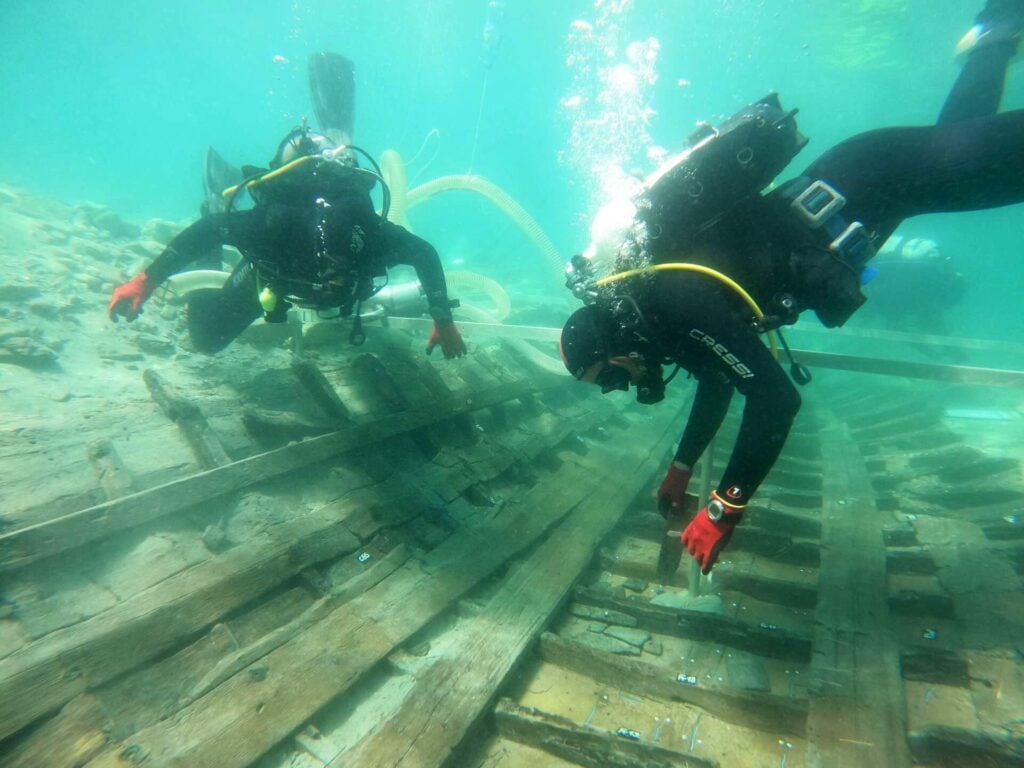
This summer the work of uncovering the wreck has been completed, and what makes it even more unusual is that elements of the vessel’s upper works, a vanishingly rare find in an ancient shipwreck, have been revealed in the process. The construction techniques employed would have enabled the vessel to carry heavy loads over medium to long distances.
The dive-team is producing detailed photogrammetric models to ensure precise digital documentation of the site and plans to create a 1:10 scale model of the vessel for display at the Zadar Museum of Underwater Archaeology.
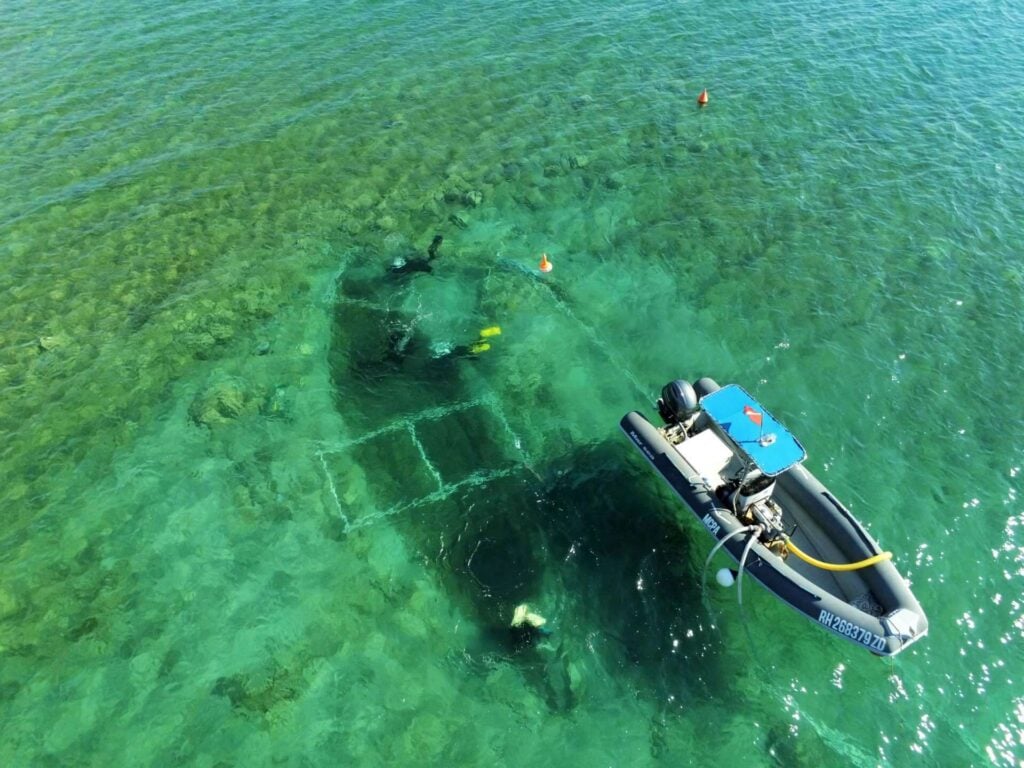
Despite earlier plans to raise the wreck, it has now been decided that this would be too expensive. Instead it will be covered with a protective geotextile membrane before being reburied in the sand.
The 2025 research team also included experts from the Polish University of Torun, the Max Planck Institute, Aix-Marseille University, Ipso Facto (timber analysis) and survey company NavArchos. The project is funded by Croatia’s Ministry of Culture & Media.