The 96m-deep wreck of the early British iron steamship The Greek has been identified following post-dive research by divers, after 156 years sunk far from land beneath the Celtic Sea.
The site was found halfway between Cornwall and Ireland in September 2024 and dived by three members of the Darkstar technical-diving team.
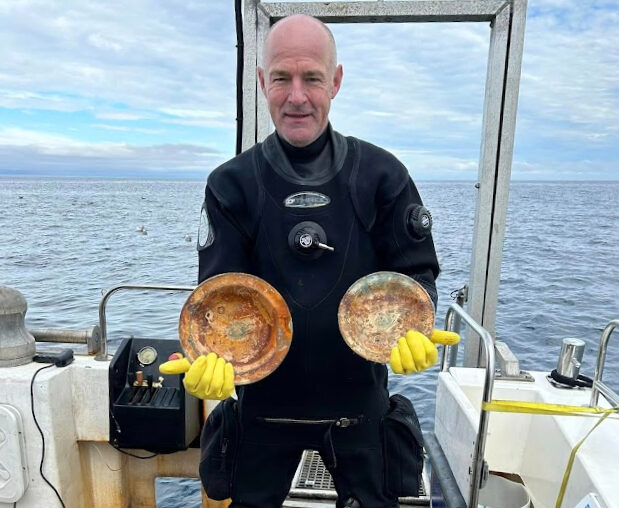
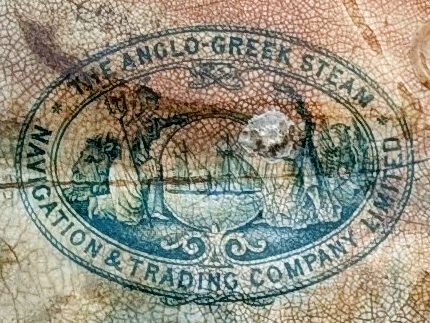
They had discovered a wreck with a hold full of firebricks as well as crockery bearing the insignia of the Anglo-Greek Steam Navigation & Trading Co, which ran three other cargo ships. The short-lived company had been the first owner of The Greek in 1865.

Since then Darkstar wreck-hunter Dominic Robinson has spent a year researching vessels thought to have been lost in the area.
A newspaper article from the time described how the 60m Greek had left Glasgow for Rotterdam on 3 December, 1869, carrying firebricks and iron on a voyage that would normally be expected to take around five days.

The ship, built in 1864 by Richardson, Duck & Co at Stockton-on-Tees, was owned at the time it was lost by WB & C Palgrave of Dublin.
She failed to reach the Netherlands but was not reported missing until the following month. Her 23 crew including Captain James Warren were lost, presumed dead.


Followers of Robinson on his Deep Wreck Diver social media were able to assist him with the identification, and video of the dive and the background story can now be seen on his YouTube channel (below). He has said that a combination off bad weather and overloading would be his guess as to why the ship sank.
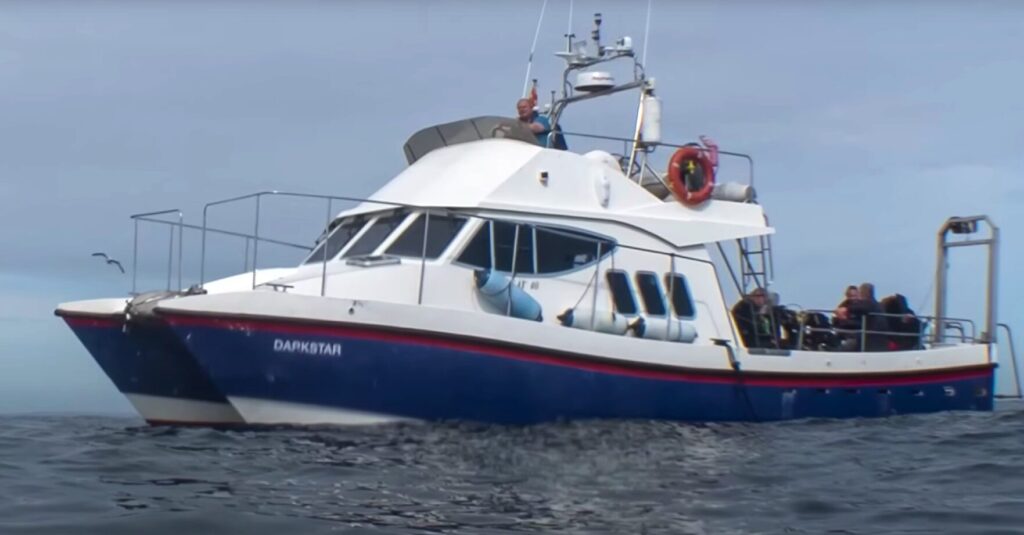
Robinson was accompanied on the dive by Will Schwarz and Leigh Bishop using closed-circuit rebreathers and DPVs from the Darkstar boat out of Cornwall, skippered by expedition leader Mark Dixon.


The shot turned out to be some way off the wreck but the three divers managed to locate the port side and soon came across large quantities of firebricks, the toppled two-cylinder engine, a dome-shaped boiler and later an anchor.

At the stern they could see the three-bladed single screw but no rudder. They were surprised, convinced as they were that the remote site was previously undived, not to come across any brass artefacts.
The bulk cargo was thought likely to have been hurled forward as the ship descended bow-first, likely burying the ship’s bell and other possible clues needed to enable a 100% ID.
However, Robinson can now describe it as a “strong probability” that the ship is The Greek, and goes so far as to call it “what might be the most fascinating wreck discovery of my diving career”.

The dive-time was around 2.5 hours, with an unexpected visit from dolphins during decompression providing a welcome diversion.
Earlier this year Dom Robinson exploded a “lost-forever” myth when he found the bell of the 65m-deep WW2 U-boat victim Royal Canadian Navy corvette Trentonian in the Channel, and was able to return it to the navy.