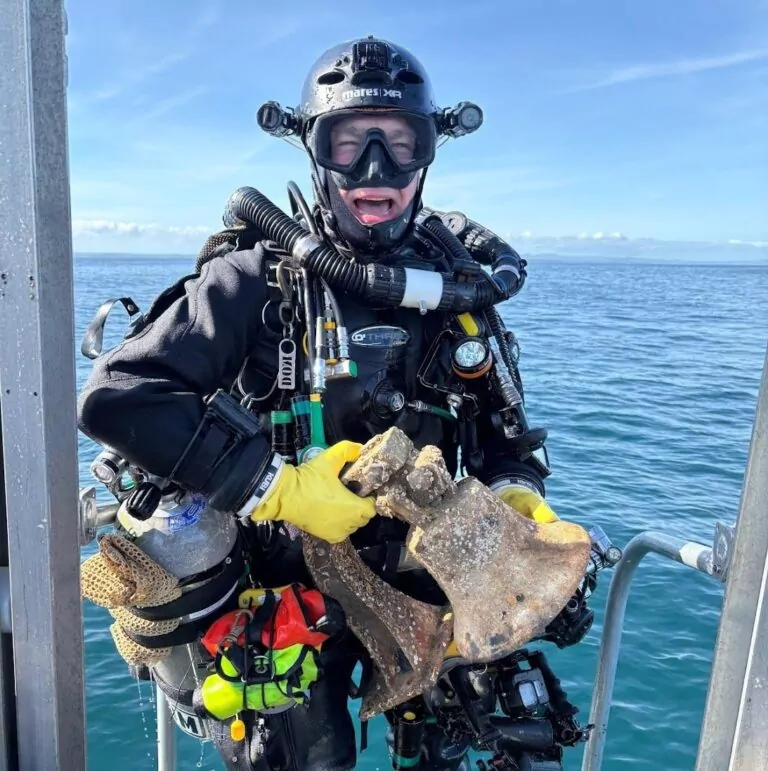
A “myth of the bell” had surrounded the Royal Canadian Navy corvette Trentonian, which was sunk in the English Channel by a German U-boat in February 1945, according to well-known British technical wreck-diver Dom Robinson.
The artefact was rumoured to have been located but not raised years ago, on the first-ever dive on the 65m-deep wreck. After that it had not been spotted again, and was thought to have been lost forever in seabed mud.
Also read: Divers raise bell from tragic fish-can shipwreck
“So I never in my wildest dreams believed that I would actually find it – but sometimes myths are true,” says Robinson, who succeeded in recovering the bell recently and has shared the experience on his popular Deep Wreck Diver YouTube channel (see below).
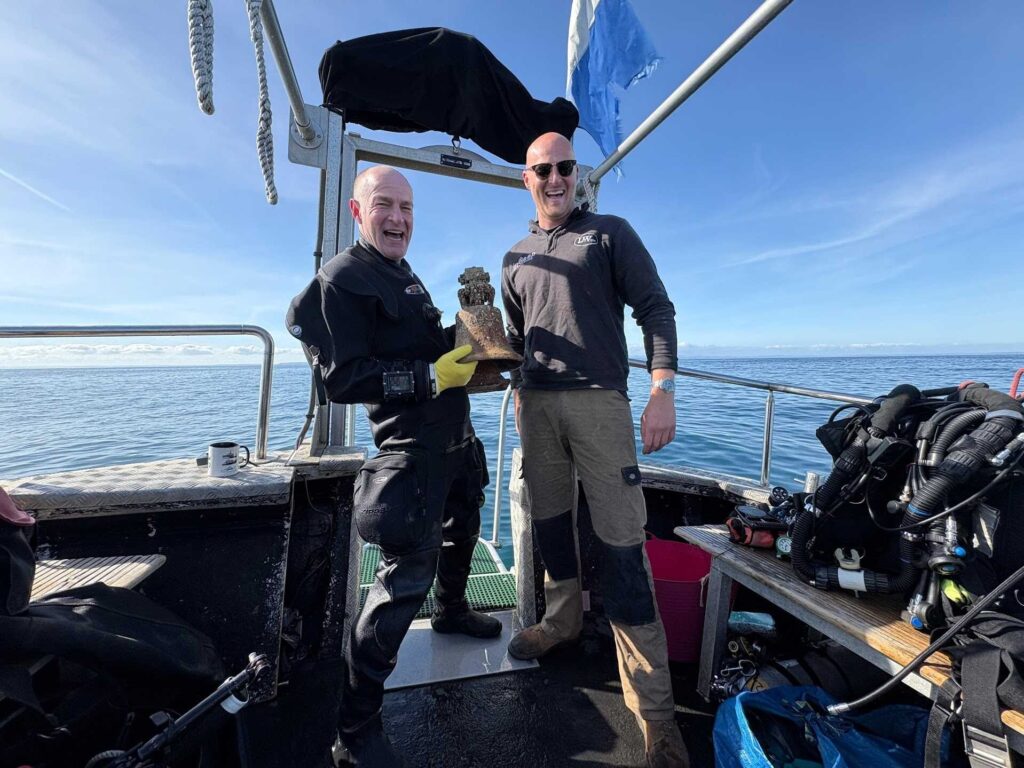
Not only that, but within a fortnight of bringing up the bell Robinson had declared it to the Receiver of Wreck and returned it to representatives of the Canadian Navy. It will now be restored for display at the Naval Museum of Halifax.

HMCS Trentonian (K368) was a modified Flower-class corvette, and the last one to be lost during WW2. She had seen action during the Battle of the Atlantic and had been serving as a convoy escort under Plymouth Command when she was torpedoed by the German U-boat U-1004 not far off Falmouth. The corvette went down in fewer than 10 minutes, with the deaths of six of her crew.
Third time lucky
Robinson had already dived the Trentonian twice, and visited it for a third time only because other divers in the group were keen to see the remains of the 63m-long warship.
The wreck lies badly broken and slightly on its port side, and Robinson’s video guides viewers past the Yarrow boilers to an exploded fire-extinguisher at the stern. There are remains of a porthole and pipework and what could be a broken-open depth charge.
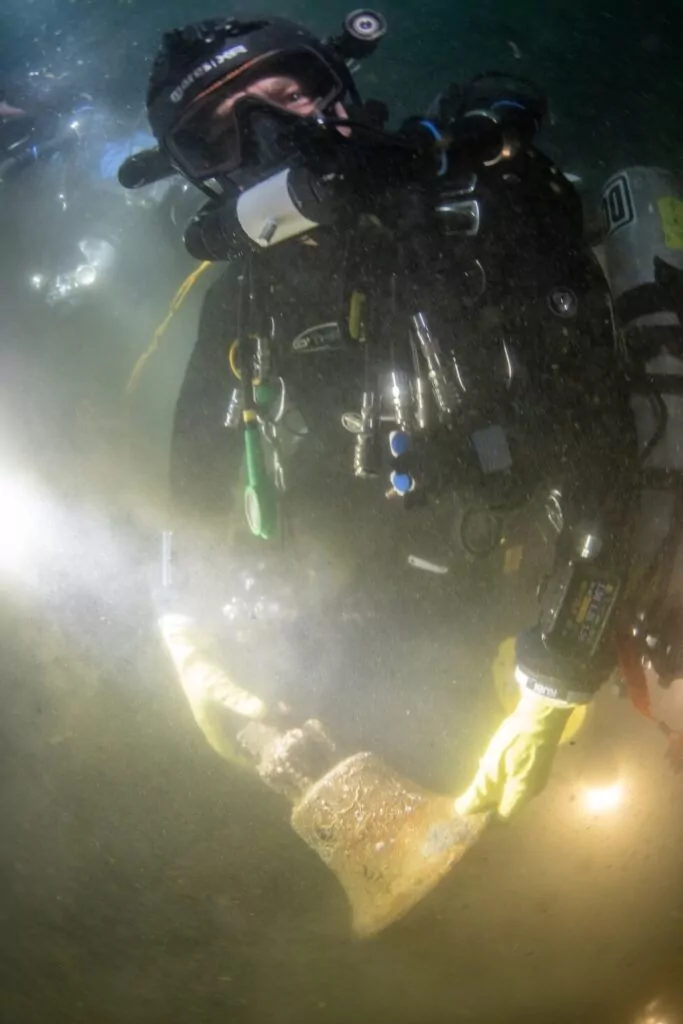
Closer to the bow, Robinson describes “a room made of bronze” or other non-ferrous material thought to have been a compass room. Further forward is a mass of cabling, junction boxes and pipework, but as he spots the rim of the bell and tries to extricate it, the silt erupts.
With his GoPro in any case losing power, underwater photographer Rick Ayrton was fortunately on hand to take over the recording duties at this point.
The wreck is not protected, and a naval historian called Roger Litwiller responded to news of the discovery by telling Canada’s CTV News that he thought the Trentonian should be treated as a war grave, with “legacy items” such as brass artefacts left in place.
Litwiller said that many artefacts had already been removed from the wreck by divers in previous years. “If the staff at one of the cemeteries in Normandy came to work in the morning and found holes dug throughout the cemetery and the brass handles on the caskets removed, what would the response be? There would be an international uproar,” he told the station.
The right thing
Robinson agrees that the wreck has been “frequently dived since at least the early 2000s” and, of the bell, that “lots of divers have unsuccessfully tried to find it, including me – until this dive”.
“I was a bit nervous when I met all those Canadian officers, because I felt that they were going to be a bit upset that we’d removed the bell from a shipwreck, where obviously members of the Canadian Navy had died,” he says.
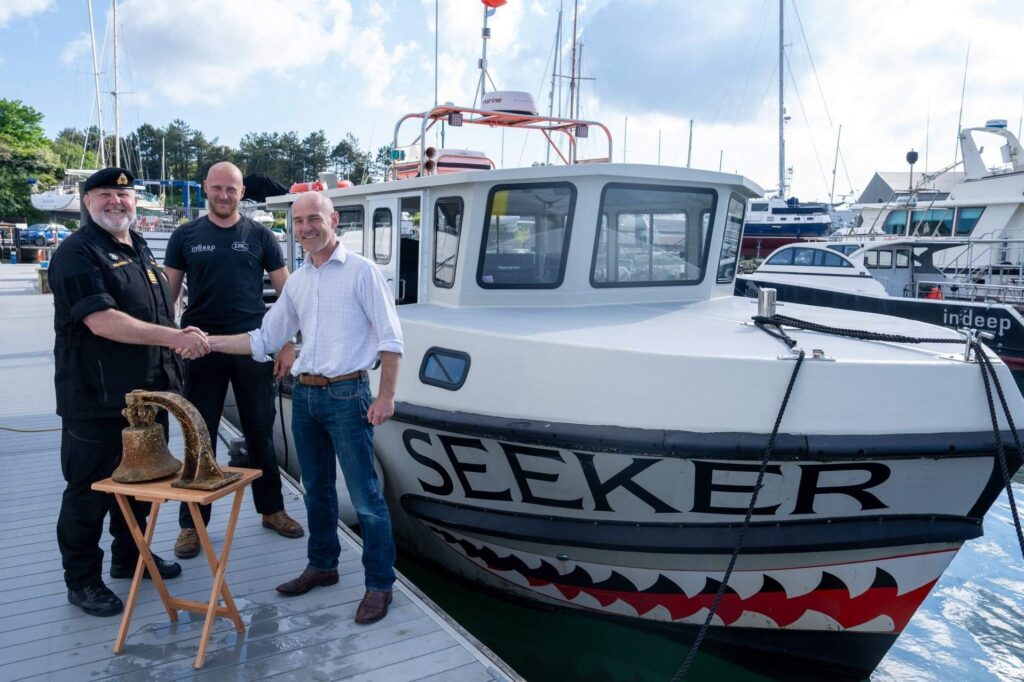
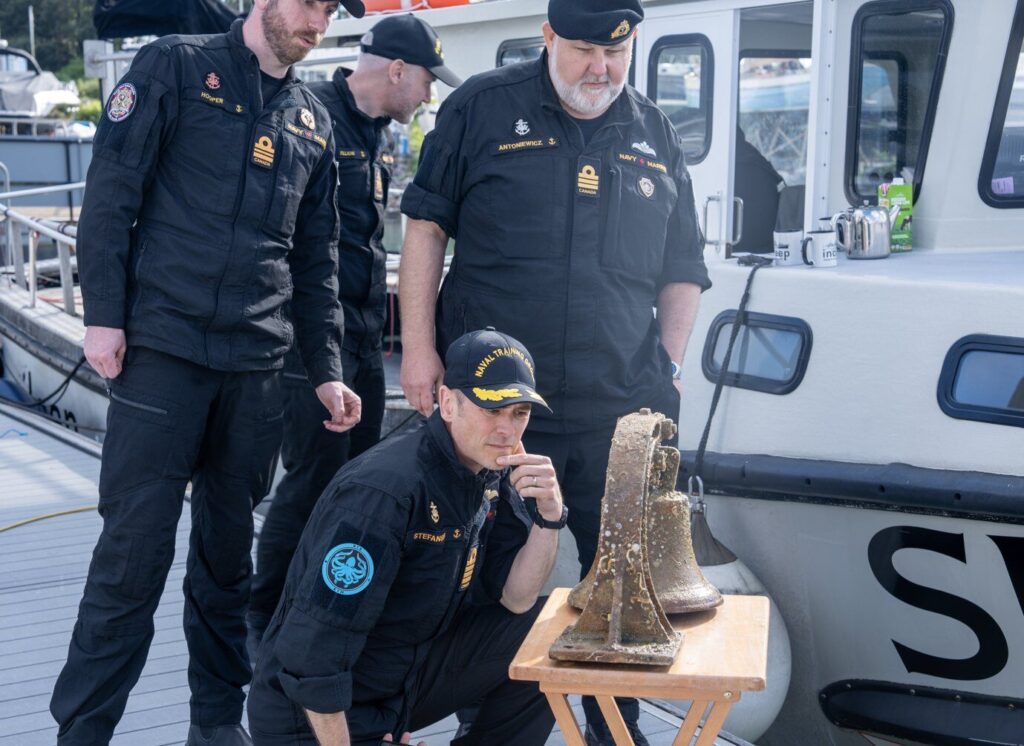
However, any such fears were quickly allayed when he was told by one of the officers: “Look, what you did was absolutely right. In a short period of time. there is not going to be anything left down there. These things are just decaying and falling and, ultimately, it will become part of the seabed.”
The Canadian officer told Robinson: “It’s much better to have that bell on the surface, in a museum where lots and lots of people will be able to go and see it, and where the people who died and served will be commemorated.”
“I’m unbelievably chuffed, not just because I found the bell, although that is clearly amazing, but also the fact that it’s heading back to Canada aboard another Canadian warship,” says Robinson. “And once it gets there, it’s going to be displayed in a museum to commemorate those who were lost, but also those who served.
“It was an absolutely epic dive, it was a great experience and, you know, I think I’ve done the right thing.” Watch the Trentonian dive and other wreck-diving videos at Deep Wreck Diver.
Also on Divernet: How Darkstar divers found destroyer USS Jacob Jones at 115m, 10,000 bottles sitting on a wreck – drinkable or not?, ‘Argonauts’ dive long-lost HMS Jason at 93m, Divers solve two U-boat puzzles

It begs the obvious question as to why this wreck was never designated as a war grave?