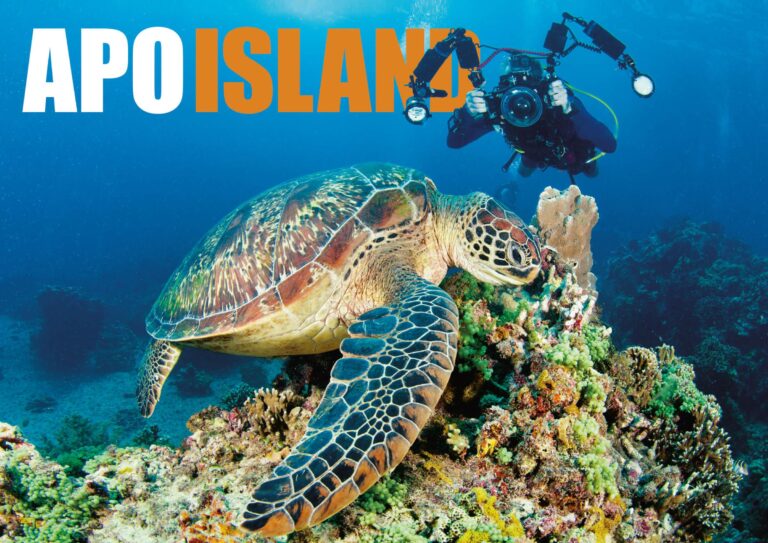
Adrian Stacey takes a closer look at a true marine conservation success story in the Philippines
Apo Island – A Jewel in the Coral Triangle
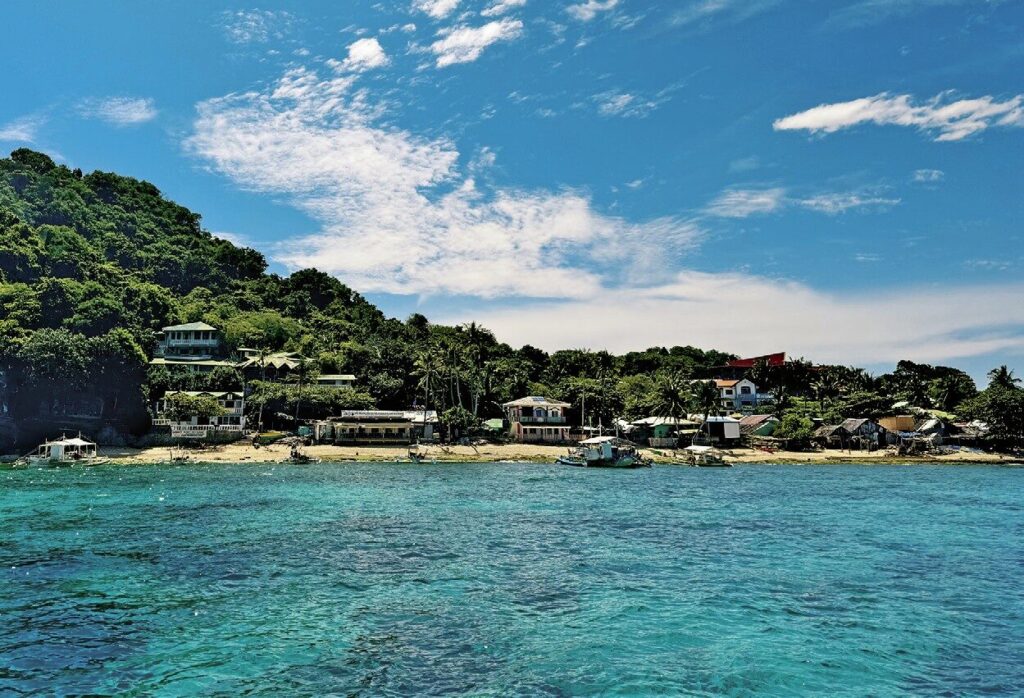
The Philippines comprises over 7,000 islands and is located at the top of the fabled Coral Triangle. This country has been blessed with a wealth of underwater treasures, so it is not surprising that considerable efforts are being made to conserve its fantastic marine environments.
One of the smallest inhabited islands in the archipelago is Apo Island, a tiny speck of land located off the shores of the Negros Oriental province that covers an area of less than one sq km. The local population of around 1,000 inhabitants have a close affinity with the ocean, and most rely on it for their livelihood and food.
The island has been a designated Marine Protected Area (MPA) since 1982. The reefs are flourishing and currently home to over 650 species of fish and over 400 species of coral. The island is also an important nesting and feeding ground for green and hawksbill turtles.
From Destruction to Protection
However, this was not always the case. Before the MPA was established, dynamite and Muroami (a destructive method of fishing that involves smashing large rocks or cement blocks onto the reef to scare fish into huge nets) fishing were prevalent, and fish stocks were on the brink of collapse.
Then, in 1982, a marine scientist, Dr Angel Alcala, who grew up in the region, persuaded the somewhat sceptical locals that setting up a protected area would benefit the surrounding fisheries. His theory was that there would be a spillover of adult fish from the protected area into the surrounding area, where the protected area functions as a shelter for fish to escape, mature, and spawn. Fish spawning in the protected area would produce larvae that are carried by the currents to other communities on the reef.
“Now, as the oldest continuous Marine Protected Area in the Philippines, this diminutive little island has played an important role in shaping the marine conservation efforts of the entire country”
Did you know?
At present, Apo Island is home to over 650 documented species of fish and estimated to have over 400 species of corals. Most of the Philippines’ 450 species of coral can be found here, from tiny bubble corals to huge gorgonian sea fans and brain corals.
A Model for Community-Based Conservation
In 1986, Apo Island’s Marine Management Council was established and declared the end of unsustainable fishing practices, allowing only line and spearfishing, traps and gill nets. The locals are now fully invested in the project and police the area diligently, having seen the fish stocks blossom and revenue from tourists, who come to dive and snorkel the pristine reefs, dramatically increase.
Now, as the oldest continuous Marine Protected Area in the Philippines, this diminutive little island has played an important role in shaping the marine conservation efforts of the entire country. In fact, such has been the success of the community-based sanctuary that has been established here that it has inspired similar projects all over the Philippines and even the globe! There are currently over 1,500 small Marine Protected Areas in the Philippines, started by local communities who have wanted to emulate the success of Apo Island.
The island itself is part of the Dauin municipality, which is located in the Negroes Oriental province of the Philippines. Just to confuse things, there is also an Apo Reef, and the two are nowhere near each other. Apo Reef is located off Mindoro Island’s shores, about 500km away.
Diving Apo Island Today
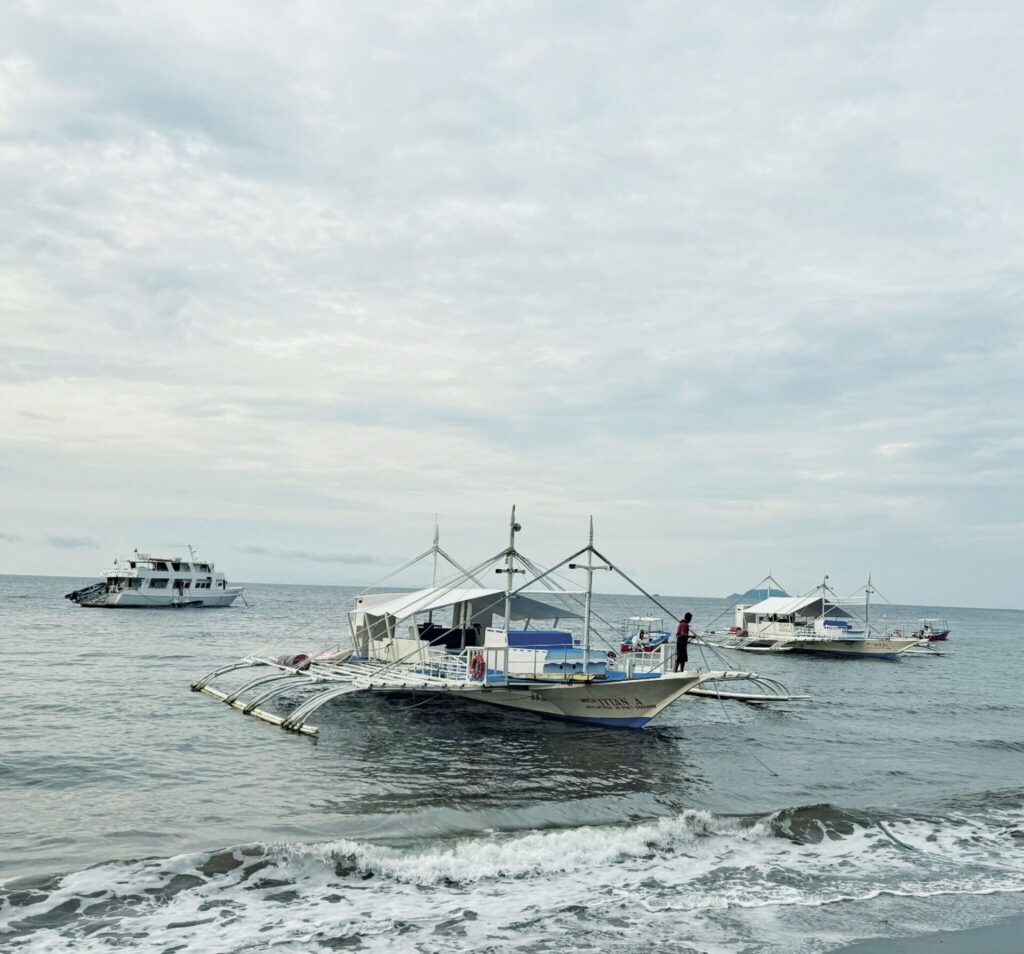
I was recently in the region for the Dive 7 Festival, so while I was in the area, I was eager to check out Apo Island for myself and find out first-hand what has been achieved by working with the locals to create sustainable marine sanctuaries. It is possible to stay on Apo Island, but I opted to reside on the mainland in the town of Dauin at the Atlantis Resort and Spa, which is only a 35-40 minute boat ride away.
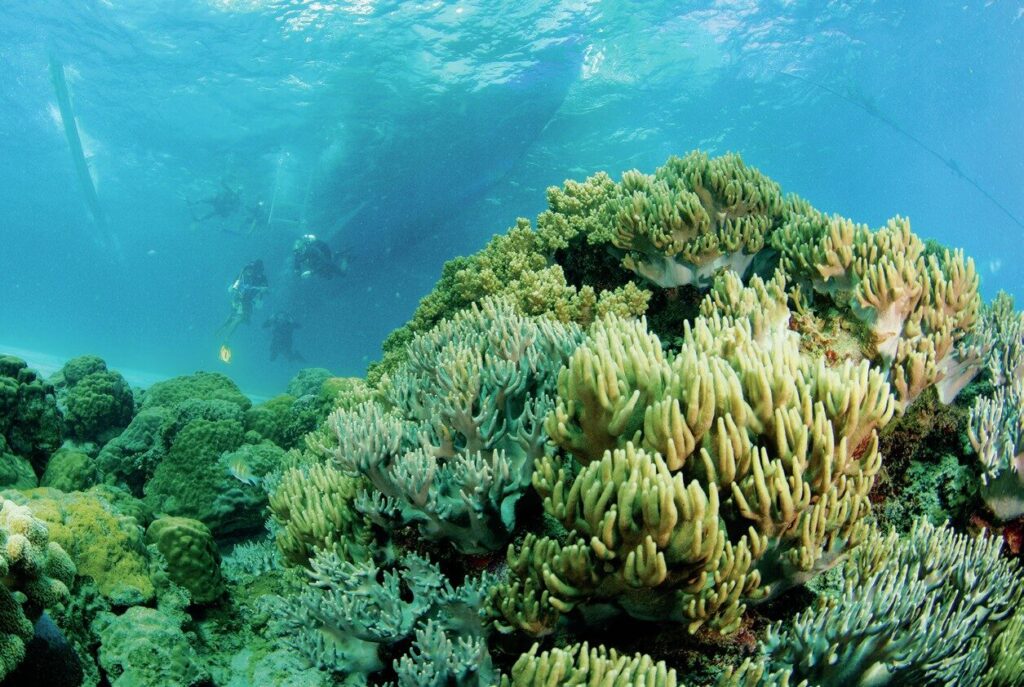
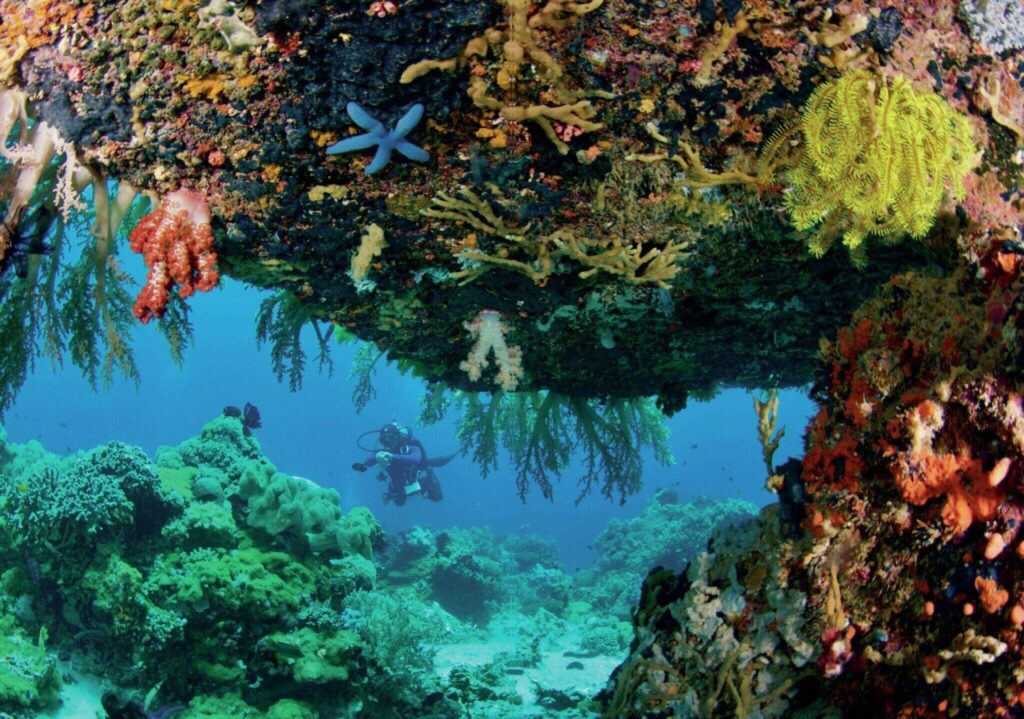

“Vast fields of pristine staghorn corals shimmered with neon blue chromis, and as on all dives around the island, we were joined by a couple of green turtles”
Conservation in Action at Atlantis Resort Dauin
Atlantis Resort and Spa currently runs numerous initiatives to assist in the conservation of the local marine environment. I chatted with their in-house marine biologist, Marco, who told me about some of the projects they are involved with.
Coral Tree Conservation: Broken coral is attached to a wire frame with monofilament line; the coral then hangs freely in the water, which allows the coral to grow quicker, a staggering 10cm-30cm over four months. Staghorn and acropora coral apparently grow the fastest. Guests are also invited to participate in the programme, assisting with collecting broken corals from dive sites, hanging the corals, and removing barnacles from the wire frame. This is conducted in partnership with Mead Foundation, which is a local NGO.
Data Buoy Installation: Atlantis, in association with the University of the Philippines Marine Science Institute, has installed a data buoy on the reef in front of the resort. This device will collect information that will help scientists understand why the coral in the region is more resilient to the effects of higher water temperatures caused by global warming. This initiative could have global consequences!
Dive Ambassador Programme: This program aims to train the next generation to become dive professionals who will go on to care for the ocean. Two candidates are chosen from the local science high school to complete their training from Open Water to Divemaster. During the internship, they not only learn to dive but also take part in conservation and surveying projects.
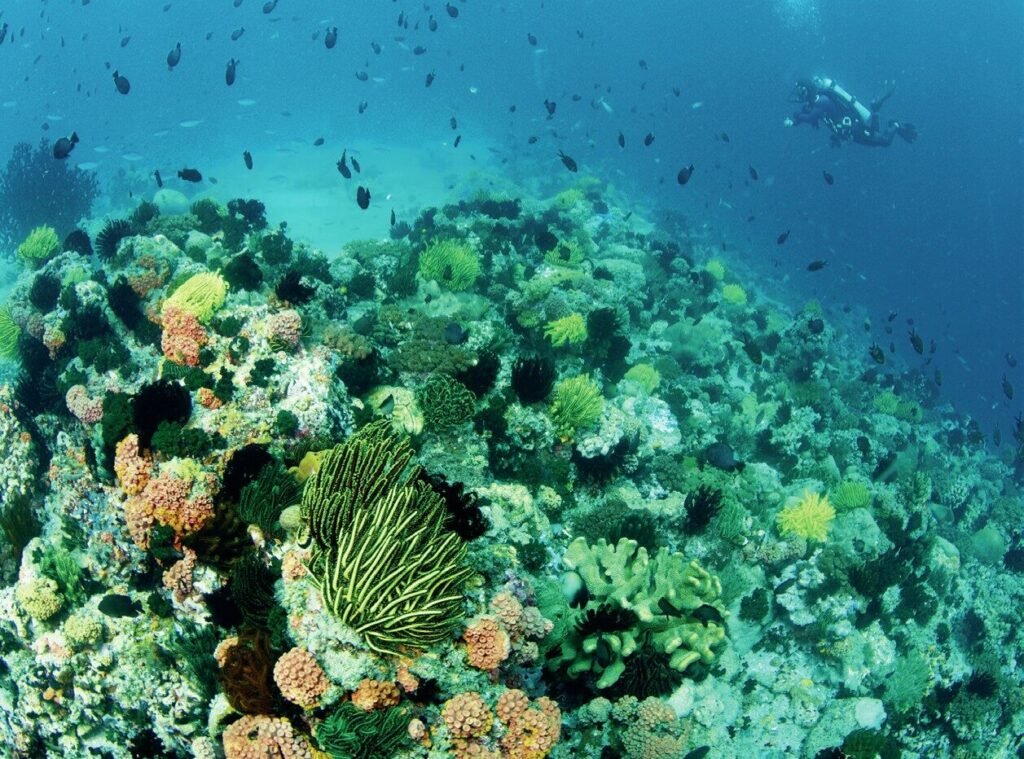
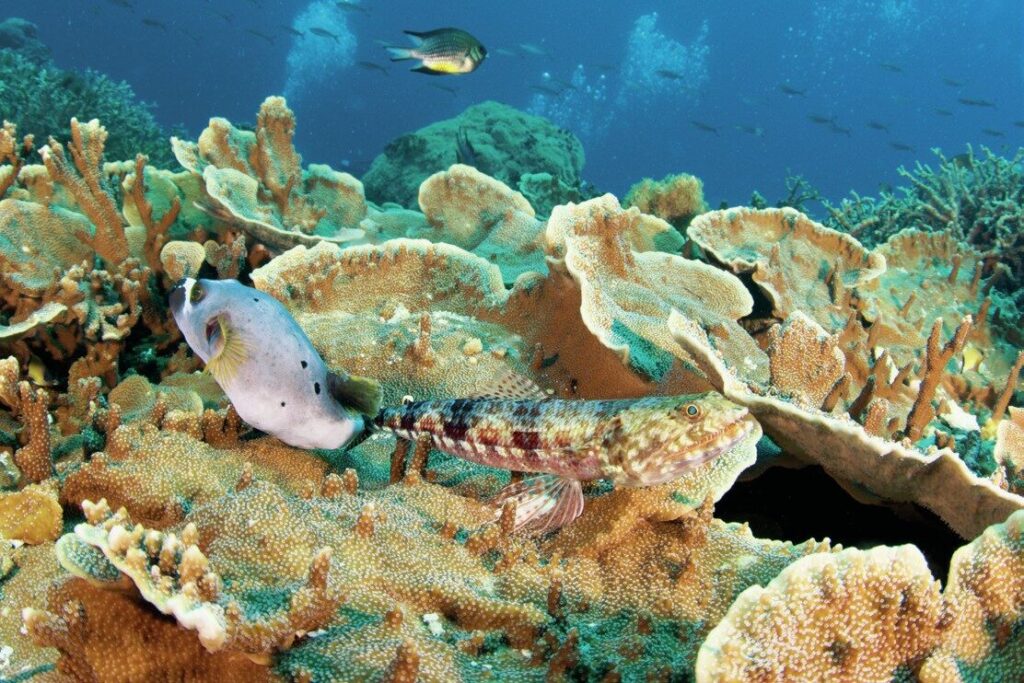
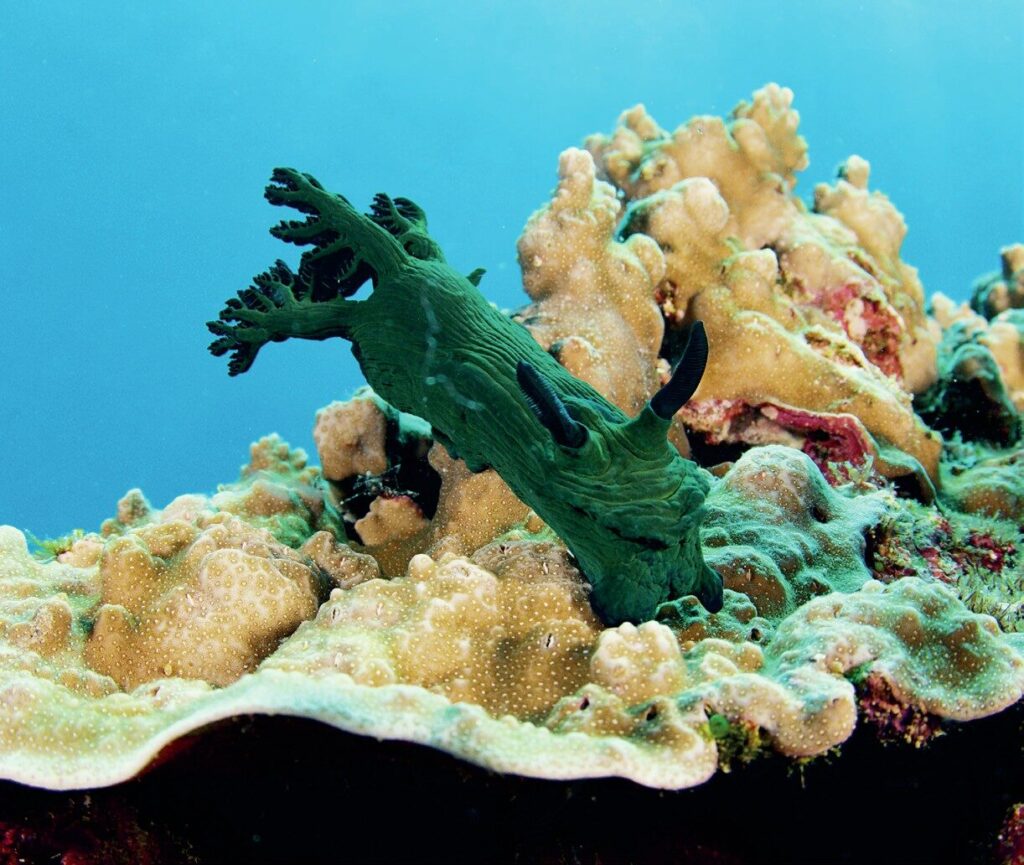
While Apo Island is only a few km from the mainland, the topography and reefs are entirely different from the shores of Dauin, which are mainly black volcanic sand slopes with occasional coral patches and reefs ideal for finding macro life and muck diving. On the other hand, Apo Island offers extensive hard coral reefs, walls, drop-offs and the possibility of pelagic encounters.
Exploring the Dive Sites of Apo Island
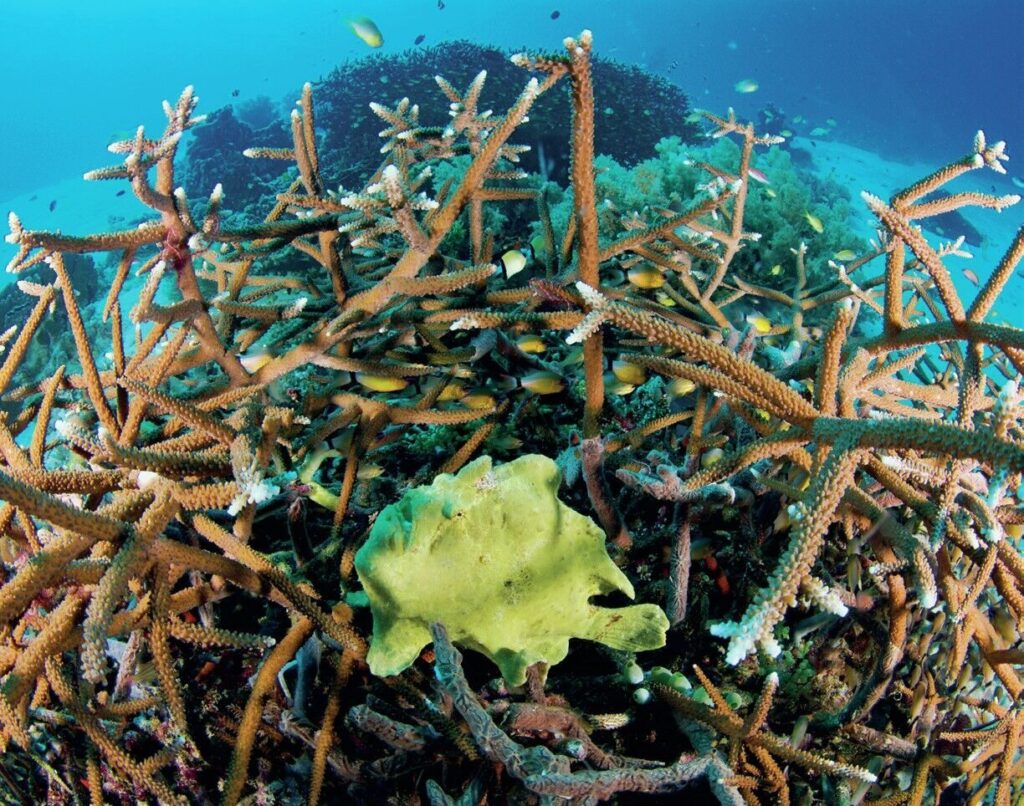
My first dive was at a site called Chapel. This fantastic dive began in a shallow, hard coral garden that gently dropped into the depths. At around 18m in a thicket of staghorn coral, my guide found a very photogenic green giant frogfish and a less-photogenic black giant frogfish. After a few minutes, the topography changed from a gentle coral bommie-covered slope to a sheer wall covered in various sponges and soft corals. There were plenty of overhangs, little caves to explore, and plenty more little critters to find, including several painted frogfish and the harmless-looking but incredibly vicious harlequin shrimp! The dive finished with further exploration of the shallow coral garden, where we encountered several turtles.
We also visited Rock Point East, which is a large finger-shaped reef that juts out from the southeast corner of the island; due to its location, this dive site often experiences currents and, as such, attracts schools of fish and the occasional visit from pelagic species like manta rays and sharks. Like most of the dive sites around Apo Island, the shallows are populated by fantastic hard coral gardens, which are frequented by both green and hawksbill turtles.
“This fantastic dive began in a shallow, hard coral garden that gently dropped into the depths”
Another of the sites we dived was Largahan Point. This is great for macro lovers, with coral bommies scattered across the sandy ocean floor providing a wealth of critters a place to hide. Our guide found plenty of colourful nudibranchs, scorpionfish and so on hiding among the coral gardens. Vast fields of pristine staghorn corals shimmered with neon blue chromis, and as on all dives around the island, we were joined by a couple of green turtles.
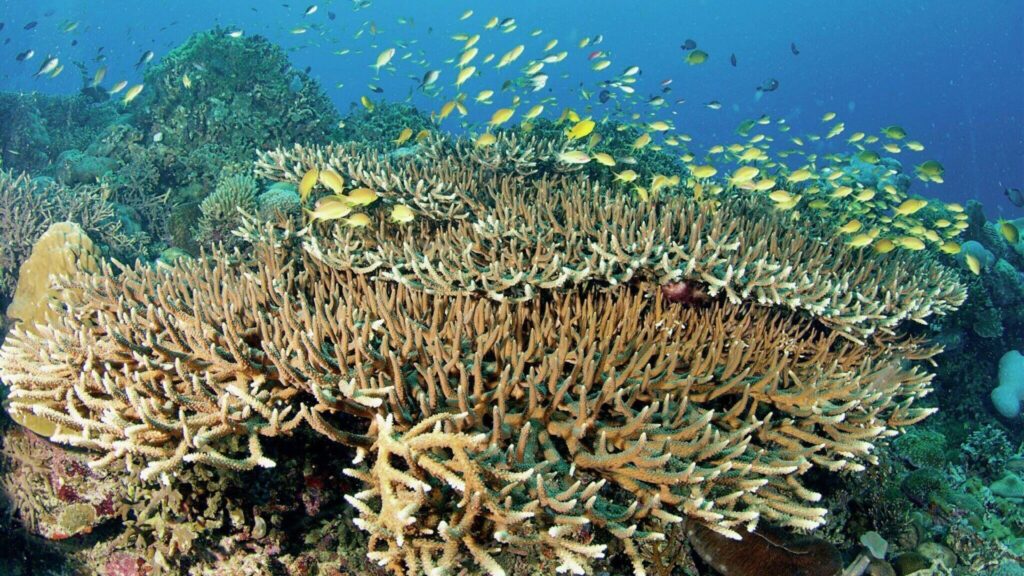
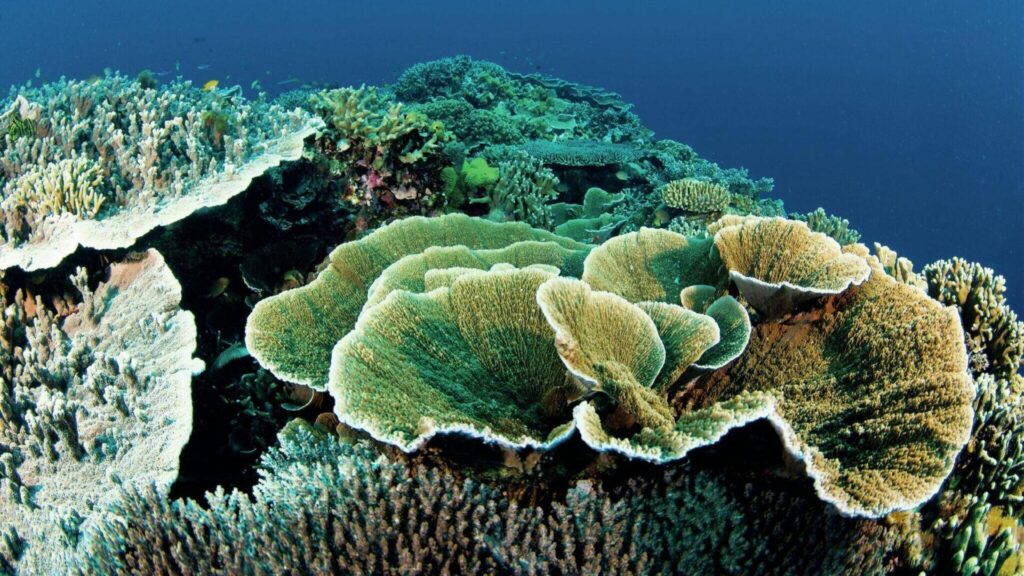
While all these dives were very enjoyable and filled with a variety of marine encounters, by far my favourite was Coconut Point. Located on the island’s northern tip, this dive site is prone to strong currents and is usually done as a drift dive. Once we were out of the shelter of the shallow reefs, the current whisked us along a steep slope covered in all manner of hard and soft corals, colourful sponges and numerous crinoids. Damsels, anthias, fusiliers, bannerfish, butterflyfish, Moorish idols and many more bustled along the reef and a large school of bigeye jacks hung in the blue, enjoying the current. Towards the end of the dive, we sheltered in the shallows, among a healthy and thriving ecosystem which had huge table corals dripping with soft corals and decorated with sea stars, plus grouper, batfish and of course, more turtles.
Apo Island offers a great contrast to Dauin’s muck diving. The health and diversity of corals that inhabit the reef is staggering; there are vast fields of staghorn corals, immense table corals, huge porites corals and a wealth of soft corals. Plus, plenty of sponges and crinoids to add a splash of colour. The marine life is also just as varied. Small fish bustle around the corals, pelagic species can be found in the deeper water just off the reef, turtles are everywhere and plenty of critters can be found.
A Living Testament to Marine Resilience
The reefs around Apo and the surrounding areas are not just pretty to look at; they are also very hardy and seem to recover quickly from typhoons and other natural disasters. They seem to cope with warmer water temperatures, so they are more resistant to bleaching and the effects of global warming. It is always good to hear about a conservation success story, and Apo Island is that and much more!
Frequently Asked Questions
Where is Apo Island located?
Apo Island lies off the coast of Negros Oriental in the Philippines, within the Coral Triangle, a region known for its exceptional marine biodiversity.
Why is Apo Island a marine conservation success story?
Once devastated by destructive fishing, the island’s reefs recovered after locals and scientists established a marine protected area in 1982.
What can divers expect to see at Apo Island?
Over 650 fish species, 400 corals, sea turtles, frogfish, and vibrant reef walls make Apo a world-class diving destination.
How did the community benefit from the Marine Protected Area?
Locals now enjoy sustainable fishing, tourism income, and healthy reef ecosystems, proving conservation and livelihoods can coexist.
How does Atlantis Resort contribute to local conservation?
Through coral restoration, data buoy research, and youth dive training, Atlantis partners with NGOs and universities to protect reefs.
This article was originally published in Scuba Diver Magazine
Subscribe today with promo code DIVE1 — enjoy 12 months for just £1!
