
John Magee savours some Malapascua diving in the Philippines, a destination renowned for thresher shark encounters, but which offers so much more for visiting divers.
There are many places around the world for a scuba diving holiday. The Philippines is one that often comes to mind with its breathtaking marine diversity as well as the beauty on land. That biodiversity stems from the fact that the Philippines is in the Coral Triangle, the birthplace of coral and the centre of marine biodiversity.
Welcome to Malapascua – A Diver’s Paradise in the Coral Triangle
After flying into Cebu, a three-and-a-half-hour road trip and a ferry to the island, you arrive at the sunny, sandy, and sleepy island of Malapascua. With the water temperature averaging 28 to 32 degrees C, this toasty paradise is one of the few places on the planet where you can see world-class shark life alongside world-class macro. I first visited in 2014 and since then, have been back five times. It’s almost like visiting old friends, but with the advantage of never knowing if you’re going to see something brand new as well. There are many dive centres here and for me, three stand out: Sea Explorers, Thresher Sharks and Evolution Divers. Evolution is my go-to; they have great service, good dive gear with nitrox available, small groups with even one-on-one available and best of all, they have the best eyes and can spot the smallest of creatures from metres away.

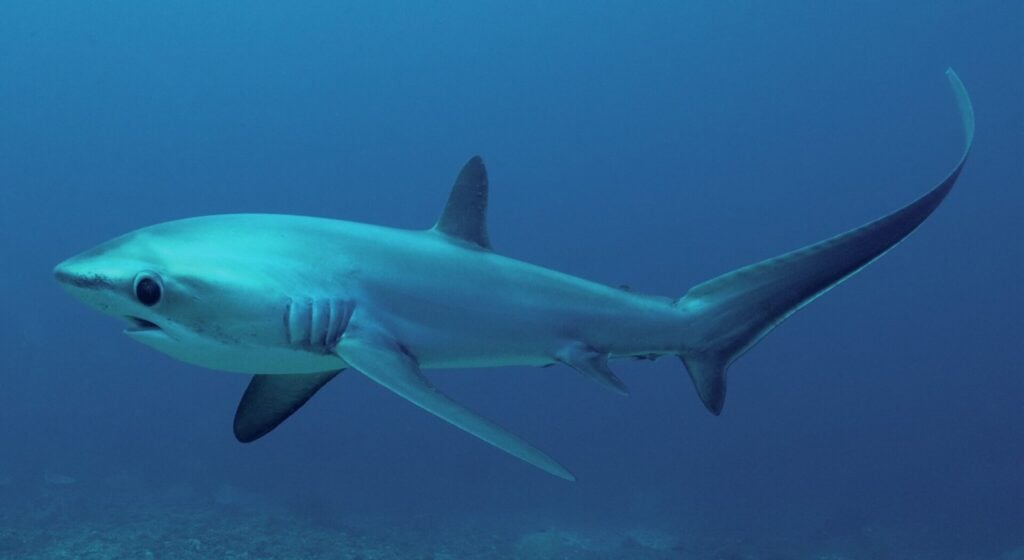
The first thing to do on arrival is to head to bed! This might sound counterproductive but with 4 am starts to get to Kimud Shoal first, you need to make friends with your bed. With the early starts, however, it does mean that you are first to the threshers and get to watch not only the sun rise but the sharks come up from the deep to the cleaning stations for the day.
Watching their behaviour during the dives, there seems to be an understanding between the sharks, as there can be up to six different sharks all waiting to be cleaned, and yet there never seem to be any arguments.
Did you know?
You can go diving in Malapascua all year long. The best months for underwater visibility are January to April. Dive conditions are generally good year-round with the exception of November and December, when visibility is lower.
With the early starts, however, it does mean that you are first to the threshers and get to watch not only the sun rise but the sharks come up from the deep to the cleaning stations for the day


Your first dive of the day can be a long one as you sit at 12-14m for up to 80 minutes, but there is plenty to look at during this time. The main thing to take into consideration on these dives as a photographer is that no lights or strobes can be used at all to make sure the sharks are comfortable. This just means that you might need to adjust your way of shooting to make the most of the subjects with these restrictions. One dive that stood out for me during my 12 days here was the second from last dive with the threshers. Towards the end of the dive, the threshers suddenly disappeared. The guide and I looked at each other, and two minutes later, two huge tiger sharks, each around four metres long, swam straight past us in just 4m of water. You just never know what you might see here.
One of the major reasons I came back to Malapascua was for the macro life. There are around 20 different macro sites here with everything you could want with a macro lens. One of the best places to start is Evolution Diver’s house reef at night. Head in to 5m-6m of water to a small area of coral and wait as the sun sets. As the world is heading to bed, the mandarinfish come out to play, and it’s not long before the male starts doing his thing and tries to get the female to come out of the coral for a sunset dance. Using a light scares the mandarinfish away, so it’s red light only with the strobe, and you may need some real patience to get the right picture. It’s not easy, but it’s worth it to capture the dancing. Some of the other dive sites around Malapascua are well worth diving and have some great macro life and beautiful pink soft corals everywhere.


Lapus Lapus is a dive site about a 15-minute boat trip from Evolution. This has no mooring, so you will jump in and drop down, and you dive around a sloping pinnacle that drops down 10m-22m. Usual highlights are nudis, frogfish, cuttlefish, shrimps and other macro life. There is a lot here, so keep your camera on standby! On the way back, after 60 minutes, there are always strong currents, so stick together.
Giliano is a beautiful reef to the north of the island, lots of corals, both hard and soft, around 10m, and it drops down to 23m to a sandy rubble bottom – and this is where the magic is. Here you may encounter seahorses and sleeping sea urchins moving around, zebra crabs, some Nemos and lots of sea moths and three beautiful red frogfish looking for dinner and nudis everywhere. You can do another 60-70 minutes here, just watch your air. And there is a mooring line back to the boat.
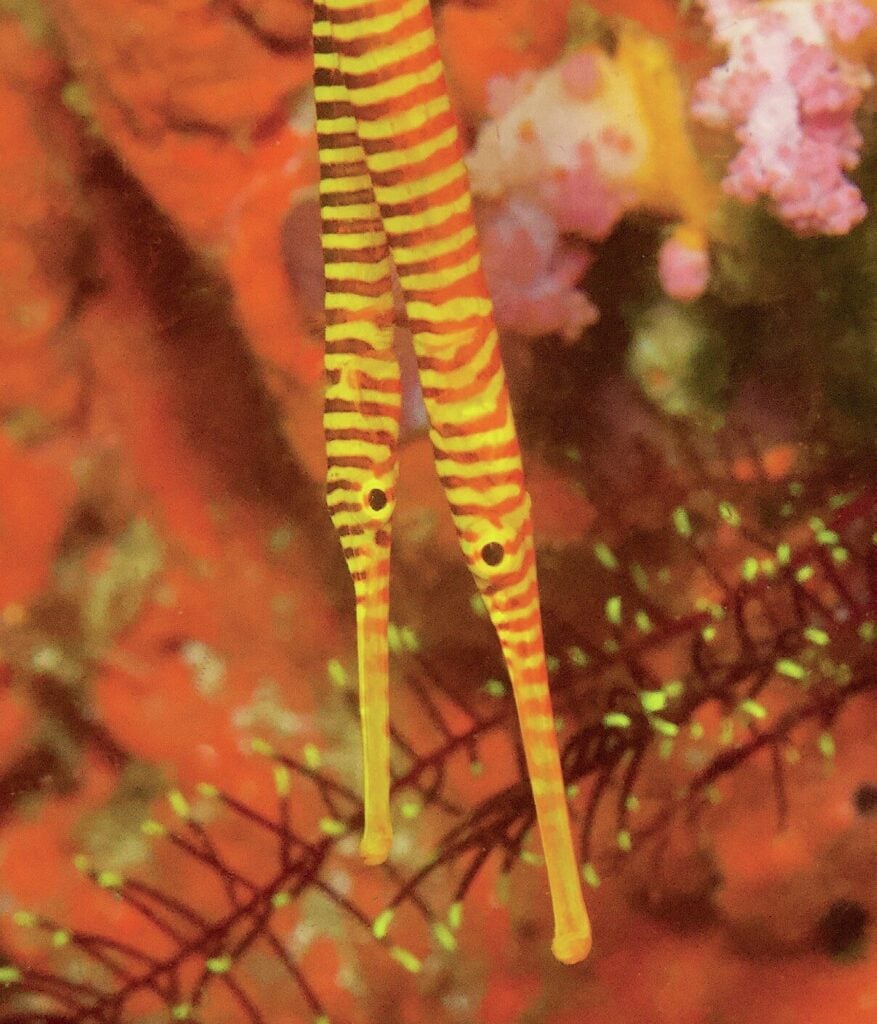
Deep Slope is also nearby and is the other great dive site on the other side of this bommie and drops away to 23m with more life here to a sandy bottom and the place to find ghost pipefish black and white, and also red robust ghost pipefish too, and a few mantis shrimps, and a few coloured flat worms that I have never seen before. There is a lot to see, so keep your eyes open. Starting back to the boat, the corals live up to their name, lots of soft corals of all colours – yellow, red, pink and blue.


Did you know?
The pygmy seahorse is a master of camouflage and disguise! Growing no bigger than two centimetres in length, it makes them one of the smallest vertebrates in the world and thus difficult for predators and photographers to discover!
With the early starts, however, it does mean that you are first to the threshers and get to watch not only the sun rise but the sharks come up from the deep
One of the day trips offered is to Gato Island, where you can do two very different dives in the same day. The first is a cavernous area with candy crabs, pygmy seahorses, ghost pipefish and sleepy whitetip reef sharks. There are also rocky outcrops covered in beautiful soft corals, hiding the smaller critters and even octopus. This really is a photographer’s wonderland.
The second dive Gato Island offers is Nudibranch City. As the name suggests, in one dive, I counted 18 different species of nudibranch, including many I have never seen before. What a place!
My final highlight was Chocolate Island, and not just because of the name. The reef here is in amazing condition with corals I have never come across before, not even in books. The amount of life here and how it behaves could easily trick you into thinking you are the first person to ever visit this reef. The marine life did not seem afraid of us clumsy divers, stopping to investigate us as much as we wanted to investigate them. In just one dive here, I managed to take well over 100 pictures. It really did live up to its name, providing the sweetest reef and marine life that you can’t help but love and want to take home with you.
So for both the big and the little in just one place, Malapascua has something for divers on every level. The reef changes throughout the year, but the best time is anytime between March and September. I’m sure I’ll be back, maybe I’ll see you too?
Did you know?
Within the thresher shark family there are three recognized species: the common thresher, the bigeye thresher and the pelagic thresher. While each species shares the same iconic long tail, they have slight variations in size and habitat.
Frequently Asked Questions
Where is Malapascua Island, and how do you get there?
Malapascua is a small island off Cebu in the Philippines. Travellers typically fly into Cebu, drive three and a half hours to Maya Port, and then take a short ferry to the island.
Why is Malapascua famous among divers?
It’s one of the few places in the world where you can reliably see pelagic thresher sharks at cleaning stations, plus rich macro life and coral diversity.
What dive operators are recommended on Malapascua?
Notable options include Evolution Divers, Sea Explorers, and Thresher Sharks Divers, all offer professional guides, Nitrox, and small-group dives.
What kind of marine life can you see around Malapascua?
Expect thresher sharks, pygmy seahorses, ghost pipefish, flamboyant cuttlefish, frogfish, nudibranchs, and mandarinfish.
When is the best time to dive in Malapascua?
Diving is possible year-round. The best underwater visibility is from January to April, while March to September offers the most stable conditions.
This article was originally published in Scuba Diver Magazine
Subscribe today with promo code DIVE1 — enjoy 12 months for just £1!
