PIERRE CONSTANT makes all sorts of unexpected connections when he travels to dive in a little-known part of New Caledonia
It was an early-morning departure on the Betico 2, bound for Lifou Island. Check-in was at 6am at the ferry terminal in Noumea, New Caledonia’s main port.
Maximum baggage allowance was 15kg plus 6kg by hand, so I had needed to come a day early to bring my 42kg excess baggage as cargo – that is, my dive and underwater photographic equipment. For a diver, there was no other option!
Also read: Fur seals? There’s no such thing!
Flying also limits you to 15kg. Depending on sea conditions, the ocean crossing to Lifou, in the Loyalty Islands, takes seven hours. The ferry sails through the Mare Islands before docking at Wé, on Lifou’s east coast, shortly before 2pm.
This was my second time in New Caledonia. On my first trip, in March 2022, I had not had time to take in the Loyalty Islands.
A tall, slim, long-haired Frenchman from Britanny, Pascal of Wé Plongée, awaited me, and we transferred to his country home in a dented old, grey Dacia Logan. In this Kanak land, most cars seem to have suffered damage of some sort or another. Lifou was to be my home for more than two weeks.
Also read: Bound to dive the Vitu Islands
The topography
The Loyalty Islands stretch over 500km from north-west to south-east. They are separated from the mainland by the Coral Sea, 100km wide and 2km deep. From the south-east the islands are the Walpoles, Mare, all 1,115sq km of Lifou, Ouvea, Beautemps-Beaupré and the submerged Astrolabe Reef.
The Loyalty Islands are an ancient volcanic arc resulting from the subduction of the Australian Plate under the Pacific Plate. The atolls were formed between the Pliocene and Pleistocene by repetitive subsidence.
25 million years ago, Lifou was a volcanic island with a fringing reef. Five million years ago, despite new eruptions, the volcano eroded, and 300,000 years ago the sea level was 120m higher than it is now, and the atoll had an inner lagoon. Then the ocean receded.
During the Riss-Würm Ice Age, 15,000 years ago, sea level was 100m below what it is now and caves and underground rivers formed. Most of the caves are flooded today. Made of compact limestone, the barrier reef lies 3km offshore.
The centre of the island is flat, the old lagoon filled with crystallised limestone, sand and conglomerates. In the north, the plateau is 25m high and the reef crown rises to 90m. In the south, the plateau is 40m high and the crown rises to 110m.
The biggest and oldest caves in Lifou – Hnanawei, Wanaham and Inegoj – formed 190-130,000 years ago. There are no surface rivers; everything flows underground. Heavy rains occur in the February/March season, with part of that water stored under ground.
As for human history, Austronesians from south-east Asia arrived in Melanesia in 3000 BC. The first migration of humans from north Melanesia (the Admiralty Islands) to New Caledonia dates back to 1700 BC. Lapita pottery found in Kone on New Caledonia’s west coast has been dated to 1400 BC. From the 16th to early 19th century, Tongan and Samoan migrations to Lifou occurred, possibly from Vanuatu too.
If Captain James Cook indeed “discovered” New Caledonia on 4 September, 1774, it was only in the late 18th century that two British ships landed at Lifou. The Loyalty Islands were named after one of these ships.
Whalers had already been visiting since 1810 but In 1829 French navigator and explorer Dumont d’Urville “rediscovered” the Loyalty Islands and drew up a definitive marine chart.
Wé Plongée
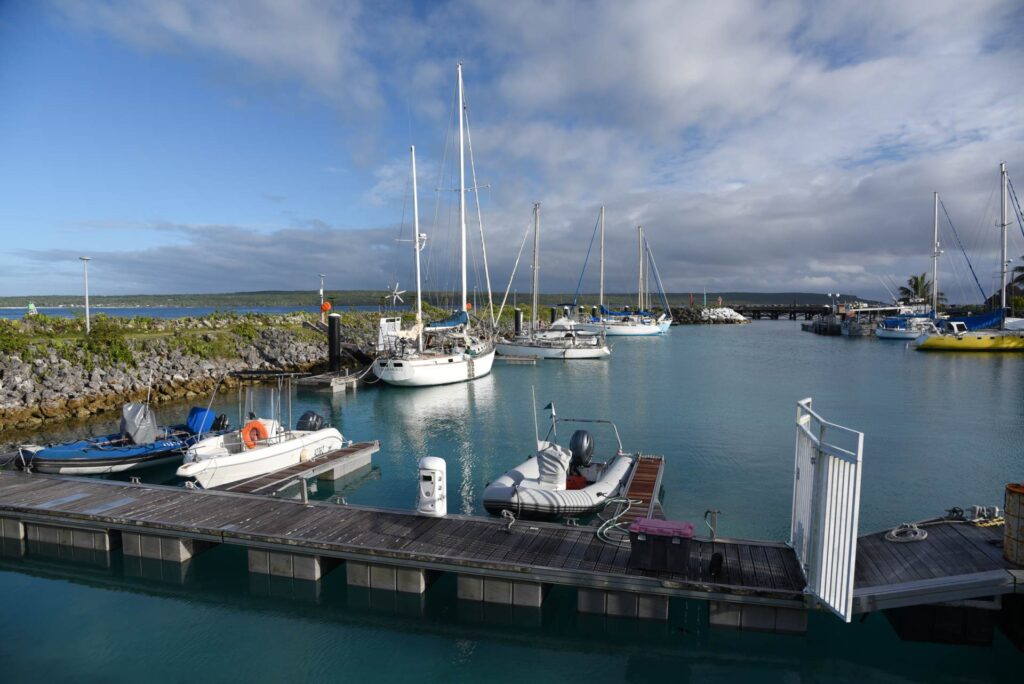
Based at Wé marina, near where the Betico 2 docks, Wé Plongée has been operating since 2018. Pascal set up the dive-centre in a container that also acts as a private bakery because he cooks bread every day!
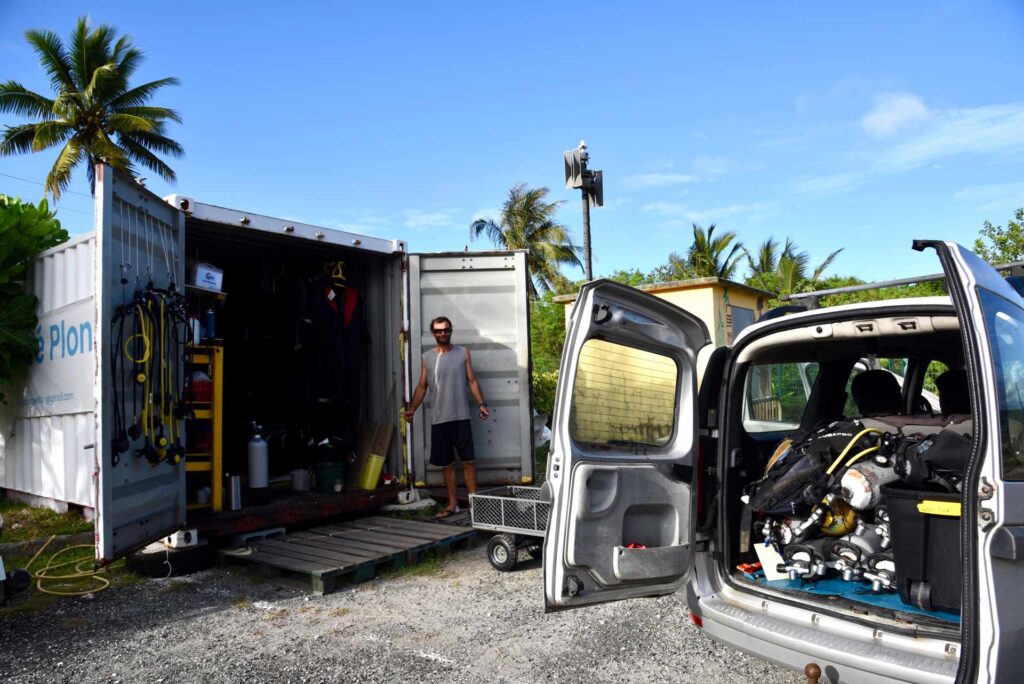
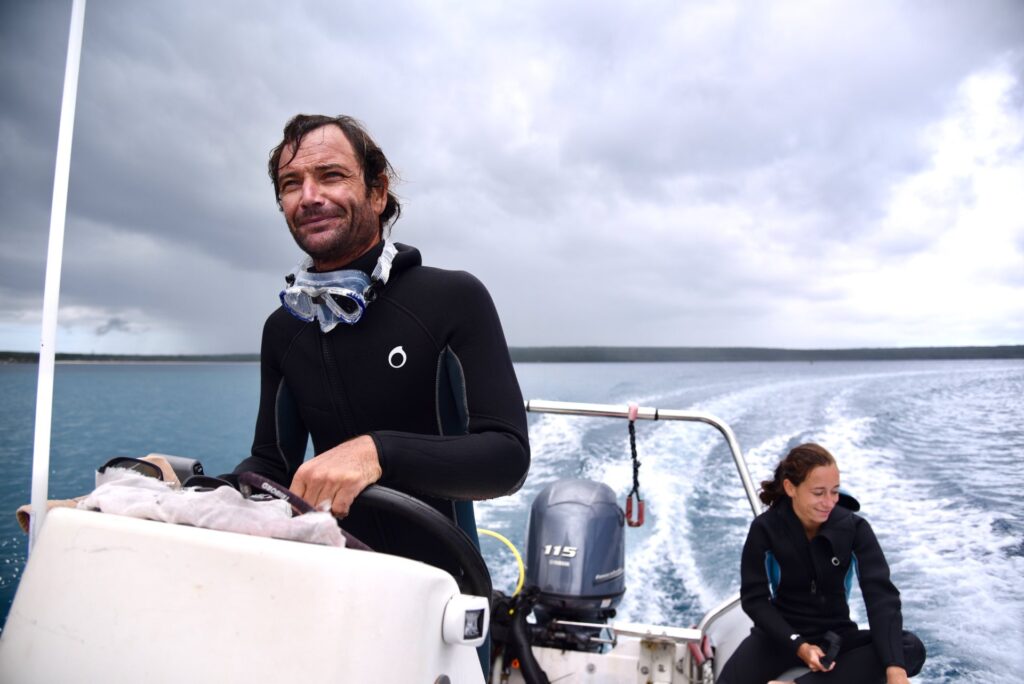
A French FFESSM as well as a PADI and SSI instructor, Pascal conducts Discover Scuba Diving experiences but also diver training at a variety of levels. Outings in Chateaubriand Bay are made using an inflatable, and most of the dive-sites are no more than five minutes away.
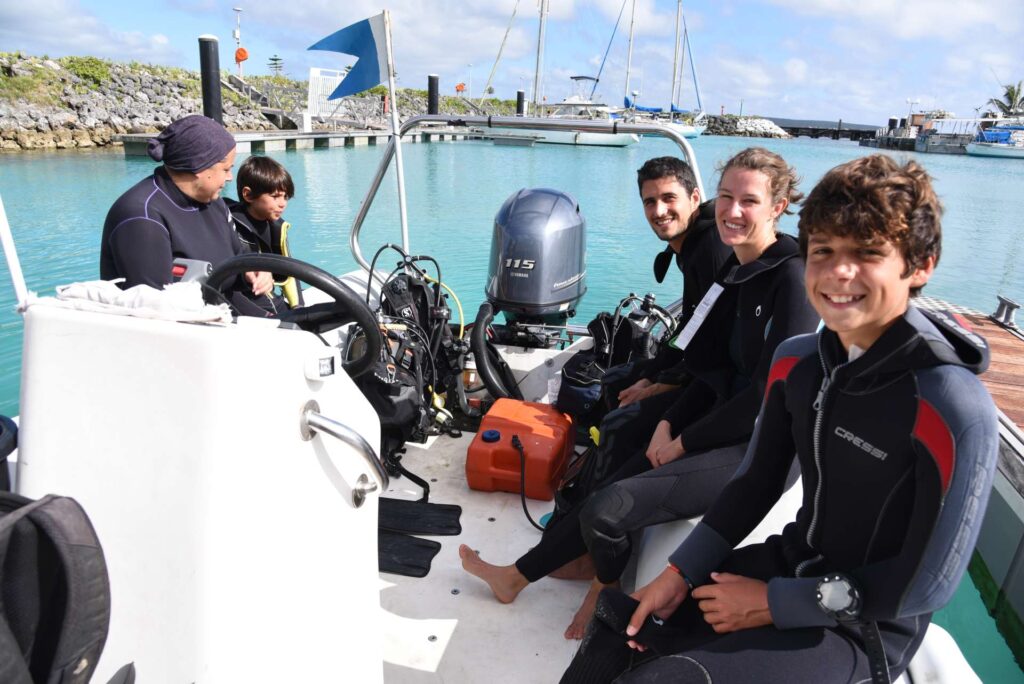
Permission to dive in any specific area must be granted by the tribal-custom authorities. Activities outside the bay are reserved for traditional clans. Qualified divers can go for two dives in the morning, while DSD and dive training takes place in the afternoon.
Province Good & Canyons
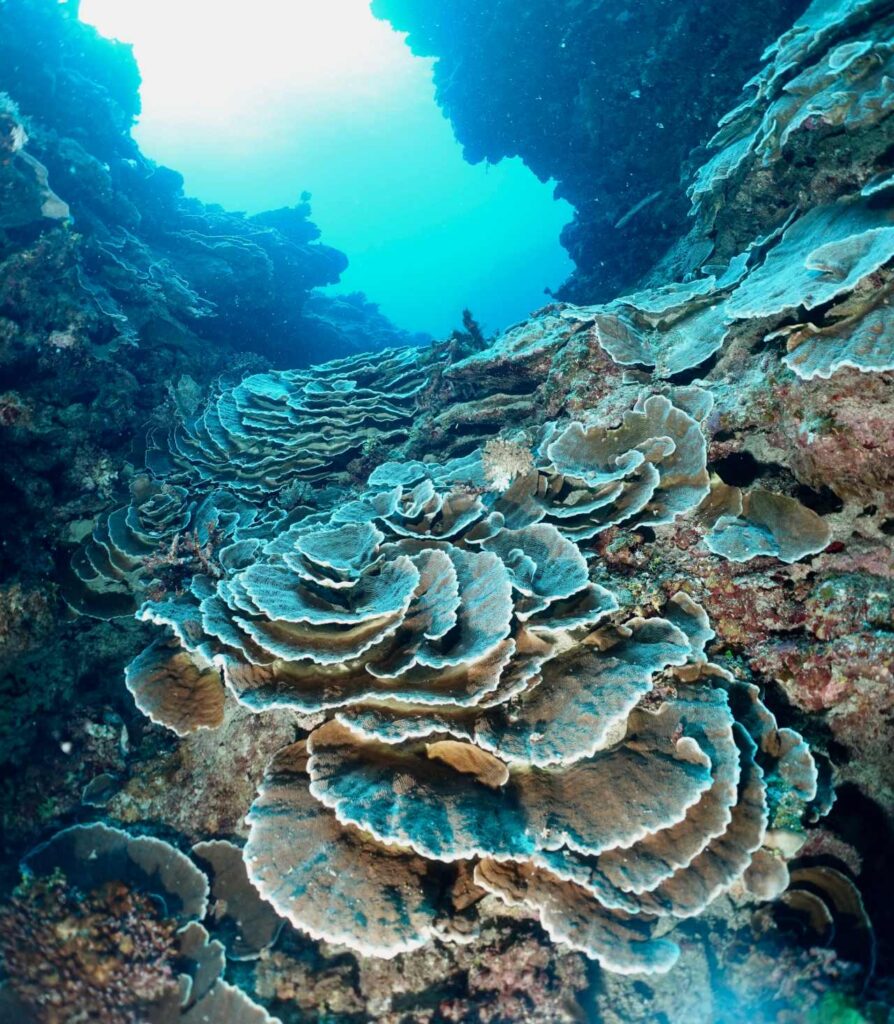
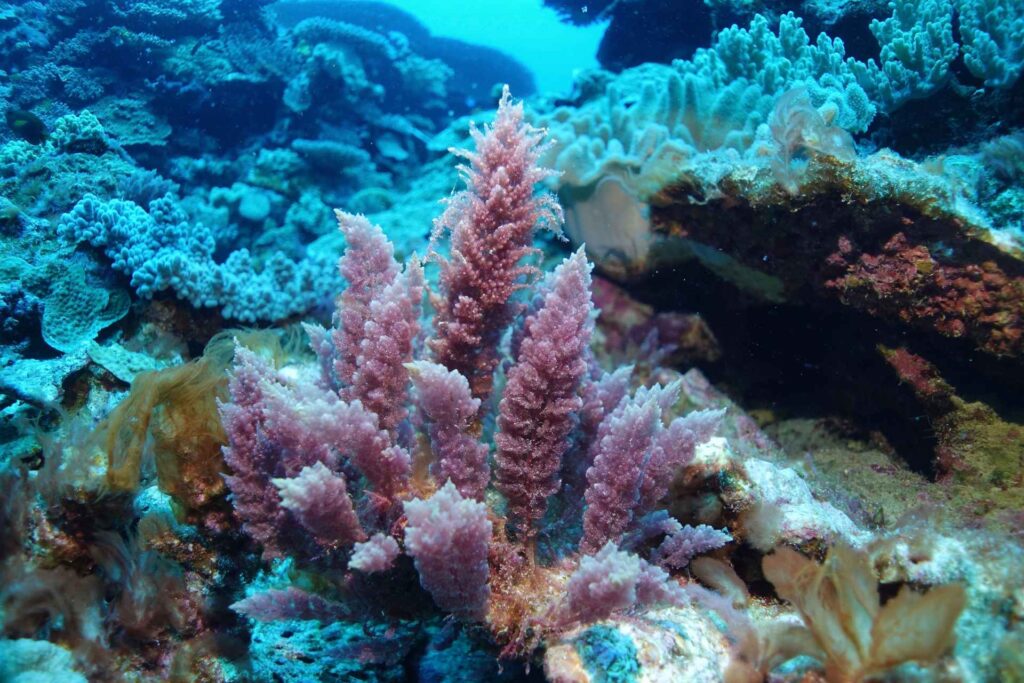
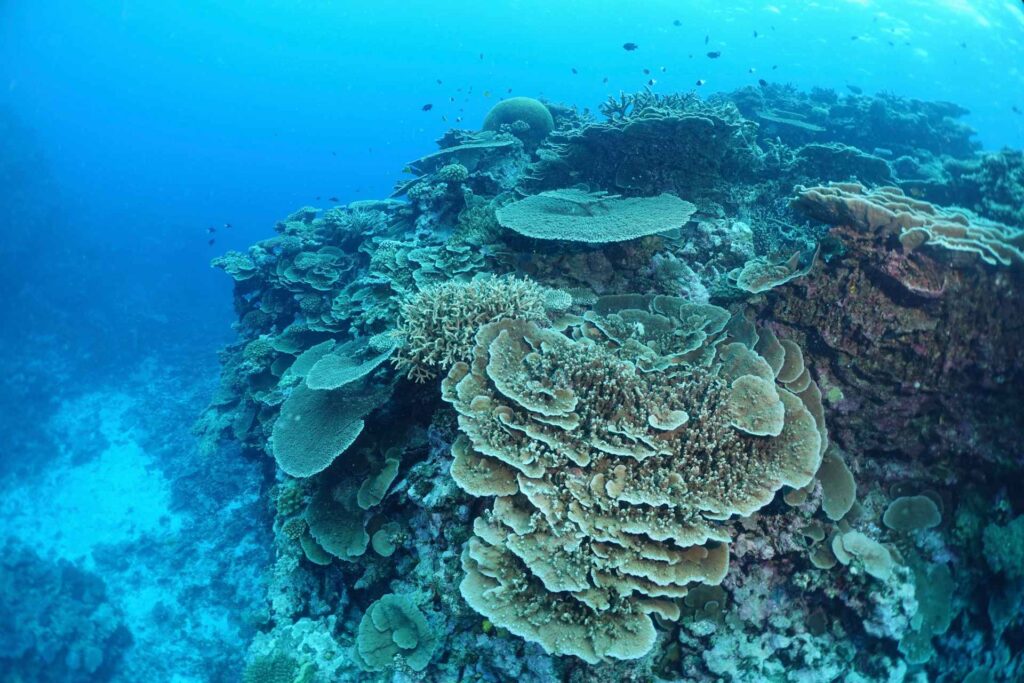
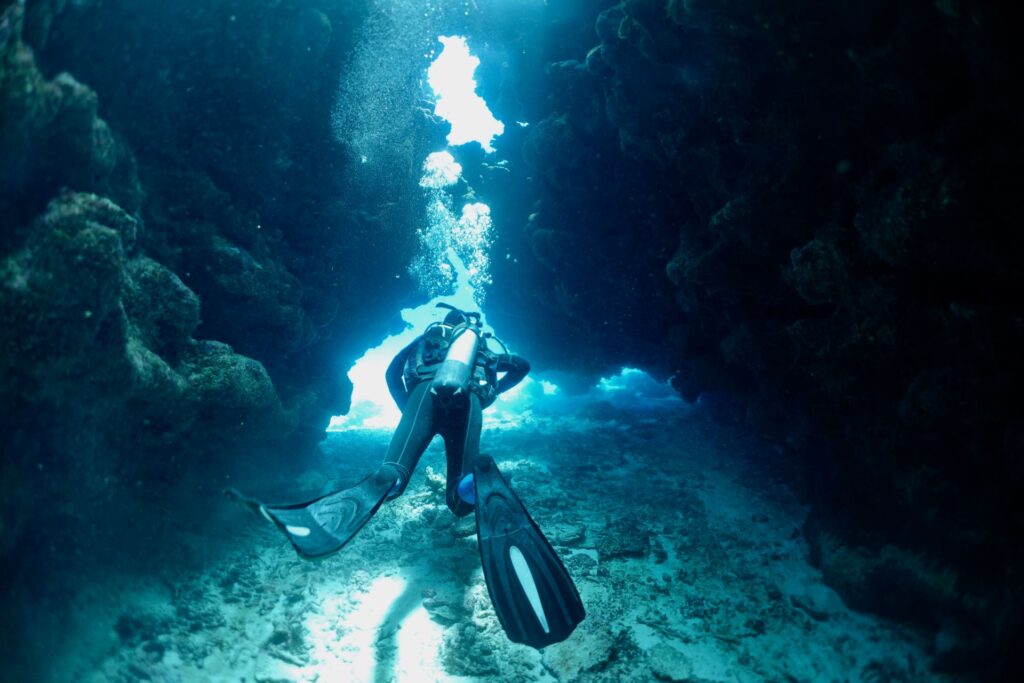
On the first day, the dive-plan was to visit the rather similar Province Good and Canyons. The reef is massive, cut with numerous canyons, swim-throughs and tunnels, with white sandy patches around it.
It was more of an atmospheric experience because the fish life was inconspicuous – no big specimens, no schools, only the usual butterflyfish, parrotfish, surgeonfish, occasional angelfish and the odd school of gold-spotted striped bream (Gnathodentex aureolineatus).
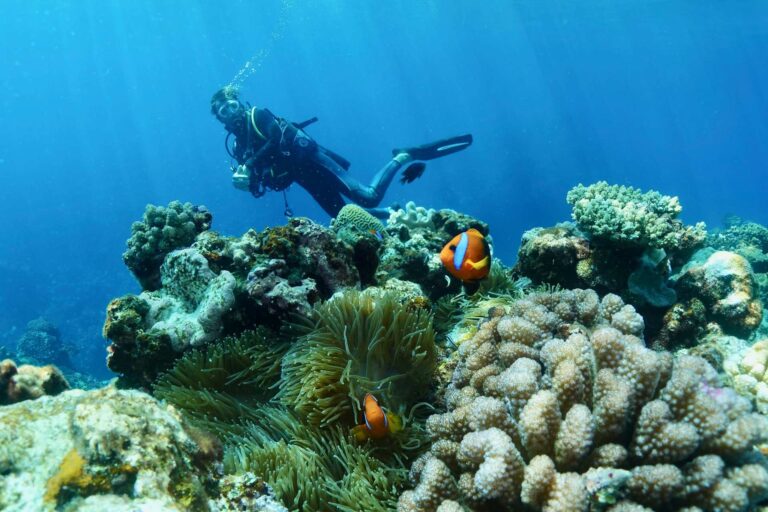
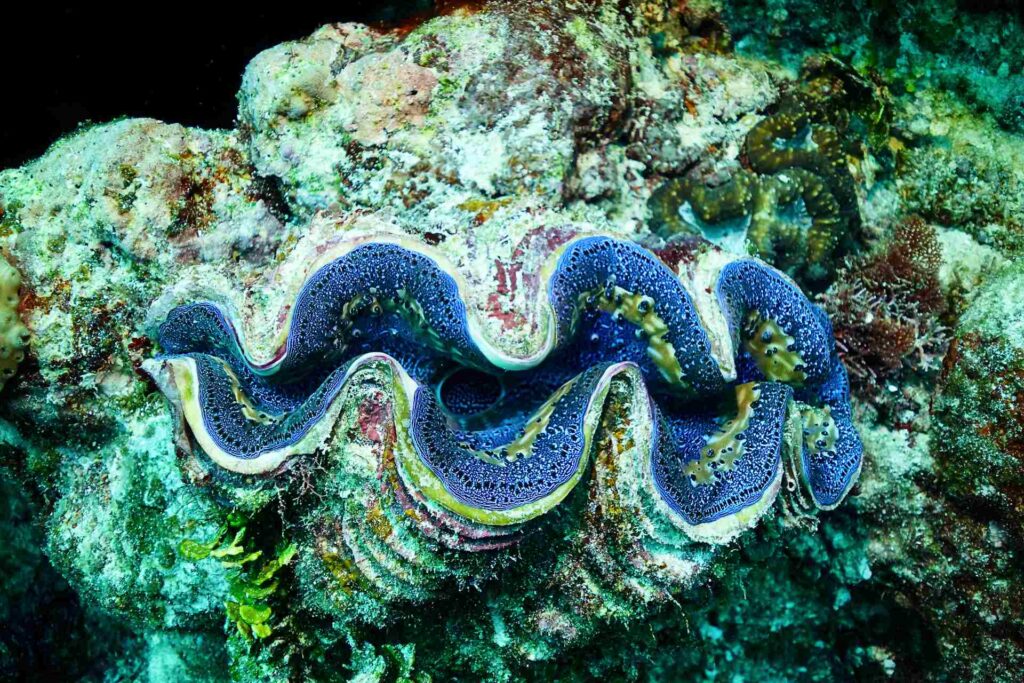
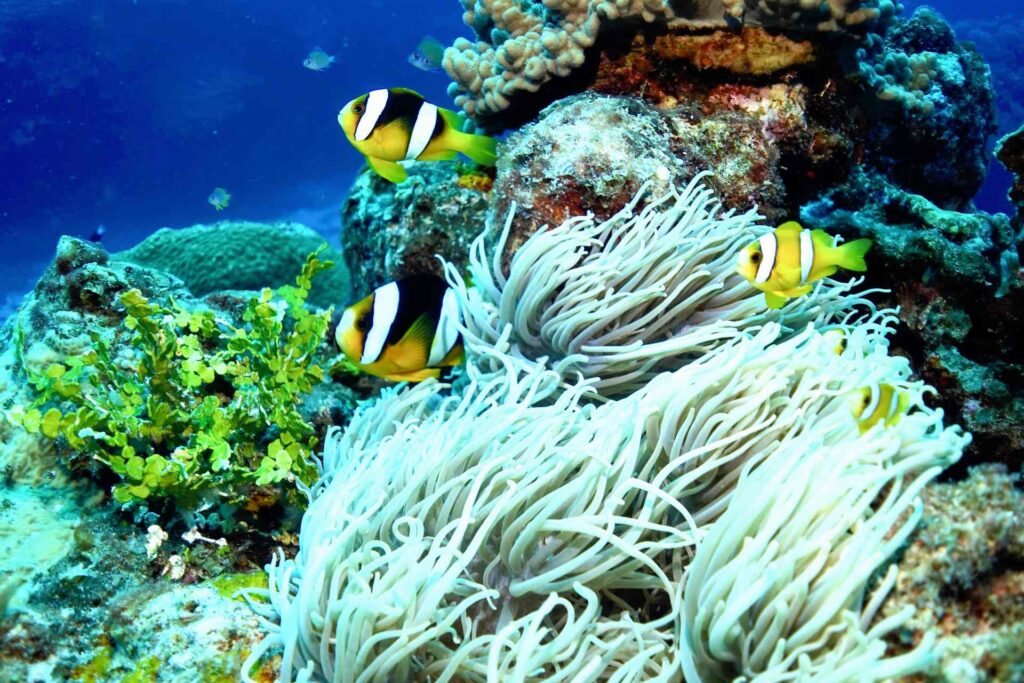
Colonies of orange-fin anemonefish (Amphiprion chrysopterus) with white tails were common, as were Clark’s anemonefish (A clarkii). Blacktail hogfish (Bodianus loxonotus) were a frequent sight. The pineapple sea cucumber (Thelenota ananas) was seen on the sandy bottom, and giant clams (Tridacna squamosa) too.

Tombant de la Marina
On day two, Pascal took me to one of his favourite sites, popular for training. Tombant de la Marina is a small drop-off with a maximum depth of 13m with white sand and scattered coral bommies.
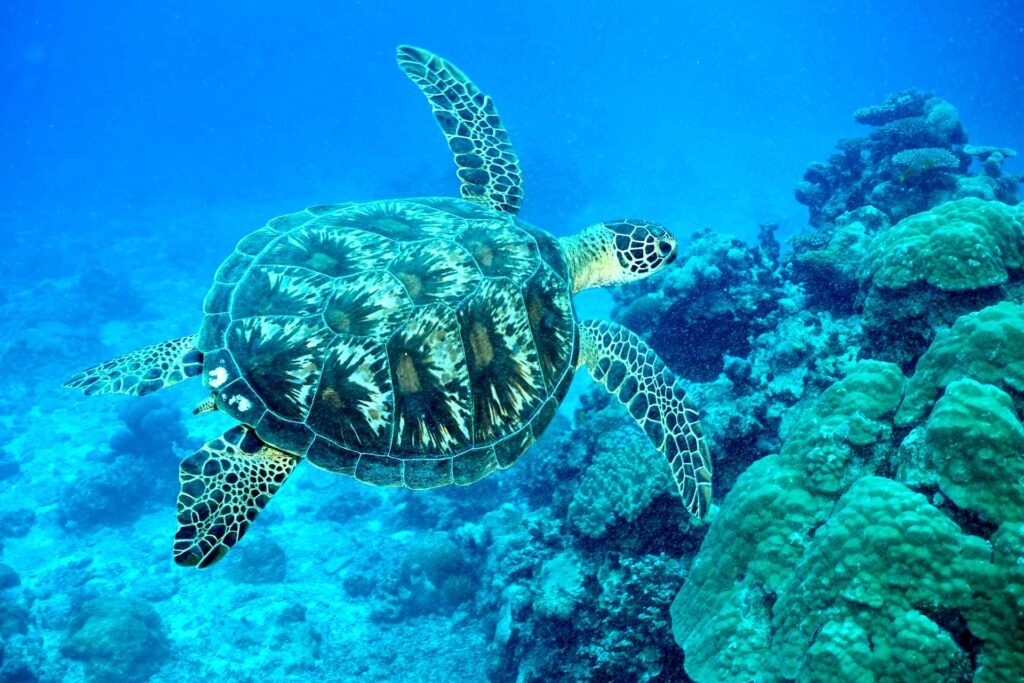
Fish-life tended to be more conspicuous, with green turtles, whitetip reef sharks, Napoleon wrasse, bluefin jack, coral grouper (Cephalopolis miniata) and peacock grouper (C argus), porcupinefish and guineafowl puffer.
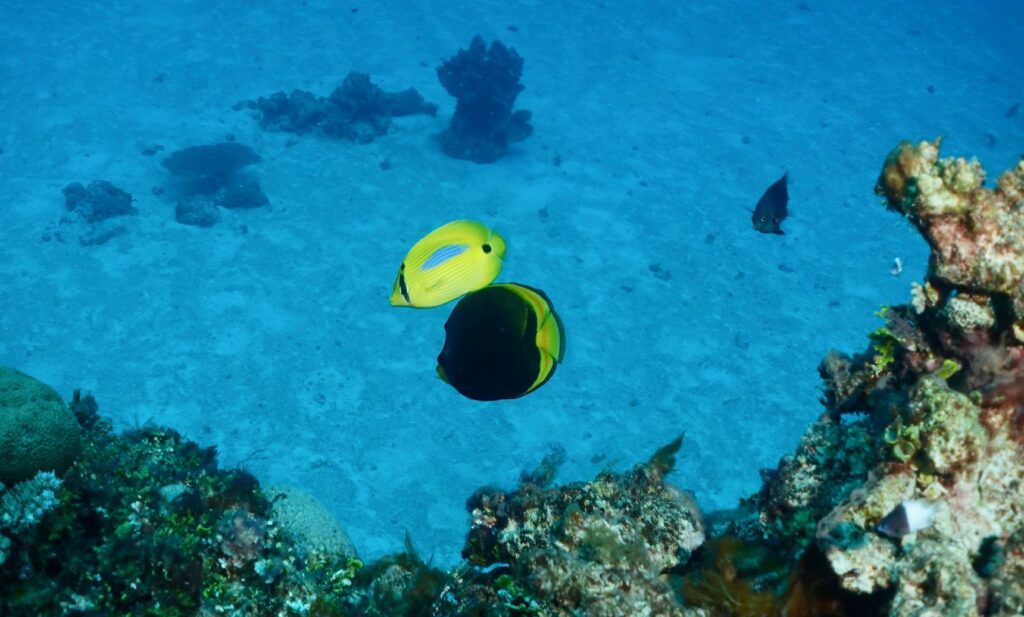
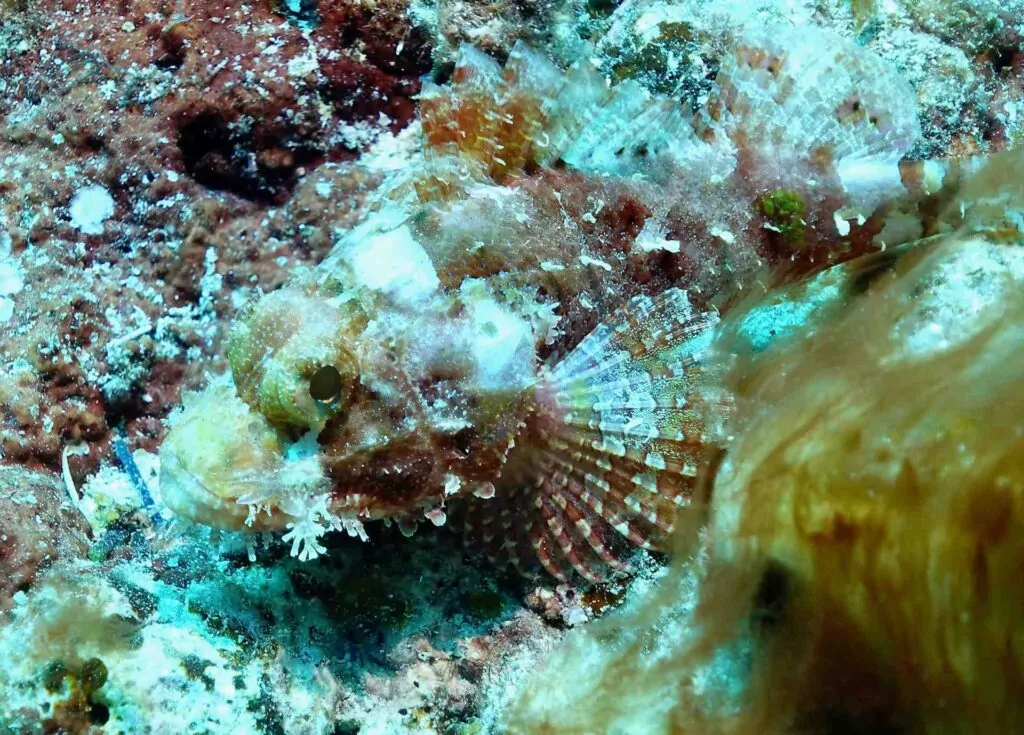
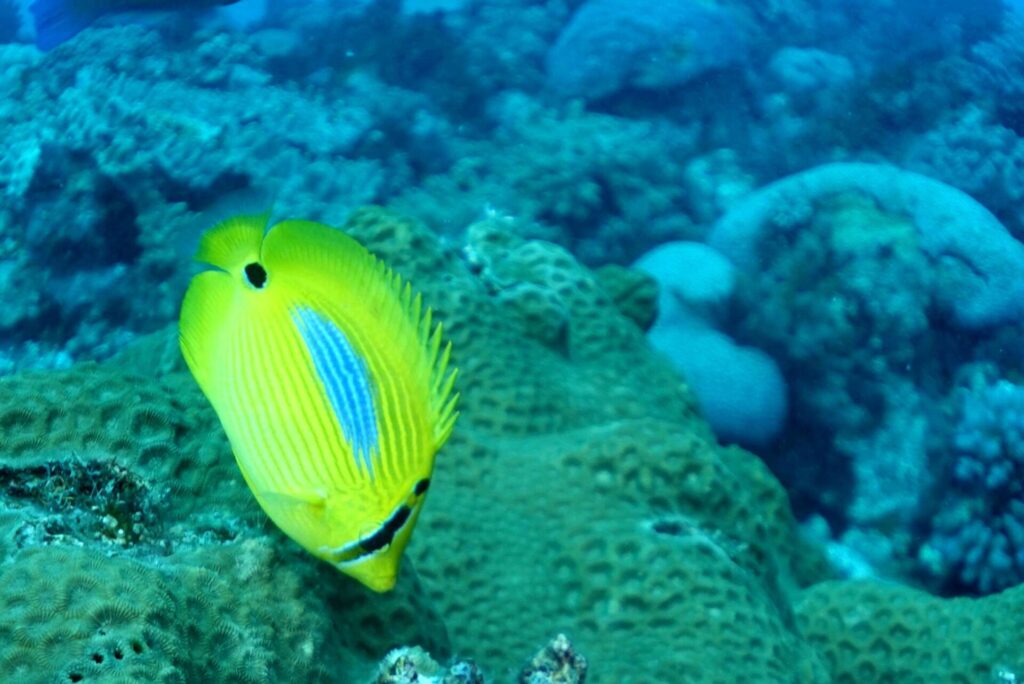
I came across several red and black anemonefish (Amphiprion melanopus), the devil scorpionfish (Scorpaenopsis diabolus) with its yellow and red pectoral fins, ovalspot butterflyfish (Chaetodon speculum), yellowbar parrotfish (Scarus schelgeli) and lemon-peel angelfish (Centropyge flavissimus) in yellow with a blue eye-ring.
“The other day, during training, we saw a manta ray and even a hammerhead shark once,” claimed Pascal enthusiastically.
Patates de Hnassé
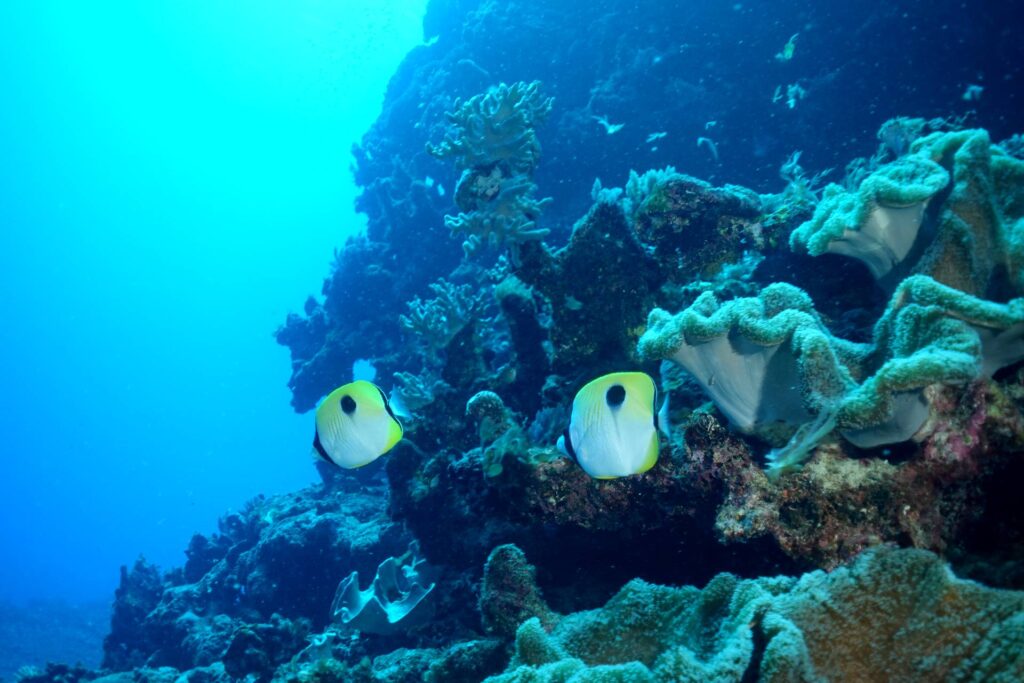
Patates de Hnassé turned out to be rather pleasant – a collection of large coral bommies, scattered over sandy flats, with an outer slope open to the blue.
Among others I saw teardrop butterflyfish (Chaetodon unimaculatus), Papuan scorpionfish (Scorpaenpsis papuensis), chevron butterflyfish (C fascialis) and blue dash butterflyfish (C plebeius). Twin-spot garden eels (Heteroconger hassi) ornamented the sandy bottom in places.
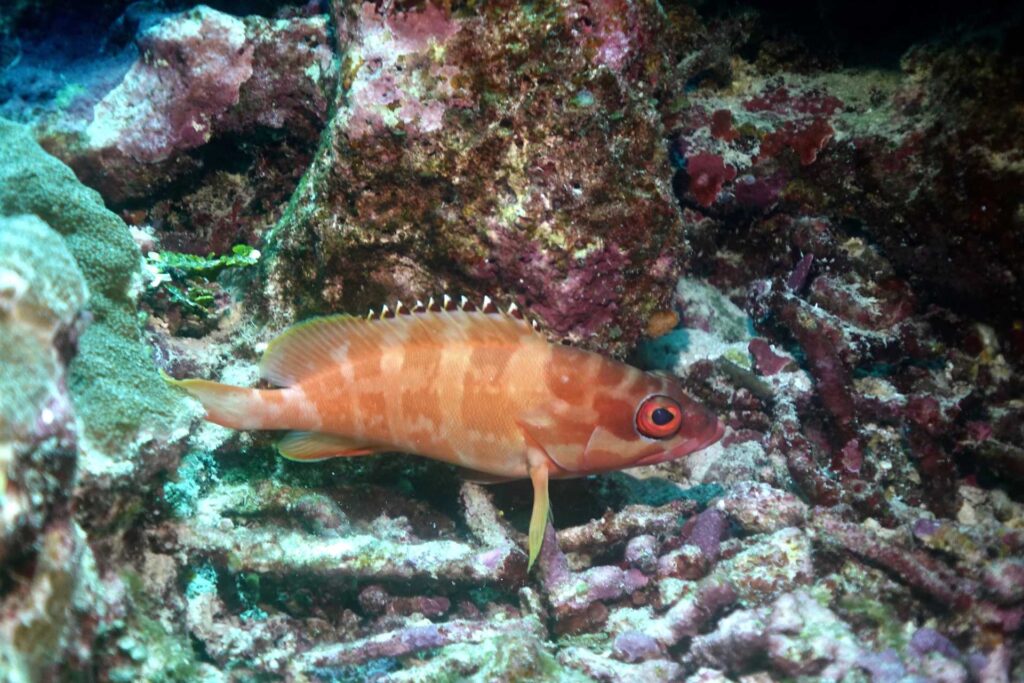
In the grouper family, there were honeycomb (Epinephelus merra), blacktip (E marginalis) with red with white blotches and the lunartail Variola louti.
A wide patch of Alveopora coral proved worth a look with its little daisy-like polyps, and blue and black spotted sting rays (Neotrygon kuhlii), clown triggerfish and sling-jaw wrasse (Epibulus insidiator) put in appearances.
Bouée Verte, lying between red and green buoys near the channel entrance, consists of four aligned bommies, with a deep slope to the left down to 25m and more.
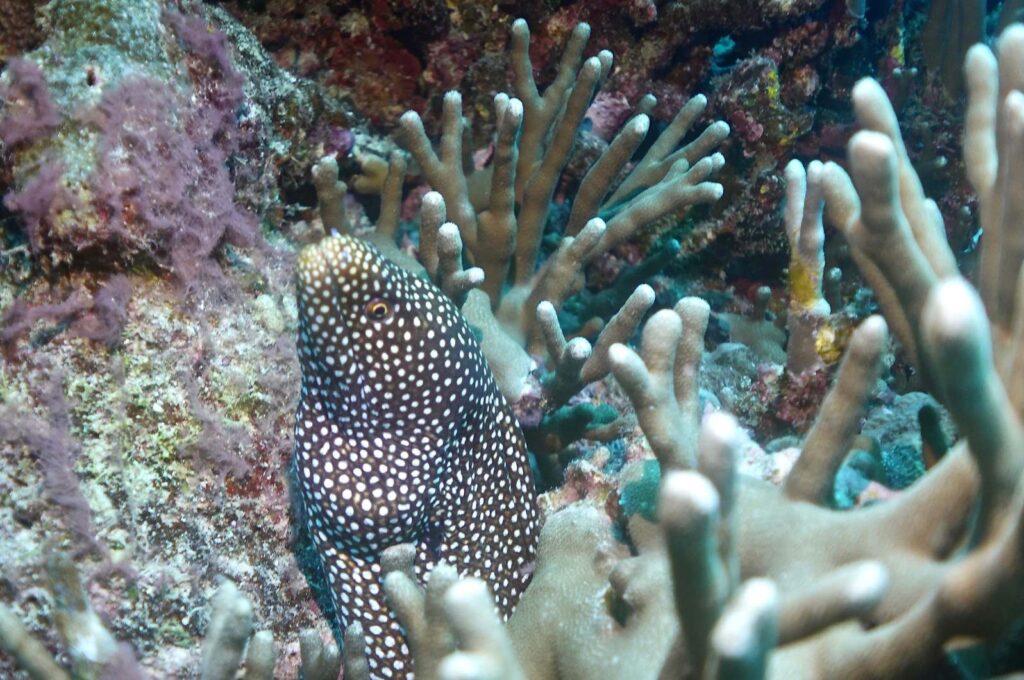
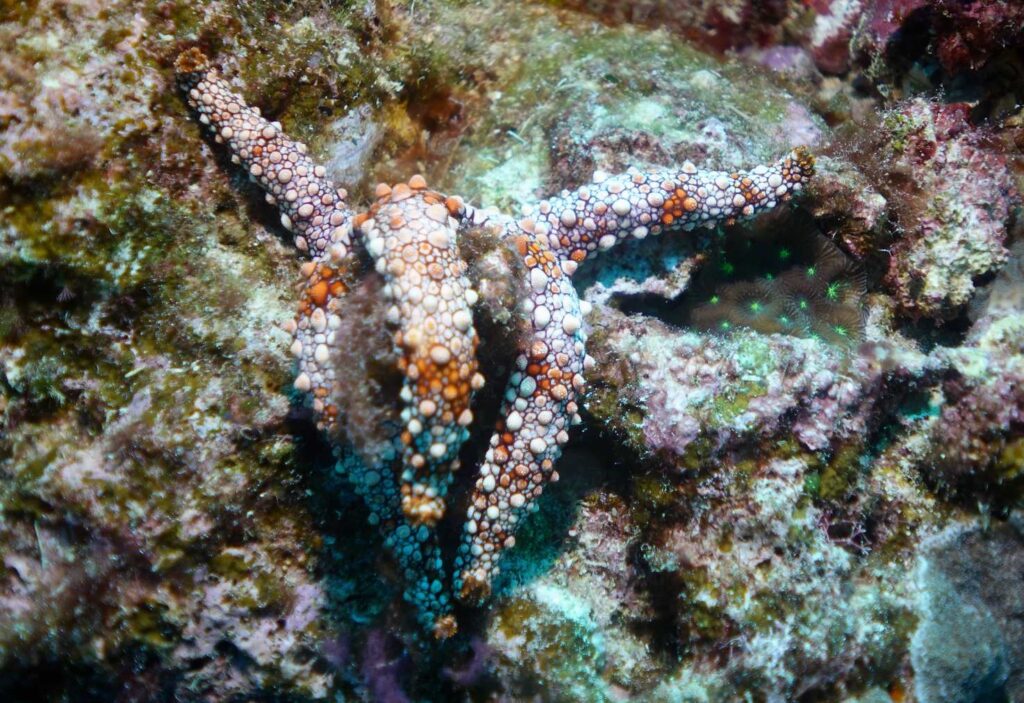
Both green and hawksbill turtles could be seen, along with the whitemouth moray (Gymnothorax meleagris), pale brown with white dots, semicircle angelfish (Pomacanthus semicirculatus) and bigeyes (Priacanthus hamrur) in crimson with a black eye. The Egyptian seastar (Gomophia egyptiaca) also caught the eye.
To the caves
On a day off from diving, touring the north or even all of Lifou with a hire car is recommended. The tar road led me to Hnathalo, from where the route to Tingeting proved quite a challenge. That’s because a youthful pastime is to destroy existing signboards wherever they might exist, requiring constant asking of the way.
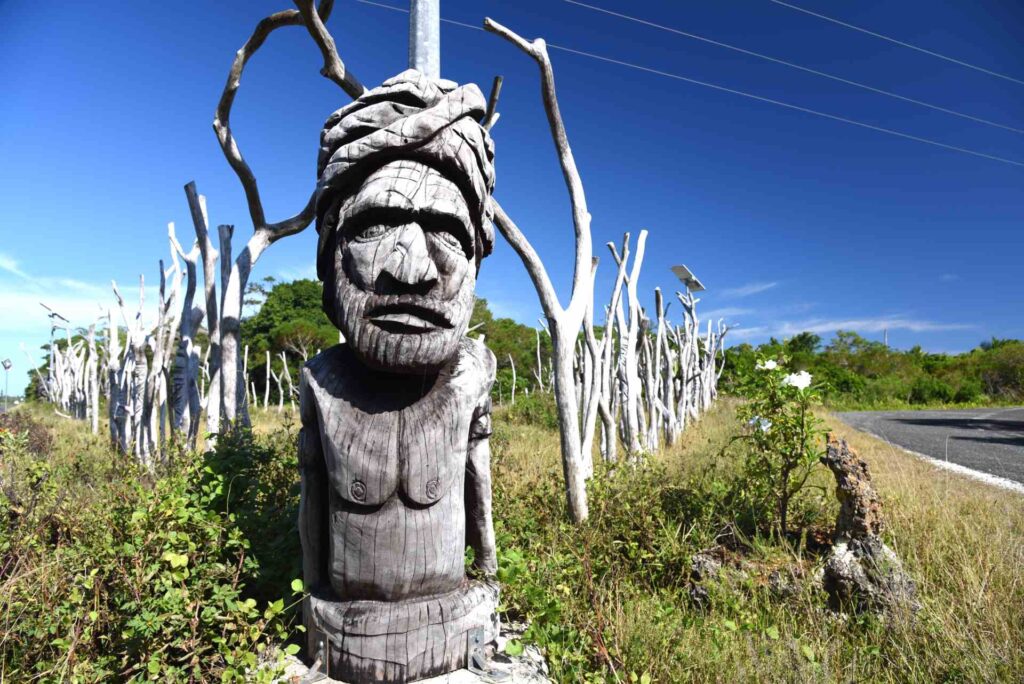
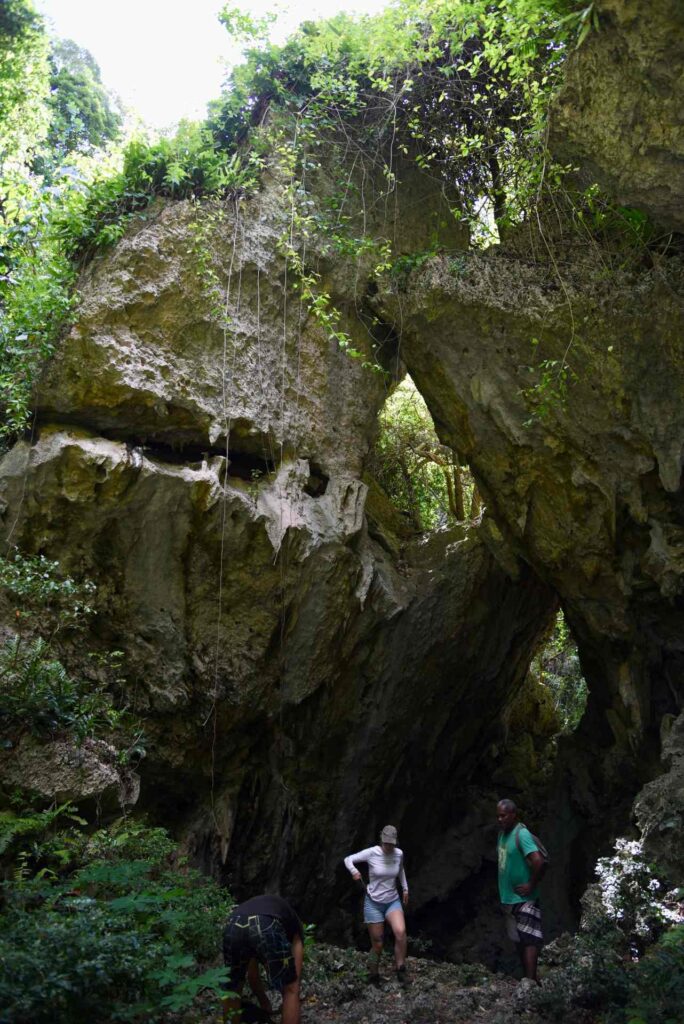
I eventually found the Devil’s Cave, where the elderly landowners requested an entry fee equivalent to about £14. A 10-minute forest trail led to the base of a cliff, the outer limestone crown of the atoll.
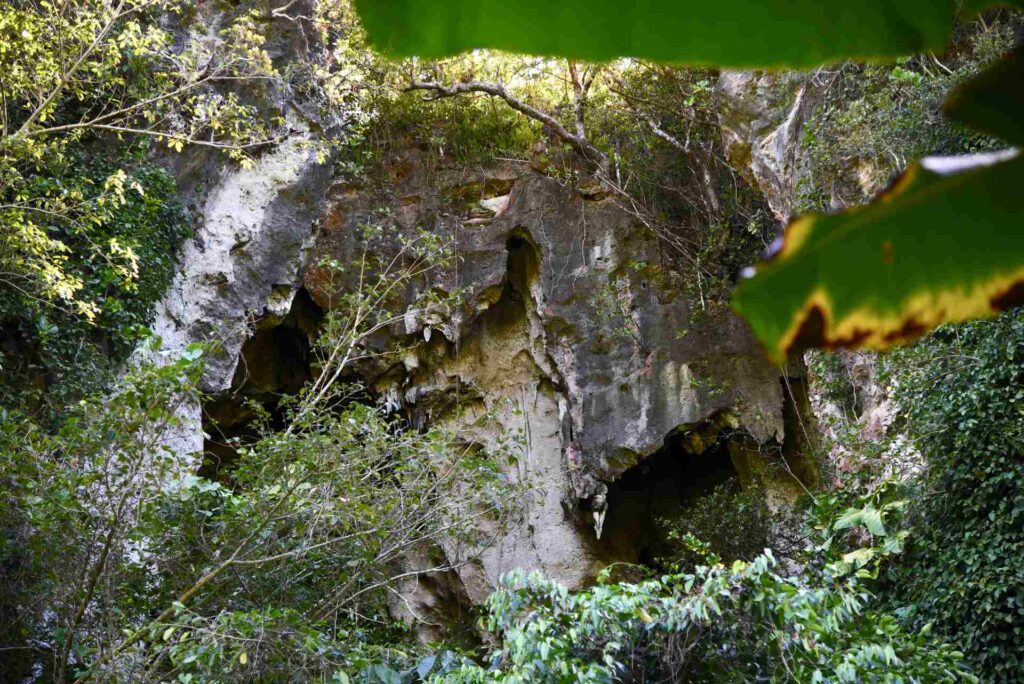
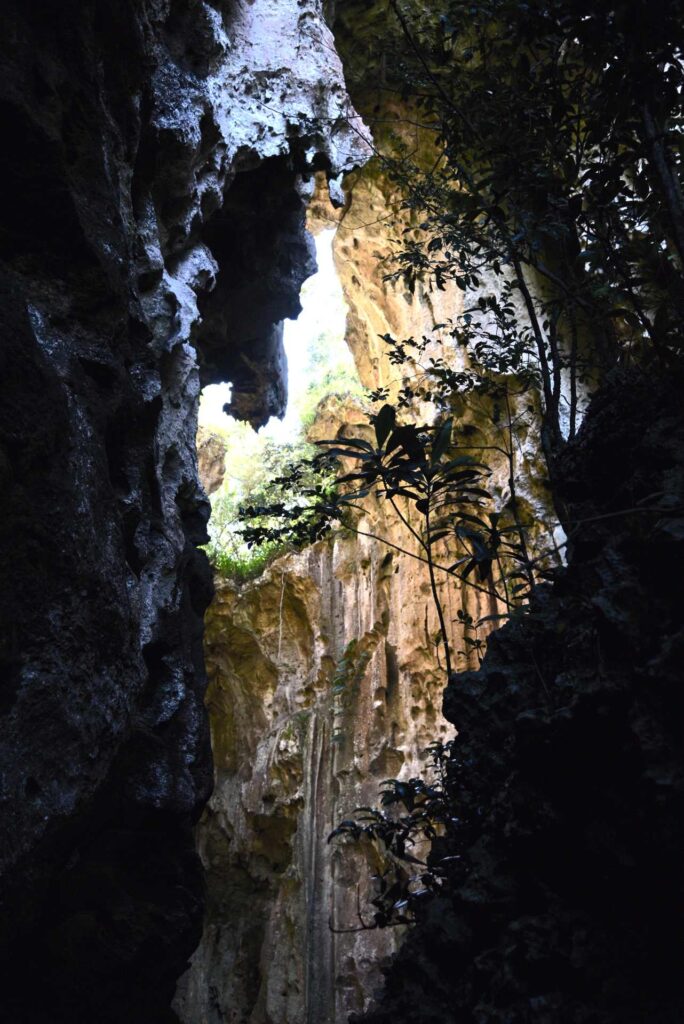
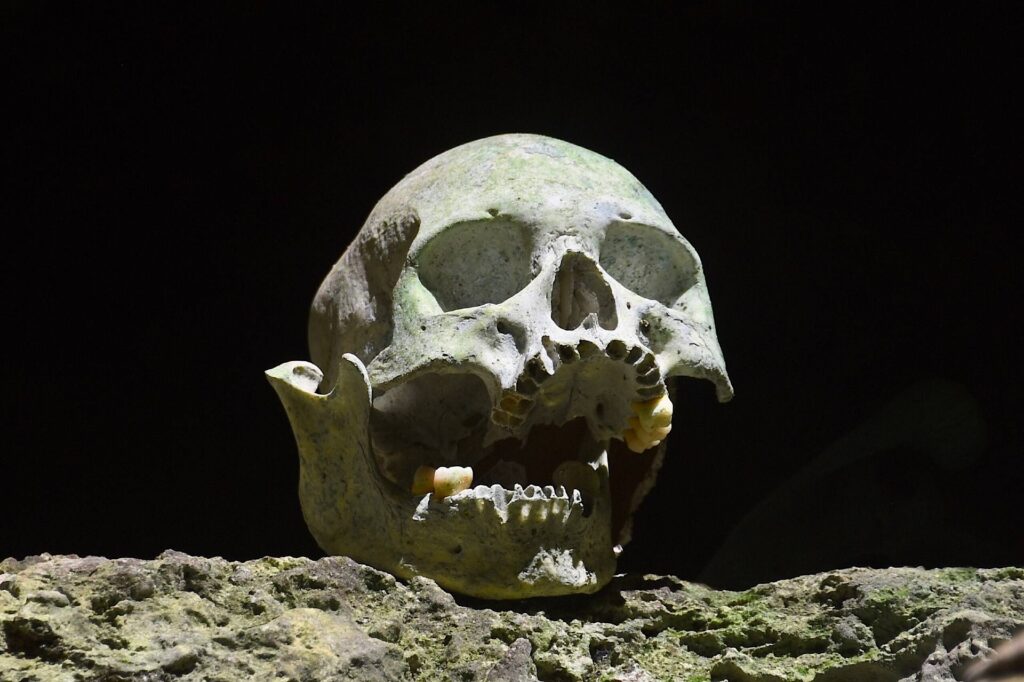
Climbing up and down, I found a heavily fractured cave with an open roof. A bunch of human bones lay in a cavity on the left, with a couple of skulls grinning stoically on a rock shelf above. “Remains of cannibal times and macabre rituals,” I was told.
The number of caves in Lifou is impressive, some extending in as far as 8km. Having read about the presence of water in some of these I chose to dive Luengoni Cave on the south-east coast. Permission has to be granted by the landowner.
Athletic-looking Pascal Qazing, a self-proclaimed champion of Kanak independence, ran tours to the cave and agreed to take me along one morning. He lit small candles inside the cave and partly around the inner lake, where visitors were delighting in a cool bathe.
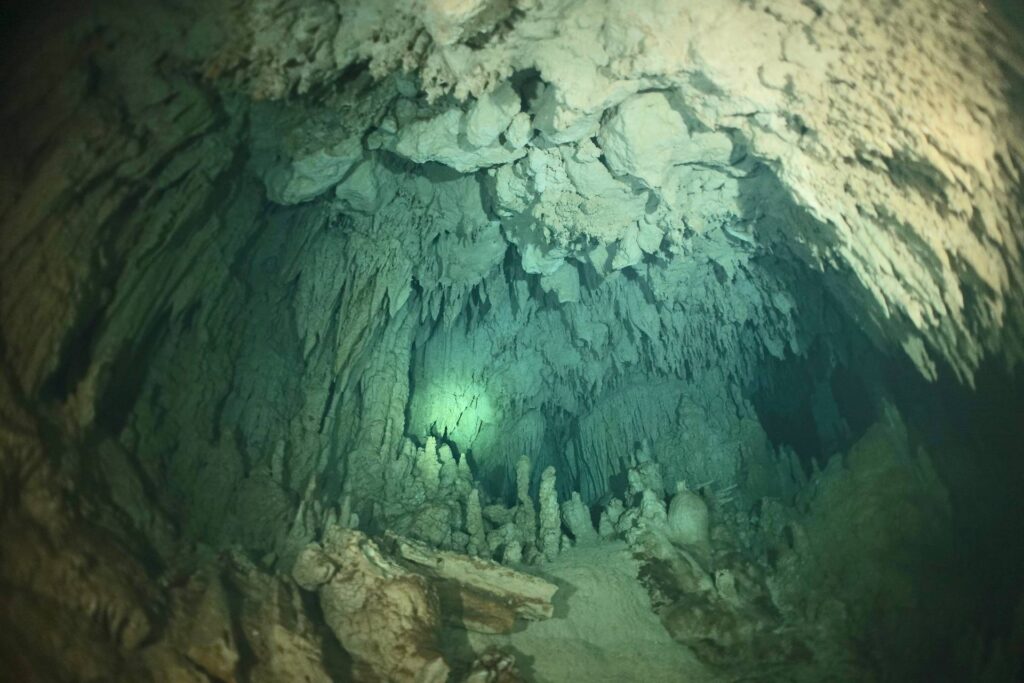
Tank on my back, I submerged in the clear pool. The temperature was 21°C. I followed a narrow tunnel with some stalactites and stalagmites up and down, nothing fancy, until I reached the halocline at 10m deep.
My dome lens suddenly grew foggy. It was only condensation from the warmer saltwater but I turned, annoyed, afraid that I had flooded the camera.
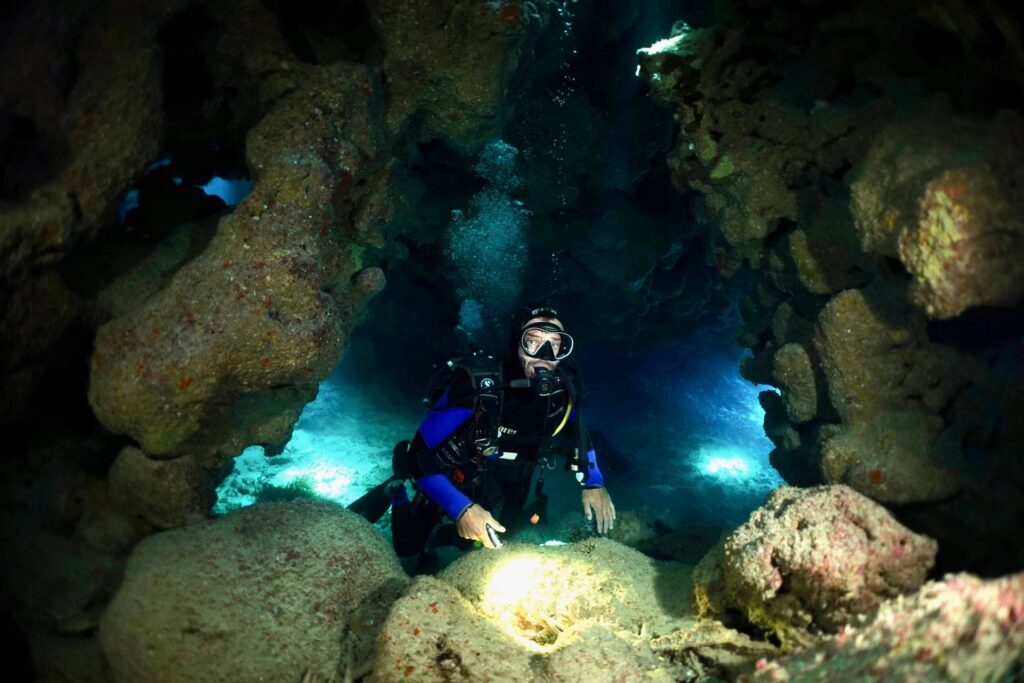
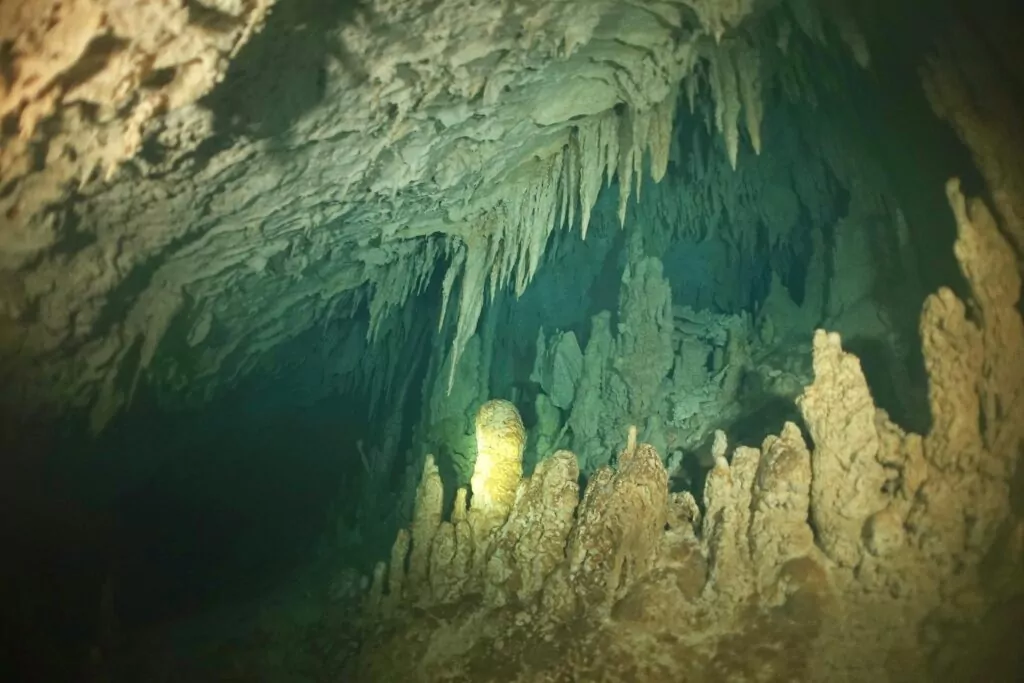
In search of Inegoj Cave, I found the 78-year-old landowner sitting at his table listening to the radio. He referred me to a man in town who managed the area, but my permission to visit in a couple of days’ time failed to materialise because the only possible guide was otherwise engaged in the yam fields. I had to forego that 500m-long tunnel leading to an underground lake.
Gorgones Reef
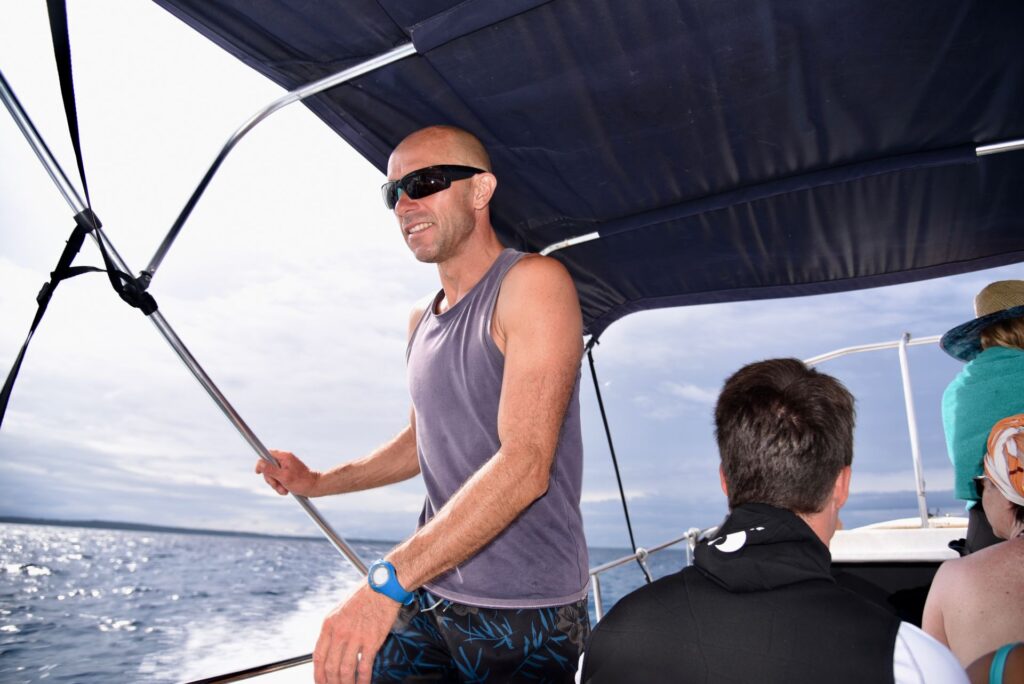
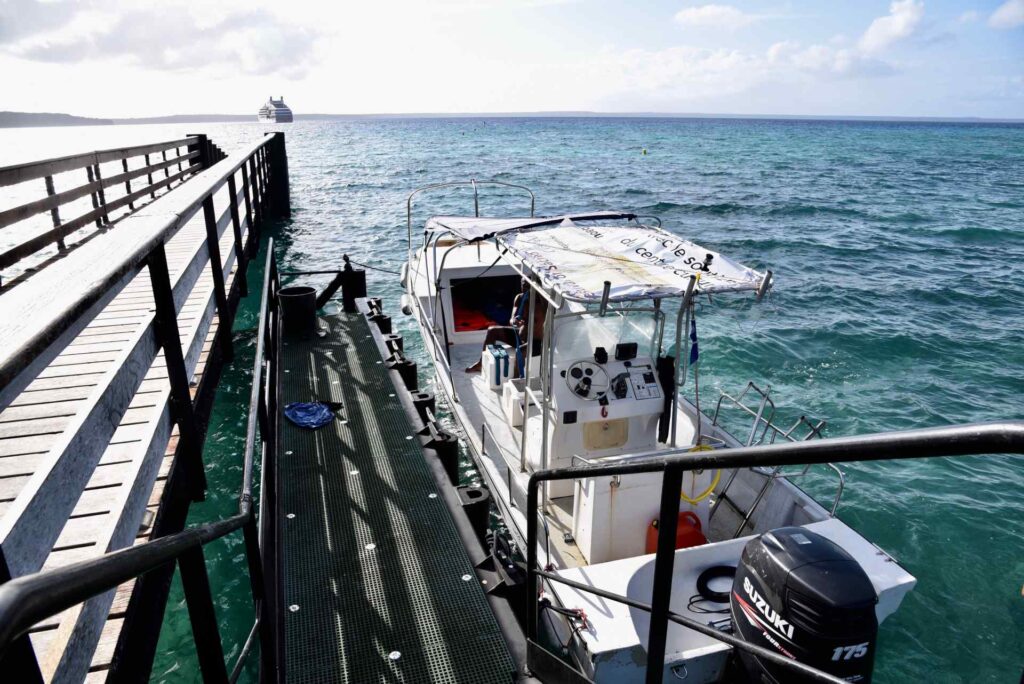
Pascal recommended that I contact a dive-centre in Easo, on Lifou’s north-west coast, run by Bastien, a tough-looking but friendly bald fellow. Lagoon Safaris had been operating since 2013, with a 7.5m glass-fibre boat with 175hp outboard that could carry eight divers to some 25 dive-sites north of Baie de Jinek.
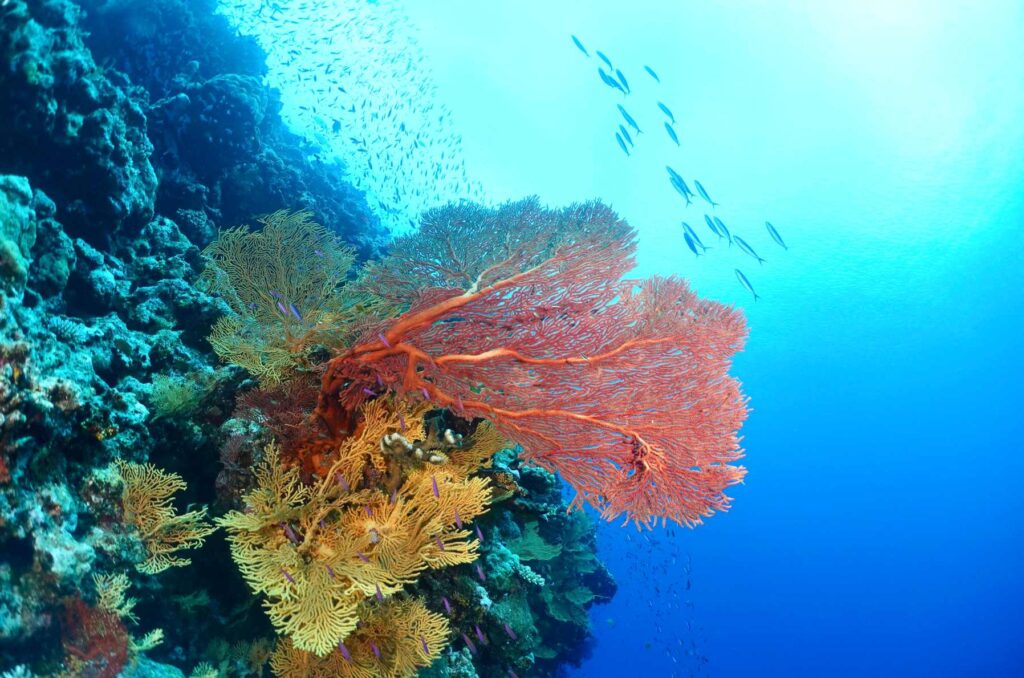
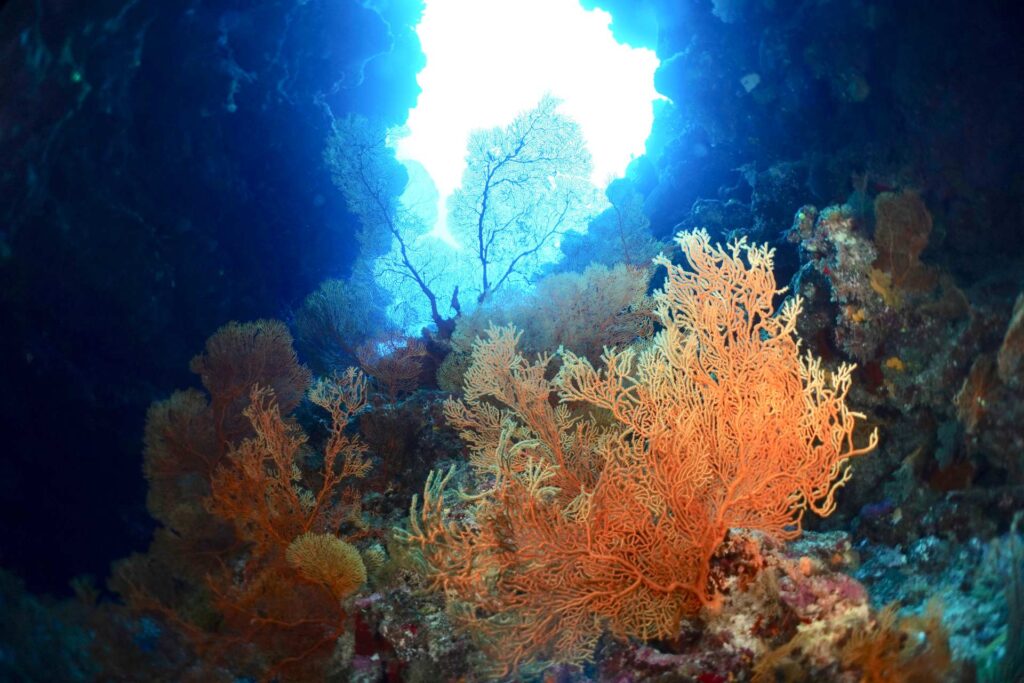
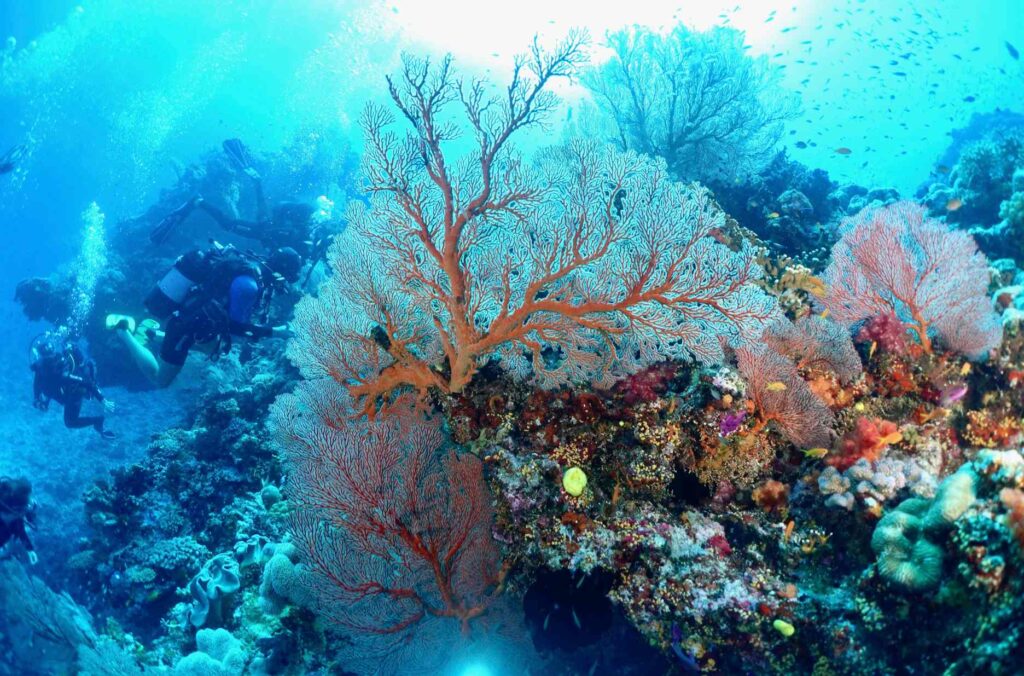
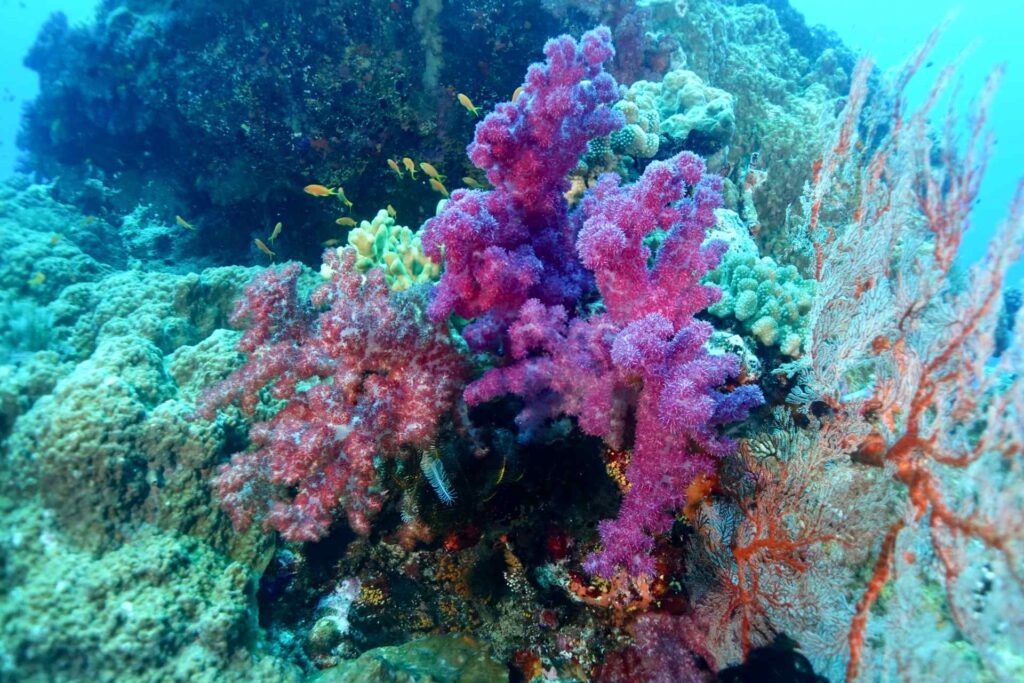
The diving contrasted with that of the confined waters of Baie de Chateaubriand, with cobalt waters, gin-clear visibility and plenty of fish welcoming me at Gorgones Reef. Open to the ocean and bathed in a regular north-flowing current, the site offered a bonanza of gorgonians and soft corals and proved to be a healthy, vibrant reef.
Two pinnacles rose from 30m+ on white sand, and the water temperature was 27°C. Bluefin jack paired with barcheek jack (Carangoïdes plagiotaenia), noticeable for chevrons on silver sides and a black dash on the gill-cover. Red snapper (Lutjanus bohar) mixed with a large school of black snapper (Macolor niger) close to the surface between pinnacles.
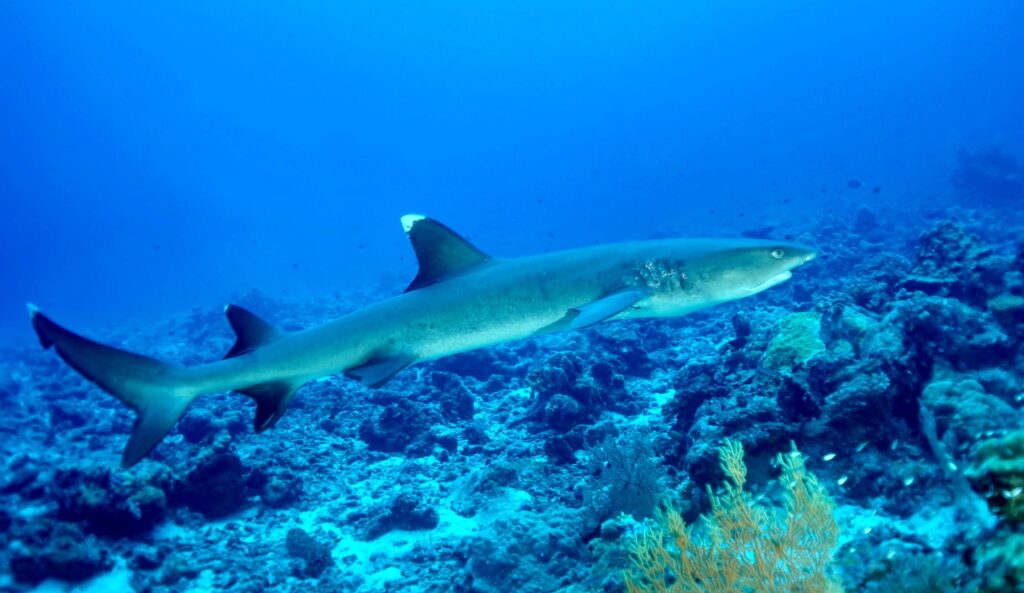
Some big dogtooth tuna (Gymnosarda unicolor) cruised past in the deep, and whitetip sharks were occasionally seen resting on the sandy seabed. On top of the pinnacle, a sling-jaw wrasse (Epibulus insidiator) with its yellow and brown phases attracted my attention..
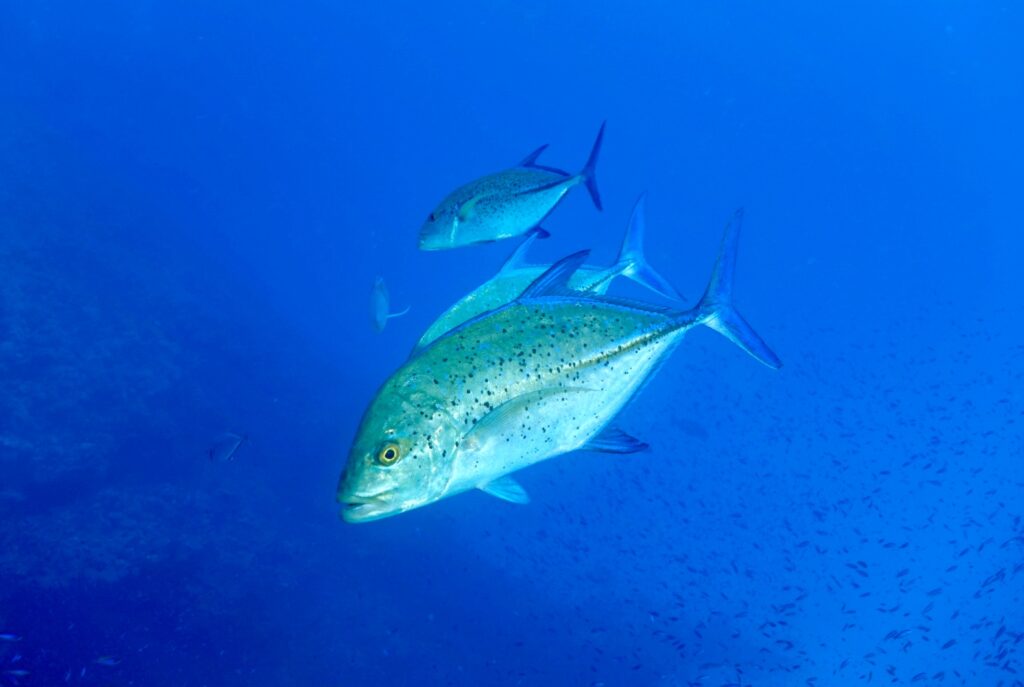

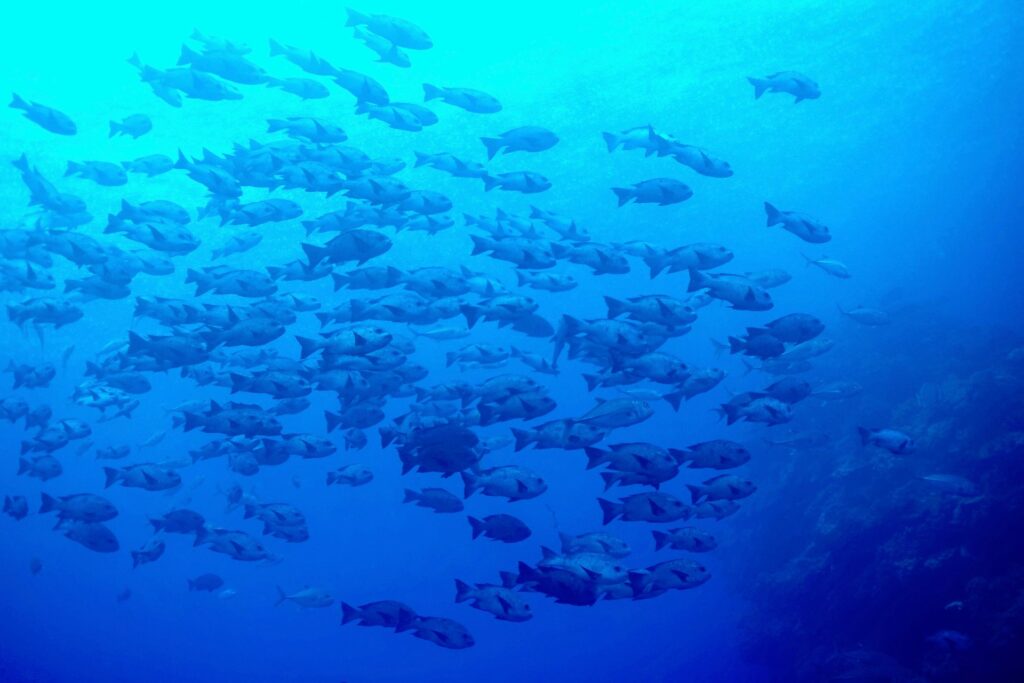
A stone’s throw away was the Arch, a gigantic archway decorated with enchanting red and golden gorgonians. On top of the mound, three snubnose pompanos (Trachinotus blochii), silver with yellow fins, teamed up with a school of rather shy bigeye jack.
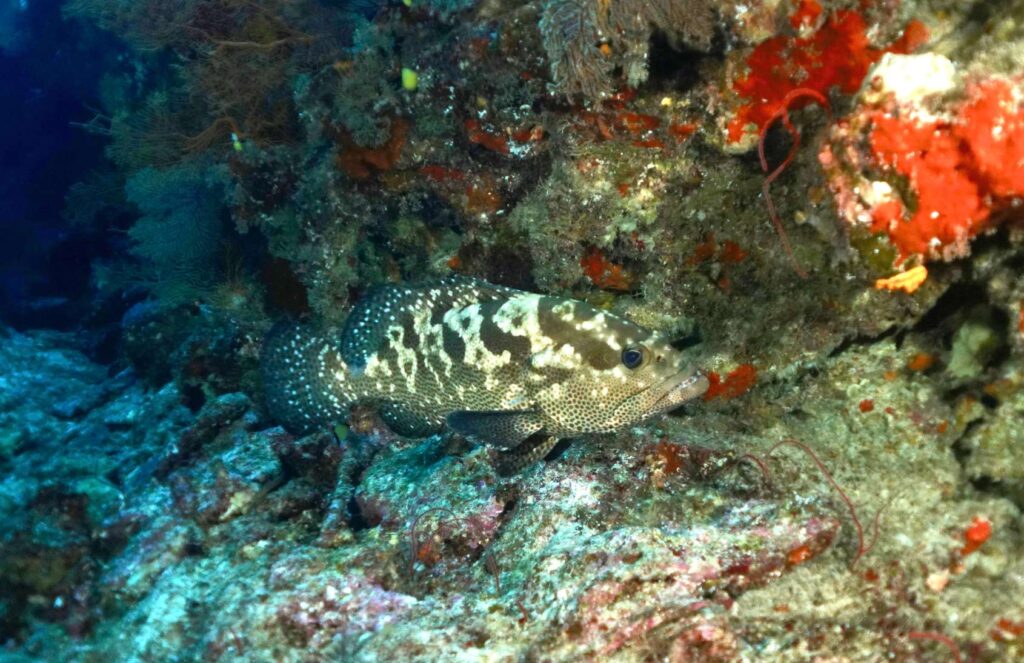
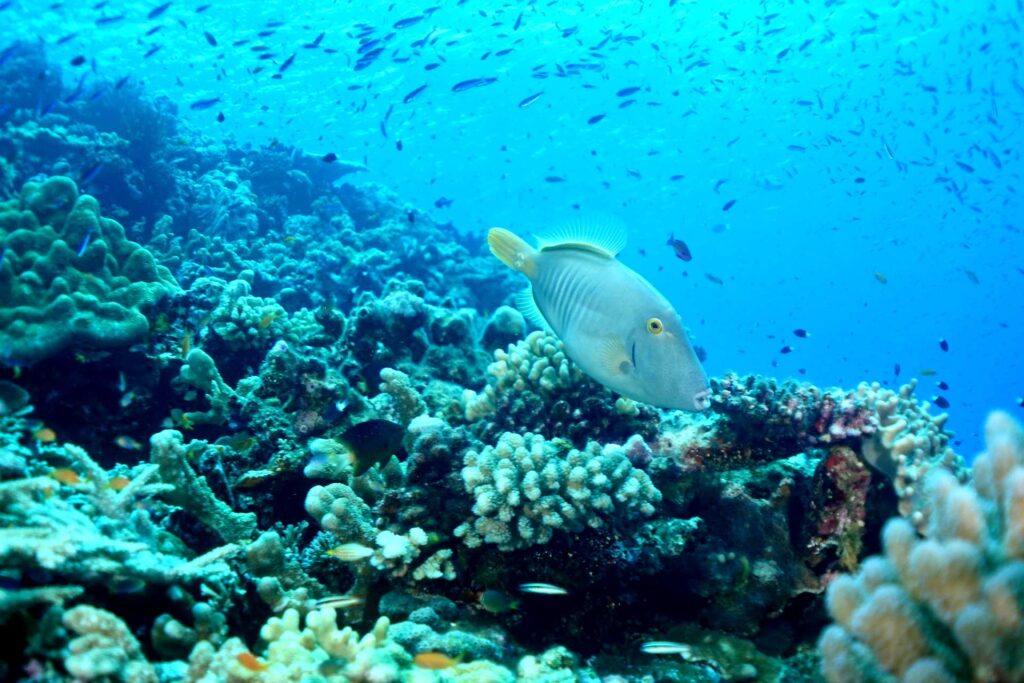
A yelloweye filefish (Cantherhines dumerilii) showed up inquisitively. Peacock and coral grouper roamed everywhere and a camouflage grouper (Epinephelus polyphekadion) hid under an overhang, gazing at me placidly.
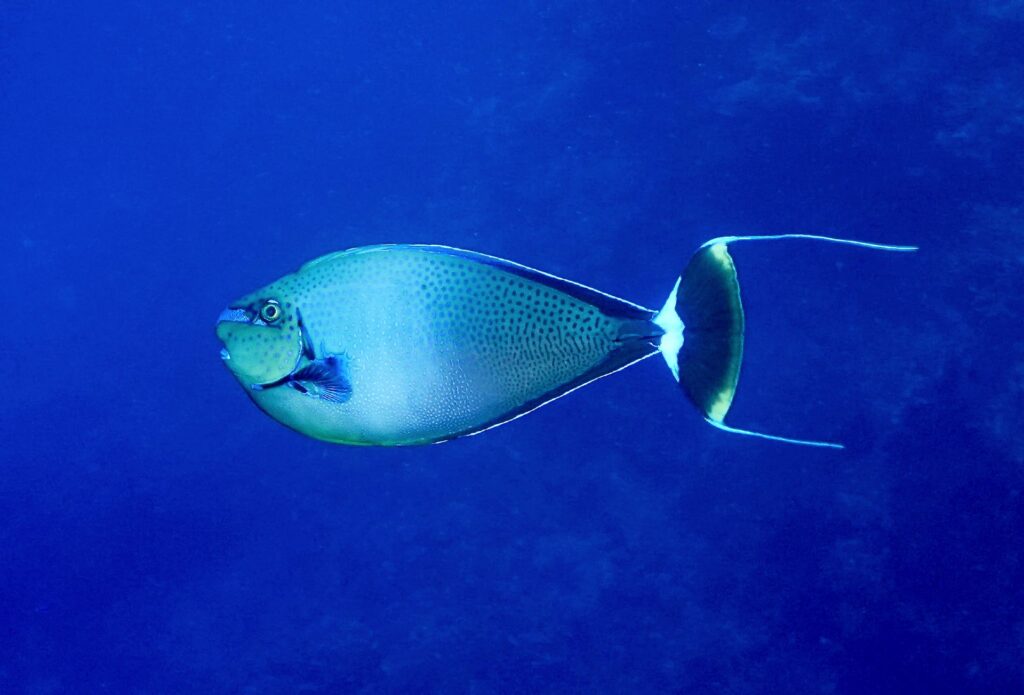
A 2m long grey reef shark swam in leisurely fashion at depth. Snubnose unicorns (Naso vlamingii) were a visual delight, blue filaments streaming at the tail end.
Cap Martin
Cap Martin, further north, offered the sight of a big coral bommie away from the wall. The spot was full of gorgonians and soft corals. As I explored a smaller bommie protected from the strong current, Bastien frantically pointed at something behind me.
I turned just in time to gaze in awe at a beige hammerhead shark drawing a graceful curve over my back. It was such a surprise that I didn’t even have time for a photo!
Tomoko
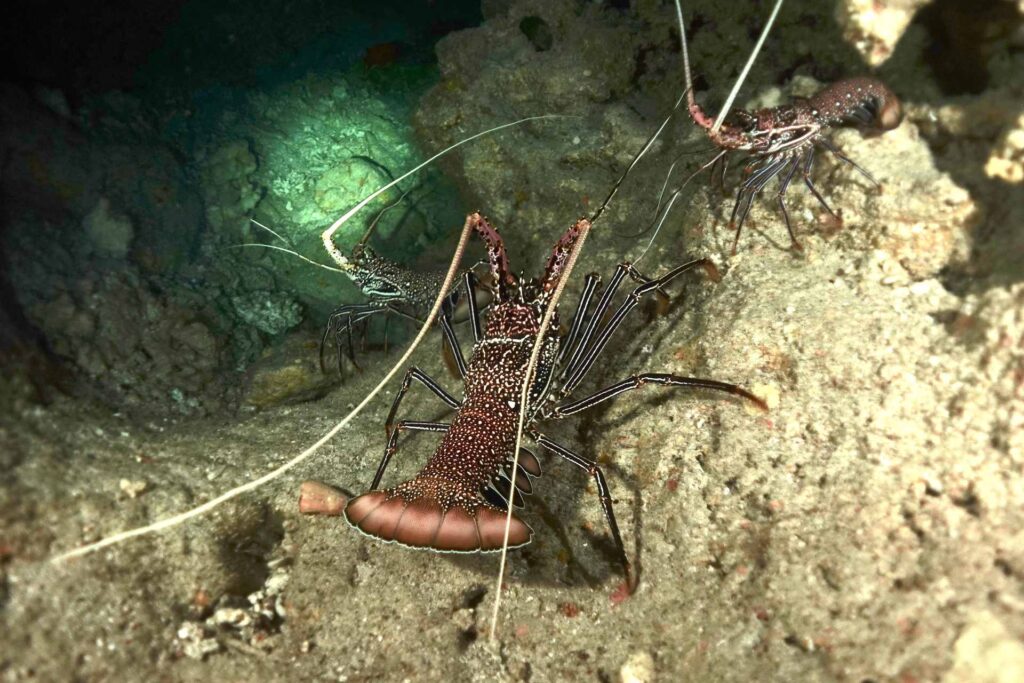
At Tomoko the coastline is carved with sea-caves, one of them the lair of the pronghorn spiny lobster (Panilurus penicillatus). Bastien convinced me to join him for a night dive. “A good chance to meet the nautilus,” he beamed. The offer was too tempting to refuse.

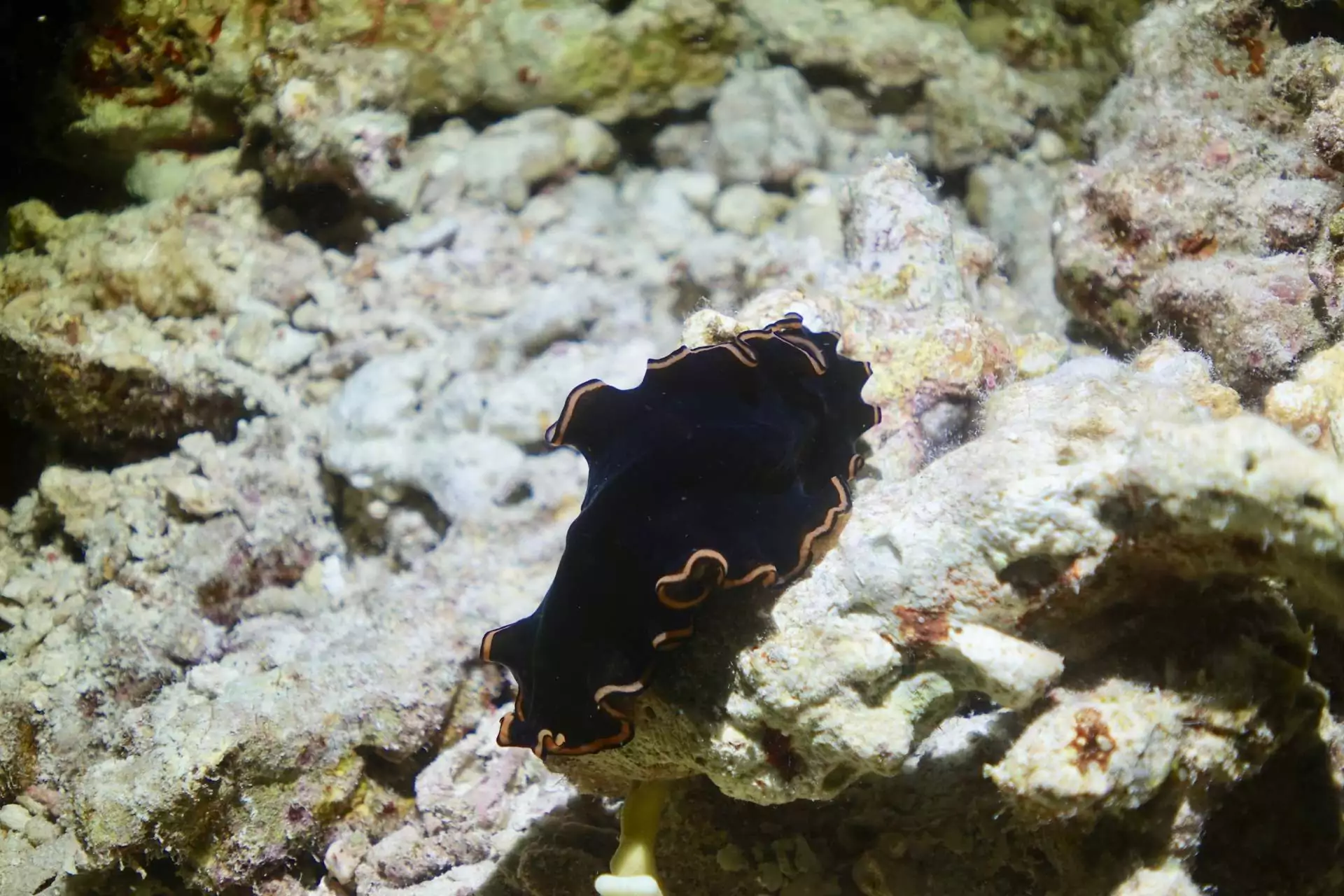
Starting from the beach in Easo after dark, we swam on snorkel for about 10 minutes before submerging. Soon, I witnessed a festival of basket-stars (Astroboa nuda), fully deployed in a feeding position. Bastien found a black Hancock’s flatworm (Pseudobiceros hancockanus), with orange and white girdle.
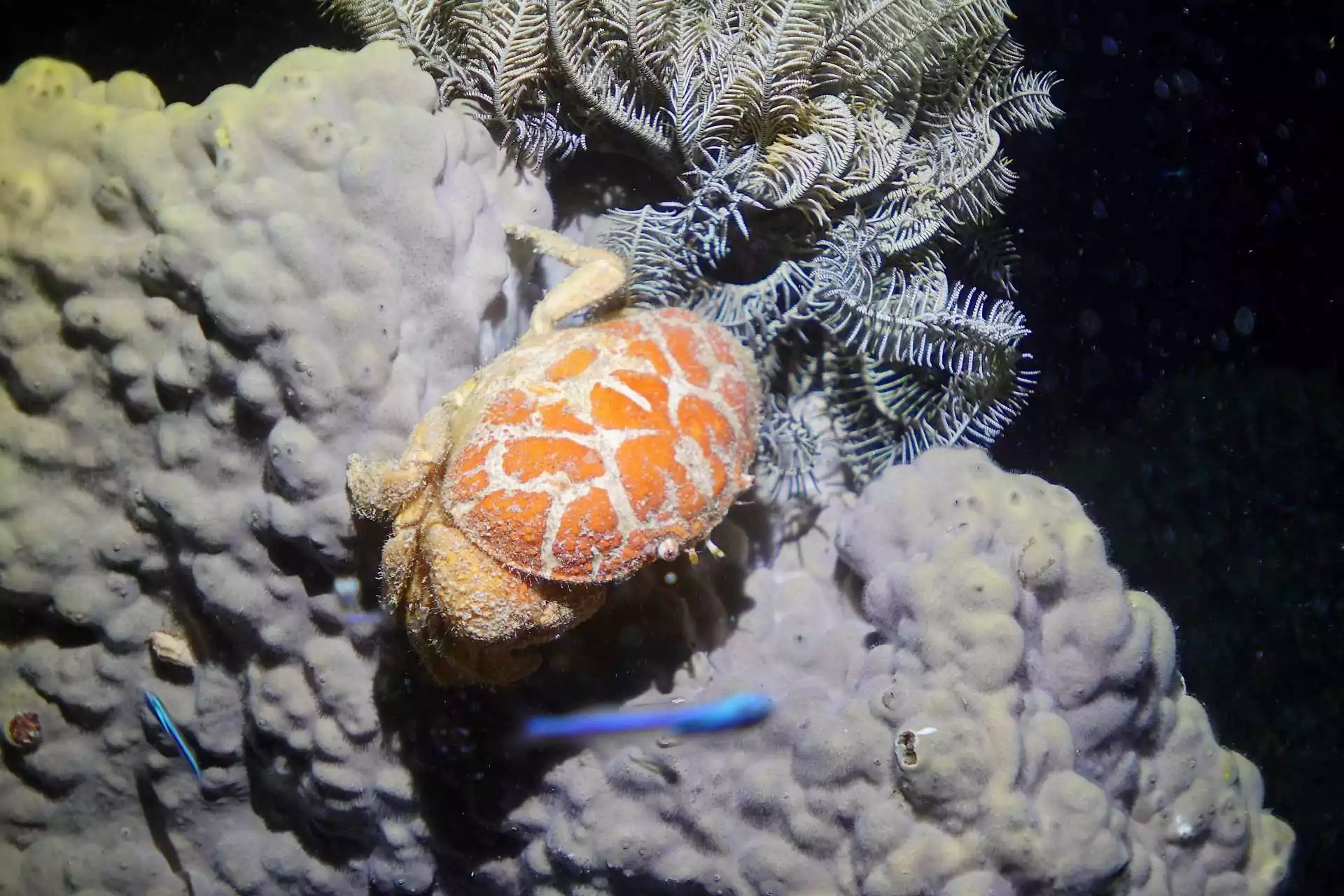
I marvelled at a pink velutinid Coriocella sp with black lines, something I had never seen before and, I suspect, a new species. An orange spotted box crab (Calappa lophos) posed on a rock, and a yellow-margin moray (Gymnothorax flavimarginatus) displayed itself under a staghorn coral.

To add a little spice, a large banded sea krait (Laticauda saintgironsi) foraged in the open of the sandy flats, oblivious to my presence.


Labyrinthe
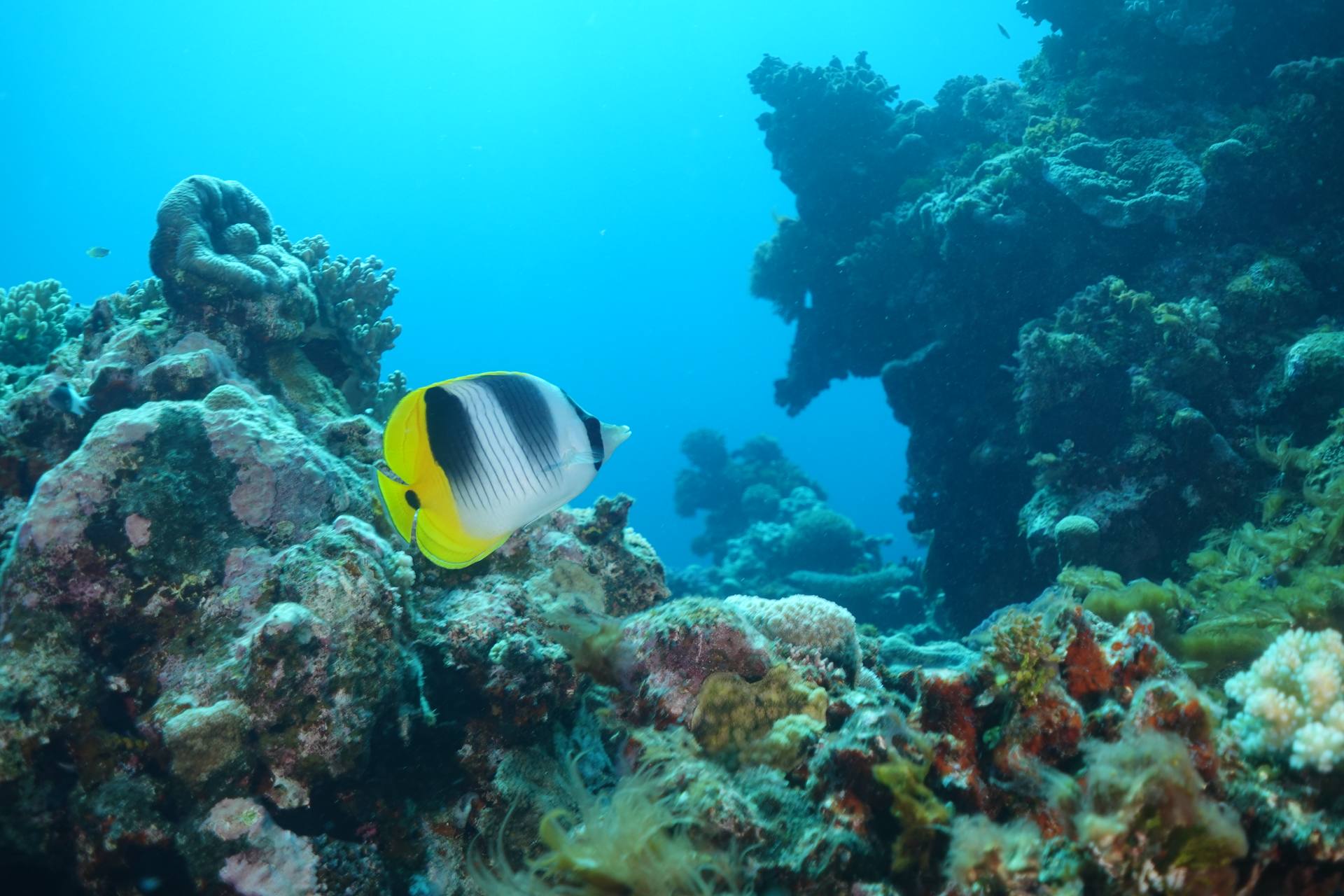

Before my departure, Pascal insisted on taking me to the Labyrinthe, one of his chosen sites. It was a true maze of canyons, swim-throughs and tunnels, through which one squeezes like a rat. It was my chance to meet the elusive colourful harlequin tuskfish (Choerodon fasciatus), red with white and grey bands, hiding in the darkness.
A loop road leads around the north of the island to Hnathalo, Wanaham airport, Jokin and Xepenehe. Another skirts around the west (Drehu), south (Mu) and east coast (Traput).

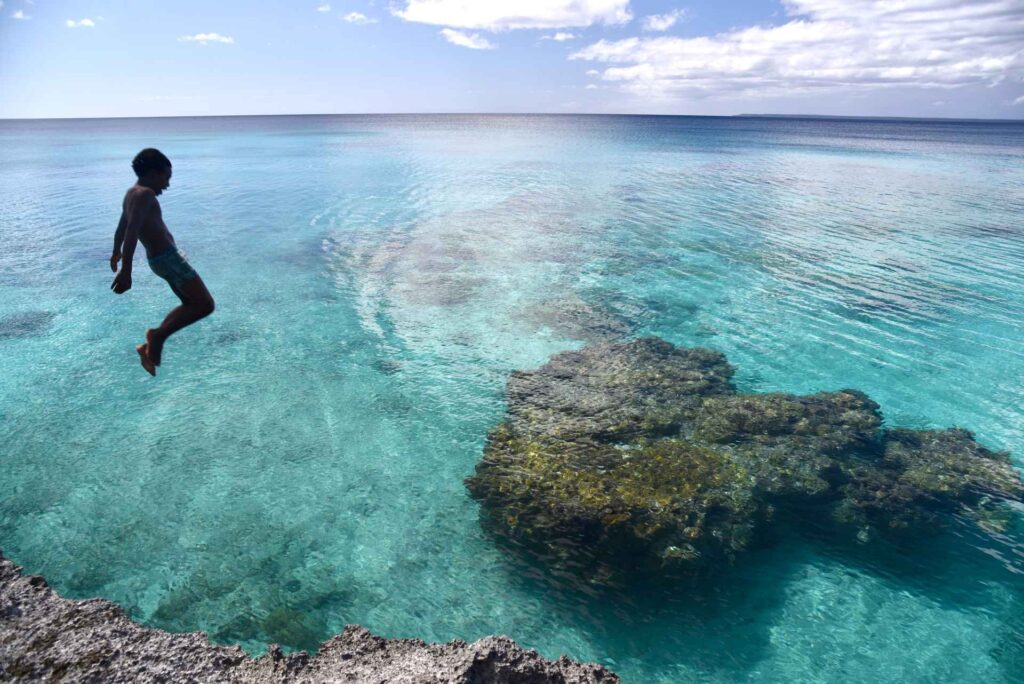
Lifou offers plenty of possible excursions and guided hikes to caves or scenic viewpoints, such as the Jokin cliffs or Marmites du Cap des Pins, where huge tide-pools are found on elevated reef terraces. It’s an invitation to take a bath with a view.
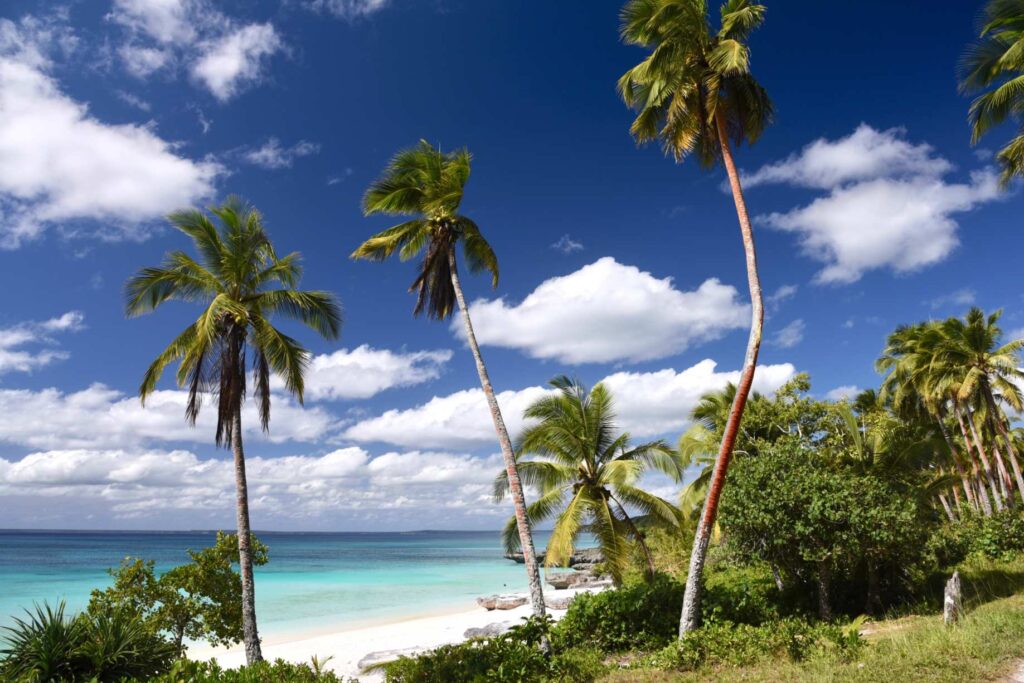
Should you fancy idyllic beaches, the choice is between Chateaubriand, Luengoni and Peng. And beyond a green patch of indigenous forest, the secluded Kiki Beach is a jewel for nature-lovers, at the base of a cliff south of Xepenehe. North of Easo, the Baie de Jinek offers an exciting underwater trail for snorkellers, who can swim independently there, little buoys with flags marking the way.
For an optimal diving experience, I recommend a week on Lifou, shared between Wé Plongée on the east coast followed by Lagoon Safaris on the north-west coast. Should time allow, you could also explore other Loyalty Islands such as Mare or Ouvea.

On the last day, a 6am appointment with Haman brought me to a hidden place behind Wanaham Airport. I intended to visit the poorly known Fetra He Cave. “I am not working the yam fields on Sunday, it is the day of the Lord,” confided Haman.
As custom required, we sat and chatted for a while in his garden so that he would understand my purpose. Hidden in the forest behind his house, the small porch of a cave appeared. We had to squat to enter, cave swiftlets flying about, bumping randomly into my face. “Here is the guardian of the cave,” he whispered, pointing to the right.
My eyes fell on a skull in a niche. Crawling on all fours with my headlamp, we penetrated dark, tight passages soiled with bat guano. Some crushed human bones were lying around. After 100m of dirty progression, my hands and knees were sooty-black.
A spacious chamber opened up, with dark stalagmites and stalactites. To my bewilderment, the walls were covered with hand stencils in black, sometimes red. “Archaeologists came here over 30 years ago and dated these. They are 3,000 years old and belong to the Lapita people,” I was told.
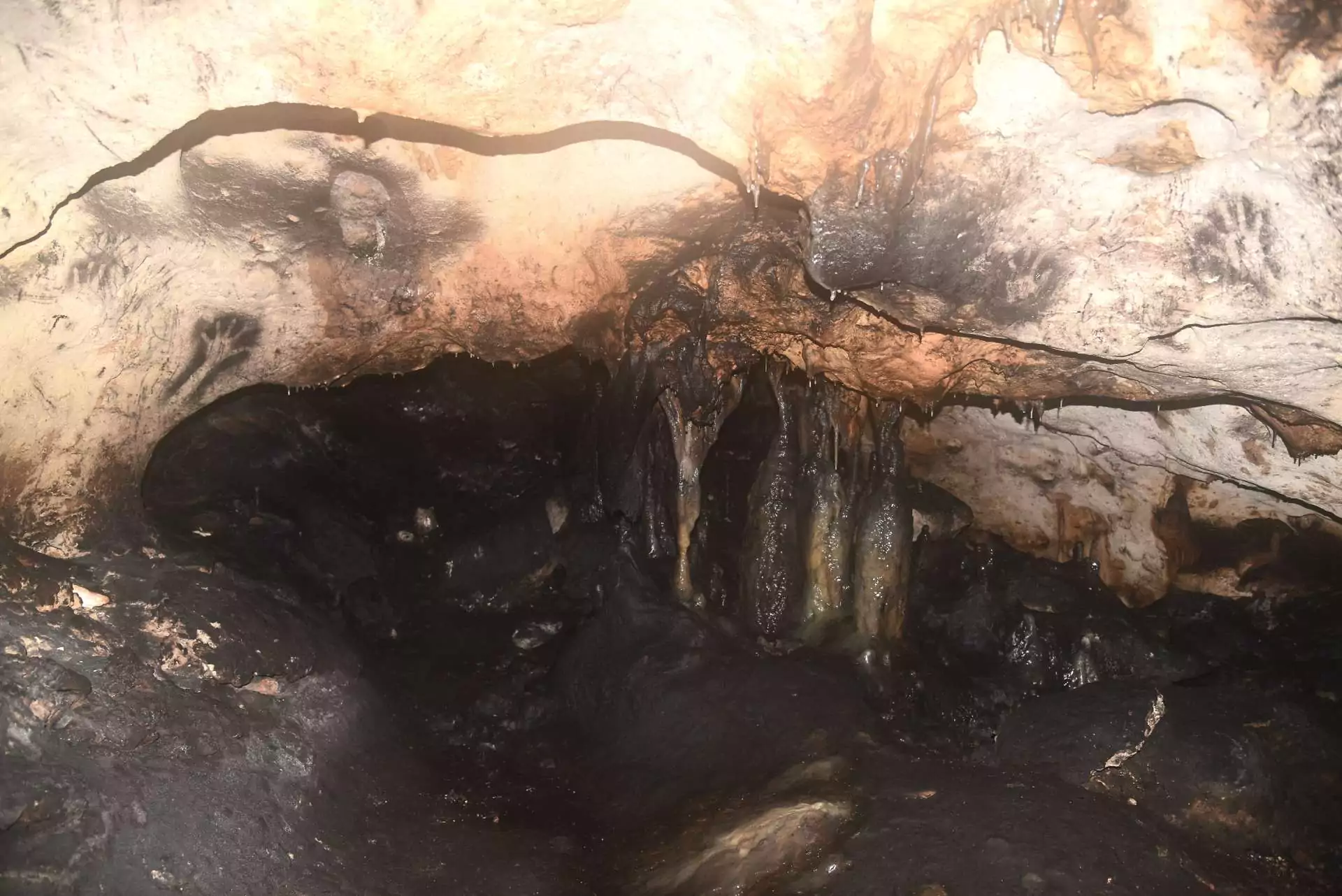

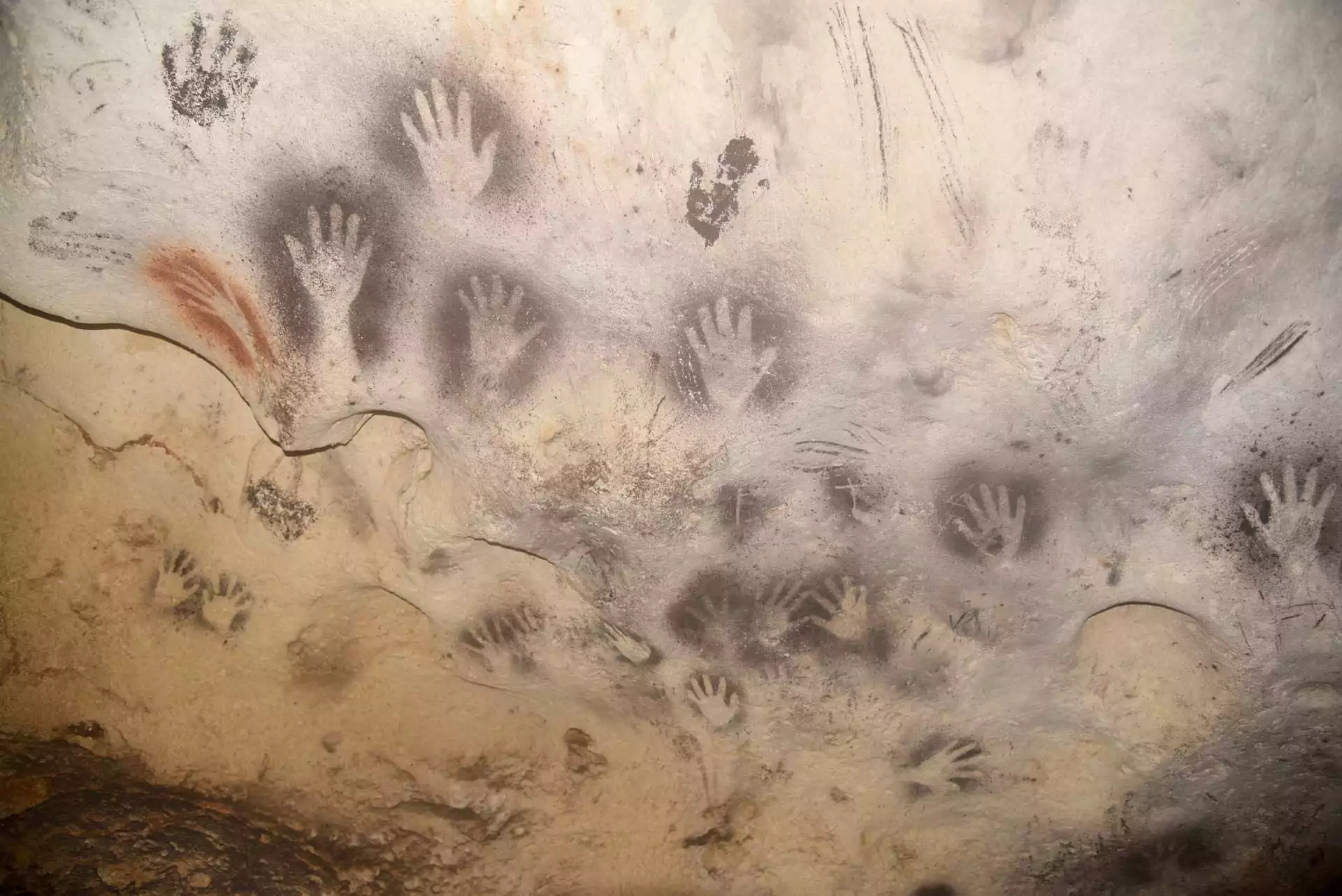
These early navigators from south-east Asia left traces of their migration with renowned potteries all across the Pacific. Lifou’s ancestors had come from north Melanesia, from the Admiralty Islands in Papua New Guinea, where I once lived.
Everything fell into place. My intuition was that I had been on the tracks of the Lapita people for several years. As if, in a former life, I had been one of them.
Beyond the screen of certitudes, the mind works in mysterious ways…
Contacts
Wé Plongée (Pascal)
Lagoon Safaris (Bastien, Easo)
Les Joyaux de Luengoni (Luengoni cave) with Pascal Qazing, email elkyhrtg@gmail.com
Ferry Betico 2 for sailing schedules out of Noumea

PIERRE CONSTANT runs Calao Life Experience. Other features by the author on Divernet include FLORES, GATEWAY TO KOMODO, HELL’S BELLS AND OTHER YUCATAN CAVE SPECIALS, VANUATU BEYOND THE COOLIDGE and DIVE-TRIP: MUSANDAM TO MUSCAT